
How Steam Deck Changed the Future of Linux Gaming
Valve’s continued investment in Proton and SteamOS has fundamentally altered Linux gaming viability across modern hardware.
Hardware by Tanvir Kabbo on Feb 08, 2026
People have been joking about Linux becoming a genuine desktop operating system for regular people for decades. Every few years, someone would confidently say that this would be the year of Linux, but nothing actually changed.
Now, in 2026, that familiar claim is being made once again—but this time, the data, the industry momentum, and the technology itself suggest something genuinely different is happening.
Linux is no longer stuck at the fringes. Its desktop market share reached 4.7% globally in 2025, up from just 2.76% in 2022. That kind of growth in only three years is unprecedented for Linux. While this does not mean Linux is about to overtake Windows in gaming or general use, it strongly suggests that Linux adoption is accelerating faster than it ever has before.
Linux and the Longstanding Adoption Problem
Linux has always dominated the server world, but for general users and gamers, Windows was the only real option for decades. The biggest issue has always been compatibility. People avoided Linux because it could not run the games and applications they wanted, and developers ignored Linux because not enough people used it. That feedback loop stalled Linux growth for years.
Early Linux gaming experiences reinforced that problem. Outside of a handful of Valve titles using OpenGL, like Counter-Strike, and a few lightweight games such as SuperTux, options were extremely limited. Wine existed back then, but performance and compatibility were unreliable at best, making it difficult to recommend Linux to anyone serious about gaming.
Rise of Gaming-Focused Linux Distributions
Today, that situation looks entirely different. Modern Linux distributions now aggressively target gamers, with projects like CachyOS, Nobara, and Bazzite delivering great performance and simple settings. These distributions are no longer just experimental oddities; they are reliable, refined, and can compete with Windows for many gaming tasks.
We have tested many of these distributions across Intel, Nvidia, and AMD GPUs, old and new, and the results consistently show how far Linux gaming has come. The improvement did not happen by accident, and it can largely be traced back to one company with enough influence to force real change.
Valve’s Role in Reshaping Linux Gaming
Valve has done what very few companies can do: push an entire ecosystem forward through sheer execution. Vulkan, the successor to OpenGL, has seen adoption from major studios like Valve, Rockstar, and id Software, alongside many indie developers. While Vulkan adoption has been uneven across the industry, Valve has consistently made it work at scale.
Market share numbers help explain the impact. In 2009, Linux held just 0.68% of the desktop market. By 2018, that figure reached 1.68%, a meaningful increase that still took nine years. That same year, Valve released Proton.
Proton is a compatibility layer built on Wine, enhanced with additional libraries and patches to dramatically improve Windows game compatibility and performance on Linux. Within just two years of Proton’s release, Linux market share rose to 1.93%, and the pace of growth began to accelerate.
Steam Deck and the Push Into the Mainstream
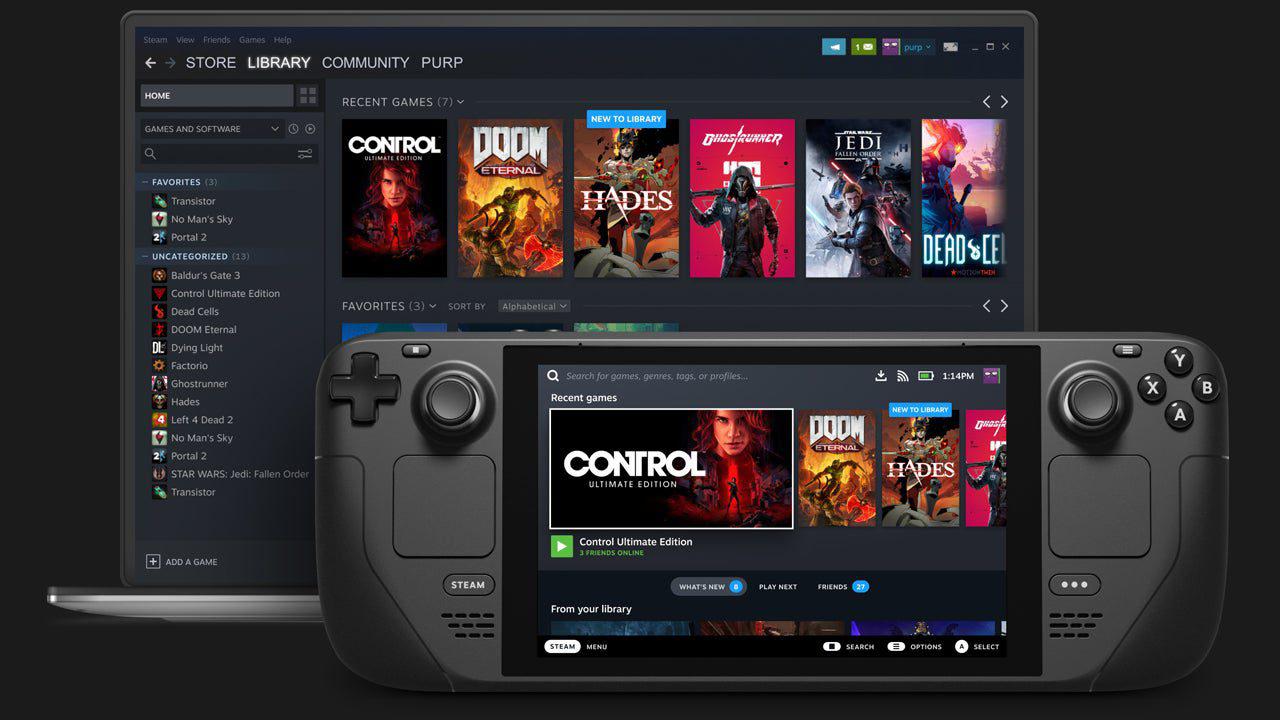
Valve doubled down with the release of the Steam Deck, a handheld gaming system built entirely around SteamOS, a Linux-based operating system. This move forced Valve to aggressively optimize Proton, SteamOS, and game compatibility, because the success of the Steam Deck depended on it.
That optimization effort benefited the entire Linux ecosystem. As more games became Steam Deck verified, more games became Linux-compatible effectively. Within six years of these efforts, Linux desktop market share climbed to 4.01%, surpassing 5% when server usage is included.
With upcoming hardware like the Steam Machine, Steam Frame, and Steam Controller—all built on Linux—Valve is clearly committed to pushing Linux even further into the mainstream.
Growing Frustration With Windows
A lot of people who use Windows on their desktops are getting angrier and angrier with it. Some consumers have moved on because of complicated updates, unreliable performance, and aggressive design choices. Distributions like ZorinOS that are easy for beginners to use have taken advantage of this change by providing clean interfaces and easy-to-follow instructions. Some months, they have had over 2 million downloads.
We are also seeing developers take Linux more seriously. Tools like OCCT now offer native Linux support, and senior engineers at companies like GOG have openly described Linux as the next major frontier. Industry groups such as the Open Gaming Collective aim to solve longstanding Linux gaming issues, with major hardware players now participating.
Hardware Support and Performance Improvements
Even Nvidia, long criticized for weak Linux driver support, has made meaningful moves. GeForce Now is now available on Linux, and ongoing work around Proton and DirectX12 translation suggests potential performance gains for Nvidia GPUs in the near future. If those improvements land as expected, Linux adoption could accelerate even faster.
Microsoft itself appears to be aware of this shift. Recent efforts to fix problems with Windows 11 and cut down on unnecessary AI features show that Microsoft is responding to users' growing unhappiness and competition from other platforms.
Why 2026 Feels Different
In 2026, all of these trends will come together. Valve is putting a lot of money into it, developers are paying attention, distributions are getting better, and customers are more willing to switch. Linux still has work to do—compatibility gaps, anti-cheat challenges, and driver quirks remain—but the foundation has never been stronger.
If you are running an AMD system, Linux already offers an excellent experience. NVIDIA and Intel users are likely to see further improvements soon. We are planning extensive CPU and GPU benchmarks across Linux and Windows, including Linux-vs-Linux comparisons, to track exactly how these changes play out.
Linux may not replace Windows, but for the first time, it does not need to. Growth, momentum, and legitimacy are enough—and for the first time in decades, Linux finally has all three.
Also, check our other AMD articles below:
- AMD Ryzen 9 9950X3D Review: Setting The Standard For 2025 Gaming CPU
- AMD Ryzen 7 9800X3D Review: 3D V-Cache Goes God Mode with Stunning Gaming Performance
- AMD RX 9070 Performance Review: Thermals, Clocks, and Real-World FPS
- AMD Ryzen 5 7600 Review: Best Budget Gaming CPU of 2025?
- AMD Radeon RX 7800 XT Review: RDNA 3 Power For Midrange Gaming
- Sapphire NITRO+ AMD Radeon RX 9070 XT Review: The Ultimate 4K Gaming GPU
- AMD Ryzen 7 7800X3D: Delivers Gaming Performance Far Beyond Expectations
- AMD Ryzen 9 7900X Review: Powering the AM5 Era with DDR5 & PCIe 5.0
- Intel Core i9‑14900K vs. AMD Ryzen 7 7800X3D: Power Profiles & Gaming Benchmarks
Senior Editor, NoobFeed
Gaming Hardware Updates
No Data.