
Why is OneXPlayer 3 the Best PC Handheld Right Now?
OneXPlayer 3 emerges as a leading contender for the PC handheld crown, combining Intel Panther Lake performance with a premium design.
Handheld by Nahe Yan on Sep 11, 2026
The PC portable market has matured to the point that no single device is the default for everyone. This has been the case at different times with the Steam Deck, ROG Ally X, Xbox Ally X, Legion devices, and other handhelds. The search for the perfect all-round PC portable has become trickier, with pricing, styles, features, and performance shifting across the market.
What is the new default PC handheld? What is the one that can be said to be the best all-round PC handheld? Previously, that has been the Steam Deck, the ROG Ally X in its day, and more recently the Xbox Ally X and assorted other Legion devices. All of them, for one reason or another, held the mantle at some point.
The Search for a New PC Handheld King
MSI was probably somewhere in there as well, especially with the release of its first MSI Claw 8 EX AI Plus. The names are confusing. The one that came out before the most recent models did, around late last year or early this year, was essentially part of that discussion. Overall, one way or another, one of those handhelds had held the crown as the PC handheld king.
In this new stage of the PC handheld industry, given the RAM crisis, what is currently closest to being the PC handheld king? In my opinion, no true handheld king exists right now. For one reason or another, pretty much every handheld has a significant caveat. Most commonly, that is their price, their design, a feature, or just a lack of power for the price.
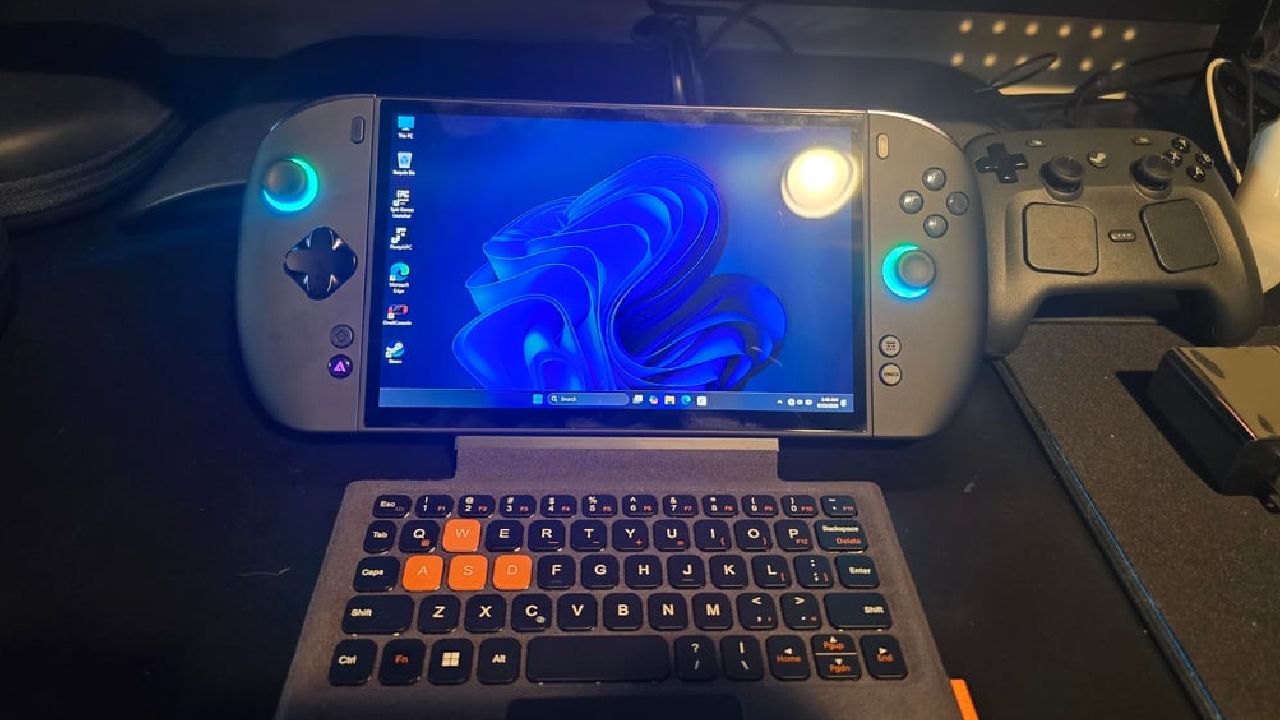
For $1,500, at least seemingly for now, it is probably, by some accounts, one of the best deals in PC gaming. The main reason is that it's $1,500 with Intel Panther Lake chipsets. It's one of the most powerful PC handhelds on the market, with a zero-compromise design. Despite its one flaw, the price, other reasons make this the king.
Steam Deck Set the Value Standard
A major reason the Steam Deck was probably the clearest time there was a definitive king is that it offered the best bang for the buck. There has not been a really good deal in a long time. That is true even with things like the white Xbox Ally. That is only a good deal when it is on sale. At a base price of $600, a used Z1 Extreme-based device can make more sense. It doesn't really matter what you pick.
It will be around the same price, probably less, while offering significantly more performance. In terms of what the Steam Deck represented, it was about the best bang for the buck. Granted, the OneXPlayer 3 is in a completely different price bracket. OneXPlayer 3 does sort of exemplify maximizing performance for the dollar amount.
For anyone looking for something that feels next-gen while currently using an original Legion Go, original Ally, Steam Deck, or even an older Neo or GPD device that has not been updated in quite some time, the OneXPlayer 3 would be a worthwhile upgrade. It would be a substantive upgrade, enabling modern AAA titles to run at reasonable quality levels that weren't possible before.
Before this, the Legion Go 2 and the Xbox Ally X with the Z2 Extreme, along with other handhelds using similar chipsets, haven't been the upgrade many hoped for. They were largely an iterative upgrade, with a nominal generational uplift of roughly 8% to 10% at best. AMD's fine-tuning technology suggested performance would be middling at first, but once the drivers matured and AMD did more development, it would improve.
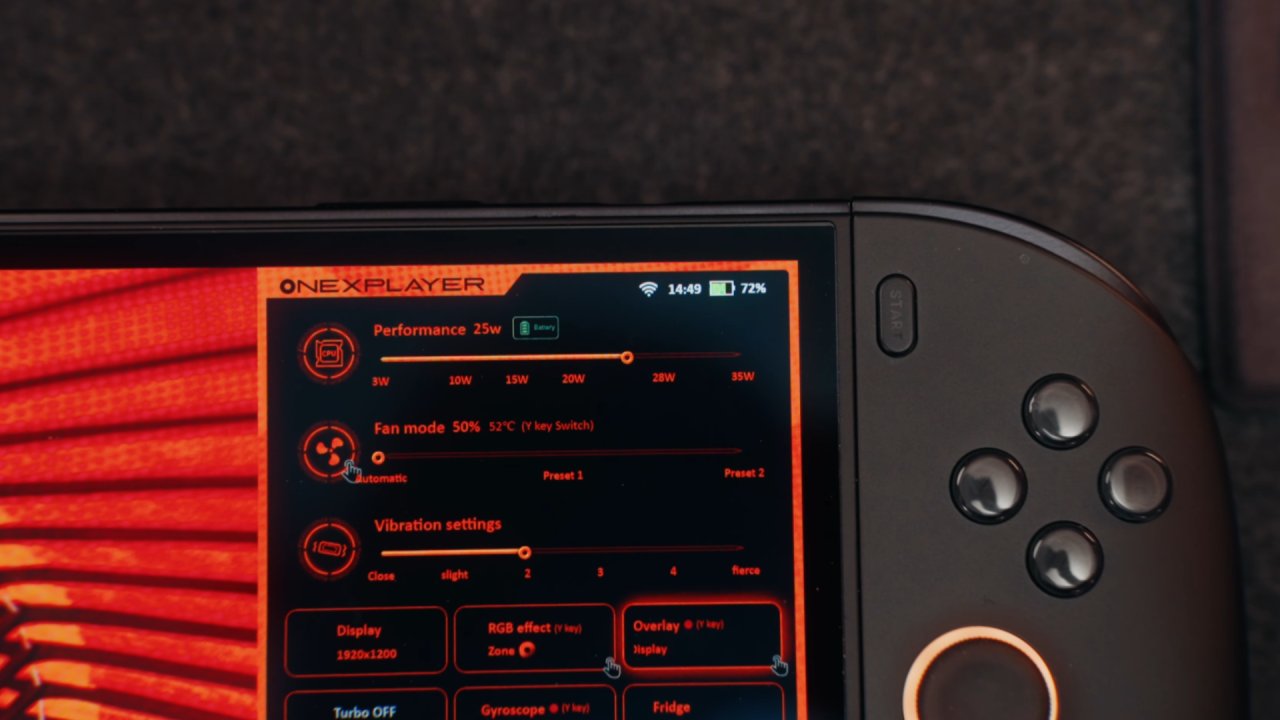
That has not really materialized. The performance gains hoped for from the Xbox full-screen experience also haven't really materialized. Microsoft appears to be pulling focus away from the full-screen experience, at least temporarily, to get Windows 11 back into shape by overhauling some core components, features, and visual identity.
Panther Lake Changes the Performance Picture
Windows 11 may be part of the issue, but it may not be the reason the Z2 Extreme is held back this way. On Linux, it performs better with SteamOS, but that isn't enough to say Windows is 100% the problem. Overall, the Z2 Extreme has been disappointing as the platform has matured.
Panther Lake, while being reasonably new in terms of product releases, has been in development for quite some time. The chips have been announced and are already shipping in their mobile equivalents. The laptop versions have also been shipping since the beginning of the year. The development has been visible, and now these handhelds are finally arriving.
It is probably one of the most mentioned handhelds in the comments. Whenever people discuss PC handhelds, they mention the OneXPlayer 3. Sometimes they also mention a GPD device like the GPD15, which is a good device, but it uses Strix Halo and starts around $1,000 more. It is not exactly an apples-to-apples comparison, but the comparison makes sense.
OneXPlayer 3 only started shipping late last month, so many people have only recently gotten access to it.
The one handheld category that can really argue against the OneXPlayer 3 is Strix Halo handhelds. However, they are so expensive that spending that much money doesn't make sense for most people unless there is a very good reason to buy one.
There can be many reasons. Handheld gaming may simply be the preferred form factor. For someone who travels a lot but does not want a gaming laptop because of portability, a PC handheld with Strix Halo may be as much as the travel budget can sustain. Regardless, most Strix Halo handhelds are in a product class that's too expensive for most people.
For anyone upgrading from an older handheld, the combination of Intel Panther Lake performance, an 8.8in OLED 144hz 1080p VRR display, detachable controllers, and additional accessories makes it a device that covers the major areas expected from a PC handheld.
Editor, NoobFeed
Latest Articles
No Data.