
Save $300 on RAM: DDR4 vs. DDR5 Gaming Performance Tested on RTX 5070
Current DDR5 pricing has widened the cost gap with DDR4 enough to shift value calculations for budget-focused PC builds.
Hardware by Nahe Yan on Sep 12, 2026
DDR5 prices are a major cost factor in building or upgrading a PC and have increased considerably compared to DDR4. The difference is enough to make DDR4 worth considering, especially on Intel architectures that allow both memory types for less expensive computers.
12th-, 13th,-, and 14th-generation Intel CPUs can support either DDR4 or DDR5, depending on the motherboard. Of these, the Core i7-12700 is a low-cost alternative and, in some cases, can be found for less than $200, or even under $300. We test an i7-12700 with DDR4-3600 CL18 and DDR5-6000 CL34 in six games.
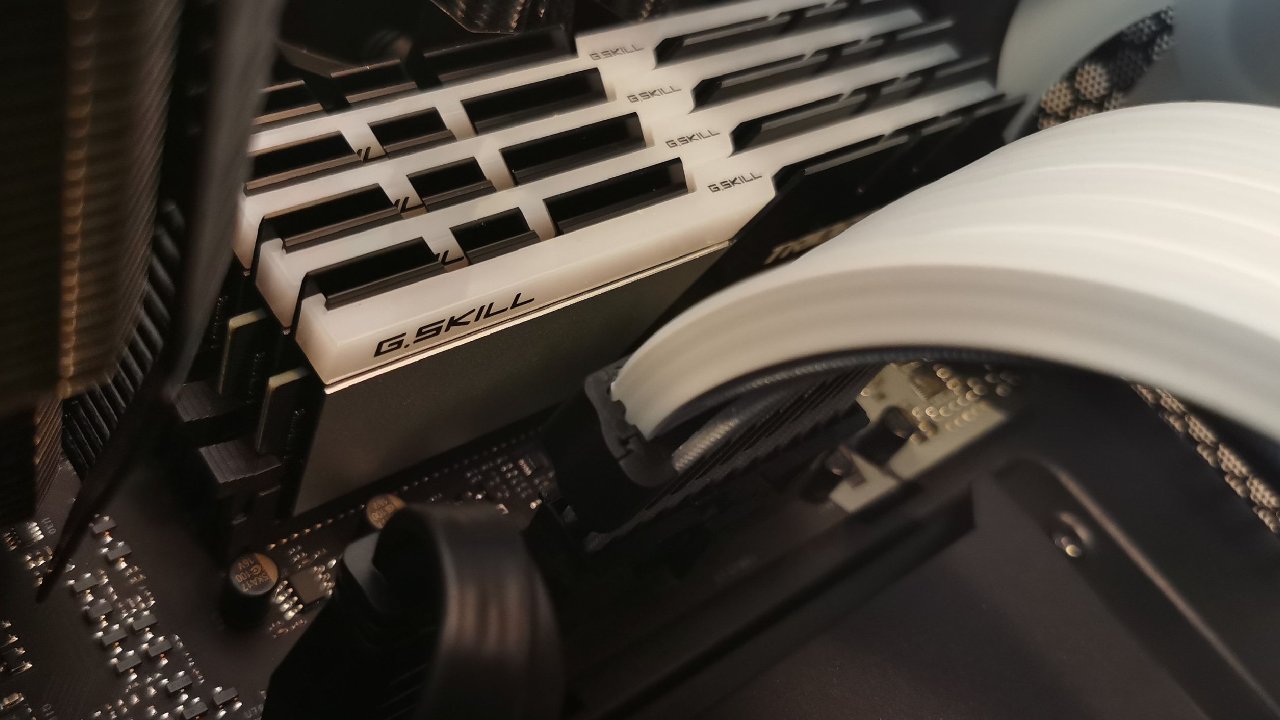
DDR4 Offers a Lower-Cost Upgrade Path
For graphics tests, we used an RTX 5070 on the following settings: 1080p low, 1440p medium, and 4K high for most games. CS2 showed virtually no difference at 1080p, and DDR5 had a slight edge at 1440p. The difference was about 15% at 4K. Resident Evil 9 achieved 166fps at 1080p and 121fps at 1440p, whereas it only managed 144fps at 1080p and 118fps at 1440p.
The difference was minimal at 4K: 1fps. At 1080p, Pragmata's difference was about 3%-4%, and at 1440p and 4K it was very small and negligible, respectively. DDR5 generally had a leg up at the 0.1% lows. There was a slight discrepancy at 1080p in Marvel Rivals, with a nearly identical average FPS at 1440p.
Fortnite was one of the most obvious. It peaked at 226 fps at 1080p, and was extremely close to the 221 fps 1080p rate in 1440p and 4K. The 007 First Light scored 137 fps in 1080p, and DDR5 scored 142 fps. Even the 007 First Light had 0.1% fewer lows. 1440p saw a 2 fps difference, and the average FPS at 4K was the same.
The biggest change was seen in the 0.1% lows at 4K.
The 0.1% lows also favored DDR5, but the gains weren't big enough to meaningfully affect the gaming experience. During testing, DDR4 also used slightly less CPU power. This, coupled with lower-priced DDR4 motherboards, means this older memory standard remains a cost killer.
RTX 5070, too, has gotten more pricey, with rumors pointing to an $850+ price tag, up from about $600. The high cost of RAM makes the total cost of the PC even higher. But the RTX 5090 isn't practical for mainstream PCs because of its cost and power draw. For smaller and/or budget-oriented systems, a more functional graphics card may be better suited.
Editor, NoobFeed
Gaming Hardware Updates
No Data.