
AMD Expands ROCm 7.14 With Ryzen AI MAX PRO 400 and Gorgon Halo Support
ROCm 7.14 delivers early optimization tools and AI framework support ahead of the Ryzen AI MAX PRO 400 launch.
Hardware by Masaru Hoshino on Jul 17, 2026
AMD is making another calculated move in its AI strategy, and this time the focus is not on silicon alone. Instead of waiting for new hardware to arrive before enabling developers, the company has officially rolled out ROCm 7.14, extending support to its upcoming Ryzen AI MAX PRO 400 family weeks ahead of launch.
The decision signals that AMD understands one of the biggest realities of modern AI computing: hardware performance means little without a mature software ecosystem. The latest ROCm release brings optimized compute libraries, updated AI frameworks, and expanded developer tools for processors that have yet to reach customers.
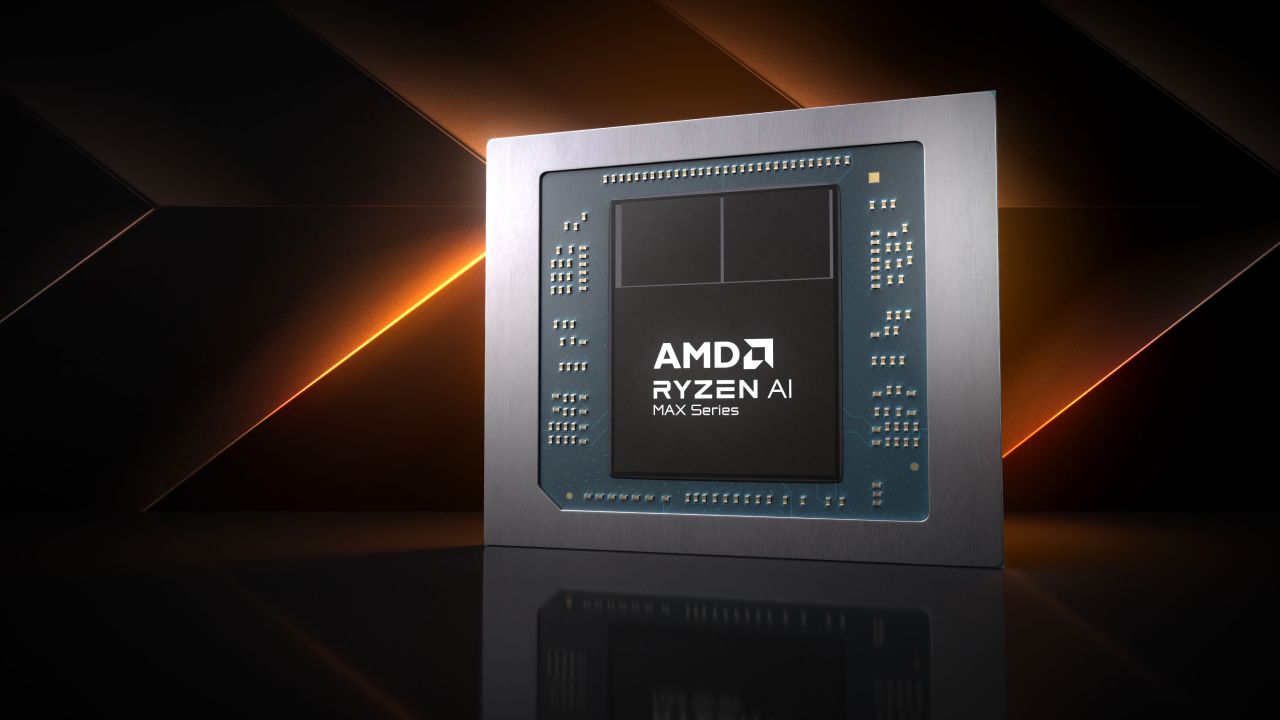
While the hardware itself remains unreleased, AMD is already inviting developers to prepare applications, optimize inference workloads, and validate AI software before the first systems become commercially available.
AMD Builds the Software Foundation Before the Hardware Arrives
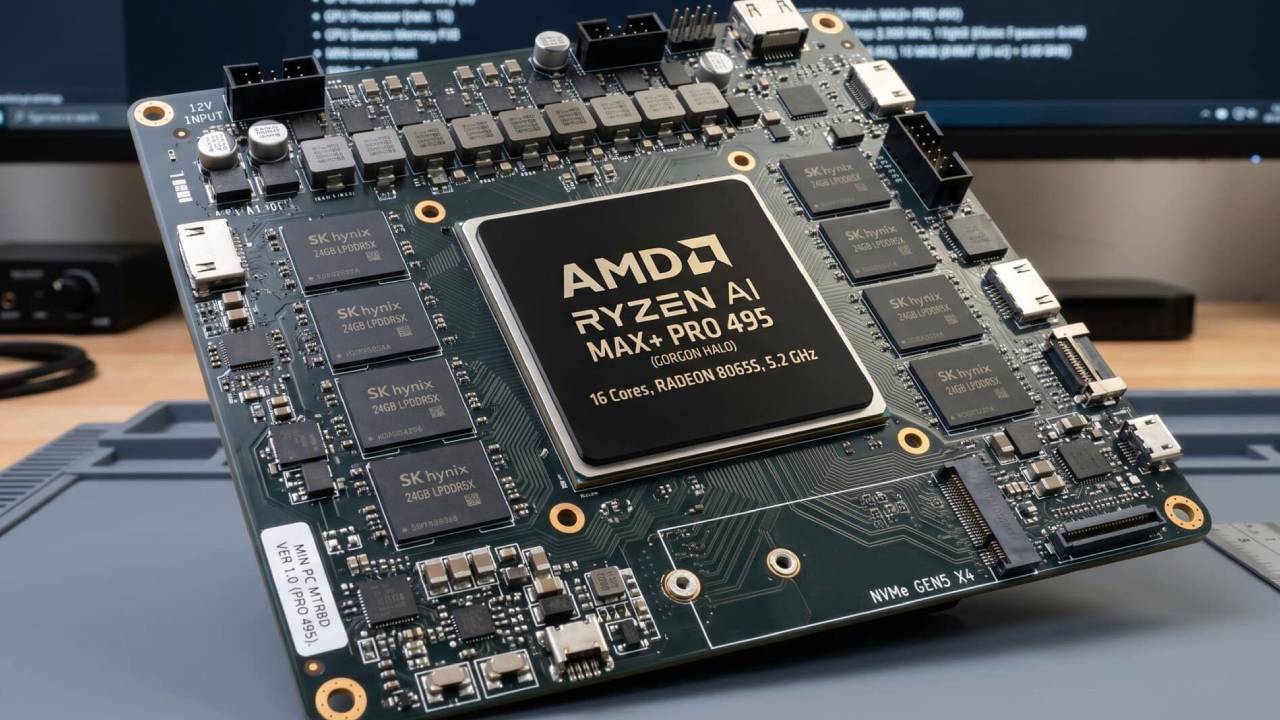
The newest ROCm 7.14 software stack officially introduces support for the upcoming Ryzen AI MAX PRO 400 lineup, internally known by its codename, Gorgon Halo. The supported processors include the flagship Ryzen AI Max+ PRO 495, alongside the Ryzen AI MAX PRO 490 and Ryzen AI MAX PRO 485.
This early compatibility is more significant than a routine software update. Instead of asking enterprise customers and AI developers to wait until launch day for optimization tools, AMD is creating an environment where software can mature in parallel with hardware availability.
That strategy reduces deployment delays while allowing developers to identify bottlenecks long before production systems begin shipping. In an increasingly competitive market, minimizing that transition time can be a real win for software suppliers and enterprise customers.
ROCm 7.14 Extends AMD's AI Development Toolkit
In addition to hardware compatibility, ROCm 7.14 provides a set of tools to facilitate AI performance optimization and system management. The version now includes the improved ROCm Systems Profiler and ROCm Compute Profiler, which enable developers to evaluate GPU workloads, analyze kernel execution, and detect performance constraints in complex AI applications. These profiling utilities are especially helpful for tuning the inference process and expediting model deployment.
It also upgraded its System Management Interface, or SMI. Command-line monitoring provides developers with visibility into temperature behavior, power draw, clock rate, and memory utilization. These parameters are becoming increasingly relevant as AI workloads demand sustained maximum performance from technology.
There has also been substantial care paid to framework compatibility. JAX 0.10.0 supports PyTorch 2.12, enabling developers in major machine learning ecosystems to start validating their projects right after launch without waiting for other software updates. Rather than treating ROCm as a simple driver package, AMD continues expanding it into a complete AI software platform designed to compete with established developer ecosystems.
Why Gorgon Halo Matters for Local AI Computing
The excitement surrounding Gorgon Halo extends well beyond CPU performance. The platform has attracted significant attention for its anticipated support for massive unified memory configurations up to 192GB.
For AI researchers and developers, memory capacity has become one of the primary limitations when experimenting with increasingly large language models. Larger models require enormous memory pools, particularly during inference and fine-tuning workloads.
With configurations approaching 192GB of unified memory, Gorgon Halo-based systems could make it practical to execute language models exceeding 300 billion parameters locally under suitable quantization methods. That dramatically reduces dependence on cloud infrastructure for certain development scenarios while giving researchers greater control over data privacy, latency, and operating costs.
Of course, real-world performance will depend on software optimization and workload details. Still, the large amount of RAM and built-in AI acceleration make this platform an interesting choice for local AI exploration.
Software Readiness Could Become AMD's Competitive Edge
AMD's timing suggests a larger strategic purpose. Rather than allowing software support to lag behind hardware launches, the company is attempting to synchronize the two ecosystems.
Historically, NVIDIA's greatest competitive advantage has not simply been GPU performance but the maturity of its CUDA software ecosystem. Switching costs across research institutions and enterprise deployments have become significant due to decades of optimized libraries, documentation, frameworks, and developer familiarity.
One of the common pain points with new hardware adoption is being addressed by AMD as they get ROCm 7.14 to market before Ryzen AI MAX PRO 400 reaches users. Instead of viewing launch day as the start of software enablement, developers can assess AI models, port apps, and optimize workflows before commercial availability.
It is yet to be seen whether that will convert into wider corporate usage, but reducing the optimization cycle is a meaningful advantage for clients looking at alternatives to CUDA-based infrastructure.
Editor, NoobFeed
Gaming Hardware Updates
No Data.