
Intel Crescent Island GPU Has Up to 480GB LPDDR5X Memory
Intel Crescent Island introduces up to 480GB of LPDDR5X memory for AI inference while reducing reliance on expensive HBM.
Hardware by Nahe Yan on Sep 09, 2026
AI workloads are pushing GPU memory requirements higher, with large language models and inference systems needing more memory to handle larger models, longer contexts, and more concurrent requests. Intel has revealed a GPU called Crescent Island that could bring up to 480GB of memory to a single accelerator, using a different approach than traditional high-bandwidth memory.
That is 15 times the VRAM of an RTX 5090. Intel gave it that much memory and may have just shown us where the GPU market is heading next. The GPU is called Crescent Island, and instead of using extremely expensive HBM, as Nvidia and AMD do with their biggest AI accelerators, Intel is doing something very different. It's using LPDDR5X.
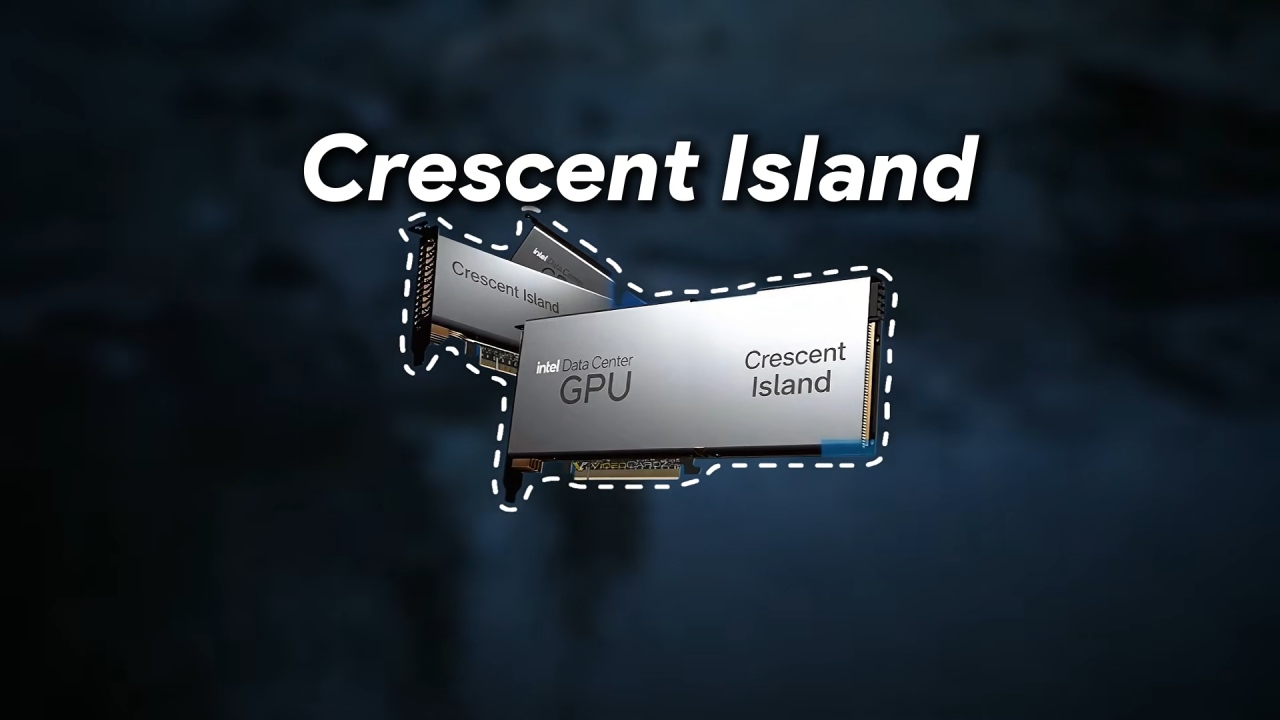
Intel Crescent Island Uses Up to 480GB of LPDDR5X
So, why would Intel put laptop-style memory on a GPU designed for AI? That's where this gets interesting. At Hot Chips 2026, Intel confirmed that Crescent Island uses its XE3 architecture with 32 XE cores, 256 XMX AI engines, and 32 MB of unified L2 cache. It comes as a PCI Express GPU with a 350W power target and is designed to work in normal air-cooled servers.
But the headline feature is memory. Intel's own reference card uses 160GB of LPDDR5X. However, partner designs can scale up to 480GB. For comparison, Nvidia's RTX 5090 has 32GB of GDDR7. Of course, comparing a gaming GPU with a data center accelerator is not a performance comparison. They're designed for completely different jobs.
So, why not use HBM? Here's the problem. High-bandwidth memory is extremely fast, but it's also expensive and in high demand in the AI industry. Nvidia's H200, for example, has 141GB of HBM3E and delivers 4.8 TB/s of bandwidth. AMD goes even further. Its Instinct MI350 series offers 288GB of HBM3E with up to 8 TB/s of bandwidth.
Intel is taking another route. LPDDR5X offers much more affordable capacity, lower power consumption, and easier availability. But the trade-off is bandwidth. Intel has not publicly announced Crescent Island's final memory bandwidth, and that number matters. 480GB sounds incredible, but huge memory capacity does not automatically make a GPU faster.
Crescent Island Targets AI Inference
So, what workload actually benefits from this? AI inference. When you run large language models, memory determines how large a model can fit on one GPU, how long the context can be, and how many AI requests can run at the same time. That's where Crescent Island could come in.
Instead of chasing maximum training performance, Intel says this GPU focuses on tokens per watt and agentic AI inference. That changes the comparison. An AI company may not always need the absolute fastest GPU. It may want a cheaper card that can fit a much larger model without having to split it across several accelerators.
And don't ignore the power number. Crescent Island is rated at 350W and uses air cooling. AMD's MI350X is rated around 1,000W, while the higher-end MI355X reaches 1,400W. Again, they are not direct competitors because AMD's GPUs target much heavier training and HPC workloads.
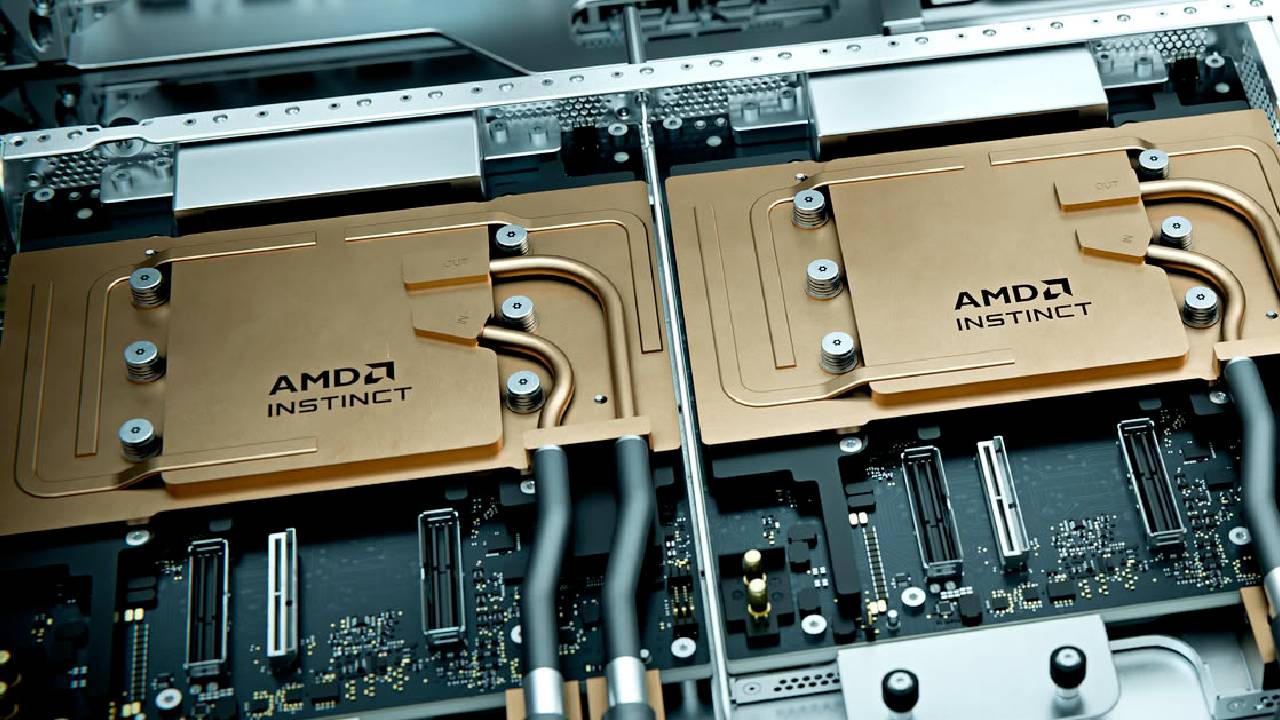
Large AI memory requirements could affect PC hardware.
And this could matter for normal PC hardware buyers, too. Why? Because AI companies are consuming enormous amounts of HBM, GDDR, and DRAM production. If Intel proves that some AI workloads can move to large pools of LPDDR memory instead, it would create another option for the industry.
That doesn't mean gaming GPU prices suddenly fall, but reducing pressure on premium memory would be good news for a market already struggling with RAM and VRAM costs. Intel's newest GPU is not about maximum FPS. It's about maximum usable memory at a lower power and potentially lower cost.
And if AI keeps pushing GPU memory requirements higher, 480GB may sound extreme today, but will be much less so a few years from now. The key question is whether the lower-cost, lower-power memory approach can deliver enough bandwidth for the workloads Crescent Island targets.
If it can, Intel could address the growing memory requirements of AI inference differently. Would you rather have an AI GPU with faster HBM or much cheaper LPDDR5X memory? The answer could depend on whether memory capacity or memory bandwidth is the bigger limitation for the workload.
Editor, NoobFeed
Gaming Hardware Updates
No Data.