
Steam Machine Shows Why Cooling Matters More Than Power
Steam Machine performance benefits from careful cooling, consistent frame times, console-like simplicity, and optimized hardware integration.
Hardware by Shinji Okazaki on Sep 09, 2026
Steam Machine still hits hard, showing how much software, cooling, frame-time consistency, and overall system design matter beyond raw hardware performance. On paper, it’s not the most powerful gaming PC. But the way it all comes together creates an experience that can rival more powerful devices in ways not always clear from the specs alone.
When we look at the Steam Machine, one thing really sticks out. Attempts to build an NVIDIA equivalent of the Steam Machine have run into many problems with frame-time pacing, overall frame pacing, temperatures, and cooling. Those are all the extra little things Valve worked hard to get right.
.jpg)
Steam Machine Delivers More Than Its Hardware Suggests
Technically, on paper, as a device plugged into a TV, it is kind of the least powerful option available. It is basically on par with the PS5 and Xbox Series X. Compared to other PCs, it is dramatically weaker. But the plug-and-play simplicity, the fact that we get more consistent frame times than on PCs that run laps around it.
Those convenience factors seem to outweigh the overall performance loss. It is kind of following the same path the Steam Deck did back in the day. Once more powerful handhelds started coming out, we immediately defaulted back to the Steam Deck because of all the extra work Valve puts in to make sure it's a good experience from top to bottom.
Xbox Ally X should run laps around the Steam Deck in terms of performance. However, all the work Valve has put into the overall experience, including SteamOS, means it often feels smoother on the Steam Deck, even though the Steam Deck is technically weaker.
Technically, you could build something on par with the Steam Machine. It could be more powerful and potentially cost about the same, but given how things are priced nowadays, that is not guaranteed. Valve delivered on its promise of a gaming PC like a console you can plug into your TV. You just boot it up and go into the game with no issue.
Cooling Makes the Difference for Mobile GPUs
There has been a lot of chatter about building a stronger PC versus buying a Steam Machine. Anything above the Steam Machine represents only a small share of gaming PCs, according to Steam's own research. Most PCs are on par with the Steam Machine. The 4060 or 3060 laptop variant comes up frequently.
Those are good laptop cards because they use lower power, which is ultimately good. But an issue you consistently run into is that, even though those cards are roughly the same as what is in the Steam Machine on paper, they start to heat up when you reach the higher limit of what they can do.
Even though the Steam Machine technically uses a mobile card, it can run it at full wattage. Because so much work has gone into cooling, you don't get the frame-time stutters or spikes you would see on a mobile platform like a laptop. That is what has been most impressive about the Steam Machine: how consistent the frame times are.
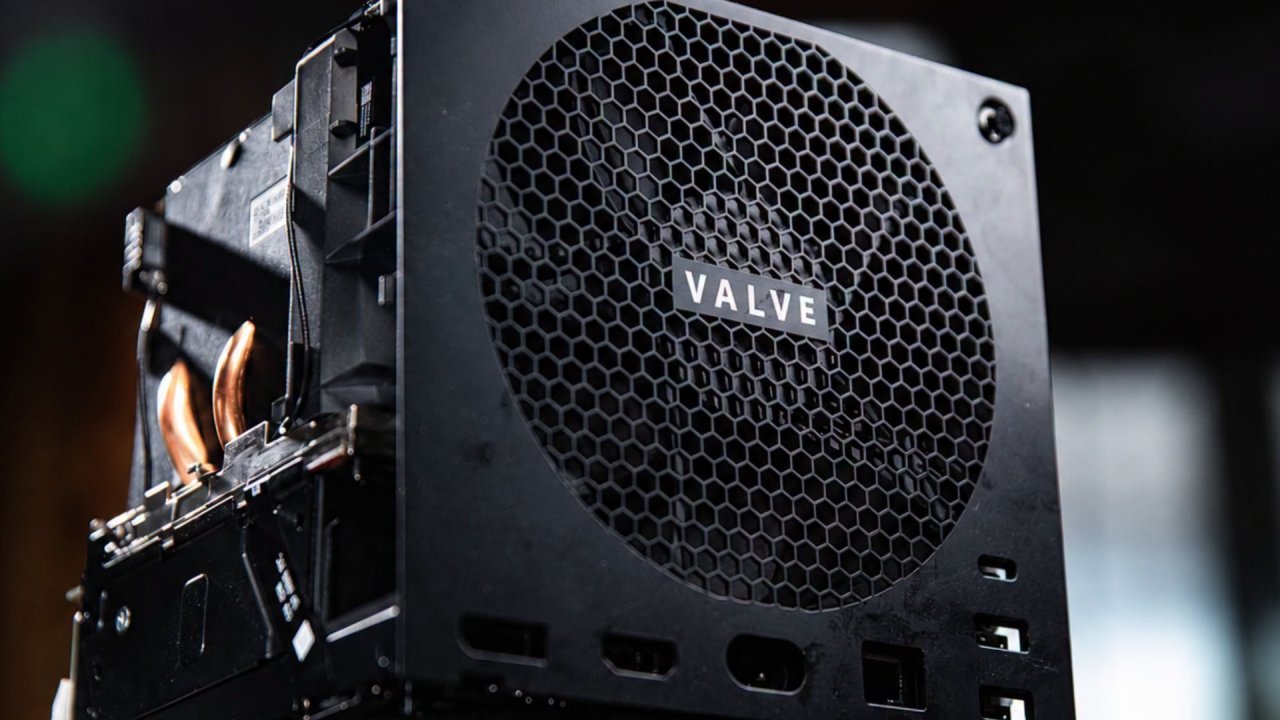
Especially considering how small and relatively weak it is compared to everything else. It is almost like Valve knows what is important to its audience. Consistency, especially in the frame-rate department, access to the Steam library, and the ability to just plug the system into a TV and have everything work, all come together.
Steam continues to attract players looking for variety.
The core player base was shrinking, especially on PlayStation, and it is clear many of these people are moving from consoles to PC to play single-player games. It is encouraging to see that there is still an audience for this type of content on Steam. Those games have become harder to find.
At the same time, when we look at the numbers relative to the overall install base, only a fraction of PlayStation 5 owners are even playing those exclusive games. The rest are playing FIFA, Call of Duty, Apex, and other live-service games. That is interesting, because many of those games can be a better experience.
Crimson Desert could seem off-putting to most people because of its size, the time it demands, and how overwhelming its systems can be. It came out in March or early April, and so much has happened since then that it is easy to forget about it after all the games released afterward.
Editor, NoobFeed
Gaming Hardware Updates
No Data.