
The Blood of Dawnwalker is Shaping Up to Be 2026’s Most Ambitious RPG With Its Nonlinear World
With a nonlinear world, a 30-day story clock, vampire abilities, branching quests, and combat inspired by The Witcher 3 and Kingdom Come: Deliverance, Rebel Wolves is taking a very different approach to the open-world RPG.
News by Tahmid Mahi on Aug 18, 2026
The Blood of Dawnwalker is set to launch on September 3, and everything shown so far suggests that Rebel Wolves is aiming for an RPG that gives you far more freedom than the usual open-world adventure.
Developed by former members of the team behind The Witcher 3: Wild Hunt, the game takes you into a dark fantasy version of 14th-century Europe during the Black Death. While humanity is struggling with plague and war, vampires emerge from the shadows and seize control of an entire valley called Vale Sangora.
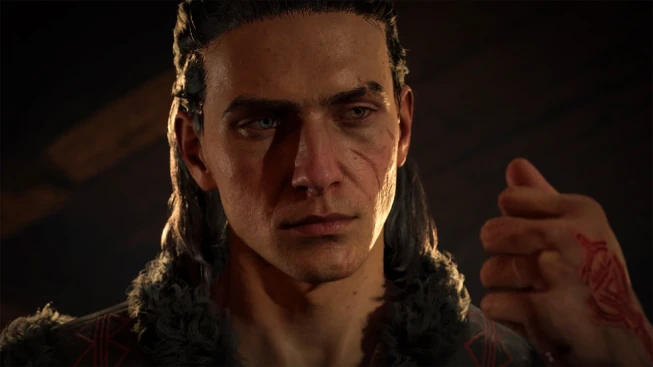
You play as Coen of Rivia, also known as the Butcher of Sangora and the Black Wolf, who is transformed into a Dawn Walker after the vampires take control of his home.
A Dawn Walker can move through daylight without suffering the usual consequences associated with being a vampire, giving Coen a very different role within this supernatural world. The central story is personal from the beginning because the vampires take your family, leaving you with one clear objective: bring them back.
That freedom becomes clear as soon as you finish the prologue. Rebel Wolves has confirmed that every path becomes available at that point, with quests and activities acting as optional pieces that help shape your version of the adventure.
You can even head straight toward Brencis' castle and attempt to take on the vampire lord who rules the valley, meaning the game does not force you to follow a traditional progression route before reaching its biggest confrontation. The developers have openly encouraged players to try it, with an early victory being described as something worthy of legend.
That approach should make The Blood of Dawnwalker especially interesting for players who enjoy nonlinear RPGs. Instead of giving you a fixed sequence of objectives and expecting you to complete them in a specific order, the game is built around letting you decide what deserves your attention.
You could spend your time exploring, completing side activities, or working toward the larger objective, while another player could potentially take a much more direct route through the story. That freedom also means that different players can create very different experiences from the same game.
The scope of the game has also grown considerably during development. Rebel Wolves originally targeted a campaign of around 30 to 40 hours, but later playtests reportedly reached between 55 and 70 hours for a full playthrough, although it remains unclear whether that figure represents a standard completion or something closer to a more thorough run.
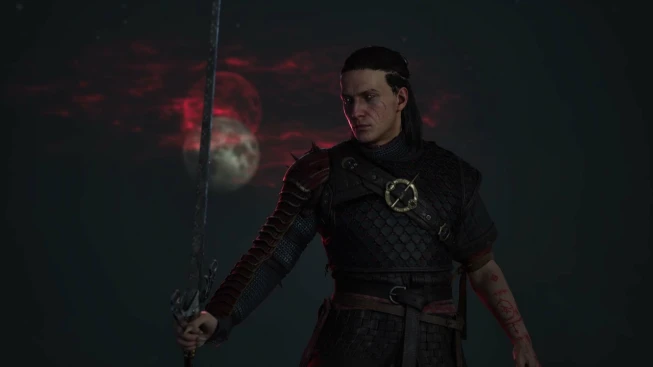
Interestingly, the developers are not trying to make the biggest possible map.
The world is designed as a smaller, denser valley, with the closest comparison being The Witcher 3's Blood and Wine expansion rather than a massive continent-sized open world. You will not have horses or mounts to cross the landscape, although fast travel is available and Coen can transform into a wolf to cover ground more quickly.
That philosophy also affects how much of the game you will actually see during one playthrough. According to the developers, you can expect to experience around 60% of the game's content at best in a single run because branching quest lines can lock away certain outcomes once you make important decisions.
Two players could therefore finish the game while experiencing substantially different stories and activities. Rather than treating replayability as an extra feature, Dawnwalker appears to be building it directly into the structure of its world and quests.
Combat has gone through an interesting evolution as well. Earlier gameplay footage raised some concerns about how the fighting would feel, but more recent showcases have made the system look considerably more promising.
When Coen is fighting as a human, he uses swords alongside signs or hex-based magic, while melee combat relies on a directional system where you choose whether to attack or block from different directions. Perfect blocks can also function as parries, creating a system that rewards you for paying attention to enemy attacks rather than simply repeating the same moves.
The system inspired Kingdom Come: Deliverance, particularly with its directional swordplay.
At first, controlling the different directions may feel awkward, but the idea is that your skill improves through practice rather than simply increasing because your character gains better statistics. The director compared the learning process to Guitar Hero, where you initially struggle to hit the correct inputs before eventually becoming capable of handling much more complicated combinations.
At the same time, the game does not appear to force everyone into the most demanding version of the system. The directional combat is optional, and an autoblock setting can reportedly handle parries even when you press the wrong direction.
That gives you the choice to engage with the more technical system if you want additional depth, while still allowing you to approach combat in a more accessible way. It is a useful distinction for an RPG that is clearly trying to support different play styles.
Things change significantly once night arrives. As a vampire, Coen gains access to abilities such as Shadow Step, a short-range teleport that opens up different movement and combat possibilities. Vampire Coen can also reach areas that are inaccessible to his human form, while his health bar doubles as a hunger meter that forces you to consider how you recover after taking damage.
That feeding system introduces a moral choice into something as basic as healing.
Taking only a small amount of blood allows your victim to survive, while draining someone completely means you have killed them simply to make yourself stronger. You can also feed on animals if you want to avoid harming people, although drinking blood makes Coen stronger while contributing to a corruption-style push-and-pull system.
The interface and inventory systems also carry a clear connection to The Witcher 3. The menus shown in gameplay presentations are heavily inspired by that earlier game, which is understandable considering the developers' background.
More importantly, Dawnwalker seems to be taking several familiar ideas from that experience and reshaping them around its own vampire-focused world. You can see that influence in the interface, but the larger design philosophy seems to be about giving you meaningful choices rather than simply recreating an earlier RPG.
.jpg)
One of the game's most unusual systems is its 30-day and 30-night limit for saving your family. At first, a countdown like that might sound restrictive, especially in an RPG where you normally expect to spend hours wandering around, collecting items, and completing optional activities.
However, time does not pass continuously while you explore and instead advances when you complete specific quests and activities. The game tells you how much time an activity will consume before you commit to it, allowing you to make informed decisions about how you spend your limited days.
This means you can still explore the valley for as long as you want without automatically burning through the calendar. The important distinction is that major actions have a cost, while simply wandering around does not. If you fail to save your family within the 30 days and 30 nights, the game does not simply end or force you to reload an earlier save.
The time system therefore seems less interested in punishing you and more focused on making your decisions matter.
Every major quest becomes a choice about whether that activity is worth spending part of your limited timeline, while the consequences can shape how your story unfolds. That fits naturally with the game's larger role-playing philosophy, where your decisions can close off certain quest paths and create different outcomes.
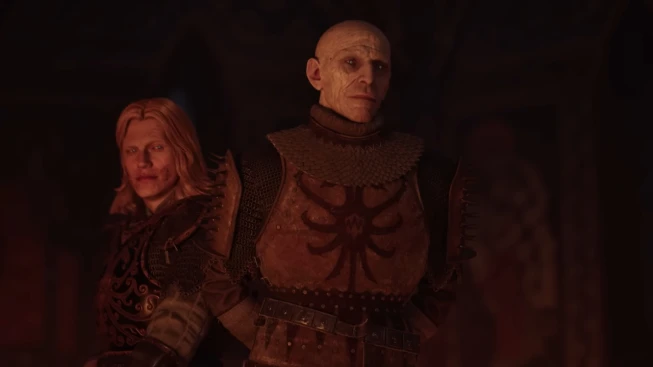
The infamy system adds another layer to those decisions. Brencis and three officers control Vale Sangora, and causing problems for Brencis increases your infamy. Instead of functioning like a traditional reputation meter where merchants simply dislike you, this system directly affects the enemies controlling the region, making them increasingly alert to your actions as your infamy rises.
Each officer has an individual anger meter toward Coen, and filling one of those meters unlocks a unique quest connected to that vampire. Taking down the officers can also make the eventual confrontation with Brencis easier, creating another reason to engage with these optional encounters.
On the other hand, leaving them alive could make the final confrontation harder, since those characters may still be around at the end. The result is another system that connects your optional decisions directly to the main story rather than making side content feel completely separate.
Editor, NoobFeed
Related News
No Data.