
Crimson Capes Review
PC
Crimson Capes: Duels, Discipline, and the cost of complexity.
Reviewed by Joy Rahman on Feb 18, 2026
Crimson Capes is not a sequel or part of an existing series. As a major independent project, it aims to carve out its own place in a genre already full of Souls-like games, Metroidvanias, and 2D action platformers. It looks like another side-scrolling Souls-like game at first glance, with its dark tone, brutal combat, stamina systems, and checkpoints that look like bonfires.
But after playing it for a while, it's clear that it's going for something different. Crimson Capes isn't trying to be a big RPG or a complicated Metroidvania. Instead, it's more about the fantasy of grounded, deliberate fighting.
.jpg)
Crimson Capes is a 2D action-adventure with a partially open world that is a lot like Souls and has a bit of arcade thrills.
As a result, the game feels both familiar and new. It's sometimes clever and sometimes too hard to understand, but it's never boring. The idea behind it is simple, but it works. You play as Milon from The Tempest, who is in charge of a secret group of witch hunters called the Crimson Capes.
The kingdom is in danger from a plot by powerful wizards, and the Capes have to do things that aren't morally right to stop them. This isn't the perfect dream of a knight in shining armor. These are agents doing work that "real" knights aren't allowed to do in public.
The mood is always dark and oppressive, with destroyed towers, cursed woodlands, and strange plots that make me think of the dark side of the Middle Ages. You learn about the tale through short talks, the setting, and a system called "blood memory" that gives you access to fresh lore as you beat different kinds of opponents. It doesn't have much story in the same way movies do, but it creates a world with enough mystery to make up for the constant violence.
At times, there are even dry jokes that break up the sadness, which keeps the experience from becoming too one-dimensional. The mood sometimes reminds me of the dark, monster-hunting mood of a dark fantasy epic, but Crimson Capes is still strongly focused on action over drama.
Crimson Capes is mostly about moving, getting good at fighting, and exploring. In a mostly open structure, you can go through caves, woods, magical towers, ruins, and dangerous areas. About 80% of the world can be reached early on, but some areas can't be reached until you have certain items, like a gem needed to hurt a certain creature.
The game has a light Metroidvania feel, but progress is more based on gear and bosses than on standard ability locks.
Beds of flowers all over the world let you move quickly and heal quickly. Resting on them restores resources and summons new enemies, in a loop similar to the one in Souls. There are checkpoints before the big bosses that make retries quick and not too painful, which is very important because the difficulty goes up quickly.
.jpg)
Character changing is a big part of the game. At rest points, you can switch between the four characters you can play as. Milon is the leader of the balanced longsword. One character holds a huge blade that hits harder and slower. Another person uses twin daggers and aims to deal a lot of bleed damage at once.
Fey, the ninja-style fighter, stands out because of how quickly she hits, how mobile she is, and how she can stack bleed to kill bosses in the right situations. Each has their own set of skills and magical abilities, such as lightning hits, fire control, and other abilities that help them in battle. Multiplayer adds more depth by letting you work together as other Capes or invade as an enemy "death blade."
But only the host's progress is saved, so it's more of a side game than a campaign that everyone plays. Crimson Capes's combat is both its best and worst part. It has many rules that require you to pay close attention and time your moves. There are light and heavy strikes, as well as blocking and dodging, and players can get invincibility frames for moving precisely.
You can also parry, but it works differently than in most Souls-like games; you have to pay close attention to the enemy's energy or poise bars before it can work.
Feinting is an extra layer of strategy that lets you pretend to attack to get your enemies to commit too quickly. Taunting, on the other hand, can change your enemies' behavior, prompting them to look for openings. The way each character fights is different because they have different discipline skills or combat styles. Magic attacks add a new level of offense and crowd control.
The "combat flow" timing system is what makes combat so fun. Players are rewarded for chaining hits in a rhythmic way that increases speed and damage. These systems work with enemies' stamina meters to make fights feel more like battles than just random button mashing, though new players may find them too complicated at first.
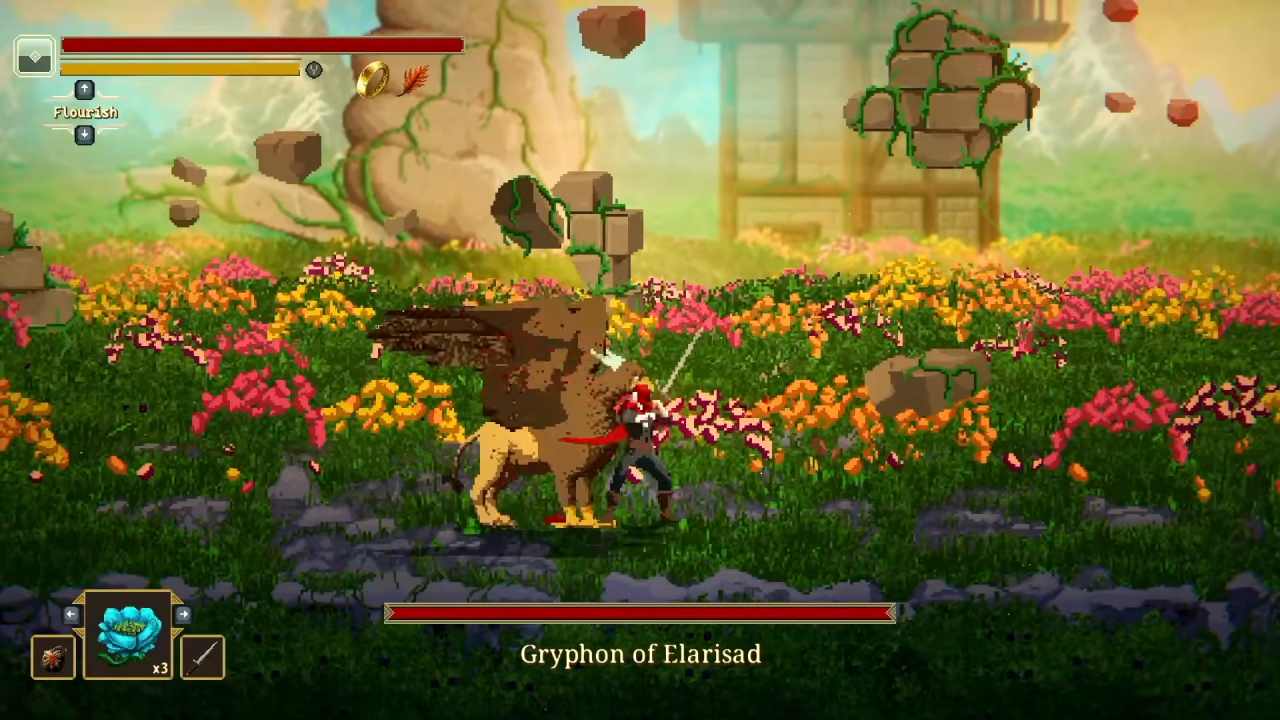
The battle flow system rewards the rhythm. Your next moves will come out faster and do more damage if you time them right after you land a hit. When you get into the flow of battle, it feels great—fluid, deliberate, and satisfying. Every duel turns into a dance of time, space, and waiting.
Enemies, especially bosses, use energy bars. Tougher enemies have a yellow stamina meter that needs to be used up before certain moves, like parrying, can be used. This meter is usually drained by sustained pressure or by magic strikes, such as calling down lightning. You can't get critical hits until your energy is gone.
When compared to many Soulslikes, parrying is backwards. Instead of lowering your stamina, parries only open vital windows when your stamina is already low. This style choice is brave, but some people don't like it.
It's great when battles go well. Hits feel heavy, sound effects add to the effect, and finishers like beheadings and other brutal killings are rewarding. Meeting someone one-on-one feels like a real fight. It's fun to learn how enemies move, and once you do, you can run right past small enemies without any problems.
The boss checkpoints are in good spots. You can read the map. It's easy to travel quickly. The game is built to respect your time. One of the best mechanics is probably the stagger method, by improving disciplines to do more damage while stunned, it's easy to do real harm to bosses. Fey's ability to move quickly and stack bleeds gives you real tactical variety.
Boss reading can be a big problem. Some rely on strikes that happen very quickly and are hard to predict because there aren't many visual or audible clues. Most of the time, you guess instead of responding. That changes how hard it is from "challenging but fair" to "sometimes frustrating."
Pressure after a hit is harsh. Once a boss hits you, they tend to stick with you. There are very few healing windows, and retreating can trigger gap-closing strikes. When players are stunned for longer than enemies, this can feel too much. Some parts of the discipline system are not always clear. For example, flourish moves are meant to surprise opponents. Sometimes it's not clear when or why it's helpful.
As if that wasn't bad enough, the game throws almost all of its mechanics at you right away. It can be hard to keep track of feints, flow timing, stamina loss, magic management, supplies, and skill trees. Some systems seem to be there more to make the game unique than to be necessary, and boss pacing often makes it hard to use slower, more complicated features.
.jpg)
You get XP by killing enemies, which is usually done in satisfyingly aggressive ways. With this XP, you can access new attacks, buffs, and discipline upgrades in the skill trees that are special to your character. However, there is no normal stat leveling. In a typical RPG, you don't grind to get more raw health or power.
Instead, growth makes your tools better. Gear, like armor, rings, and consumables, changes stats and gives you benefits in certain situations. You can get more potions, bombs, healing things, daggers that you can throw, and explosive dust clouds.
Because stats don't scale, bosses are still skill checks. You can't just out-level a problem when you're stuck. You need to get better at performance, or you could try using a different character, like Fey, to take advantage of bleed stacking. This design encourages skill over grinding, but it makes it harder for players who like to see their stats grow slowly.
Crimson Capes is beautiful to look at. The sprites are well-drawn, the images run smoothly, and the fighting moves feel real. Some scenes, especially the sword swings and dodges, look like they were rotoscoped to look real.
Lighting that is built into the environment can add depth and mood to places like ruins, magical towers, and forest clearings. Each region has its own feel without losing the overall style.
There are some small problems. Some bosses use screen-blur effects that some players may find uncomfortable. It would be nice to have a toggle for these kinds of visual illusions. But all in all, the art direction is one of the best things about the game.
Combat weight is strengthened by sound design. The sword has power over the land. Magic is full of power. Finishers are very rough. Moody background music adds to the atmosphere and builds tension without detracting from the action. Even though it's not very innovative, the sound works well with the gameplay loop.
.jpg)
To make things fairer, the soundscape should have clearer audio telegraphs for boss strikes.
Other than that, the soundscape does a good job of supporting immersion. Crimson Capes is a big, complicated 2D action-adventure game that combines the structure of Souls with the energy of shooting games. The game's semi-open world, numerous playable characters, and complex battle systems make it a great sandbox for players who enjoy mastering it.
It's thrilling to fight flow, stagger management, and dodge time when everything works out. Duels are important. It gets stressful and skill-based when you fight a boss. The graphics are good, and the game gives you enough time between checkpoints. But its complexity can be overwhelming. Not all processes are clear or work well together. Boss readability problems can sometimes make the challenge level less fair. Parrying might annoy genre experts who were expecting the usual stagger reduction. Some methods seem more decorative than necessary.
This isn't a simple action game. You have to be patient, careful, and ready to die while you learn. Crimson Capes, on the other hand, is a great game for people who want to play difficult rhythm-based sword games in a dark and magical medieval world.
Contributor, NoobFeed
Verdict
Crimson Capes delivers satisfying, skill-based combat, striking visuals, and deep exploration, but its complex mechanics and punishing bosses may overwhelm some. For players who enjoy deliberate duels and dark fantasy.
80
Related News
No Data.