
Crimson Moon Review
PC
A compact dark-fantasy action RPG that mixes tough combat, flexible builds, and short runs into an experience that is rough around the edges but easy to enjoy with a friend.
Reviewed by Tahmid Mahi on Sep 02, 2026
Crimson Moon comes from Probably Monsters, a developer taking a different approach to the modern action RPG. Instead of building another enormous game that expects you to spend hundreds of hours chasing seasonal content, Crimson Moon focuses on something much more contained.
The game puts you in control of a Nephilim, a character who is part human and part angel, and sends you into the ruined city of Gildenarch. Probably Monsters has built Crimson Moon around a clear idea: you should be able to sit down, complete a meaningful section of the game, and walk away without feeling like you have barely made progress.
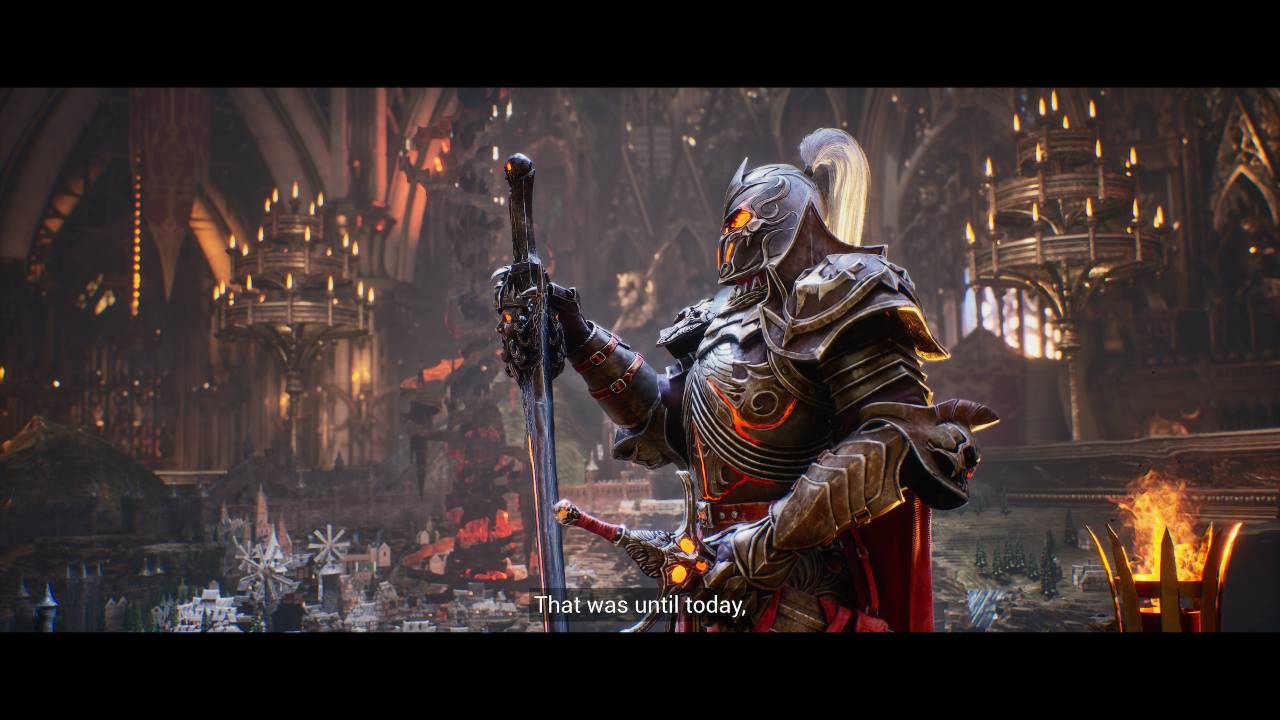
You can play alone or bring another player along for two-player co-op, and the game does not revolve around battle passes, seasonal grinding, or a constant stream of limited-time objectives.
Instead, you return to your hub, improve your character, choose another mission, and head back into the city. The formula has familiar Soulslike influences, but Probably Monsters gives it a more arcade-like structure that keeps you moving instead of asking you to commit your entire evening to one enormous area.
The story is centered on Gildenarch, a city overrun by demons and undead forces. As the Nephilim, you are sent there by the church to recover three Araxus stones and close the portal that has allowed these creatures to enter the world.
It is a straightforward setup, but it gives you a reason to keep pushing into increasingly dangerous areas while keeping the focus on the action rather than burying the game beneath layers of exposition.
Gildenarch works as the foundation for the game's atmosphere. You move through a city that has effectively collapsed under the weight of the demonic invasion, fighting your way through enemies while working toward the objectives of each run. The story isn't necessarily the strongest part of Crimson Moon, but it serves its purpose of providing context for the missions and a consistent setting for the combat.
Sanctus Clapius is your home base, where the different systems of the game come together. Go see the blacksmith to upgrade your gear and check out special offers; visit the merchant for consumables; talk to the character in charge of lore and boons; and collect bounties from the Nephilim commander.
Once you start a run, Crimson Moon gets a lot more focused.
You work your way through a series of levels, battling enemies, collecting equipment, completing objectives, and ultimately confronting bosses. Some missions might involve gathering relics or completing a specific objective before heading to a gate to claim the chest on the other side.
The biggest draw of this structure is that you don’t have to complete everything in one sitting. Complete a level, keep your progress and rewards, and return later. Even with only 15 or 20 minutes, you can still accomplish something meaningful. If you have more time, you can continue to another level and work toward completing an entire run.
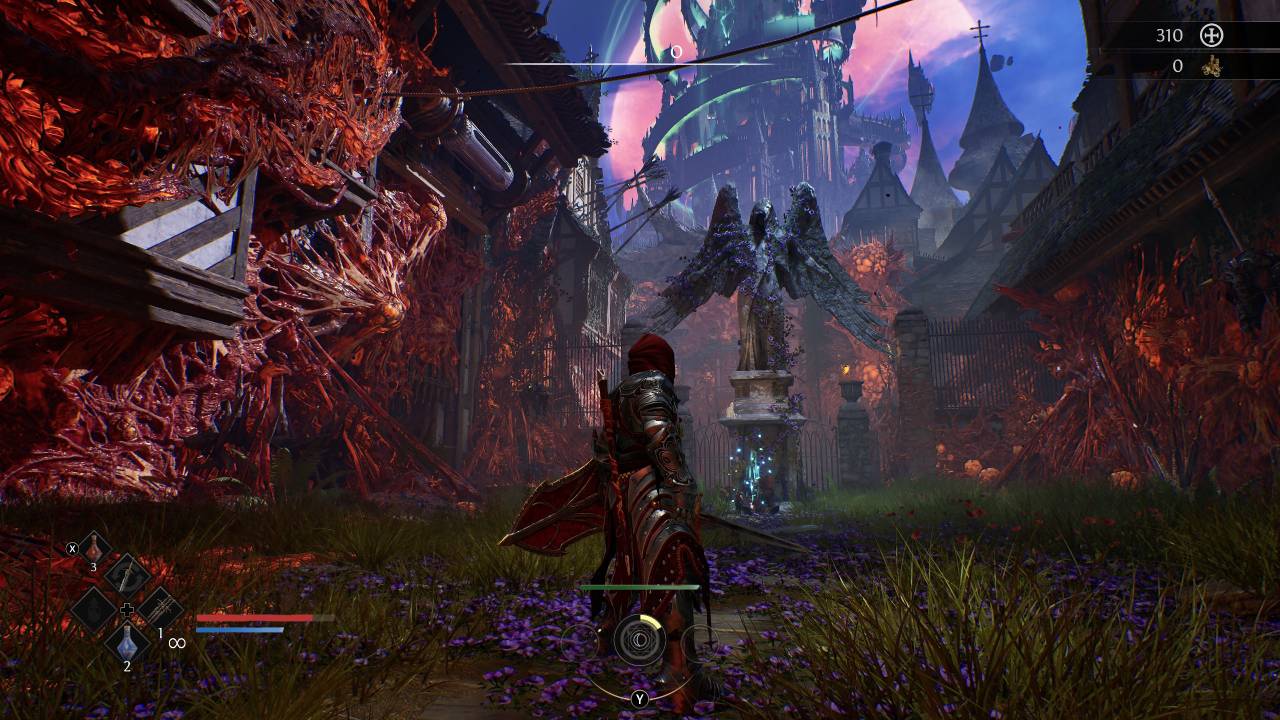
There is a risk attached to pushing further, though. Each level gives you a limited number of lives depending on your chosen difficulty, represented by helmets in the HUD. Losing those lives forces you to play more carefully, especially when you are carrying valuable loot from a successful run.
In co-op, you and your partner share lives, so you both have to be careful about constantly going down. Defeating a boss restores your lives, but if you lose all of them before reaching that point, the run ends and the equipment you collected during it can be lost.
That system adds a little more tension to every run. Gear that has already been purified remains yours permanently, but new equipment collected during an active run still carries a risk. This makes each choice feel even more important as you have to weigh up the value of new loot against the potential loss of it.
You can save certain pieces of loot to deal with later with the reserved-item system, which gives you a way to protect interesting equipment while still keeping the run’s pressure on. This is especially useful if you find something for a future build but don’t want to risk losing it before returning to the hub.
Loot comes in several tiers, starting with common white equipment and moving through green, blue, purple, and legendary yellow gear.
The better gear can grant better stats and extra bonuses, and even similar-looking gear can be entirely different depending on the bonuses. Epic gear can also be upgraded, so you are not simply throwing away everything that is not legendary.
This feeds directly into Crimson Moon's build system. There are no traditional character classes, so you are not locked into being a warrior, mage, or another predefined role. Instead, it’s your equipment that determines how you play. You can equip armor for your head, torso, legs, and arms, as well as a ring and talisman. Your weapons are another major component of your build.
You can use a one-handed weapon & shield or swap to a two-handed weapon. The first gives you more defensive options, while the second tends to hit harder. The weapon selection includes one-handed swords, axes, and hammers, as well as two-handed axes, halberds, and spears.
It is not the biggest weapon roster, and additions such as greatswords or larger clubs would have made the system more varied, but there is enough here to create noticeably different setups. The different weapon skills and stats also help make similar-looking weapons feel more useful for different playstyles.
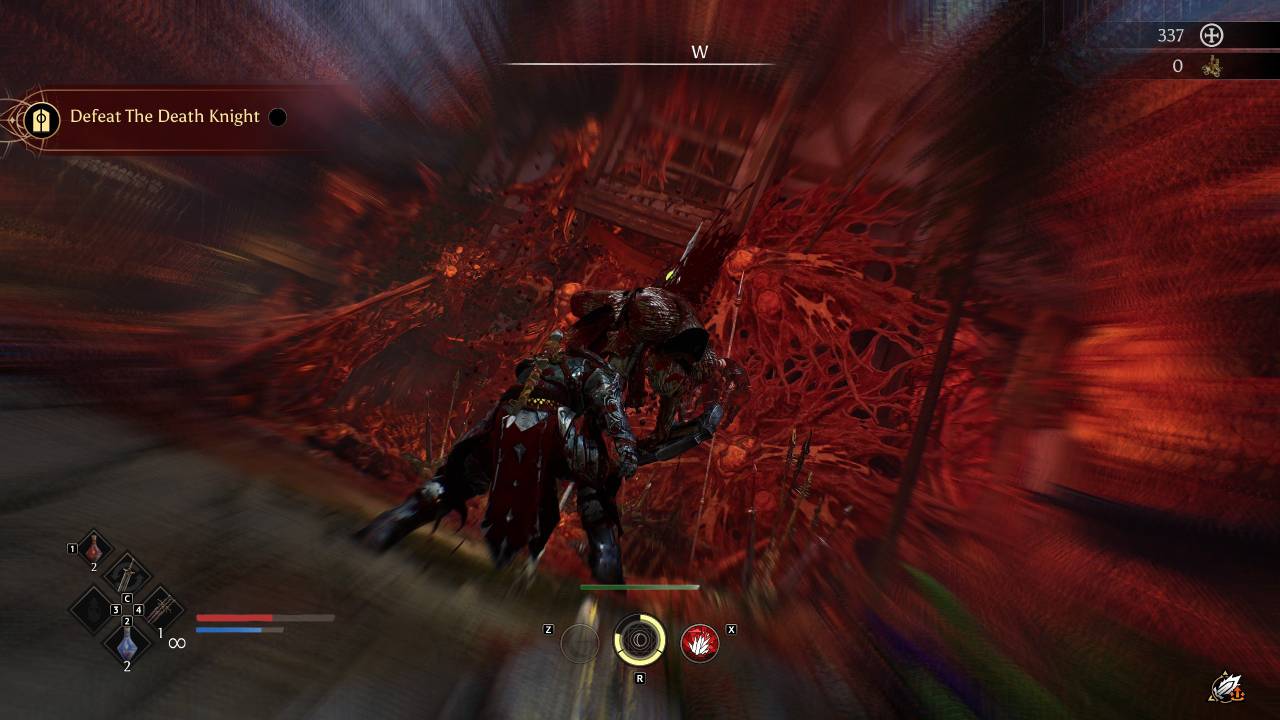
You can also build around different damage types and effects. Poison, physical damage, fire, frost, and light can all influence how your character handles enemies. One build could be fire-based, another could be poison-based, and another could be direct physical damage.
Angel forms add another layer to this system. They function as a powerful transformation that provides you with access to abilities that can change the rhythm of a fight. Different forms can emphasize different approaches, with some providing a tougher, more direct combat style and others leaning toward spellcasting.
The main problem with the progression system is that you cannot freely rebuild your character between every level of a run.
You can equip newly discovered items during a mission, but your broader loadout has to be properly adjusted before starting the run. That feels unnecessarily restrictive in a game that puts so much emphasis on build experimentation. Finding an intriguing item halfway through a run would be more useful if you could properly rebuild around it before entering the next level.
The progression also does not rely heavily on traditional XP grinding. Instead, much of your improvement comes through equipment, upgrades, currency, perks, and the choices you make during runs. The blacksmith uses souls-like currency for upgrades, while you spend gold on other purchases and improvements.
And that system keeps the focus on playing, not on grinding for a massive exp bar. You won’t spend hours grinding the same enemies over and over to gain enough XP to level up. You naturally advance through completing runs, finding better gear, upgrading useful items, and experimenting with different builds. It is a good fit for the game's short-session philosophy.
Combat is where Crimson Moon borrows most heavily from Soulslike games, and on PC, you have a full range of keyboard and mouse controls to manage your attacks and defenses. The left mouse button is for light attacks, and the right mouse button for heavy attacks. Blocking and parrying are performed using the assigned keyboard controls.
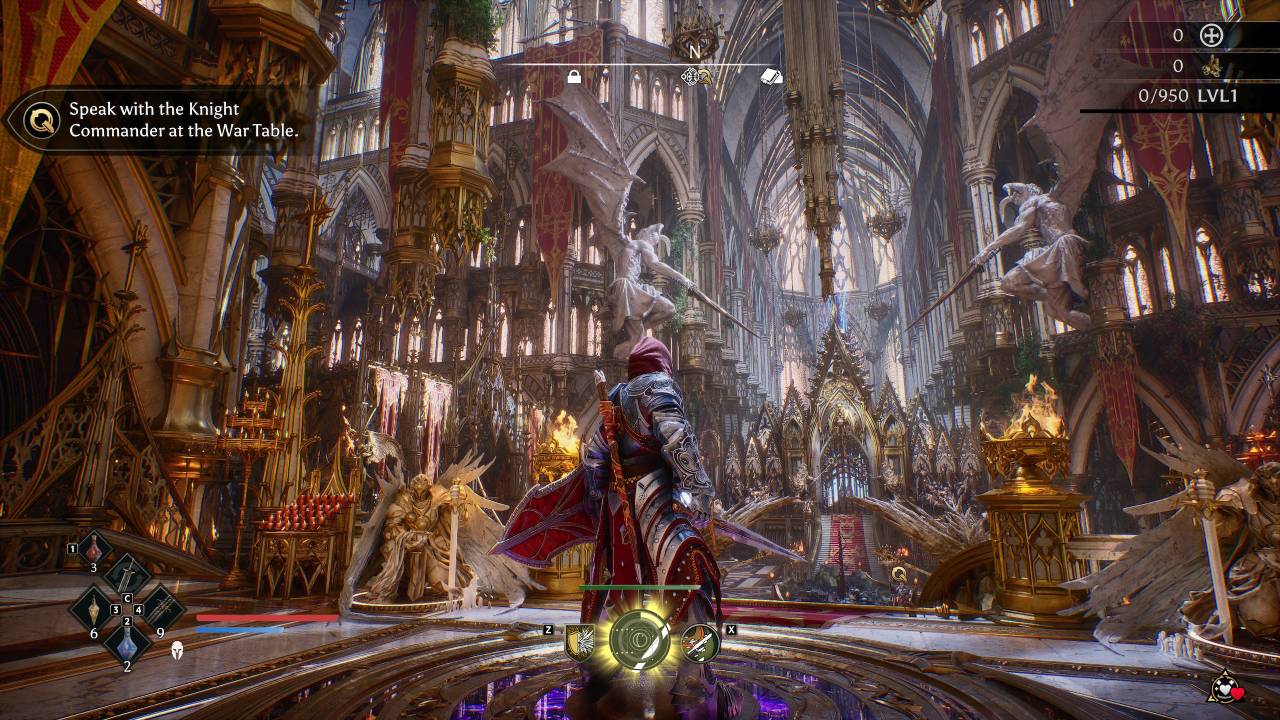
You can dodge to avoid incoming attacks, as well as perform backstabs, jump attacks, and weapon skills depending on your equipment. Your weapon skill is activated through its assigned key, with the ability changing based on the weapon and shield you have equipped.
The basic system feels satisfying when everything connects properly.
Attacks have weight, parries give you a satisfying opportunity to punish enemies, and executions provide a strong payoff after you successfully create an opening. You also have to pay attention to positioning and timing instead of simply standing in front of enemies and attacking until their health bars disappear.
The problem is that Crimson Moon can sometimes get in its own way. Some special attacks may appear to connect but do no damage, and sometimes enemies will seem to ignore hits that should have connected. Fire-based attacks can also behave inconsistently, and interrupting a special animation can still consume your mana even if the attack never successfully connects.
The camera is the bigger issue. Large enemies and narrow arenas can make the camera move around aggressively, and some boss encounters become difficult for the wrong reason. Instead of concentrating entirely on attack patterns and positioning, you can find yourself fighting the camera to keep the enemy visible.
There are also smaller combat and control issues that add up. Gold and consumables must be picked up manually, and sometimes your full resources prevent you from collecting an item until you use something first. The game also lacks proper button remapping, a basic quality-of-life feature that would make the controls easier to personalize.
Despite those problems, combat becomes much more enjoyable when you start experimenting with builds. A fire-focused setup can feel entirely different from a poison build, and even within one damage type there are different ways to approach the system.
The co-op is therefore one of Crimson Moon's strongest features. Playing with a friend turns the game's difficult encounters into something you can approach together, and the two-player limit keeps the action relatively focused.
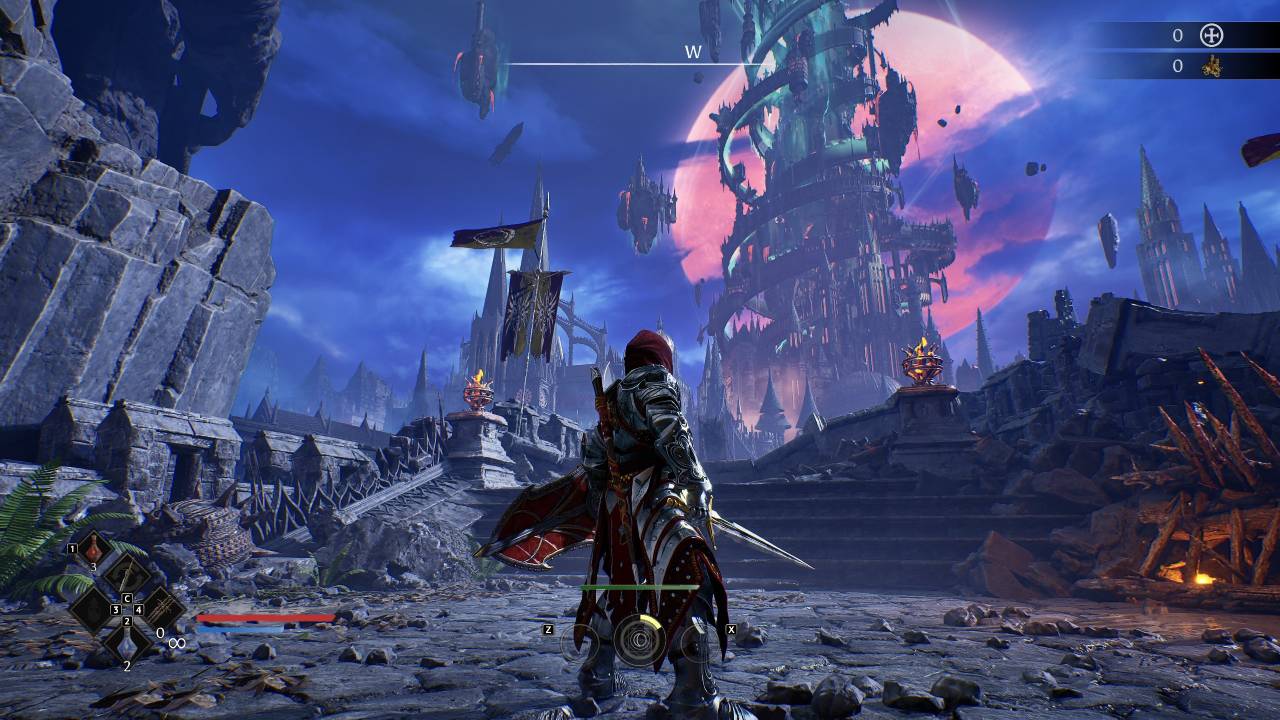
Crimson Moon is going for a stylized fantasy look, rather than a realistic look.
Character designs are over-the-top, featuring heavy chunks of armor that give the game the look and feel of older fantasy action RPGs. It may not be to everyone’s taste, but it gives the game a recognizable identity.
The ruined environments and demonic enemies fit the setting perfectly, and the larger bosses have designs that set them apart from regular encounters. The biggest visual problem again comes back to the camera.
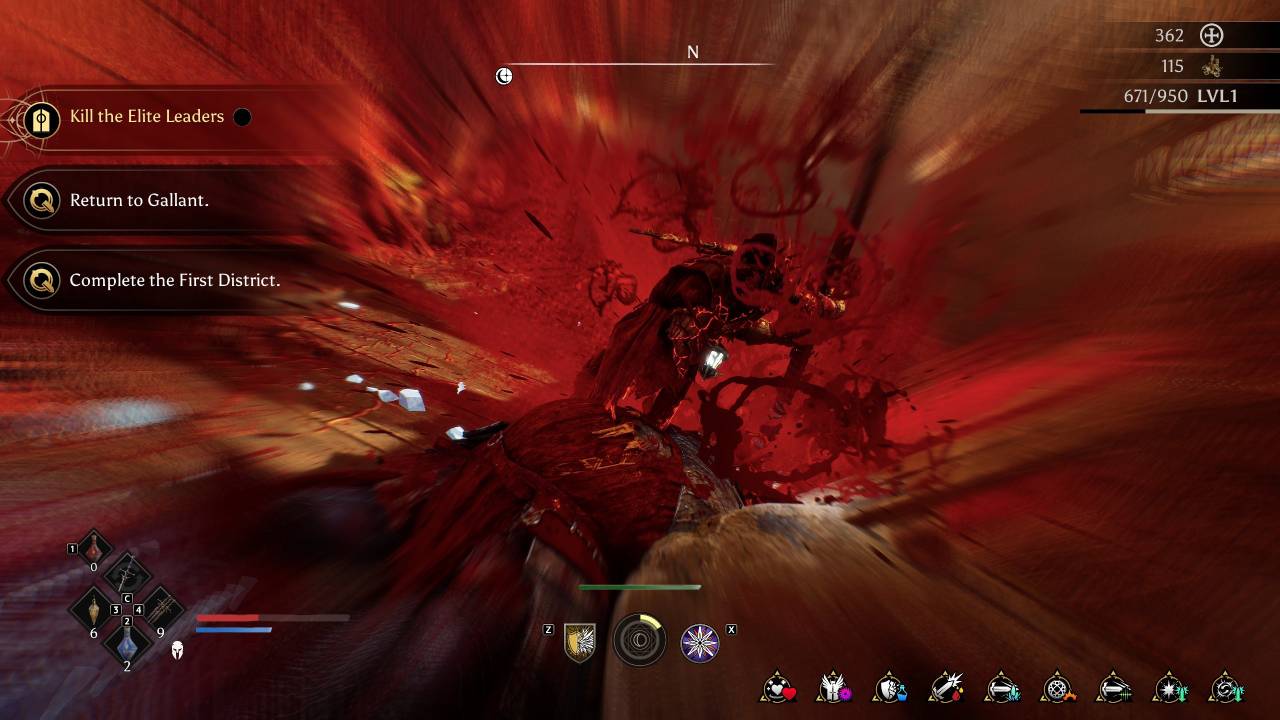
When it behaves properly, the art direction is easy enough to appreciate, but during chaotic fights, the camera can make even well-designed encounters frustrating to look at. This issue is especially noticeable during boss fights, where keeping track of the enemy can become just as difficult as avoiding its attacks.
The sound design supports the combat effectively. Weapon impacts feel meaningful enough to make attacks feel meaningful. Proper audio feedback for parries, executions, and special abilities, along with environmental sounds and music, further reinforces Gildenarch's darker atmosphere.
The biggest takeaway after spending time with Crimson Moon is that the game knows what it wants to be. It is not trying to become a massive open-world RPG, and it does not need hundreds of hours of content to justify its existence.
Instead, it gives you short runs, challenging combat, build experimentation, co-op, and enough loot to make returning to the hub and preparing for another mission worthwhile. Each run also gives you a reason to try a different setup, especially when new equipment or perks open up another way to approach combat.
At the same time, you can see where the game could have been more polished.
The camera needs work, some combat interactions are inconsistent, inventory management is more restrictive than necessary, and the lack of button remapping is difficult to overlook. The inability to properly change your build between levels also feels like a missed opportunity, especially because experimentation is one of the game's strongest features.
The $20 price helps put all of these issues into perspective. At a much higher price, these problems would be much harder to ignore. At $20, though, Crimson Moon becomes a much easier recommendation. You are getting a full action RPG experience without having to make a major investment upfront.
You are getting a compact action RPG with meaningful build variety, replayable runs, co-op, bosses, loot, and a progression system that respects the amount of time you actually have available. It gives you enough freedom to experiment with different builds without making the overall progression feel like a constant grind.
Crimson Moon is not perfect, and some of its rougher systems can become frustrating during longer sessions. Yet it remains surprisingly easy to enjoy because the core idea works. You can sit down for a short session, complete a level, improve your build, and stop without feeling like you wasted your time.
Probably Monsters has created an action RPG that understands the appeal of a focused experience. Crimson Moon may need more polish in several areas, but underneath the camera problems, occasional combat jank, and awkward quality-of-life decisions is a game with a solid foundation.
For $20, those strengths are enough to make Crimson Moon worth your time. It is a rough-around-the-edges Soulslike, but it is also a fun one, especially when you have a friend to play alongside. If future updates continue to improve the weaker systems and expand the available options, the foundation already in place could become considerably stronger.
Editor, NoobFeed
Verdict
Crimson Moon does have its rough camera and combat issues, but the $20 price tag, adjustable builds, short runs, and fun co-op make it easy to recommend to Soulslike fans looking for a more manageable experience.
70
Related News
No Data.