
Escape from Ever After Review
Xbox Series X|S
A clever RPG that turns storybooks into a corporate battleground.
Reviewed by Maisie Scott on Jan 26, 2026
Even though Escape from Ever After isn’t a sequel, it feels like the end of a very specific love letter to old-school turn-based RPGs, fairy tales, and the Paper Mario series in particular. Sleepy Castle Studio worked on the game for years, slowly building interest with sneak peeks and a playable demo that showed off its unique art style and sharp writing.
From the start, it was clear that this wasn’t just following a trend or a desire for nostalgia’s sake. Instead, it tried to improve on well-known systems with self-assurance, fun, and surprisingly well-thought-out design choices. Escape from Ever After doesn’t try to be the first RPG ever; instead, it fits into a well-known niche and focuses on how well it does what it does.
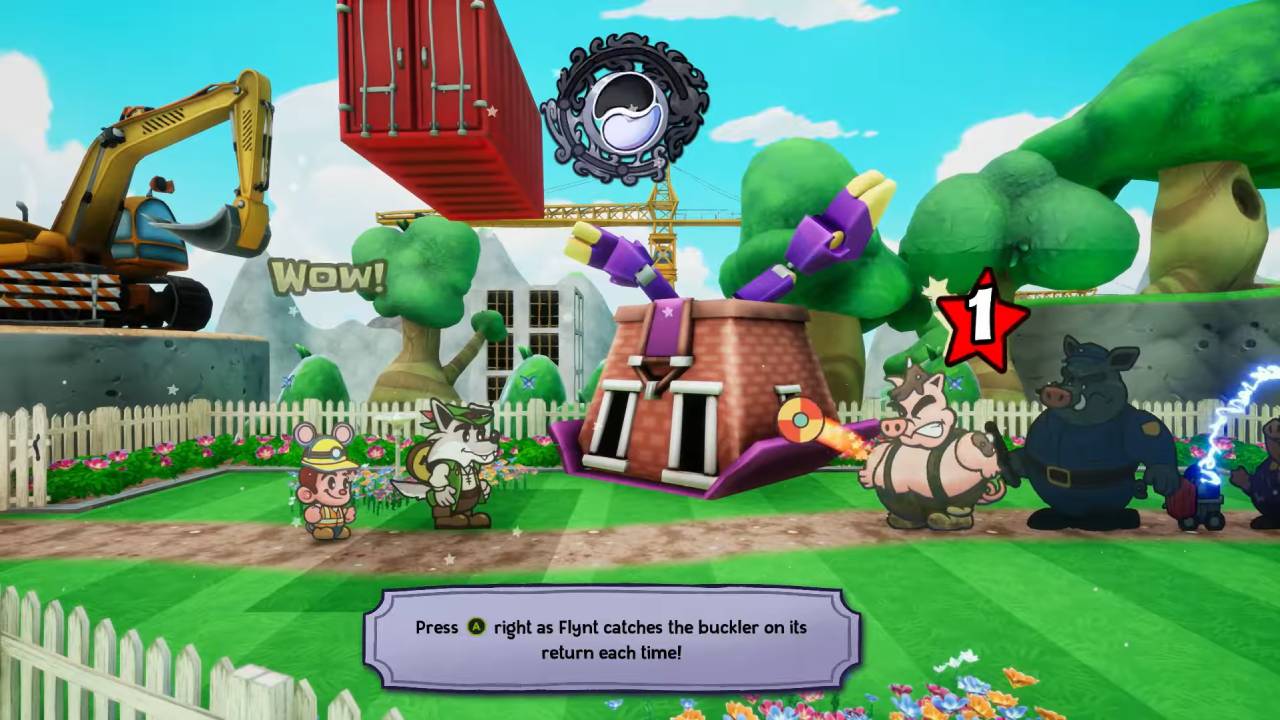
It is a fast-paced adventure game that combines standard turn-based combat, light platforming, puzzle-solving, and story-driven exploration. It’s not the technical novelty that makes it stand out, but how well it always knows its tone and audience. A game that knows exactly what it wants to be and doesn’t stray from that goal very often.
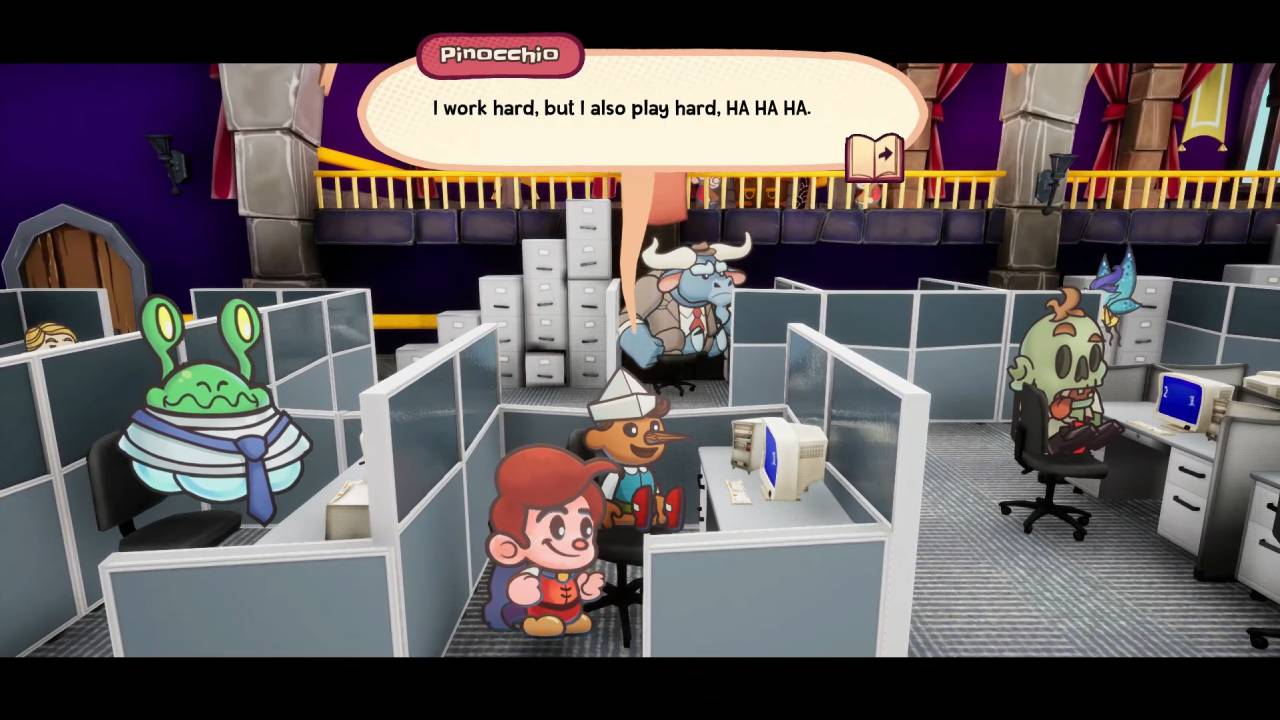
The beginning of the story is a smart twist on what you might expect. You play as Flint Buckler, a brave knight who is determined to face his worst enemy, Tinder the Dragon, and achieve his destiny. Flint doesn’t find roaring flames or an exciting battle when he finally gets to the dragon’s castle. Instead, the castle has been turned into a clean office space with desks, chairs, and company logos.
Ever After Inc., a real company, has started to invade storybooks, take their resources, and change them to make money.
When Flint refuses to join the company, he is immediately locked up and teams up with Tinder, whose size and power have been lowered by the company. From there, the trip continues through several storybooks based on old fairy tales, but with corporate interference changing each one.
Well-known characters like Little Red Riding Hood, the Big Bad Wolf, Mother Goose, Dracula, and others show up as employees, interns, or unhappy workers who are stuck in Ever After Inc.'s plan to grow. One of the best things about the game is the writing. There is a lot of humor that isn’t forced, and the mix of fairy-tale charm and purposely annoying business jargon works well.
Along with the jokes, the story sometimes delves into more serious topics, like identity, purpose, and what happens when stories stop being their own. The knowledge of the fourth wall is just right to make you feel smart without breaking the flow of the story. Although the last act stumbles a bit with a weak climax and a less powerful final confrontation, the first 90% of the story stays constantly interesting and sure of itself.
At its core, Escape from Ever After is an adventure RPG where you explore, fight, and talk to other people. Each storybook world has a main road that you can follow, but there are also side quests, collectibles, hidden paths, and puzzles in the environment. Light platforming is used for movement, and hopping and moving around feel a little heavy but forgiving.
You will never be punished heavily for falling off platforms or into danger because you will always respawn quickly and only take damage in battle.
A clear journal system keeps track of goals while exploring, making it easy to stay on track without any distracting markers. When you’re not on a mission, you can go back to an office hub and do things like check your emails, handle quests, decorate your workspace, and listen to music tracks you’ve unlocked. This hub adds to the satire of the game and gives you a break between stories.
The information on the sides is important. You can choose to do anything from simple jobs to long quests that take place in multiple worlds.
These things don’t really feel like fluff. Instead, they make the world more interesting, give side characters more personality, and give rewards that help you grow in a meaningful way, especially later in the game. The battle system is built on turns and draws a lot from Paper Mario, but it still stands on its own.
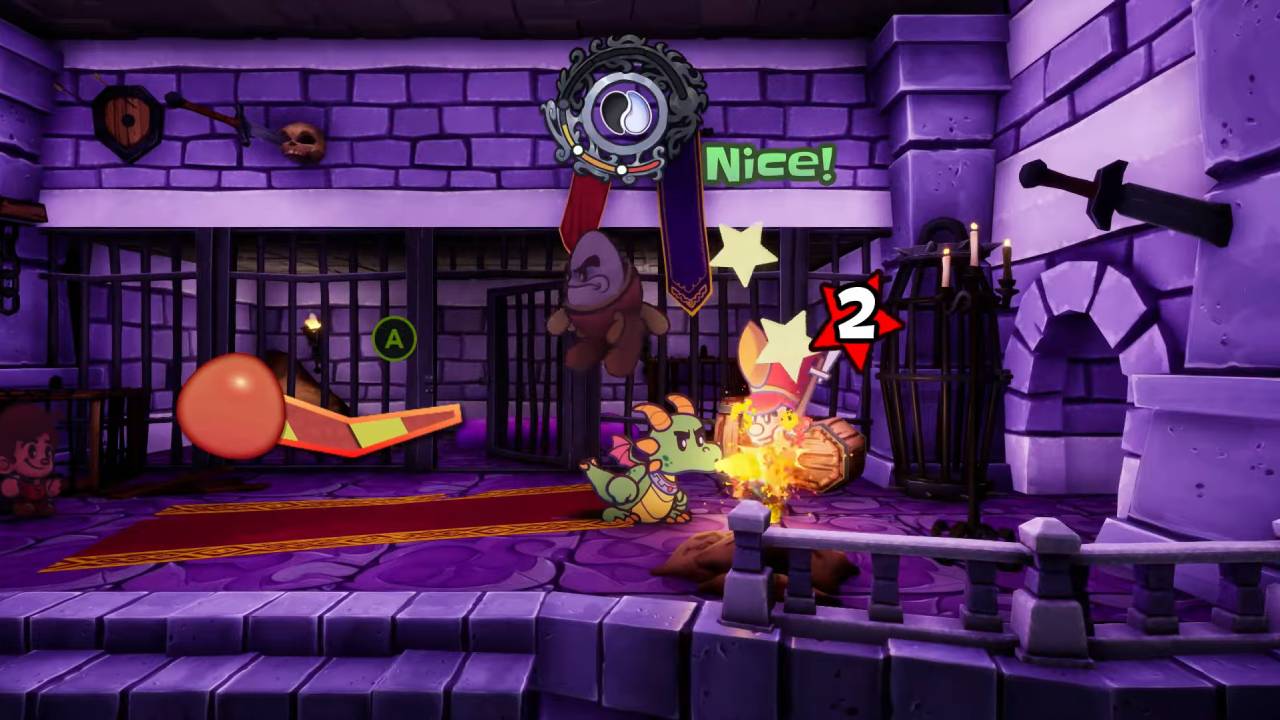
Inputs based on timing, situational knowledge, and knowing how the enemy will act are all important in battle. When you attack, you’ll often be told when to press a button to do the most damage. When you protect, you have to time your moves perfectly to block or cancel out hits. These mechanics make sure that encounters are interactive and that you’re not just picking orders.
Even though you finally get a full roster, only two people in your party can be fighting at once. You can switch between characters in the middle of a fight, but compared to RPGs with three or four active members, this can feel limiting. Still, this seems like a choice that was made on purpose to fit with the game’s themes, and fighting is balanced around it.
Enemy variety is slight but works. Some enemies hide behind shields that must be burned away or gotten around, others do state effects like poison or burn, and some enemies attack with close-range attacks even if they are not armed first. When you fight a boss, the method really shines because you can't just use force; you have to be smart about how you use the tools.
It seems like the increases in difficulty during boss fights are meant to see how well you understand how the game works rather than how well you can handle grinding.
There are lots of puzzles, but most of them are simple to solve. They range from easy interactions with the environment to a bit more complicated tasks like moving things around, lighting torches, or changing the environment with abilities. Even though they aren’t very hard, they offer a steady change of pace and keep you from getting battle fatigue.
The way levels work is one of the most interesting things about the game. Getting more experience doesn’t make attacks stronger.
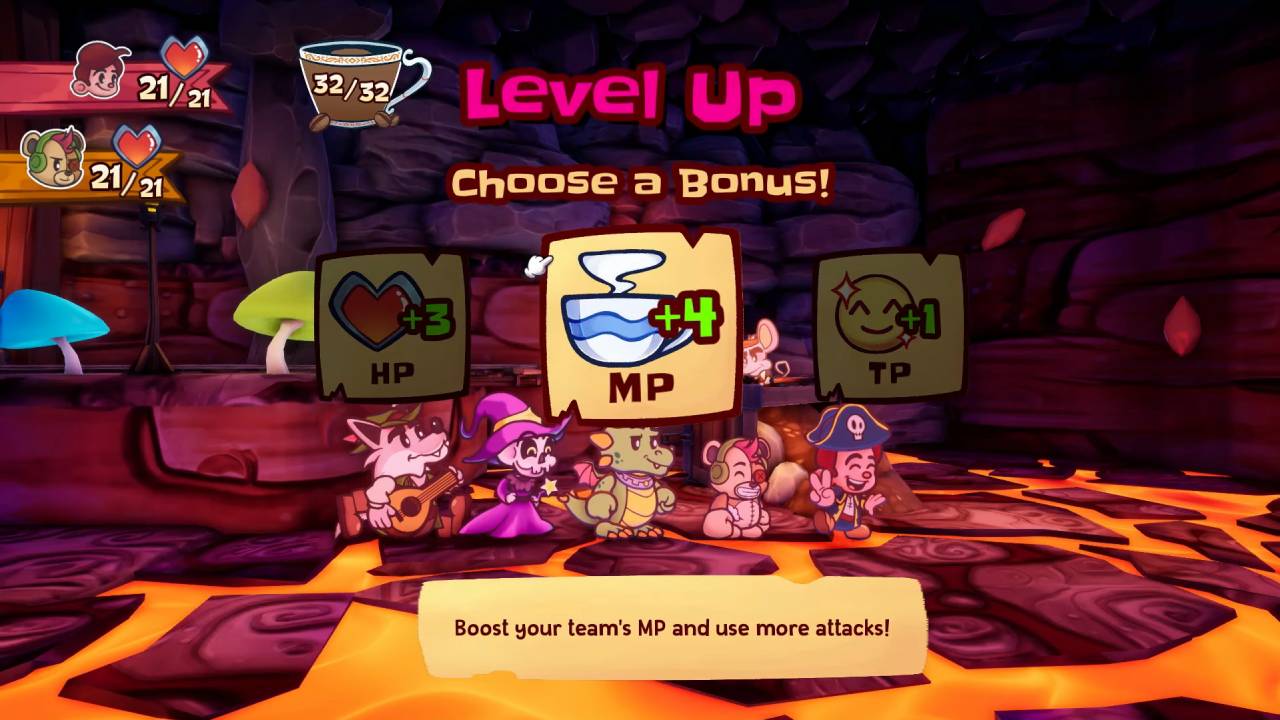
Every time you level up, you can pick between more health, more MP, or more TP. TP is used to add trinkets. Attack power only goes up during important parts of the story or when you get very rare items that fight for limited TP slots.
This way doesn't let you use brute force to boost your stats, but it does reward players who know how the game works. To win, you need to know how to use debuffs, learn how enemies move, and get the right gear. To give the game more meaning, trinkets let you see enemy health bars, protect you from poison, or heal you faster. The way the game goes on feels organized and intentional, and upgrades rarely feel like they were a waste of time.
There is a traditional knight hero in your party, along with a tiny dragon that breathes fire, a wolf singer, a magical witch, and a teddy bear that has been sewn up. They are all charming, but their growth isn’t the same.
The dragon and the teddy bear definitely get the most emotional and story-driven attention, while the others feel like they aren’t given enough attention. As in many RPGs, one party member may be forever benched because other characters are better at how the game works.
When it comes to bad guys, Mr. Moon jumps out as a really interesting bad guy. He makes a big impact and adds a lot of tension to the story. He is charismatic, unsettling, and fits in with the game’s corporate satire theme. The final boss, however, doesn’t live up to this level of quality; there isn’t enough emotional building or story payoff.
Escape from Ever After looks like Paper Mario because it combines expressive 2D character models with fully 3D settings. The art direction is neat, easy to read, and full of charm. The animations are lively, the fights are very clear, and the settings feel different from one tale to the next.
Some 3D assets look a little lower resolution up close, but they don’t take away from the general look or readability. The performance is very stable, with short load times, no visible frame drops, and not many bugs. The level of polish is really nice for a smaller company release.
The music on the soundtrack is very different, with jazz and big band sounds as well as noir-inspired tunes that fit each scene. Music goes well with travel and battle without getting in the way. Aside from some sound noises, there is no full voice acting, and this works out well for the game in the end.
The writing is good enough to carry scenes on its own, though the voice acting might have messed up the time and tone of some jokes.
The goal of Escape from Ever After is not to change the RPG genre in a big way. Instead, it takes care, humor, and a surprising level of consistency to improve on well-known ideas. Its fighting may go on too long at times, especially in parts with a lot of gauntlets, and the last act doesn’t have the story effect that earlier chapters promised. But these flaws don’t really take away from the game’s benefits.
What stays with you the most is how invested you are in the process. The writing is sharp, and the pace is fast. The system's award-winning understanding of grinding. The game respects your time, understanding, and attention. You should play Escape from Ever After if you like strong, emotional games with story-driven adventures, easy puzzles, and turn-based RPGs. It's not meant to hide behind its roots.
Editor, NoobFeed
Verdict
Escape from Ever After is a charming, well-paced RPG with smart features and well-written dialogue that puts skill over grinding, even if the ending doesn't quite work.
75
Related News
No Data.