
Mai: Child of Ages Review
PC
Mai: Child of Ages – Timelines of the soul.
Reviewed by Asura Kagawa on Oct 06, 2025
Mai: Child of Ages is one of the few games that dares to strike a balance between desire and closeness. The game was made by a small company with roots in experimental narrative design. It began as a simple independent prototype that explored changing the past and present.
Over the years, what started out as a simple proof of concept (letting a character live in the past, present, and future at the same time) has grown into a fully realized action-adventure 3D game with big story goals. Instead of building on an existing franchise, the creators decided to tell a completely new coming-of-age story that looks at the history of humanity while also focusing on deeply personal struggles with identity and choice.
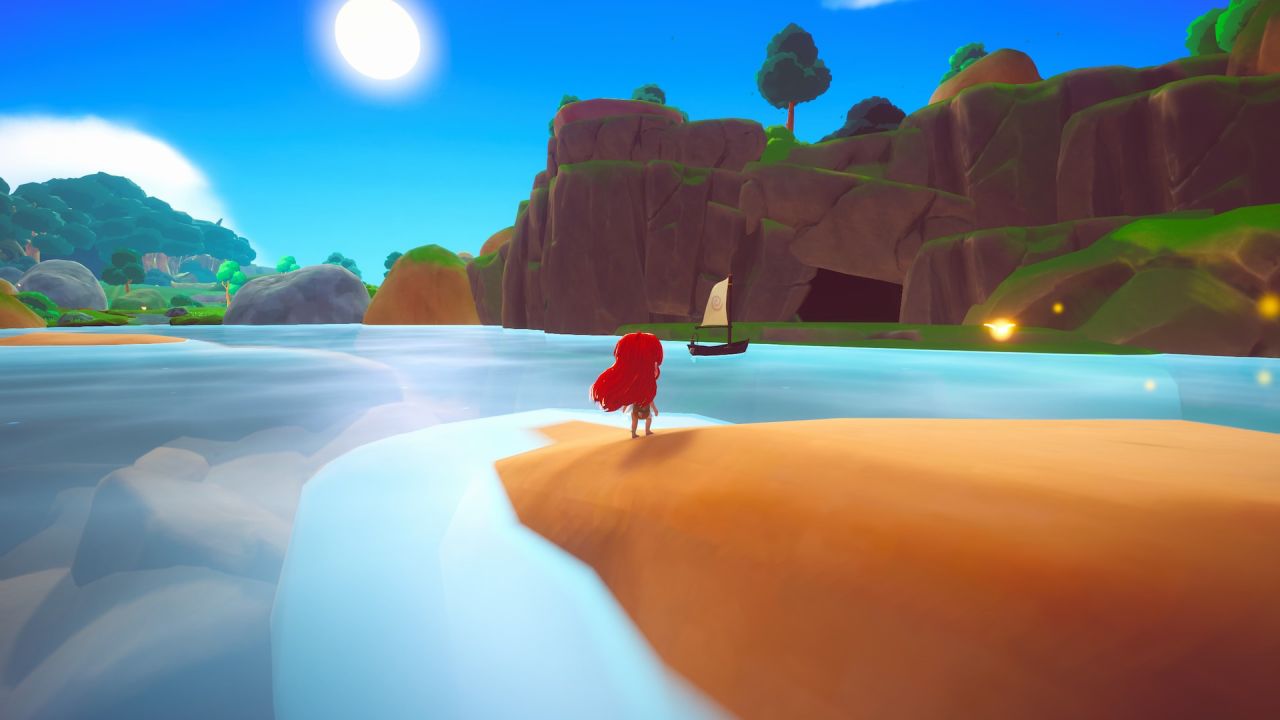
The end result is a piece that feels both creative and personal, blending the lines between high-concept fantasy and real-life emotional stories. People have said that Mai: Child of Ages is similar to Hellblade due to its philosophical tone and Celeste because of its highly personal emotional undercurrent, but it stands on its own.
Mai is the main character of the story. She is a young woman torn between three distinct selves: her past self, her present self, and the shadow of her future self. These states of being aren't just plot devices; she actually lives with them, which lets her handle the world in ways that no other main character can.
The game portrays her trip as a metaphor for growing up in a world still troubled by war, environmental damage, and cultural concerns. For Mai, time is not a straight line, but a flow. She can go back to her past, hear echoes of her future, and question whether or not fate is set in stone. The story is filled with philosophical speeches that prompt reflection on the mistakes people have made, the fragility of hope, and whether cycles of conflict can ever truly be broken.
A story that you will think about even after finishing the game.
The story really sticks with you because it uses both big and small details. Mai sometimes thinks about the future of societies, and other times she thinks about her own fears, hopes, and loneliness. In this way, the experience is both immense and personal at the same time. While the writing does sometimes get too preachy, it is clear that it is sincere, and when it hits the mark, it is deeply moving.
Mai: Child of Ages is a 3D action-adventure game at its core, but it doesn't play it safe. Almost everything you do in Mai: Child of Ages has something to do with how Mai sees time. To change the world, solve tasks, and find secrets, the player can switch between her younger, present, and future selves.
In the past, a broken bridge might have been whole and let young Mai cross, but in the present, future Mai might only find ruins—but those ruins might hide a way. This constant shifting alters how players navigate levels, transforming simple movement into a puzzle with numerous possible outcomes.
The movement itself is smooth and interesting. Mai can run, jump, climb, and glide, but what makes her special is that she can "phase" between states, allowing different worlds to overlap. This is sometimes used for easy platforming problems, and at other times, it initiates complicated chains of events that prompt players to think about more than just space and time.
.jpg)
At times, Mai: Child of Ages's mechanics are just fun to watch, like when you have to race across crumbling ruins while quickly switching between timelines to stay on your feet. When it works well, the game's gameplay flows naturally into the story; each jump and switch serves as a metaphor for the difficulty in figuring out who you are and what you want.
The problems that make the game boring.
Time manipulation is a big part of the problems in Mai: Child of Ages. Some are easy cause-and-effect problems, such as planting a seed in the past to grow a tree that can be climbed in the present. Others are more complex, requiring players to balance actions across three different timelines simultaneously. The design makes it fun to try new things by providing secrets, lore pieces, and upgrades for those who are curious.
At first, combat may not be as enjoyable, but it still serves a purpose in some way. Mai doesn't use regular weaponry. Instead, she sends echoes of herself back in time to attack, battle, or dodge. Battles are like dances, where timing and placement are very important. It's crucial to employ the proper timeline skill at the right moment.
For instance, young Mai can dart quickly and take advantage of gaps; present Mai strikes a balance between speed and strength; and future Mai moves more slowly but has deadly power. The bad thing is that battles can get boring after a while, especially when enemies take too much damage over a long period of time.
Even though the time-switching is smart, it doesn't always lead to satisfying plays. Still, boss battles make the system better by combining puzzles and fights into themed set pieces that test your quick thinking and ability to solve problems. Exploration and choice are directly linked to XP and progress.
You don't have to keep killing enemies to gain experience; instead, you find memories, change events in timelines, and solve big problems. This creates a fun loop where character growth is driven by the story, rather than being routine. It's a method that rewards players who are invested in the story over those who simply repeat actions repeatedly, but some players may prefer more traditional RPG-style progression.
The idea and the development behind the game are genius.
Mai: Child of Ages has a great premise, but the execution is not always seamless. The visual style is based on a dreamlike blend of gorgeous nature and post-apocalyptic ruin, which gives each period its distinct appearance. The present is a combination of optimism and worry, while the future is frequently chilly and terrifying. The past is full of warm, nostalgic hues.
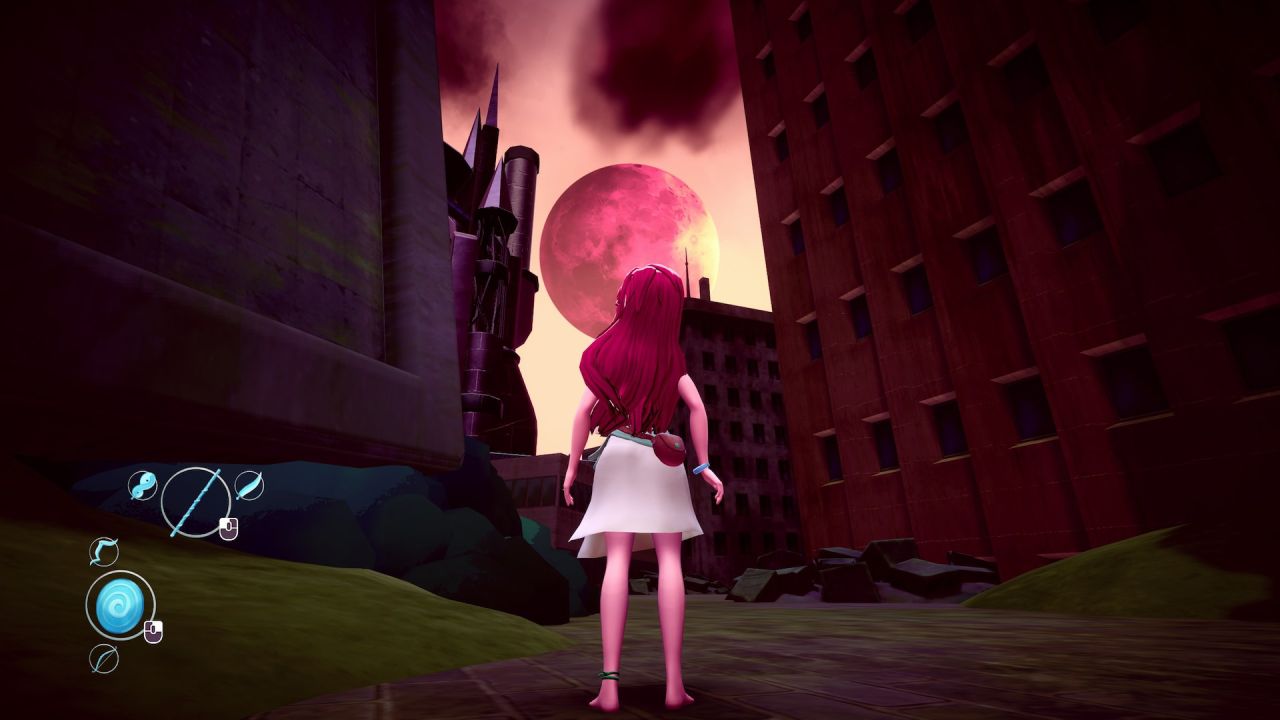
Some character models are very expressive, like Mai, whose animations change slightly based on which version of her you're controlling. Details about the environment, like ruins that are overgrown with plants or broken towns lit by setting suns, give a strong sense of place and mood.
Having said that, the professional polish doesn't always match the goal. Textures can become hazy, frame rates can drop in settings with high activity, and some animations may appear stiff. Even with these problems, the game's art style makes it work, ensuring that the story's emotional weight is reflected in its visual presentation.
One of the best aspects of Mai: Child of Ages is its sound design. The music, a haunting blend of orchestral swells and simple piano tunes, complements Mai: Child of Ages's themes of time and fate well. Each time period has its own musical language. Soft lullabies played in the past, bittersweet melodies played in the present, and distorted sounds that evoke both sadness and fear played in the future.
Emotions are felt through the strong monologues.
There isn't much voice acting, but it's quite strong. Mai's inner monologues are filled with intense feelings, which keep the plot grounded even as it becomes increasingly abstract. Sounds from the environment, like the rumble of collapsing ruins far away or the subtle rustle of leaves in the breeze, make the encounter seem even more genuine.
There are times when the sound mixing is off, and speech gets lost in the music or effects. But these times are rare. Taking everything into account, the sound design is excellent and perfectly complements the experience.
When Mai: Child of Ages attempts to blend experimental gameplay with deeply personal storytelling, it does so with a great deal of heart. It doesn't always work—combat can be dull, technical problems can disrupt the atmosphere, and philosophical ideas may not resonate with everyone—but its goal is clear.
The truth of Mai: Child of Ages, not how well it's put together, is what makes it unique. Mai: Child of Ages isn't afraid to deal with big ideas like fate, duty, and leaving a mark, but it does so through the feelings of a single character. Time-shifting is a great way to combine story and gameplay, making every puzzle and platforming section feel like it's part of Mai's journey, rather than just random obstacles.
For people who just want a simple action-platformer, this might be too much. If you're up for a slower, more contemplative experience that makes you think as much as it makes you act, then Mai: Child of Ages is a journey you should take. It's not perfect, but it's something you'll never forget.
Staff Writer, NoobFeed
Verdict
Mai: Child of Ages is an ambitious game that combines time-shifting gameplay with an emotive storyline. It's a game that sticks with you long after the credits roll, even if it's not flawless in battle.
72
Related News
No Data.