
MISERY Review
PC
A bleak, brilliant descent into survival chaos in a world born from ruin.
Reviewed by Subaiyta Jahan on Nov 04, 2025
Comparing Misery to Lethal Company or S.T.A.L.K.E.R., two video games that influenced the survival and atmospheric horror genres in distinct ways, was simple when they first appeared. However, Misery transforms these inspirations into something that is both recognizable and uniquely its own.
The game, created by a small but determined independent team, introduces cooperative elements and a new loop-based structure while capturing the post-apocalyptic horror of Eastern European wastelands.
.jpg)
Misery, set in a fictional nation devastated by radiation and war, plunges survivors into a world where disintegration is the only certainty. The game does not attempt to conceal its inspirations, even if the makers have been open about them. Rather, it deviates from conventional survival experiences by experimenting with procedural generation, intricate survival techniques, and an eerie tone.
The narrative follows a scientific disaster. In the process of investigating enigmatic oddities and relics, researchers unintentionally set off a chain of events that left the area destroyed by a nuclear exchange. What's left is the "Zone," a dangerous wasteland where radiation, mutants, and shattered pieces of mankind can be found.
In this harsh environment, survivors often assume the role of security contractors, tasked with securing survival through scavenging. Journal entries, haunting monuments, and whispering traces of the past world are all part of the environmental storytelling that makes up the story, which is less about written speech. The expedition's daily discoveries of the past create a somber yet engrossing portrait of human failure and resiliency.
Unlike other plot-driven games, Misery allows the story to develop through atmosphere and gameplay.
Misery lets the tale unfold through ambiance and gameplay, in contrast to conventional plot-driven games. A lonely note left in a decaying bunker, the flicker of a failing flashlight, or the eerie sirens before emissions—every instant becomes a narrative thread in a world that won't hold your hand..
Fundamentally, Misery is a survival game that revolves around loops. Your home base and safe haven, the bunker, is where each cycle starts. Before entering the Zone, survivors set up radiation equipment, fix tools, and prepare supplies. Once you're outside, exploration turns into a tense, dangerous dance where you're constantly being tested by environmental hazards, combat, and looting.
There is a siren to signal the start of the day. You have a little window of time to gather the necessities before the world turns into a death trap. The bunker turns into your command center once you've secured the essential supplies.
Crafting, cooking, and upgrading stations can be constructed there, gradually turning your underground shelter into a habitable stronghold. Every journey outside the bunker creates a fresh map, which consists of a combination of abandoned settlements, military ruins, and abandoned buildings.
Because The Zone is dynamically produced, each excursion feels unpredictably different. Effective time management is essential. The strain increases as the next emission draws nearer. Death is inevitable if you don't go back to safety before the sirens ring.
.jpg)
The cycle of gathering, returning, crafting, and surviving resources keeps the experience focused and grounded. Although the idea is straightforward, the layers of radiation exposure, sanity, hunger, and thirst make sure that every move has purpose. The game makes it clearer how readily control eludes you in the Zone, the more you wander.
Misery's fighting is deliberately uncomfortable to highlight the need for power.
To emphasize desperation over power, Misery's combat is intentionally awkward. There are a few, but significant encounters. Anomalies cause unpredictable landscape distortion, mutants prowl the fog, and bandits hide beneath wreckage. Because weapons feel unreliable and hefty, precise aim and resource management are required.
While firearms are rare and costly, the melee system enables fights that are rough and tough. Every bullet matters, reiterating the suspense of actual survival horror. However, in contrast to the accuracy of contemporary shooters, the fighting can occasionally feel crude. Enemy AI is functional, although it occasionally falters between genius and perplexity, serving as a reminder that Misery values ambiance over flawless shooting.
The irregularities serve as environmental riddles. These hidden changes in the environment might be good or bad, depending on how you look at them. It takes time and careful observation to find them; if you rush in without thinking, you will often die quickly. These things provide an interesting risk-reward system: you may approach to save valuable artifacts or keep away and prevent death.
Although combat is weak, its defects add to the tension.
Combat lacks skill, but its flaws heighten the suspense. Every conflict feels erratic, every interaction intimate. Surviving in Misery has a certain genuineness to it; it's more about enduring hardships than it is about winning them.
In Misery, mastery of survival is what propels advancement rather than conventional XP bars or skill trees. Through learning which routes are safe, which anomalies to avoid, and how to maximize the use of limited resources, every mission increases efficiency.
The primary method of advancement is the bunker itself. Crafting benches, storage spaces, hydroponic farms, and generators are unlocked by expanding it. Longer and more fulfilling adventures are made possible by the increased autonomy that each additional building offers.
The sense of growth is palpable even in the absence of a traditional leveling system. You can measure your progress as a survivor by having better gear, making more effective plans, and becoming more independent. More customizing options, pet companions, and even car assembly are promised in future releases, which might further deepen this progression loop.
Misery leans more toward accessible survival than harsh punishment, though, because there are no harsh death consequences. Since death usually resets you at the bunker with little loss, some people could find the stakes excessively low. This balance will be appreciated by others, particularly in co-op, where the emphasis is on promoting exploration and teamwork rather than penalizing failure.
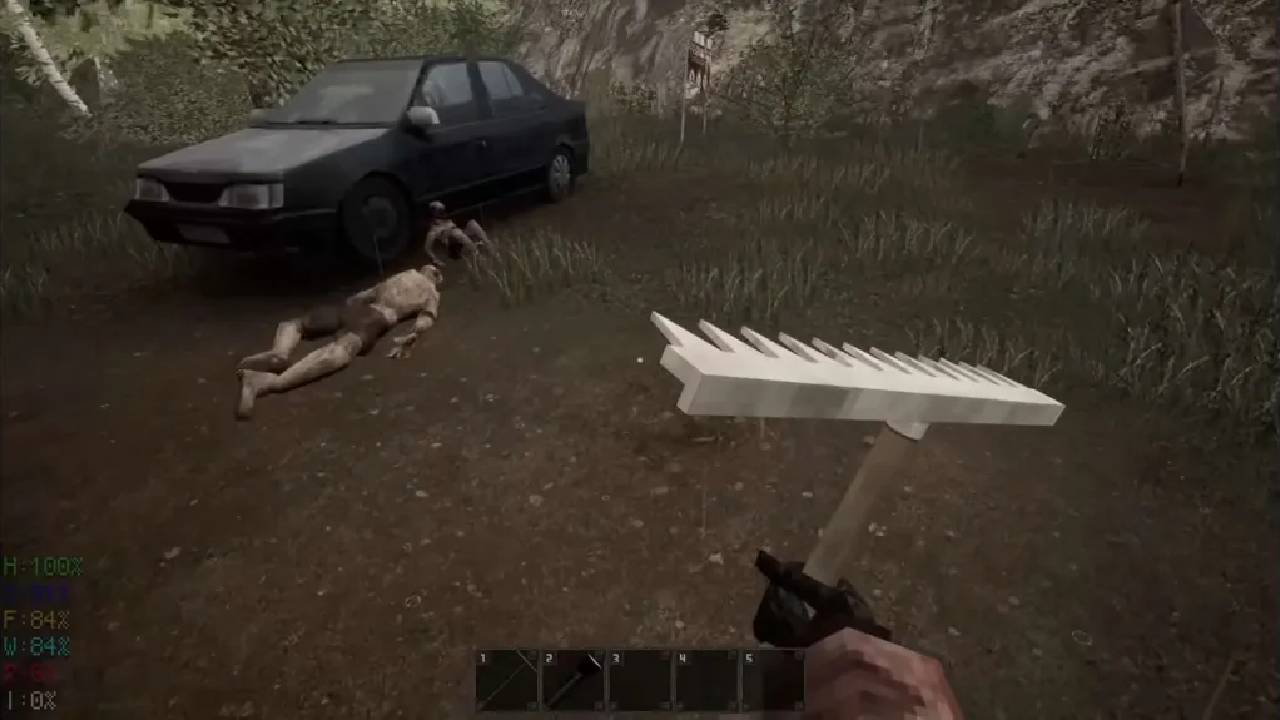
Upon initial observation, Misery's visuals appear to be from the early 2000s, characterized by blocky animations, basic textures, and low-poly character models. However, minimalism conceals a conscious artistic quality. A mood that is both nostalgic and unpleasant is produced by the PS1-style aesthetic, which includes dense fog, subdued lighting, and desaturated color schemes.
Despite being procedurally produced, each map has an eerie coherence. Every setting has a lived-in atmosphere thanks to rusty cars, cracked asphalt, and partially collapsed apartments in Khrushchyovka. The graphic design of the game relies on mood rather than reality, and it does it flawlessly.
A scene that seems alive in its decay is created by the flickering lights during emissions, bright anomalies piercing the night, and spooky fog flowing through abandoned streets. Immersion through tone and texture is more important than visual correctness.
Misery's sound design is unquestionably one of its best features.
One of Misery's strongest points is undoubtedly its sound design. Every background sound, from far-off thunder to the crackling of radiation, adds to the sense of loneliness. The harsh, metallic, and terrifying sirens that alert people to approaching emissions are remembered.
Tension is maintained by the soundscape created by the delicate layering of wind, creaking structures, and soft whispering. Even quiet is uncomfortable, yet it's frequently disturbed by a subtle hum or an abrupt screech.
Very little music is played, usually during quiet hours or in the bunker. It lends emotional weight to those respites. Despite being scant, the voice acting lends the environment a rougher quality. Conversations in the underground bar, the crackle of radio conversation, and the quiet hum of the generator reinforce the sense of life clinging to ruins by fusing atmosphere with realism.
The survival genre isn't reinvented in Misery, but it is distilled into a disturbingly intimate experience. It combines suspense, vulnerability, and revelation into a cycle that is both irritating and satisfying. Each scavenging expedition gains complexity and purpose thanks to the bunker-building mechanism, and the dynamically generated terrain guarantees that each day feels unique.
.jpg)
Emotion, immersion, and the joy of advancement counterbalance its flaws, which include clumsy combat, low stakes, and monotonous exploration. The tone of the game, which echoes the loneliness and minor triumphs of surviving against insurmountable odds, is unabashed, grim, and yet reassuring.
Playing Misery, whether by yourself or with others, provides a unique taste of post-apocalyptic survival. This game is more about atmosphere, experimentation, and endurance than it is about intricate mechanics or narrative explication.
With mod support, customization, and upcoming features, Misery appears to have a bright future. This type of game is a rough, creepy diamond waiting to be polished; it rewards perseverance and ingenuity.
Contributor, NoobFeed
Verdict
Misery encapsulates the fear of surviving in a radioactive wasteland in a profoundly realistic, bleak, and dramatic way. Although flawed, it is an eerie experience worth persevering through.
76
Related News
No Data.