
NINJA GAIDEN: Ragebound Review
PlayStation 5
This retro-style action platformer has smooth combat, fast pacing, and a surprising amount of heart.
Reviewed by Nusrat Choity on Aug 03, 2025
What do you think of when you hear the name Ninja Gaiden? Is it the NES trilogy's punishing accuracy, where every jump and slash felt like walking a tightrope over lava? Or the 2004 Xbox remake, which had bloody, cinematic battles and a difficulty curve that was hard to get used to? No matter what memory comes to mind, one thing is for sure: Ninja Gaiden has always been a model of fast, furious, and, to be honest, brutal gameplay.
Ninja Gaiden: Ragebound cuts through the noise like a katana through bamboo after years of silence. The team that made the popular game Blasphemous also made Ragebound. It's not just a return to form; it's a new game. It connects the harsh memories of the past with the polish, speed, and ease of use that modern players want.
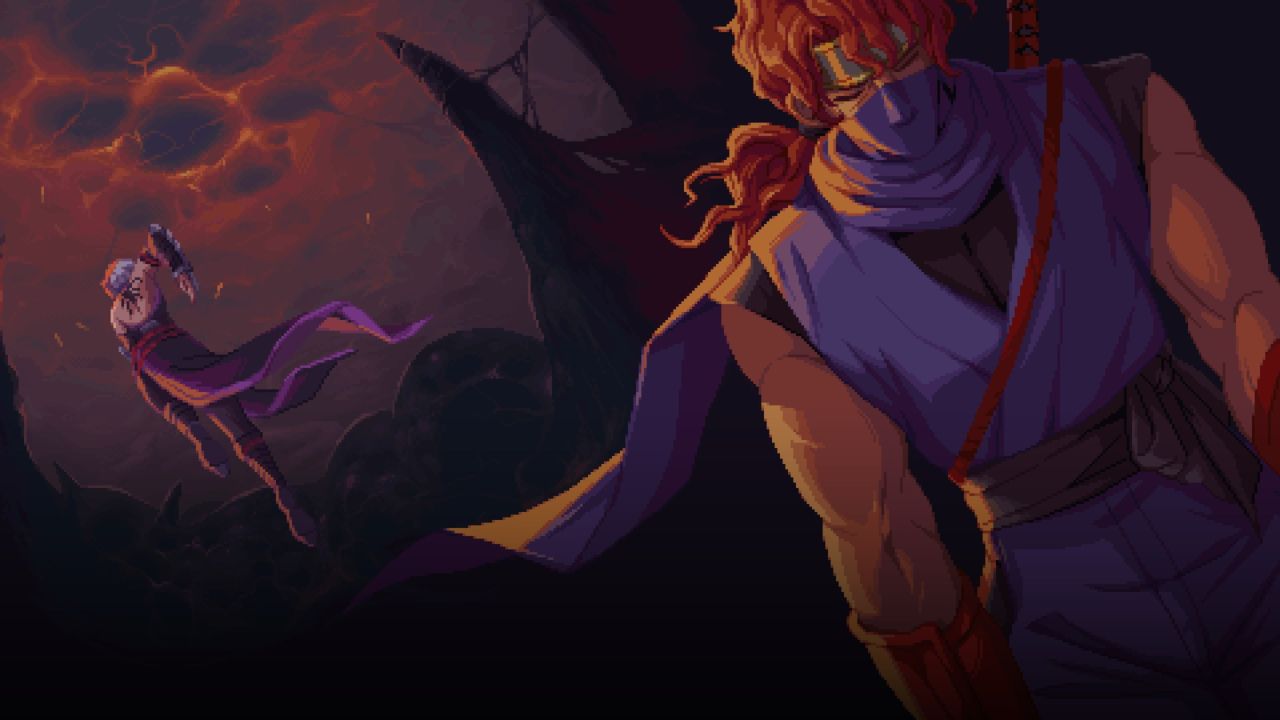
This isn't just a retro game with pixel art. It's a carefully made weapon for a game: smooth, sharp, and surprisingly soulful. Ninja Gaiden: Ragebound proves that ninjas aren't just back; they've always been here. It doesn't matter if you've been a fan of ninjas for a long time or just started.
Ragebound takes place in the same world as the original NES Ninja Gaiden, but it has its own strong personality. Kenji, a cocky but skilled young ninja and student of the famous Ryu Hayabusa, is the main character in the story. When Ryu leaves for America to deal with his end-of-the-world problems (as seen in the original game), Kenji has to protect Hayabusa Village from demons that are spreading like wildfire across feudal Japan.
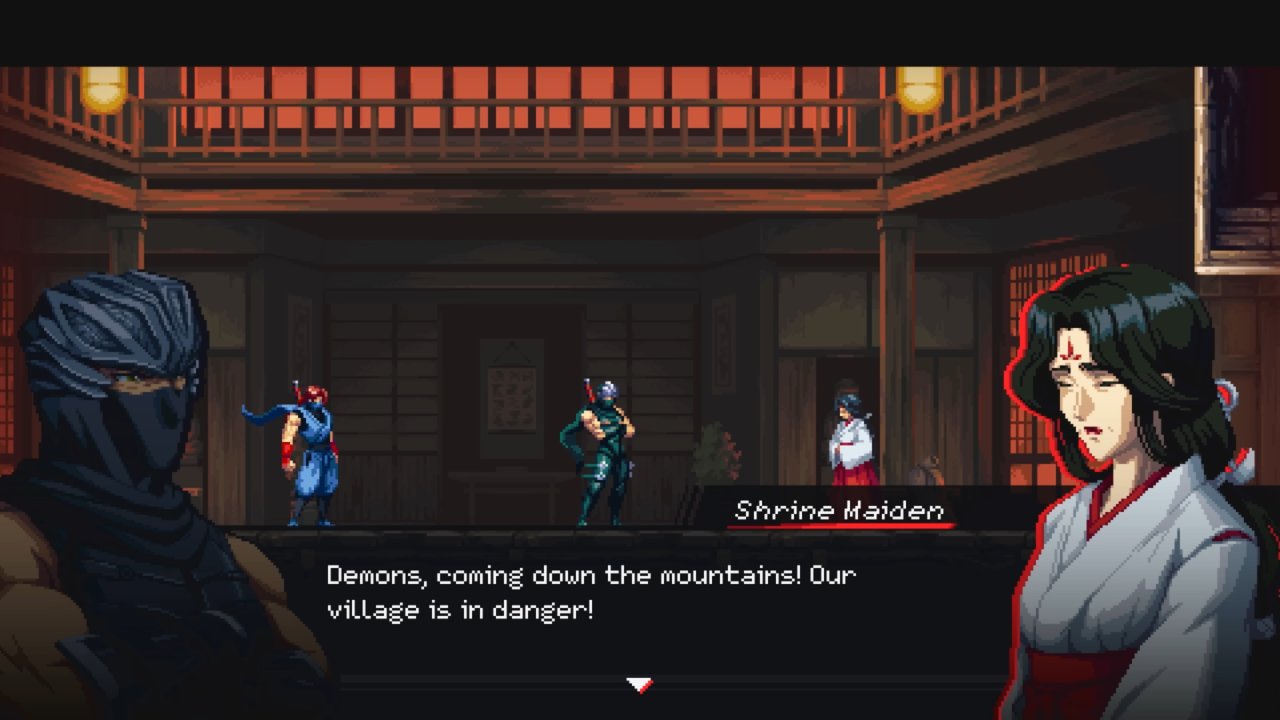
Meet Kumori, a witty and sarcastic warrior from the Black Spider Clan, which is known for being bad. Kenji can't believe he would ever team up with one of them because they have a history of betrayal and dark arts. But when things get tough, people will do anything to survive. What starts as an awkward partnership quickly turns into a strong relationship with sharp banter, personal growth, and the building of trust through blood and blade.
The writing isn't too complicated. It doesn't try to be Shakespeare with shurikens. Instead, it uses archetypes and makes them better with brilliant pacing and emotional beats. Kenji and Kumori have real chemistry, which is something that a lot of games get wrong when they put two people who are very different together. Their friendship, which is based on shared loss and redemption, gives the story a surprisingly warm center amidst the violence.
By the time you get to the last level, which is a high-speed chase through crumbling ruins with demonic beasts in tow and synth-metal music blasting, you realize that the story has quietly become something you'll remember. Not just a background, but a force that drives things.
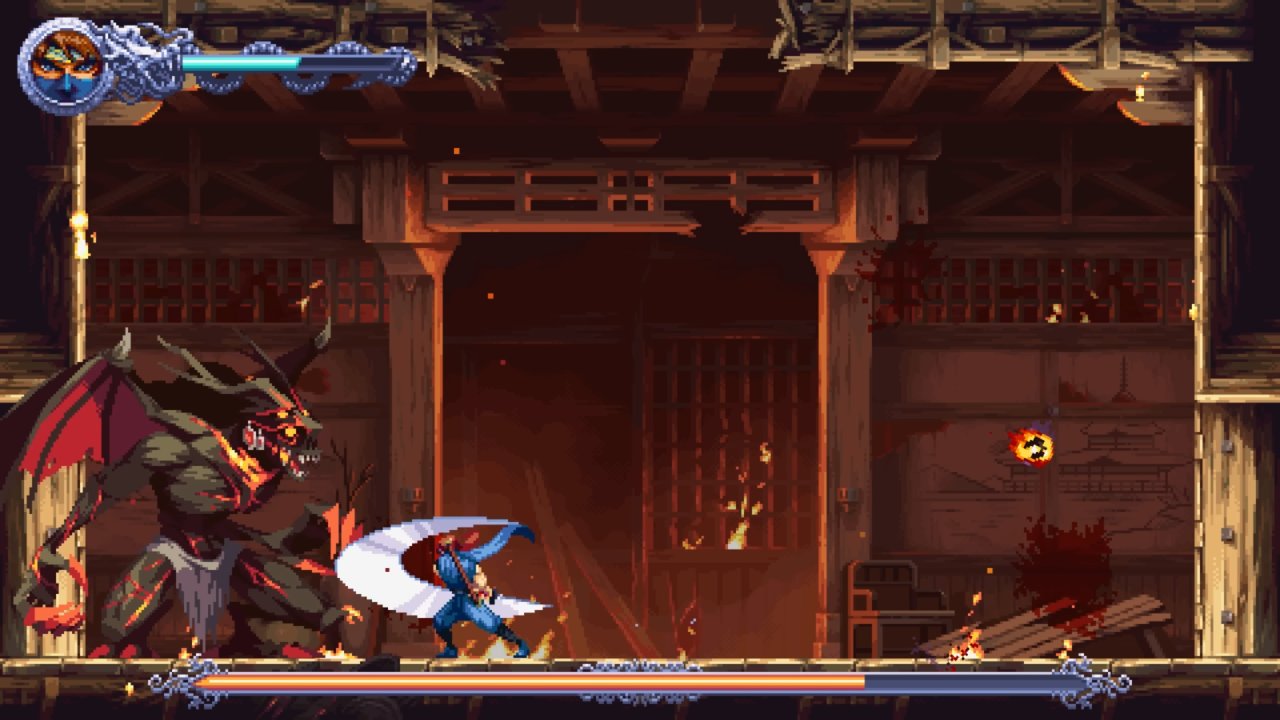
Ninja Gaiden: Ragebound is different from other retro-inspired games because it feels so good. From the first step, you can feel a smoothness and tightness that shows how well Game Kitchen makes games think. Kenji moves with deadly grace, and his katana cuts through enemies in satisfying arcs. The controls are sharp, and every move, from wall-running to parrying, works with incredible accuracy.
As you play, you'll be able to switch between Kenji and Kumori on the fly, or in some sequences, you'll be able to use a hybrid form that combines their powers into one powerful form. This two-character system makes every encounter feel real. Kenji is the bruiser—he's fast, strong, and up close. Kumori, on the other hand, is the embodiment of finesse: he throws kunai with deadly accuracy, uses shadowy evasion techniques, and sets off chain combos from across the screen.
The "Guillotine Boost" system is probably the best part of the game. It's a double jump that resets itself when you hit an enemy, which lets you do amazing aerial chains and moves. When you add wall-hops, dash-cancels, and mid-air parries to this, you have a combat sandbox where you can be as creative as you want. You begin by responding. You finish by writing battles that sound like symphonies.
Ninja Gaiden: Ragebound doesn't use spongy health bars to make the game harder, like a lot of modern action games do. One hit kills most enemies. The real fight is with rhythm: keeping the flow, being precise, and never stopping. If you make one mistake, the whole thing falls apart. Get India's right? You are a blur of steel and anger.
Even though combat is flashy, it is never empty. It has a dance-like quality and a flow-state design that keeps you moving, aggressive, and efficient. Powered souls that are found in stronger enemies are like puzzles in battle: if you beat them the right way, you can charge up a powerful Hypercharge Slash. If you make a mistake, you not only lose the power-up, but you might also break your combo chain.
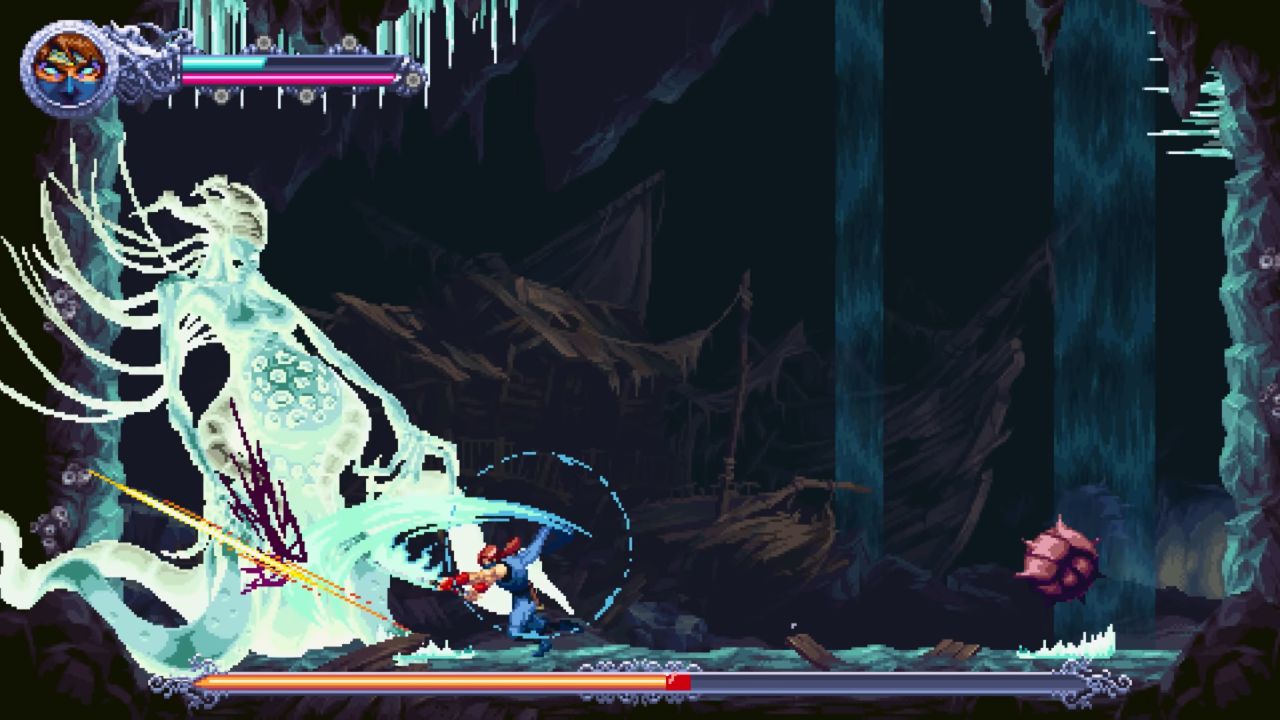
Ninja Gaiden: Ragebound is at its best during boss fights. Each one is a set piece that is unique in terms of mechanics and story. You will fight corrupted monks, demon warlords, sentient shadows, and even a mech-fortress that a rival ninja has gone crazy and is controlling. These fights are brutal, fair, and worth it. Most importantly, they want mastery, not gear grinding.
Environmental puzzles are clever but not too hard. Ancient scrolls, golden scarabs, and cursed skulls are some of the hidden collectibles that make you want to explore. Many of them are hidden behind optional gauntlets, which are precision-platforming trials that test your reflexes and memory to the limit. Not all of the best parts of the game are fights; some of them are just getting through complicated obstacle courses without missing a beat.
Demonic altars lead to Kumori's other paths, which make things even more complicated. These challenge levels change the basic mechanics by adding time limits or changing the physics, like reversing gravity, one-hit deaths, and mirror-world controls. They are hard, fair, and completely optional, but anyone brave enough to try them will remember them for a long time.
Forget bloated skill trees or endless grinding. Ninja Gaiden: Ragebound has a simple progression system that is based on skill, not slog. You can earn money by finding hidden challenges and golden scarabs. You can then spend this money at Muramasa's forge, where a grim, slyly funny blacksmith will improve your weapons and skills.
Kenji can unlock faster healing, bigger attack arcs, or longer combos. Kumori gets new secondary weapons, like the Shadow Fan and the Split-Trail Kunai, as well as Ragebound specials that change the way combat works for a short time. Want to give up defense for more power? Go ahead. Do you like accuracy more than anger? That works as well.

This is a lovely balance. Nothing feels too strong. Upgrades don't help you get through; they make your style better. You don't get better by leveling up; you get better by playing smarter.
Don't let the old-school look fool you; Ragebound is a work of art. The pixel art, which is inspired by 16-bit graphics, is rich, layered, and full of life. The atmosphere in these places is thick: rooftops glimmer in the moonlight, underground temples pulse with strange light, and desert catacombs swirl with supernatural storms.
Each sprite is carefully animated. Enemies show you what they're going to do in a straightforward but stylish way. The attacks from Kenji and Kumori feel like they're moving in a way that makes you feel both nostalgic and new. There are special effects like slow-motion killshots, rage moves with a lot of particles, and finishers that shake the screen. These add a cinematic touch without making the text harder to read.
The UI even feels sharp. Menus are clean and stylish, with colors that make things easy to understand. They are also made to keep you in the action instead of slowing you down. Then there's the sound. Oh, the sound.
Ninja Gaiden: Ragebound has one of the most heart-pounding soundtracks we've heard in a long time. It's a mix of old-school synth melodies and modern metal fusion. Imagine if Castlevania and Nier: Automata had a baby with a Yamaha synth and an electric guitar. Every song fits its level perfectly, pushing you forward with a fast tempo and strong emotions.
The sound effects are also perfect. The sound of blades hitting each other is clear and sharp. Enemies explode with a visceral crunch. There are audio clues that go along with the visuals, like a whispered tone when your Hypercharge is ready or a low growl before a boss attack. Put on some headphones and play this game. Believe me.
Ninja Gaiden: Ragebound may not be the longest game (you can finish it in 4 to 7 hours), but there are so many reasons to play it again. Secret endings. Challenges that test your speed. Mode for boss rush. Skins for characters that can be unlocked. And a Hard Mode that adds remixed music tracks, enemies that are different from the ones in the game, and dangers in the environment.
There is even an achievement board in the game that is very creative. These achievements require skill and style, not just busywork like checking off a list. For example, you have to beat bosses without getting hurt or do 20 guillotine boosts in a row. They're enjoyable. They are worth it. And they're worth sharing because they promote competition and community interaction.
But most importantly, Ninja Gaiden: Ragebound values your time. It doesn't add anything. It doesn't waste. It has tight, polished gameplay with a satisfying arc, and then it encourages you to improve. This is how a new retro game should be. Not just a nod to the past, but a big step forward.
Game Kitchen has done something that not many people can do: they've taken the heart of a legendary franchise, boiled it down, and made it so that both long-time fans and people who have never played it before can love it.
Contributor, NoobFeed
Verdict
Ragebound is a furious, fluid, and impressive revival that pays tribute to the Ninja Gaiden legacy while confidently forging its path. It's short, but it has a lot of interesting details, exciting fights, and a surprisingly emotional core.
75
Related News
No Data.