
Out of Time Review
PC
Out of Time throws players into fractured eras with time-twisting roguelite chaos, co-op mayhem, and a grind-heavy loop that's as punishing as it is addictive.
Reviewed by Joy Rahman on Sep 30, 2025
Out of Time emerges as one of the more unusual multiplayer roguelites in recent memory. Developed with backing from Epic Games and currently available through the Epic Games Store, the title occupies an ambitious middle ground between genres. It borrows the endless enemy swarms of Vampire Survivors, the loot-driven build systems of Diablo II, and the stylized visuals reminiscent of Fortnite.
The project was first thought of as a big MMO, but it was later changed into a more focused shared action-roguelite that focuses on running through dungeons with friends. The change is telling: instead of trying to compete with huge MMOs, Manor Games chose to improve fights in the present while keeping the long-term development of the genre.
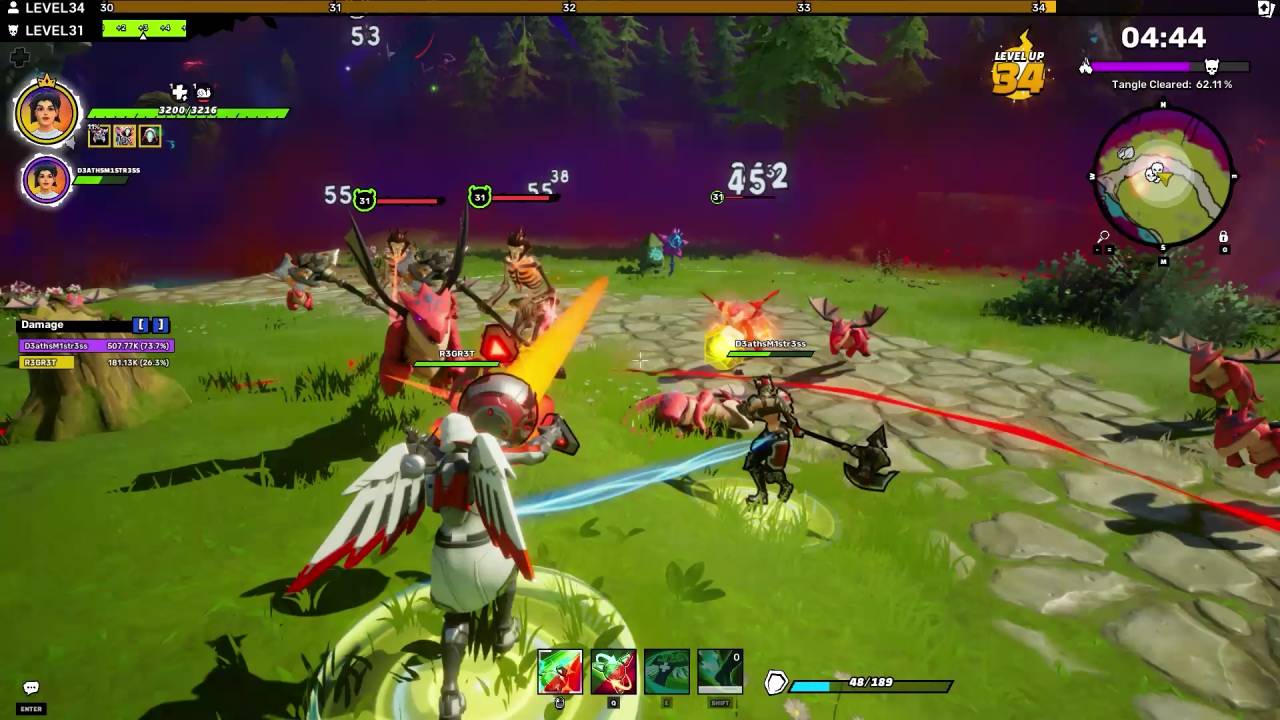
Out of Time wants to be the perfect evening game: easy to jump into, rewarding to grind, and endlessly replayable. Yet ambition can be both fuel and flaw, and this release demonstrates plenty of both.
Narrative in Out of Time is thin, but it serves as scaffolding for the chaos. "The Shattering" is the name of an event that tore timelines apart and mixed creatures, troops, and machines from different times. This creates a world where knights from the Middle Ages, drones from the future, and raccoons from today can all fight on the same ground.
The story is tied together by the world of Infinitopia, which is also the game's main machine. It's an odd mix of architecture and cultures, with floating islands and broken landmarks, and it gives the broken timelines you're about to look at some perspective. Early encounters with figures like Jeanne D'Arc provide just enough lore to justify the mix of enemies and settings, but narrative is never the star. Out of Time uses its story as set dressing, ensuring that every map feels like a collision of histories rather than a coherent tale.
At its core, Out of Time is a loop-driven roguelite. Runs begin in a circular safe zone where players, or teams of up to four, drop into one of three currently available time periods: Medieval, Modern, or Wasteland. Additional eras, such as Solar Punk, have been promised for post-launch.
Each era contains multiple environments with unique loot pools and resources. As players move through maps that are covered in fog, they find enemies, gather resources, and prepare for the final boss fight. Instead of distance traveled, progress is shown by the proportion of maps that have been completed. As soon as enough ground is cleared, the boss appears, setting up the final battle.
Players go back to Infinitopia between runs to improve their gear, trade sets of armor, or spend resources on small score boosts. Gear determines both your protection stats and your active skills. Each piece of armor affects both as you level up.
You could get a drone that heals you from one chest plate and a ghostly strike that clears waves from another. The way you attack is also determined by your weapons. Depending on the age, weapons range from axes and staves to missile launchers and energy rifles. Importantly, gear sets can work together to make full builds better, but many players like to mix and match to have more options.
The tether system defines multiplayer dynamics. Each person gives off an aura, and teammates must stay in range to keep their group buffs up. Going outside of this radius lowers your health and ratings, which discourages lone wolf behavior. The design requires coordinated placement as well as coordinated attacks, so everyone has to work together. Runs are capped at about fifteen minutes, reinforcing a "one more try" loop that encourages repetition.
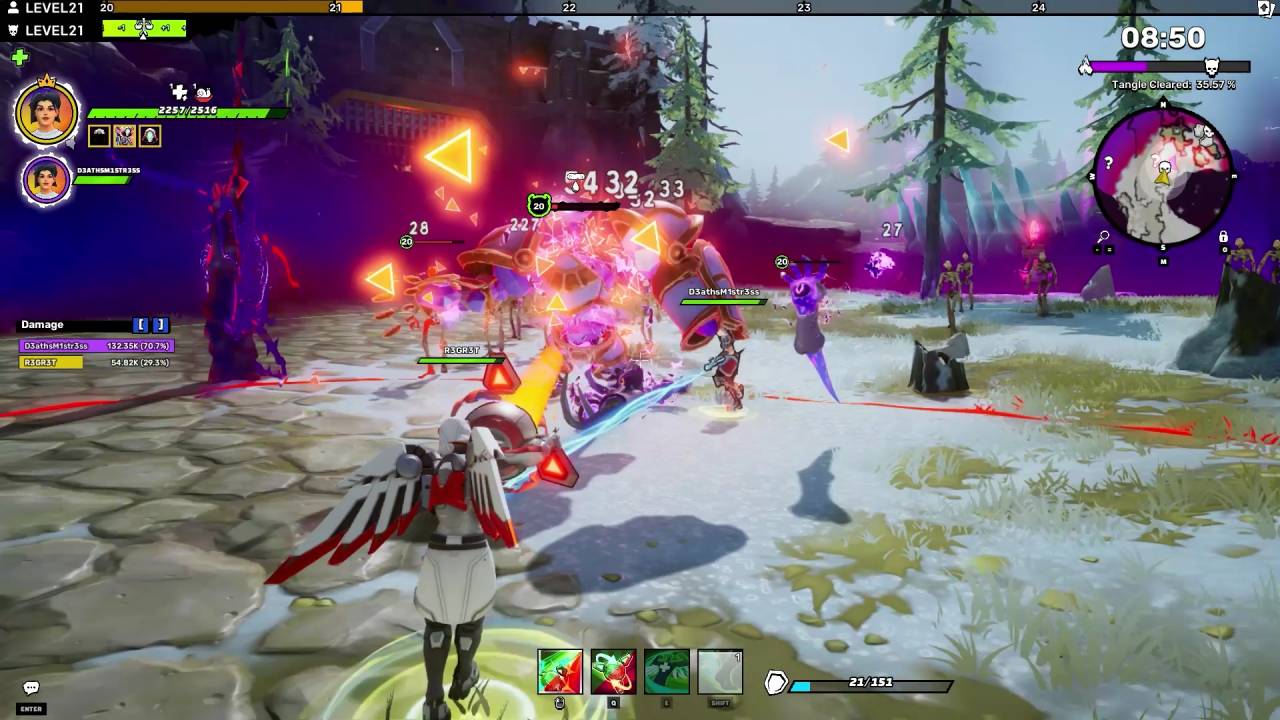
Combat is the heartbeat of Out of Time, and it is relentless. Players face swarms numbering in the thousands across a single run. Abilities operate on cooldown timers, encouraging the kiting and rotation strategies familiar to MMO veterans. Positioning and managing resources are tested in every battle: dash until cooldowns are over, use abilities, and do it again.
Because there are so many enemies on each map, it becomes a puzzle of survival where being aware of your surroundings is just as important as having a lot of weapons.
The game's larger vortex events layer additional challenges. In these "time capsule" encounters, players have to hold pressure plates, protect goals, or gather parts that are spread out while they are being attacked. If you complete these goals, you'll get powerful upgrades, but you could also lose valuable time as the clock keeps running.
Smaller vortexes set off ambushes or brief boosts like bombs, shields, magnets, or power-ups. While conceptually interesting, their execution is inconsistent. Bombs often detonate after a fight has ended, and magnets rarely prove useful given the natural flow of resource collection.
The greatest strength lies in spectacle. Out of Time makes killing hundreds of enemies in rapid succession feel satisfying, thanks to impactful ability animations and the variety of powers unlocked through gear. Coordinated teams chaining airstrikes, healing auras, and melee bursts create combat vignettes that feel dynamic and chaotic in equal measure. The tether system makes placement as tactical as choosing an ability, taking teamwork to a whole new level.
But weaknesses are easy to see. Even though the themes are all over the place, enemy variety often doesn't make sense. Modern snakes, medieval foxes, and futuristic drones all exist on the same battlefield but don't interact with each other in any useful way.
Because enemy animations don't have ragdoll physics, they repeatedly fall apart, which takes away from the visual input. When the difficulty level goes up, the game relies too much on inflated numbers instead of complex physics, making difficulty spikes that feel forced instead of earned. Players who like accuracy may also get annoyed by bosses like the Frost Bird, whose telegraphing isn't always accurate.
Progression in Out of Time is deliberately grind-heavy, drawing from MMO DNA. XP comes from defeating enemies, unlocking in-run upgrades that can increase cooldown efficiency, damage output, or support buffs. Outside runs, progression hinges on gear rarity and mastery stats.
When you buy more rare gear, your power goes up by a lot, but when you buy more stats, your power goes up steadily but less. Players can also change lower-level resources into rarer ones, but the conversion rates are high, so it takes a long time to grind.
The loot system reinforces this grind. A person picks one item from a list based on the size of their party and the difficulty of the run at the end of each run. A person who is alone has fewer options, while a full team has more chances at high-value drops.
This structure makes things unfair: smaller groups have to go through longer grinds, while bigger groups move faster.
The result is a system that rewards community play but risks alienating those who prefer solo or duo runs. Without safeguards like bad-luck protection or duplicate prevention, progression can feel punishingly random.
Visually, Out of Time embraces a cartoony, stylized aesthetic. Character models are based on Fortnite's over-the-top sizes, and settings mix fantasy, modern, and sci-fi elements to make broken landscapes. The main city of Infinitopia is especially interesting. It has floating islands and buildings that don't go together, making it look like a strange playground.
Period-specific maps tend to use well-known images, like castles from the Middle Ages, urban woods, and irradiated wastelands. While colorful and imaginative, the style sometimes struggles to convey threat; glowing red eyes on forest animals rarely inspire dread. Performance is generally stable, though some texture clipping and animation bugs betray its early access status.
The sound design helps with realism, but it's not very polished. In Infinitopia, the lo-fi music in the background makes the intense battle feel calmer. All of your ability effects, from bombs to magical spikes, hit hard and feel good.
But enemies have death sounds that play over and over and don't give you many other audio cues, which makes it hard to tell who the risks are in crowded fights. Player voices are absent, and the overall mix can sometimes obscure critical effects beneath the noise of battle. While functional, the audio package could benefit from greater layering and variety to match the scale of the on-screen chaos.
Out of Time is a paradox. It is at once inventive and derivative, fresh yet familiar. Its hybrid DNA pulls from roguelites, MMOs, and auto-shooters, creating a cocktail that feels distinct even as its ingredients are recognizable. The tether system is genuinely innovative, redefining teamwork in ways few roguelites attempt. The gear-driven ability system encourages experimentation, and the fifteen-minute run cap nails the cadence of replayability.
Yet rough edges dull the shine. Because progression systems are designed to encourage grinding, they punish smaller groups by moving them along more slowly. Even though the enemies are fun to look at, they don't always fit together well, and the fact that controllers weren't supported at launch is strange for a game that clearly took inspiration from platform games. Problems with balance, like sudden increases in challenge and random drops of loot, show that the game is still finding its groove.
Even so, Out of Time shows enormous potential. As new eras, bosses, and features arrive, the foundation already laid could evolve into something remarkable. If you play with a determined group of friends, the game is a great choice. It's a fun, crazy playground where working together really does make the dream come true. For explorers who are going it alone, the grind might be harder, but the core loop is strong enough to note. There are still a lot of ideas in Out of Time that haven't been used yet.
Contributor, NoobFeed
Verdict
Out of Time blends roguelite chaos with MMO teamwork in a unique, frenetic loop. Brilliant in concept, uneven in execution, but a strong base for future growth.
73
Related News
No Data.