
Painkiller Review
PC
Old-school chaos meets modern co-op, but is it worth picking up the controller?
Reviewed by Mahi Araf on Oct 28, 2025
Painkiller is one of those franchises that has a cult following. People who love it really, really love it. But if you're not deep into FPS games or the old-school Painkiller lore, you might not even know what it is. The version hardcore fans often say was the pinnacle is Painkiller Black, released in 2004.
That's twenty-one years ago, to be precise. If someone was born the year Painkiller Black came out, they've been able to vote for years now, and most of them likely have no idea what Painkiller even is. In comes 3D Realms with a reimagining of the franchise simply titled Painkiller.
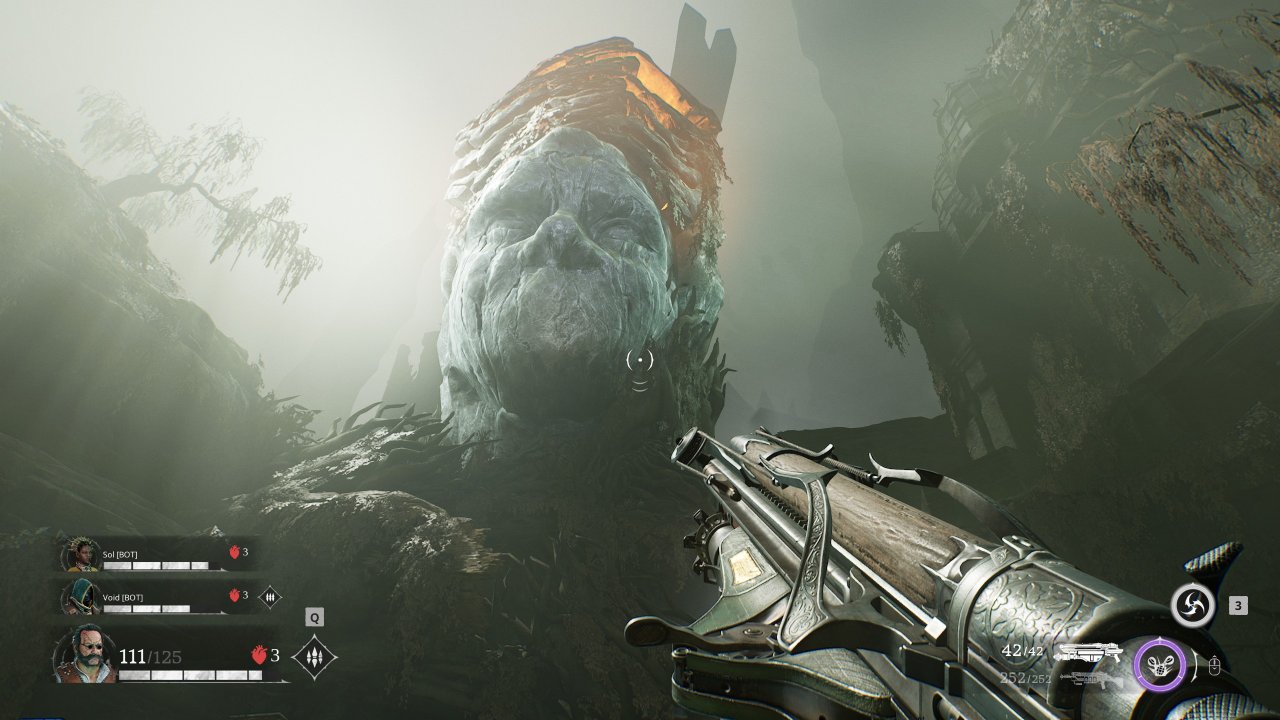
Old-school OG People Can Fly—the same company that made Bulletstorm and Witchfire—made Painkiller first. In short, it was a linear campaign-style game like Quake and Doom, with fast-paced fighting and plenty of demons to kill. To stand out, it had some really cool physics where you could stake enemies to walls, watch ragdolls fly, break objects, and use some awesome weapons that were genuinely fun to play with.
So, what does this new Painkiller offer?
The game is available on PlayStation 5, Xbox Series X/S, and PC via Steam. It's a three-player co-op experience with full offline support, which is interesting considering you can pick one of four characters—Ink, Void, Sol, and Roch.
You're thrown into purgatory and tasked with battling hordes of demons and monstrosities in a way that nods to the original's fast combat, but with a different structure that feels almost like a wannabe looter-shooter. The game's narrative is presented through character dialogue rather than cinematic cutscenes.
You learn about your character's backstory, how they ended up in purgatory, and what they need to do to reach heaven, but the storytelling is frequently interrupted by combat or objectives, so it's easy to miss key bits of the plot.
The overarching story revolves around a fallen angel named Azazel. In theory, stopping Azazel is your mission, but in practice, he doesn't always feel like a threat. It's almost like Pagan Min from Far Cry 4, where you can't quite tell if the antagonist is really an antagonist.
Essentially, Painkiller is a co-op shooter with nine missions set across three different biomes.
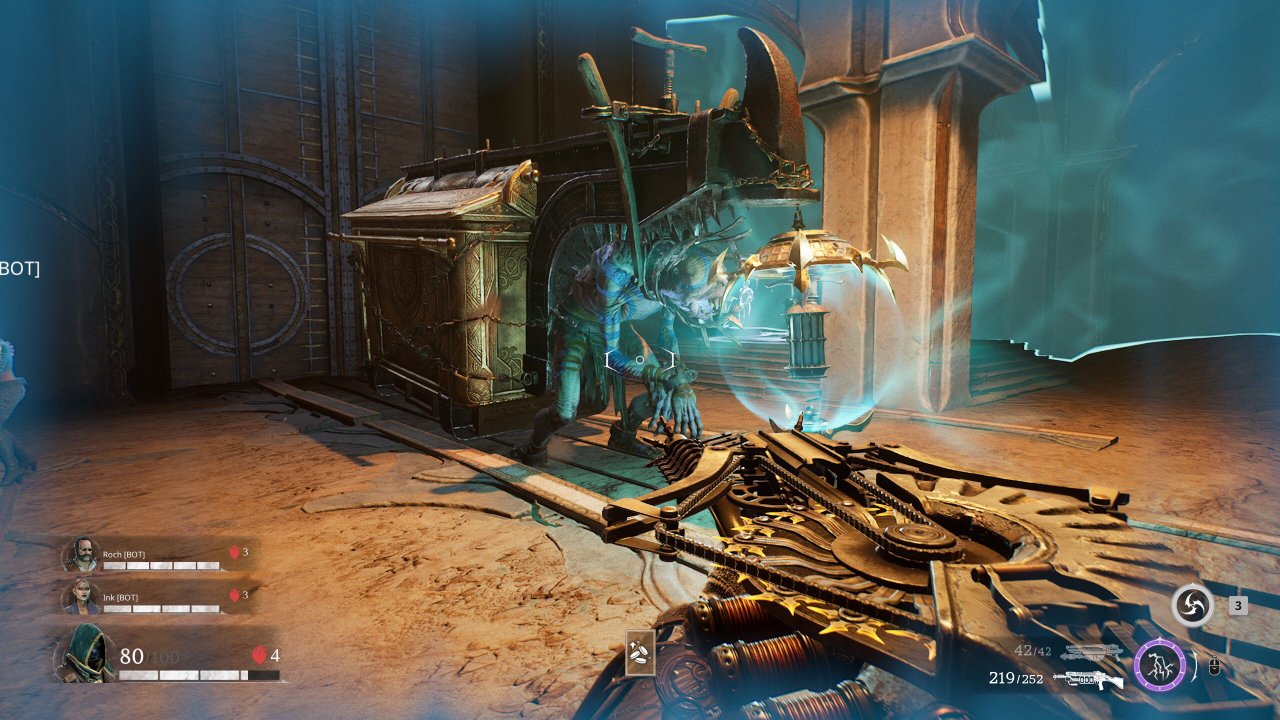
Since there are three missions in each biome, the missions within a biome feel very similar because the combat loop centers on four distinct elite enemies: melee enemies, enemies with shields, and enemies with ranged weapons.
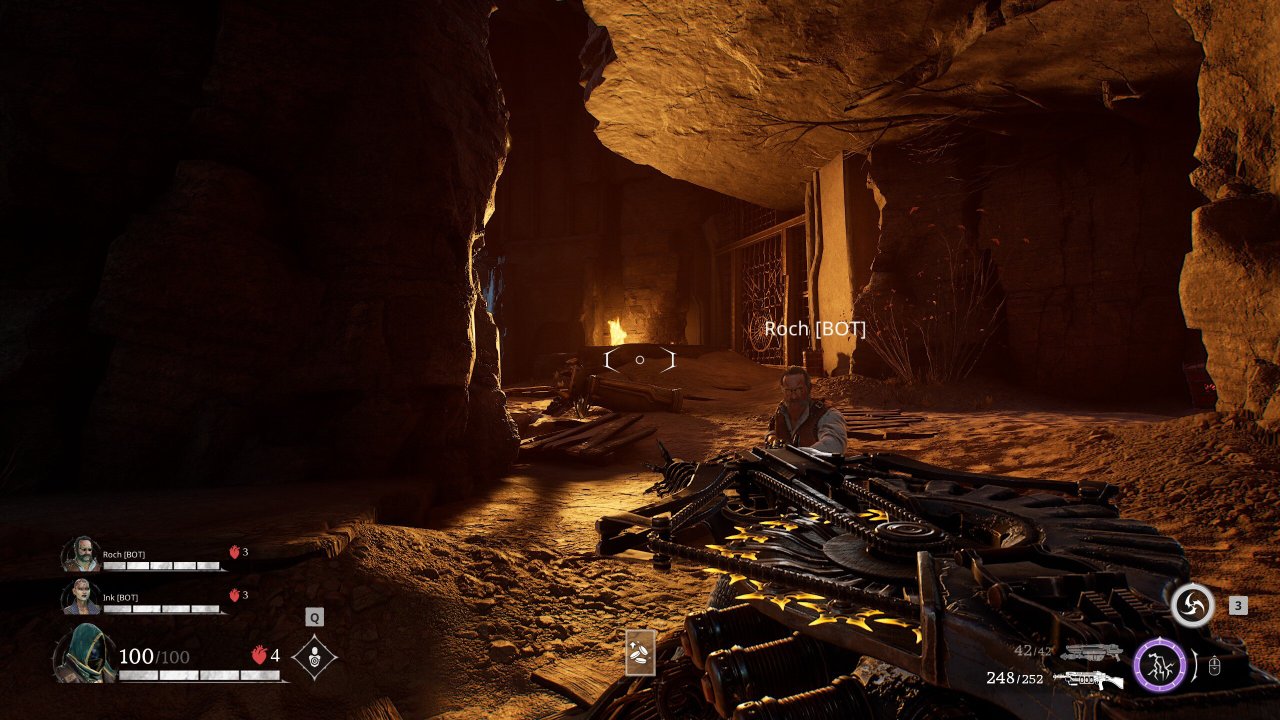
These elite enemies are boring, to be honest, and they don't really spice up the combat. This loop persists throughout the whole game, except for the last mission in each biome, which features a boss. There are three different bosses in the game.
Another difference in the combat in this reimagined Painkiller is that every once in a while, you will have to do an objective. And these usually boil down to picking up an item, killing enemies near that item, and then tossing the item where it needs to be. For the most part, you are going into an arena, needing to kill all the enemies, and then going into the next arena. So, once you get over the novelty, Painkiller quickly becomes painstaking.
You have your classic weapons, like the stake gun and a fully automatic electric shuriken launcher, alongside new additions like a spinny blade that tears through enemies. Each weapon has two fire modes, which are single-target and area-of-effect, and upgrading them becomes a mini-obsession.
The revolver, for instance, can be enhanced to turn every critical hit into an explosive, crowd-clearing blast, while the shotgun can freeze enemies, causing chain reactions that spread through mobs. My personal favorite combination turned out to be the revolver for crowd control and the shotgun for up-close destruction.
It's a satisfying synergy, and when everything clicks, the combat feels explosive. I have to talk about movement as well. You can jump, dash, and slide, with the slide being almost comical—you literally glide across arenas if you hold the button, limited only by stamina.
There's no sprint, but you're still moving fast. The game also occasionally throws in objective-based tasks, like carrying an item while fending off waves of enemies or maneuvering through tricky environmental hazards.
There's also a roguelike mode called Rogue Angel that shakes up the formula with arena challenges and boss encounters that you wouldn't see in the main campaign. I found the roguelike mode surprisingly engaging—probably more so than the standard campaign.
One criticism I have is the co-op character system. You pick one of four characters, each with passive buffs like extra health, energy recharge, damage, or ammo efficiency. In reality, most of these buffs are minor, except for the damage and energy boosts, which actually change how effectively you can deploy weapon split functions. Void, for example, gives a straight 10% damage increase, which makes a noticeable difference, especially when using energy-intensive abilities.
Painkiller revolves around two currencies: gold and ancient souls.
Gold is primarily for purchasing weapons and entering the tarot card lottery, while ancient souls are used to upgrade your weapons. Tarot cards grant temporary boosts, like increased damage or extra gold, that last for one level and then need to be repaired or replaced.
One interesting thing from playing the game firsthand is how interactive it is even when playing solo. The hub world allows you to check out new armor and cosmetic options, and you can team up with bots if you don't have friends online, which is a nice touch.
Co-op play adds a layer of coordination through ping systems, tactical commands, etc. Tarot card management and resource allocation require you to decide whether to spend your gold on a one-time buff or save it for weapon upgrades.
It costs 3k to enter the lottery for a tarot card. When you equip a tarot card, it will be used on that next level. After that level, it becomes broken, which you can repair with ancient souls or just hope you get another one through the lottery. When you use Void, as I did, you get a 40% increase in damage instead of the "30% increase in damage" that tarot cards say, so that's dope.
Weapon upgrades are where things get really satisfying. Each weapon has split functions that can be enhanced in various ways. For example, the revolver's mini-rocket function can explode on impact, and further upgrades allow critical hits. The shotgun can be upgraded to freeze enemies in front of you and chain that freeze effect to more targets, leaving a trail of the "ice in your veins".
You can only carry two weapons at a time, which is different from the first Painkiller. Objectives might seem monotonous, like "pick up an item, kill nearby enemies, and then put it somewhere." This doesn't give you the same degree of imaginative battle chaos that made the original so famous.
On the other hand, the graphics and performance are good.
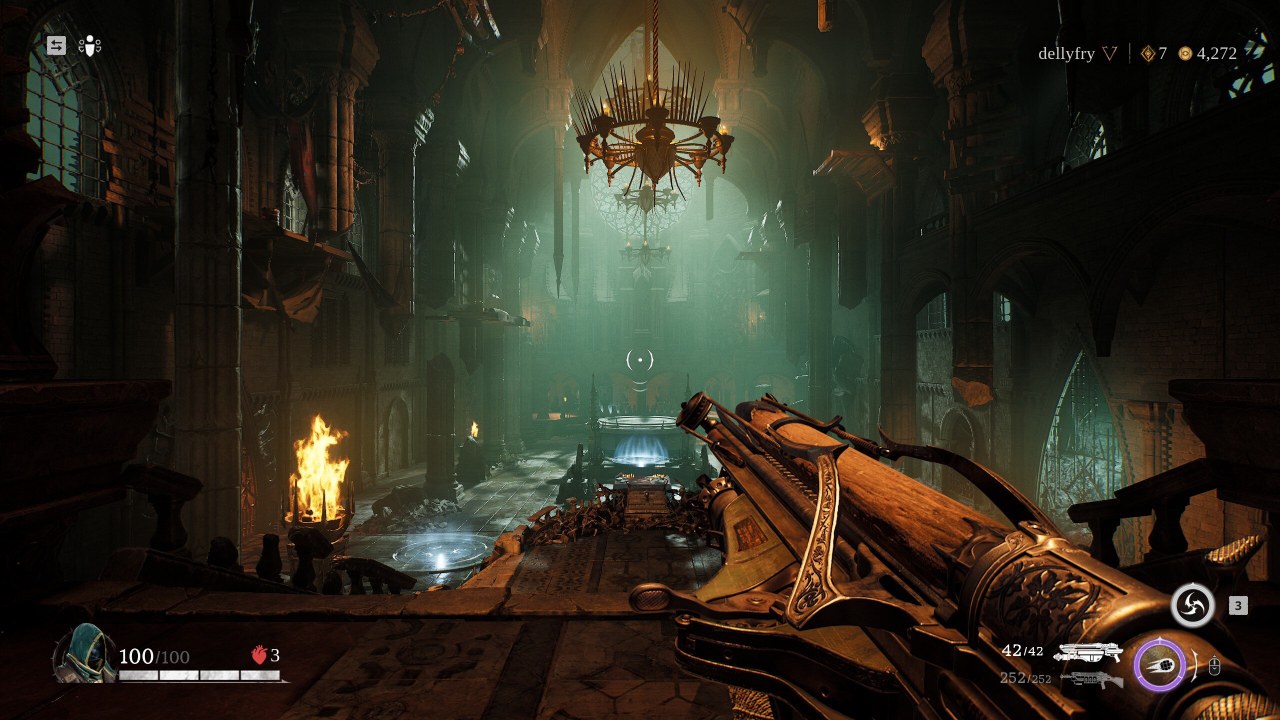
On PC, the game runs smoothly even on a system that's a generation behind current hardware, with no crashes or lag. The visuals aren't going to win "Graphics of the Year," but the gothic aesthetic carries over nicely from the original Painkiller.
There are moments where you can stop and appreciate the environments without feeling like you're in a massive open-world RPG. Weapons look like they belong in the same universe as the originals, and some little tweaks here and there make them feel more than a lazy reskin.
Weapons sound impactful, and the gore-filled carnage is accompanied by satisfying audio cues that reinforce the chaos of combat. Music is intense, sometimes so much so that you'll want to turn it down when focusing on objectives or navigating complex arenas, but it works to maintain a sense of momentum.
In terms of what Painkiller ultimately delivers, it's a mix of old-school FPS thrill and modern RPG-lite progression.
The game succeeds when you're fully immersed in combat with upgraded weapons and bouncing between arenas. It falters when objectives feel repetitive or you realize that character choices don't matter.
So, does the "Painkiller" work? If you're a die-hard fan of the original, you may like it. Some of the old charm, like freeform combat and a wide variety of weapons, is replaced by a more structured progression and a limited weapon loadout.
As the great Kobe Bryant said, "Are you a different animal and the same beast?" I don't think Painkiller is the same beast overall. Painkiller's reimagining is a complicated beast. It's not a perfect homage to the original, nor is it meant to be. Painkiller is still worth checking out if you take nostalgia out of the equation, and I will recommend it even if I can't particularly say it with a clear conscience.
Senior Editor, NoobFeed
Verdict
Painkiller's reimagining delivers chaotic combat, satisfying weapon upgrades, and fluid movement, with fun co-op and roguelike modes. But, Painkiller couldn't outmatch the past glory it once had.
72
Related News
No Data.