
Port of Jumanah Review
PC
A compact underwater roguelite that mixes pearl diving, fast runs, and a surprisingly strong sense of place.
Reviewed by Adeela Tas on Sep 08, 2026
You step into Port of Jumanah as Mansour, a pearl diver whose normal workday quickly turns into something much stranger. You start beneath calm water, looking for treasure, joking with seaweed, and wondering where the danger is until a giant shell opens and six black pearls swim away.
That small moment establishes the kind of tone you get throughout Port of Jumanah: serious enough to build a mystery around the sea, but silly enough to make a boat-eating fish sound like a perfectly reasonable explanation. You also get a setting that immediately separates Port of Jumanah from a lot of familiar roguelites.
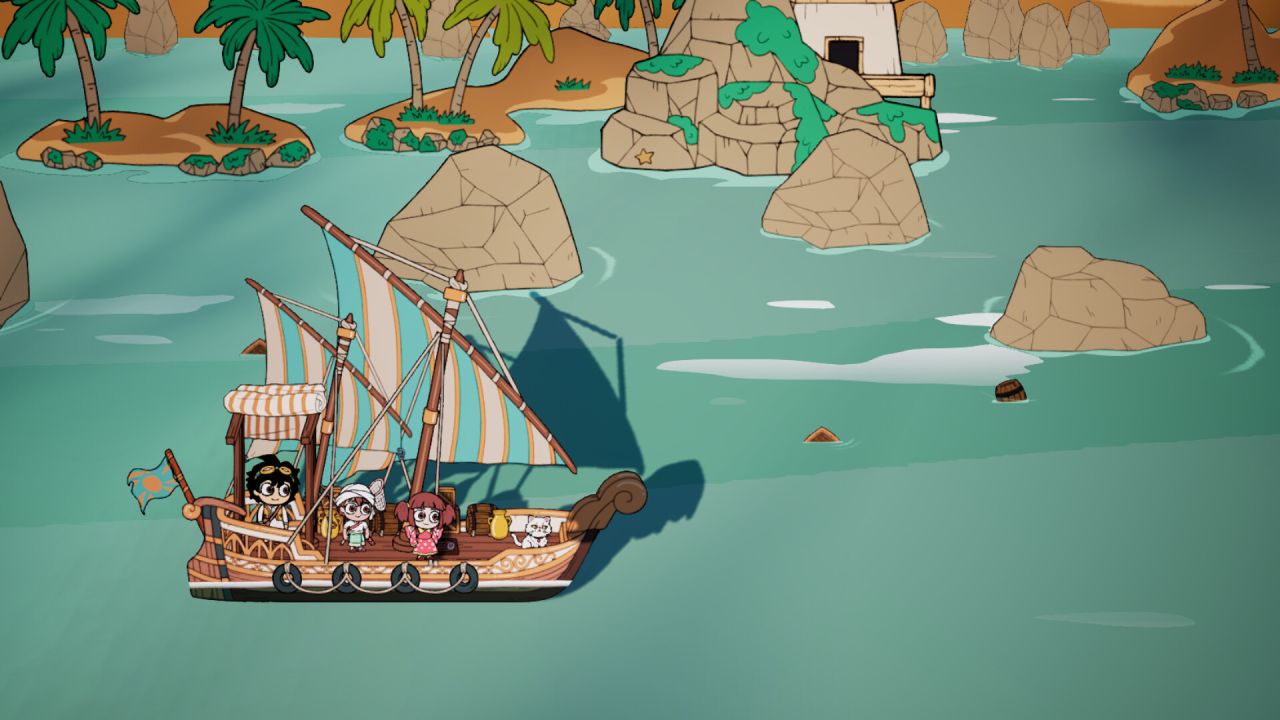
Port of Jumanah draws inspiration from traditional pearl diving culture in the Arabian Gulf.
The underwater setting isn't just a visual theme pasted over a standard dungeon crawler. Your expeditions, resources, boat, crew, and rebuilding work all connect back to the idea of diving out from a coastal port. Red Dunes Games and Agate developed and published Port of Jumanah, and the result feels built around a simple idea the team understood well: take a short action roguelite run and place it somewhere you don't usually see one.
You start with very little freedom. You can move, dash, and attack, but you do not have a pile of abilities waiting for you. Your first weapon is a sword, and your early combat teaches you to dodge incoming attacks and get close enough to use a basic melee combo. The tutorial keeps its systems light at first, then gradually reveals the larger structure behind them.
You quickly learn that something has disturbed the sea. A strange turtle named Sulhafah warns you about darkness and tells you that you have a major adventure ahead, but he can only guide you before leaving the rest to you. Later, Sikoot rescues you and warns you about an evil lady and an evil king. Instead, it's small talk, oddball characters, and scattered clues—the mystery stays playful rather than heavy.
The opening also gives you the first real disaster of Port of Jumanah. After getting knocked out, you wake up in town and discover that your boat is gone. Captain Salim gives you access to his old boat and hands you a harpoon, sending you toward the Arabian Gulf to investigate strange disturbances. From there, Port of Jumanah expands beyond the tutorial and begins showing the full loop that you will repeat across your dives.
In town, you can walk around and talk to villagers, accept requests, and find out what different locations will eventually offer.
Early on, some shops are still being prepared, so you cannot immediately use every vendor or workshop. Quests gradually open more of the settlement. Bu Khalaf introduces you to the request board, while characters like Sultan and Abdullah give you side tasks you can complete on future expeditions.
That hub matters because your dives are not completely isolated runs. You gather materials, collectibles, pearls, gold, and other resources, then return to the port and use what you have learned or collected to make future attempts stronger. Port of Jumanah keeps the town approachable instead of turning it into a giant management system. You rebuild access to useful features while meeting people who can later join your crew.
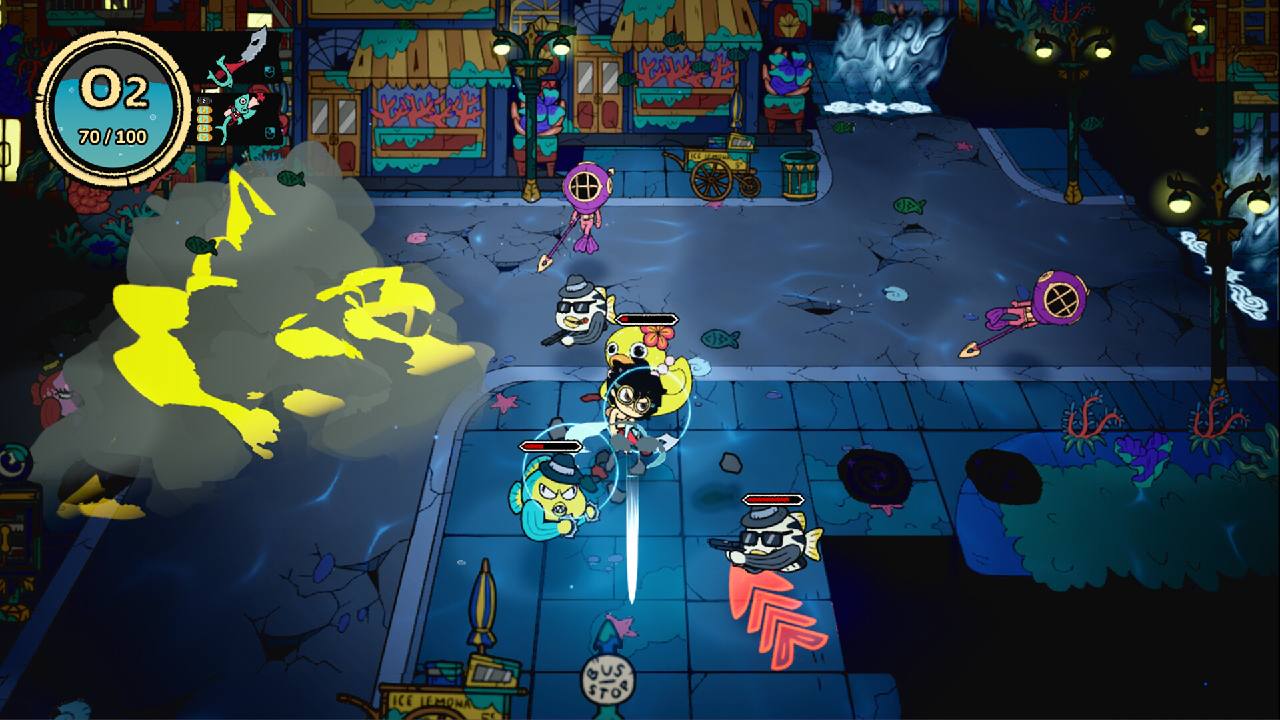
Your expeditions follow a clear roguelite structure. You choose a destination, check its expected resources and collectibles, pick your weapons, and eventually assign crew members with passive bonuses. You can find combat rooms, treasure, Shell Boost cards, special encounters, and vendors. Later, you can choose branching routes.
The rooms are compact, often square, which keeps the pace moving. A typical dive can be finished in roughly three to five minutes, and that short length becomes one of the game's biggest strengths. You can complete a run, collect what you can, return to the surface, make some progress in town, and jump back in without feeling like you have committed to an hour-long session.
Your biggest gameplay rule is oxygen.
Instead of giving you a traditional health bar, Port of Jumanah uses oxygen as both your life meter and your timer. Your oxygen decreases as you explore, and taking damage removes a large chunk of it. Oxygen shells and tanks can refill the meter, but refills are not always enough to fully restore you. Every room has pressure. Staying too long can be dangerous, while rushing unthinkingly can also get you hit.
That system gives the combat its own rhythm. You are always balancing exploration against survival. You can't just stop and clear every object without thinking about time, especially when the environment hides resources inside breakable props. Wood, fabric, scrap, pearls, and oxygen-related pickups can come from objects, so smashing the scenery is worthwhile.
At the same time, breaking everything can slow your movement when you are trying to preserve momentum. Your sword is the simplest part of the combat, but it feels responsive. The basic attack uses a three-hit combo, while the dodge gives you a way to avoid incoming attacks.
Enemies give you a heads-up before they swing - ranged attackers and the heavier foes especially - so once you've learned their patterns, you can actually react in time. You also have a secondary gadget that uses limited ammunition, giving you a ranged option to complement the sword. The harpoon is your first ranged tool, but gadgets can change during a run.
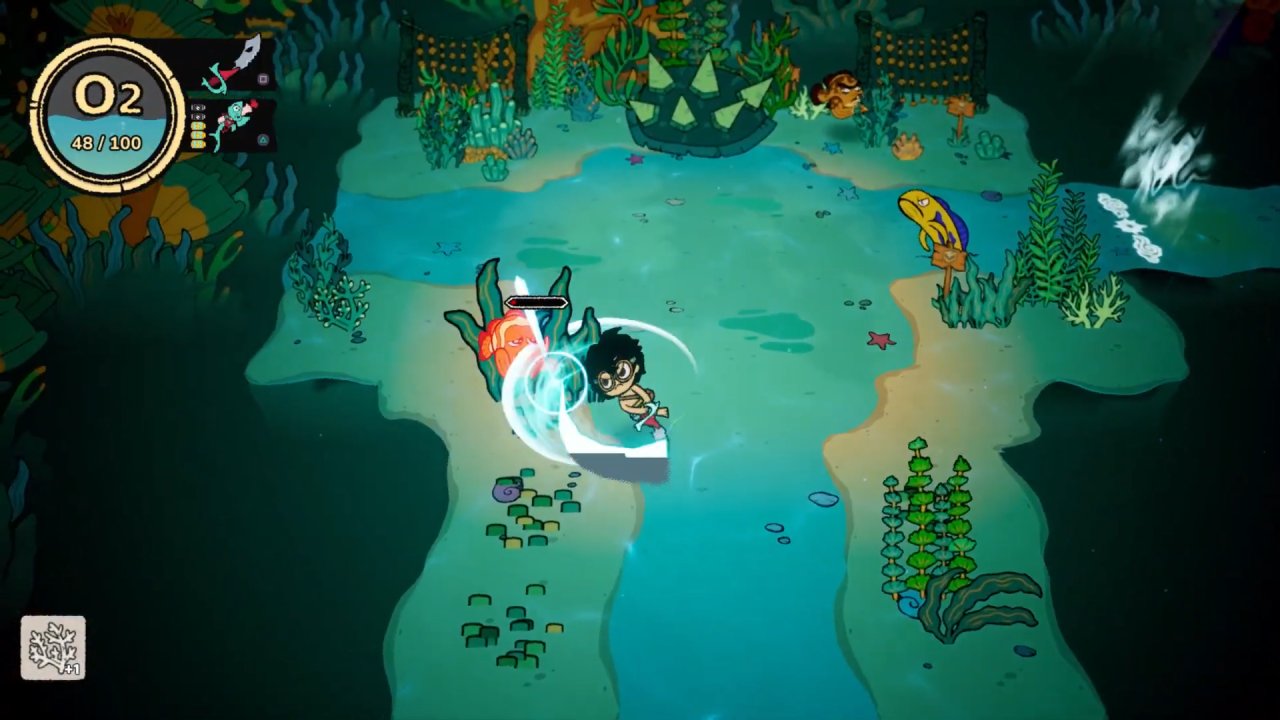
You can find options such as the Mechanical Piranha, which releases seeking fish that attack enemies for you.
Gadget ammunition can be replenished through battery pickups dropped by enemies, so the system works like an active ability charge rather than a weapon with unlimited shots. You can even weave gadgets into your sword attacks, including canceling parts of a combo to fire quickly.
Enemy variety is simple but useful. You fight fish that rush you, creatures that throw projectiles, stationary enemies that act like turrets, and larger enemies with wide attacks that can remove a huge part of your oxygen in one hit. Some rooms also use environmental hazards such as poison pools that can apply debuffs.
As your runs continue, learning what each enemy does becomes more important because enemies can overwhelm you when several attack patterns overlap. The boss encounters push this a little further. One fight throws multiple enemies and waves at you, while another features the sea-lion version of Mr. Sambal, the animal star mentioned earlier.
Keeping your distance, watching attack patterns, and allowing your passive effects to work can make these fights manageable. You also get a clear sense of your build's strength because a strong run can turn a difficult enemy into something you barely need to worry about.
Your build develops through Shell Boosts, weapons, random encounters, and crew traits.
Shell Boosts are temporary perks that affect the current expedition, and you can eventually improve their effectiveness permanently through town progression. Early examples include a chance to stun enemies with melee attacks, exploding enemies on death, a chance to prevent oxygen loss after taking damage, lightning triggered by debuffs, and extra gadget projectiles.
This is where Port of Jumanah feels closest to other action roguelites without simply copying one system. You can find synergies, but the variety does not feel as deep as the most item-heavy games in the genre. The title lists 40 Shell Boost entries, yet several are separate numerical versions of similar effects, such as damage boosts at different values.
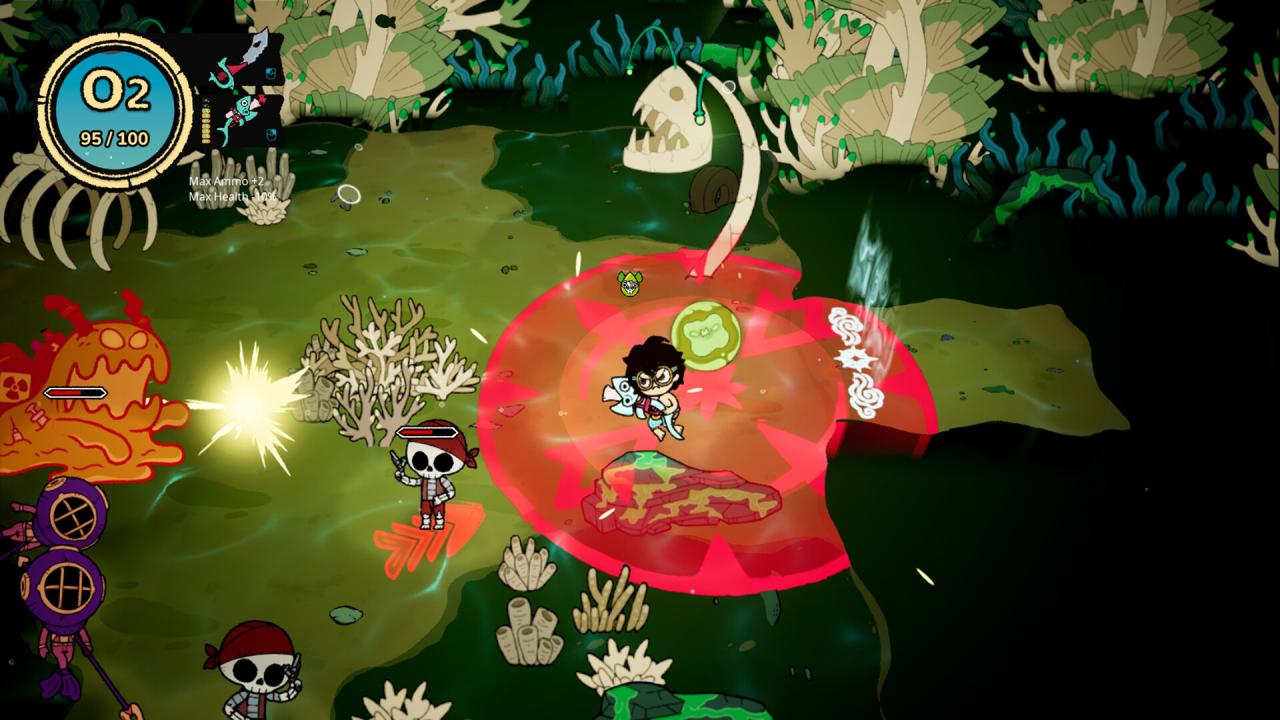
That makes the total sound larger than the actual number of completely distinct ideas. You also get weapons with different characteristics rather than only small stat changes. The starter sword deals around 10 damage with fast swings, while a Level 2 hammer can hit for about 23 damage but has a slower attack animation. That creates a basic trade-off between speed and impact.
When combined with perks and crew bonuses, even a simple weapon can fit into a very specific strategy. Your crew can have an even bigger effect. Once you upgrade the boat, you can assign crew members who give passive bonuses. Sultan, for example, can provide a damage mechanic that rewards you for refusing to dodge.
Each successful attack without dodging builds the bonus until it reaches a very large increase, then dodging resets the stacks.
That changes how you play because you are encouraged to stand your ground, kill quickly, and use defensive perks to compensate for the lack of evasive movement. Other crew effects focus on resources, including a chance to double what you gather. You can also upgrade the boat itself.
A basic hull increases crew capacity and gives you additional oxygen-related upgrade options, while ship flags are mainly cosmetic. The system is not complicated, but it gives the town a clear purpose beyond being a place where you accept dialogue.
Your progression is split between what you earn during a run and what you keep between runs. When you die, you lose the crafting materials gathered on that dive, so failure has a real cost. At the same time, certain permanent gains remain with you. One major example is Lady Rai's reward, which permanently increases your maximum oxygen capacity. Starting from 100 oxygen, that reward raises your base capacity to 110.
The random encounters add another layer to each expedition. You can meet characters such as Qursana, the pirate queen who dramatically demands money before deciding to hand you gold instead. On another dive, you can meet the White Witch, who gives you a temporary blessing that changes your stats.
These encounters are not guaranteed every time, which keeps them from becoming a completely predictable opening ritual.
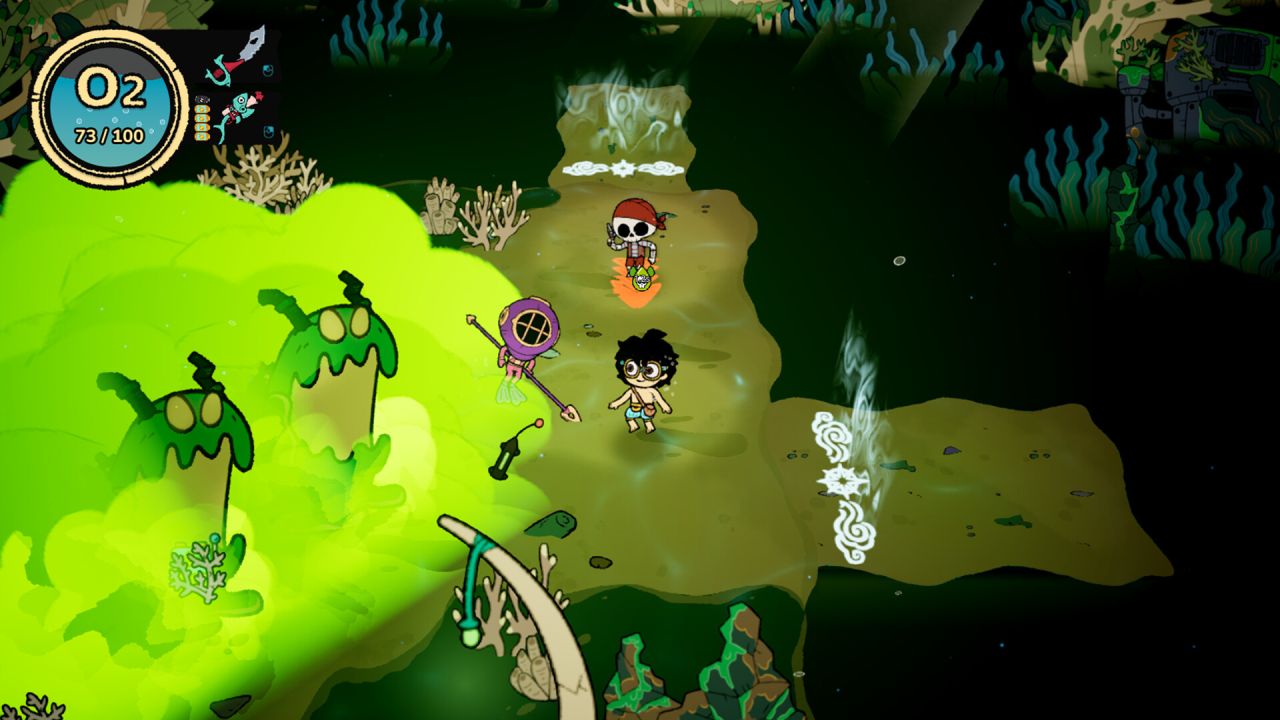
Port of Jumanah also uses side quests to make your return to town matter. Villagers will send you off on all kinds of errands - grabbing them coffee, reeling in a specific fish, or tackling expedition challenges. Those activities can unlock new crew candidates and additional town functions. The result is a loop where a short dive feeds your town progression, and your town progression gives you more tools for the next dive.
You should not expect a heavy XP-grinding system here. The progression is more focused on resources, permanent upgrades, crew unlocks, weapon access, and improved perk effects than on watching a traditional character level climb. That works well with the short run structure because you are usually gaining something tangible from each attempt, even when the run itself goes badly.
Visually, you get a stylized underwater world with a distinct identity. The art direction supports the Arabian Gulf setting without becoming overly complicated. The town, sea creatures, turtles, fish, pirate characters, witches, and sea-lion encounters all fit the playful tone. Some scenes lean into goofy character designs, while the underwater environments give you enough detail to understand where you are and what can be interacted with.
Once the full HUD appears, the interface is fairly clean. You can see oxygen, ammunition, gadget information, and a minimap showing room layouts. The minimap becomes particularly useful because it helps you understand what lies around you before you commit to a direction.
The main weakness is less about visual quality and more about presentation consistency.
One upgrade interaction even refused to respond to the controller until you clicked the mouse. That kind of issue can interrupt an otherwise smooth run. The sound design backs off the drama; it doesn't try to make every dive feel like a Big Moment, and that restraint suits the game's goofier streak.
The writing leans hard into jokes, whether it's your character rambling at a piece of kelp or some fish supposedly swallowing an entire boat whole. You get audio feedback for attacks, gadgets, and combat effects. A brief audio glitch occurs during the tutorial, but overall the sound fits the arcade-like pace.
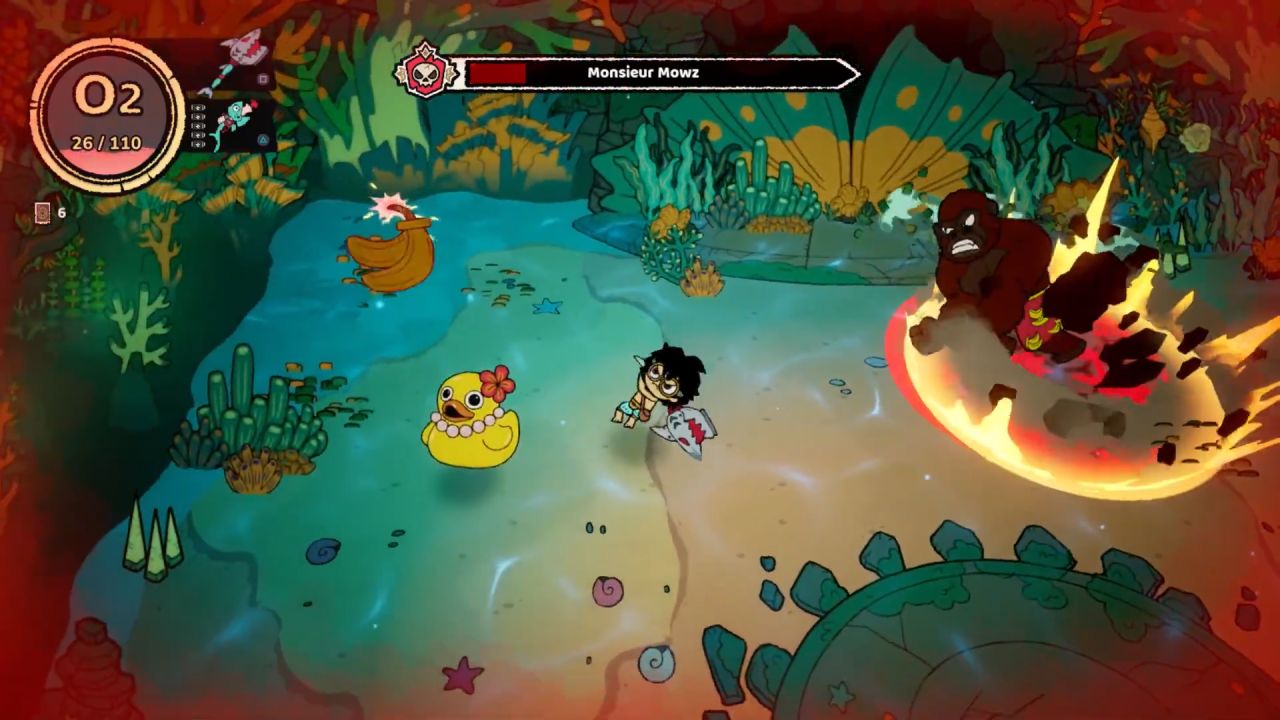
After spending time with the full loop, you get a pretty clear picture of what Port of Jumanah is trying to be. It is a bite-sized action roguelite built around fast dives, a persistent hub, simple build choices, and a setting that gives the whole package its own personality. You do not get the enormous item combinations or deeply layered systems that define the most complex games in this genre, but you do get something easier to pick up and play.
You also get a structure that respects short sessions. A few minutes underwater can give you resources, a quest objective, a new perk, or a collectible before you return to the surface. Then you can talk to someone, unlock a crew member, improve your boat, or head straight back into another dive. The loop stays straightforward.
Port of Jumanah works best when you treat it as a quick arcade-style roguelite rather than a massive progression game.
The oxygen mechanic gives every dive urgency, the combat stays readable, and the humor keeps the world from taking itself too seriously. The weaker perk variety and occasional interface roughness keep it from reaching the genre's deeper end. Still, the Arabian Gulf-inspired setting, short expedition structure, and town progression give it enough personality to stand on its own.
Editor, NoobFeed
Verdict
Port of Jumanah delivers quick underwater roguelite dives - oxygen management adds real tension; combat's simple, but the town hub and cast add charm. Perk variety is thin, but the loop works.
78
Related News
No Data.