
REANIMAL Review
Nintendo Switch 2
Tarsier Studios’ bleak return to childhood horror, bigger, stranger, and more unsettling than ever.
Reviewed by Asura Kagawa on Feb 13, 2026
If you talk about REANIMAL, you have to talk about the influence that Tarsier Studios had. The people who made Little Nightmares and its sequel, which started a new type of creepy, kid-friendly horror movies, did not come back to make the third movie in that series.
They took a step back and started to build something new. REANIMAL is not a follow-up, a spin-off, or a spiritual rehash that was sold with a smile. It is a new piece of intellectual property that clearly has the studio's DNA in it, but doesn't fit into any one category.
.jpg)
Tarsier has been known for years for writing atmospheric horror about weak children navigating gross worlds. The company leans into that identity in REANIMAL, but it takes away a lot of the fun that made their earlier work more approachable. What's left is coarser, darker, and sometimes really scary. It's not as much like a fairy tale as it is a memory that you're not sure you want back.
This is not a new idea. The scope is bigger, the presentation is bolder, and the tone is more experimental.
You wake up in rough water. A small boat moves toward faraway red buoys that are blinking. A boy pulls a girl on board, and she almost chokes him before she realizes who he is. There are no long explanations, story dumps, or goals that scream at you from the HUD. The only way you are told that something is very wrong is through hints and little conversation.
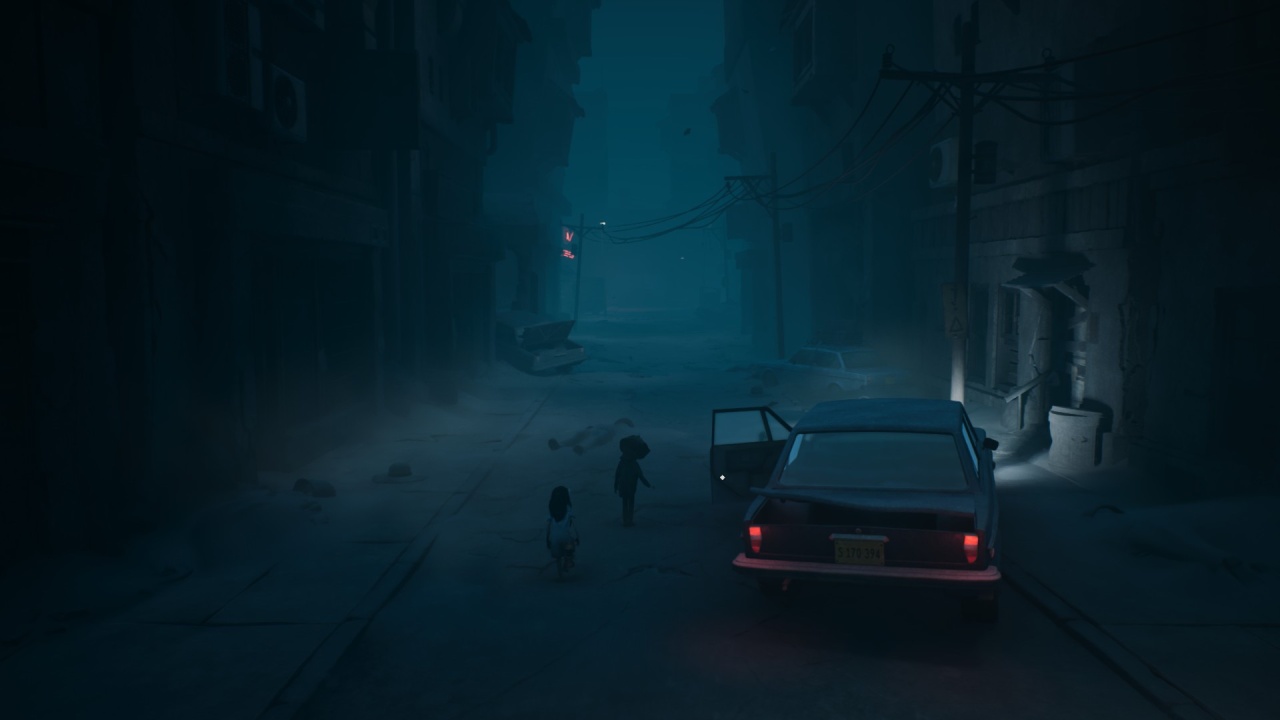
The brothers look for their missing friends all over a broken island that seems both familiar and strange. Abandoned trainyards, flooded hotels, crumbling movie theaters, empty farmlands, and industries that have been forgotten all give the impression of a world that used to work normally but has since fallen apart into grotesque distortion. Bodies without bones move slowly across floors. Long-legged people lurk in the hallways. The game's name and its creepy feel come from the way the animals are shown.
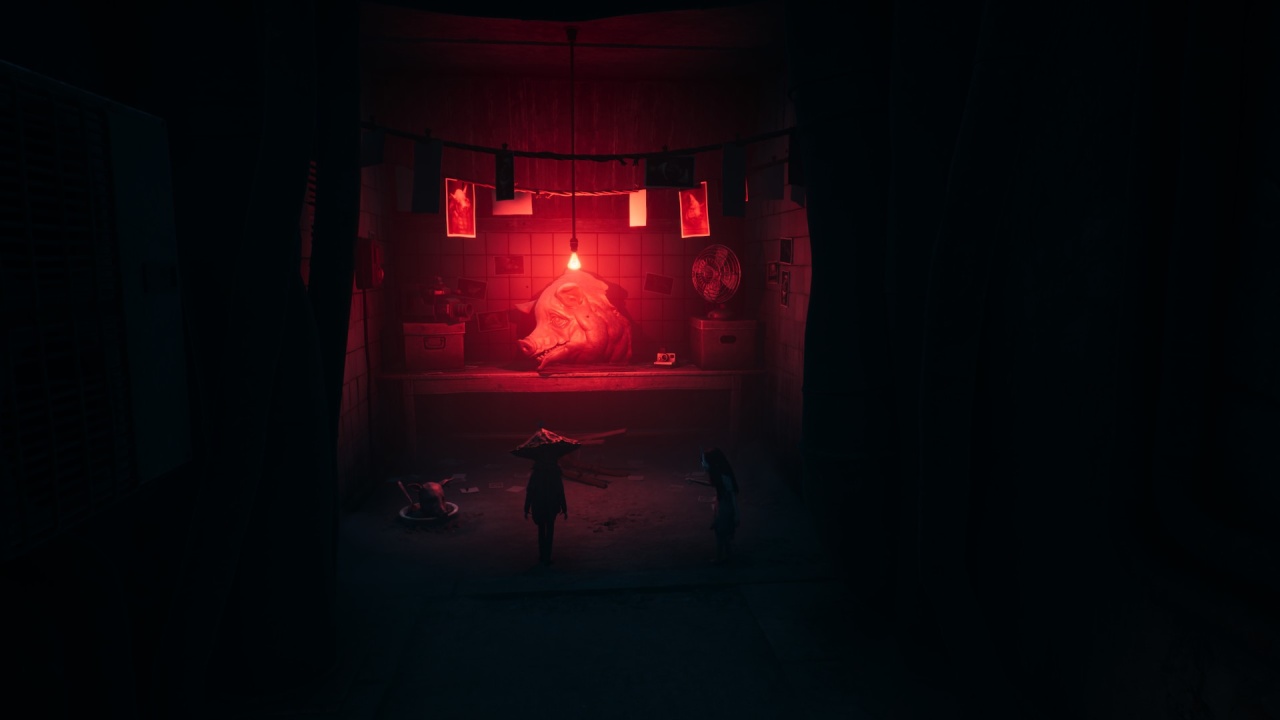
The stories in REANIMAL grow on absence. Conversations are rare but powerful. When people talk, it's short and understated, and it never takes away from how lonely they are. Most of the work for environmental storytelling is done by things like drawings, butchered remains, and small environmental signs that hint at big ideas without saying them directly.
What happened to this world, the main riddle, never feels like the only thing that's going on. Instead, the emotional center is in the relationship between the brothers and the heavy sadness that covers the island. The ending, which is meant to be vague, changes a lot of what you have seen. Some people may find it frustrating, but when you think about it, it has a shocking emotional weight.
That's not what REANIMAL does. It asks you to be uncomfortable, to think, and to ask questions. That remaining doubt becomes a part of what it is. The main type of game in REANIMAL is a third-person action-adventure with platforming, stealth, light fighting, and puzzles to solve in the environment. This game has a fully 3D world, unlike its predecessors, which had a side-scrolling view. That change changes the way you explore in a big way.
You aren't always led from left to right; sometimes you have to turn the camera around, look behind some trash to find an alley, or go back to find a tool.
The main loop is about going into a new area, finding the area's main threat, avoiding dangers, and finally finding one of your lost friends. At the end of each level, there is a scene from a movie, either a scary chase or a dramatic showdown.
You can play by yourself with the second child controlled by AI, but it's clear that the game was made to be played with other people. You can work together with other people in person or online, and the style always encourages teamwork. One person can open a door while the other gets through.
One person can be in charge of a boat and the other of a harpoon, which is used to kill enemies and bombs. These exchanges make sense and aren't usually too hard to understand. The sailing parts are like a breather between the main parts. They give you room to breathe without easing the stress completely. It makes you feel small even when you're out at sea.
The progression is mostly linear, but there are times when it takes short breaks for exploration. For those who are curious, hidden masks and concept art are fun to find, but they don't really do anything useful technically. Pacing is important to REANIMAL. It slowly adds features and doesn't make them too hard to understand very often. This limit keeps progress going, but people who want deep mechanical systems may still want more.
The puzzles in REANIMAL are easy to solve. Most of them involve finding something and using it in the right way, like getting pliers to cut a fence, getting a key for a locked door, or starting machinery to make a road. Observing the environment is very important. Instead of putting a lot of marks on the screen, the game trusts you to notice visual cues.
The puzzles aren't as hard as they were in earlier Tarsier games. This might seem like a step back to some fans. The trade-off is a better pace, though. The game almost never stops because of bad thinking.
A lot of the first half is made up of stealth parts. You duck between pieces of cover and hide under tables while you wait for the monsters that are prowling to move. There is real tension in these scenes, but they also depend on trial and error. You are caught and sent back to the last checkpoint if you mess up with timing or a plan.
Thankfully, inspectors are kind. Death rarely feels like a punishment for lost progress.
But having to restart over and over again can get annoying, especially in co-op, where misunderstandings or small mistakes in positioning can cause failure. In some situations, there aren't any clear warning signs, so you're not sure if the failure was your fault or the result of bad planning.
Combat is basic and meant to be easy. Adding a simple fighting system gives the game a sense of urgency without making it too action-packed. In later parts, set pieces add more moving parts, like things that sprint, slide, and quickly adjust to different camera views.
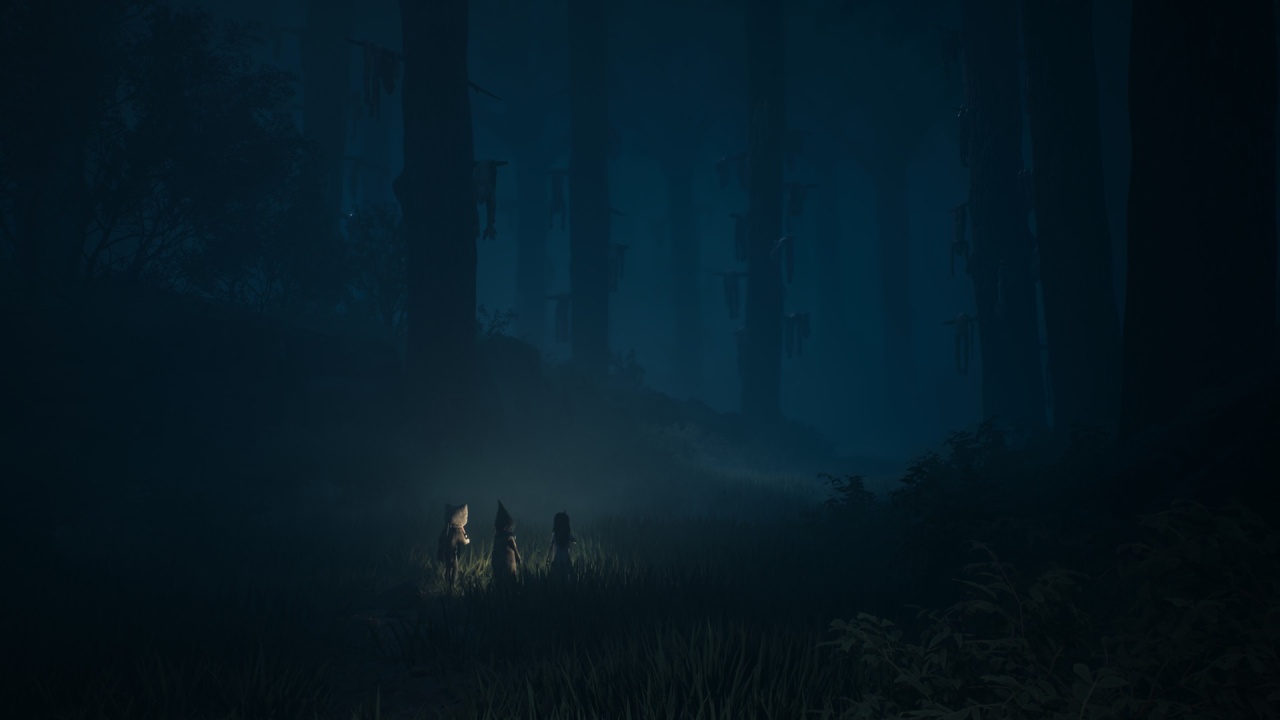
You don't get experience points, skill trees, or grind. The story drives progression. You briefly get more powerful tools, but you don't really level up. This means that the attention stays on the atmosphere and the story, not on making the stats as good as possible. REANIMAL is striking to look at. It has an eerie beauty, even though most of the colors are muted, like grays and deep blues.
When color shows up, especially sharp reds, it cuts through the darkness with purposeful force. The work with the camera is especially noteworthy. It moves quickly and smoothly, sometimes moving through windows and other times following fast-paced chase scenes. Wide shots make you feel small and helpless in the face of huge industrial ruins or creepy monsters.
The framing looks like it was done on purpose, as it belongs in a movie. Environmental detail is very careful. In the background, electric lines move slowly. Rain-slicked objects have a faint sheen. Buildings look and feel old and worn. The world's texture alone tells us about its past.
Performance is mostly stable, with only a few minor technical problems being mentioned from time to time. The strong lighting design makes the lack of HDR support on some platforms feel like a missed chance, but the presentation as a whole is still amazing.
REANIMAL is easy to miss. It is oppressive and well-balanced, putting mood over show.
Sound design is a big part of how powerful REANIMAL is. The background noise, like gulls flying far away, buildings creaking, and footsteps reverberating, builds anxiety long before the enemies show up. It is planned to be quiet so that fear can build. Subtle music that builds up during set pieces and drops back during exploring. It never gets too much. Instead, it makes feelings stronger when they need to be.
Adding voiced conversation is a big change from what Tarsier had been doing before. Thank goodness it works. Few lines are used, and they are presented with a fragile sense of reality. Instead of breaking the experience, they make it stronger. Sounds of animals are especially good because they are wet, warped, and scary. A lot of scary things are just as scary to hear as they are to see.
REANIMAL isn't a big change from what Tarsier Studios has always done, but it is a bold step forward. It’s not as soft as other works, more like a fairy tale, and has a meaner, more emotional tone. The switch to full 3D allows for more exploration while keeping the tense atmosphere that marks the studio's style.
Some people may disagree with how mechanically simple it is. Puzzles aren't as heavy. The fighting is limited. Trial-and-error silence can be annoying. Still, the game's pace, dramatic ambitions, and overall feel keep you moving forward. The real strength is how it makes you feel: small, unsure, uneasy, and sometimes sad. It stays. Even after the credits roll, there are still questions that beg to be answered.
The goal of REANIMAL is not to get bigger in hours. It wants to make people feel more strongly. If you like atmospheric horror that lets you figure things out on your own, this is the book for you.
Staff Writer, NoobFeed
Verdict
REANIMAL is a dark, movie-like horror journey with easy controls and a vast atmosphere. Even with its annoying stealth, the story stays with you long after it ends, showing that Tarsier Studios' signature fear is still unmatched.
85
Related News
No Data.