
Xbox's Latest Layoffs Leave id Software Reeling as Reports Suggest Major Cuts and Uncertain Future
The studio behind modern Doom reportedly loses most of its workforce, raising concerns over id Tech, future projects, and Microsoft's long-term plans.
News by Mahi Araf on Jul 10, 2026
If you've been following Microsoft's latest round of Xbox layoffs, one studio stands out more than almost any other: id Software. The developer behind the modern Doom games has reportedly been hit so hard that many fans and former employees believe it has been reduced to little more than a support studio. For a developer that's spent decades pushing first-person shooters forward, the news has left many wondering how one of Xbox's strongest teams ended up in this position.
The reports paint a worrying picture. According to information that came to light this week, id Software apparently lost 136 employees in Microsoft's most recent round of cuts. A WARN notice filed in Texas showed that 96 employees in Richardson, Texas, where the studio is based, were laid off, while another 40 remote workers were also affected.

Last December, the Communication Workers of America listed the studio at around 185 employees. If that number were still accurate before the layoffs, it would mean that most of id Software's workforce has now been let go.
A WARN notice is a legal filing that companies submit before carrying out large layoffs. It's designed to notify local governments when a significant number of jobs are being eliminated, partly because those losses can affect local economies and unemployment systems.
The numbers alone are significant, but what former developers have shared publicly has added even more weight to the story.
Former visual effects artist Derek Best, who worked on all three modern Doom titles, described the cuts as devastating in a lengthy LinkedIn post—according to him, years of experience disappeared almost overnight.
Best claimed the visual effects department was reduced to a single artist with no lead or producer remaining. He also said the engineer responsible for major improvements to id Tech's visual effects pipeline, including work on the particle editor, had been laid off.
Developers with expertise in Houdini, the software used extensively for procedural modeling and animation workflows, were reportedly removed as well. That leaves much of the technical knowledge built during the development of Doom: The Dark Ages without the people who originally created it.
His conclusion was especially blunt, arguing that Microsoft had effectively "nuked" the team while throwing away years of technical progress in the process. Those comments have resonated because id Software has built a reputation for producing some of the best-optimized games in the industry.
Whether you're playing on Xbox Series X, PlayStation 5, Steam Deck, or PC, recent Doom games have consistently been praised for combining impressive visuals with excellent performance. Doom Eternal, in particular, became one of the best examples of how well optimized a modern shooter could be, while Doom: The Dark Ages continued that trend with smooth performance across multiple platforms.
That reputation is closely tied to id Tech, the engine the studio has refined over many years.
Instead of relying on widely used third-party technology, id Software continued improving its own engine to suit the fast-paced gameplay the series is known for. For many observers, seeing a team responsible for that level of engineering expertise lose so many people is difficult to understand.
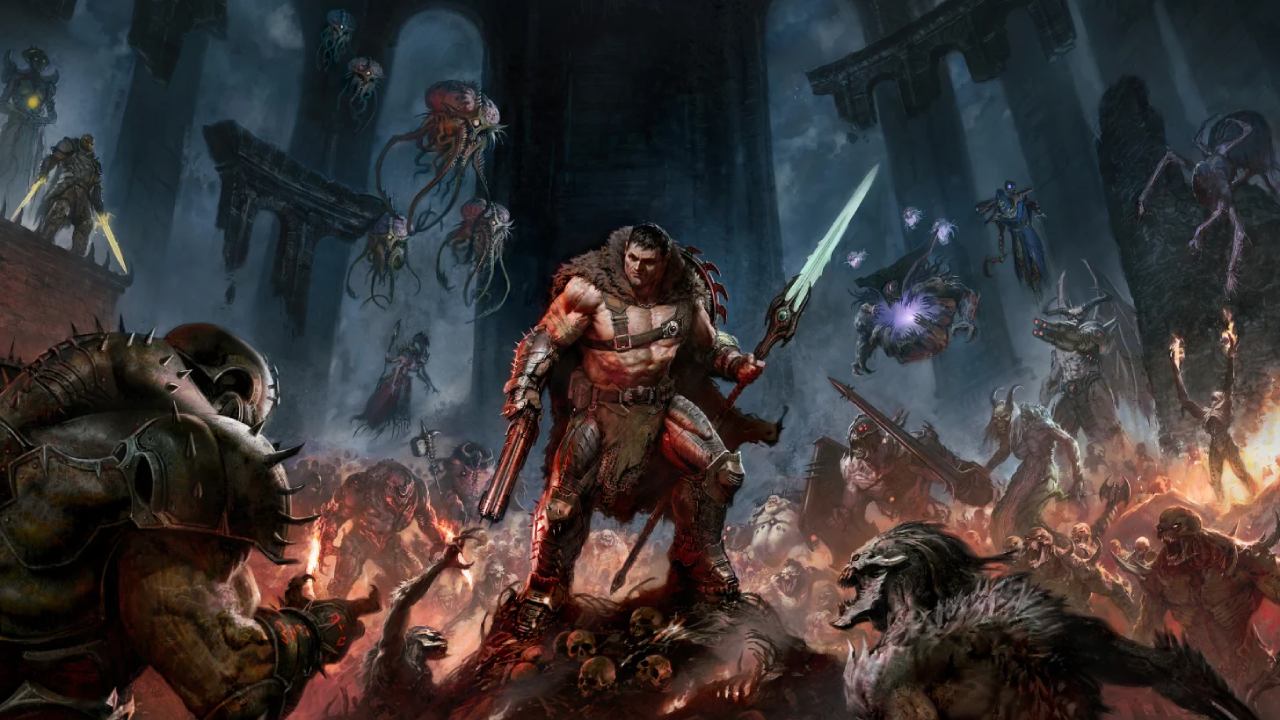
The layoffs also affect a studio that has maintained a fairly consistent release schedule. Doom (2016), Doom Eternal, and Doom: The Dark Ages arrived over roughly nine years, giving the studio an average development cycle of about three years between major releases.
Those games weren't simply sequels that repeated the same ideas either.
Doom (2016) focused on relentless run-and-gun action. Doom Eternal expanded the formula with more movement and vertical gameplay, encouraging players to stay airborne constantly and chain abilities together. Doom: The Dark Ages returned to a more traditional gameplay, where standing your ground, blocking attacks with the shield, and fighting enemies head-on in heavier combat was the key. Each release introduced meaningful mechanical changes while still feeling unmistakably like Doom.
Because of that track record, many fans see the recent layoffs as an abrupt interruption to one of gaming's most consistent development teams. The concerns extend beyond Doom itself. Best also suggested that the remaining studio could eventually stop building games around id Tech altogether and instead transition toward Unreal Engine.
That possibility has sparked another wave of debate.
While Unreal Engine powers countless successful games, it has also faced criticism in recent years for shader compilation stutter and performance issues across various releases. By comparison, id Tech has long been viewed as one of the industry's strongest proprietary engines, particularly for fast-paced shooters.
Supporters of the studio argue that, rather than scaling back id Tech, Microsoft could have expanded its use across Xbox Game Studios. Teams like MachineGames already have experience working alongside id Software, leading some to believe the engine could have benefited more first-party projects instead of being sidelined.
The argument isn't simply about choosing one engine over another. It's also about preserving the engineering talent that built the technology in the first place. Experienced engine programmers remain some of the hardest developers to replace, making these cuts especially notable.
Another former employee, visual effects artist Todd Boyce, criticized not only the scale of the layoffs but also their timing.
According to Boyce, the job cuts happened just one day before the release of a major expansion for Doom: The Dark Ages. He said developers had spent months working unpaid overtime to finish the DLC before many of them were ultimately let go. Boyce described the decision as corporate greed and argued that it showed little respect for the people who helped complete both the expansion and the technology behind it.
id Software also operates a studio in Frankfurt, Germany, which focuses on id Tech development. At the moment, it remains unclear whether that office has been affected. European labor laws often require different procedures before large-scale layoffs can take place, meaning any potential changes there may not become clear for some time.
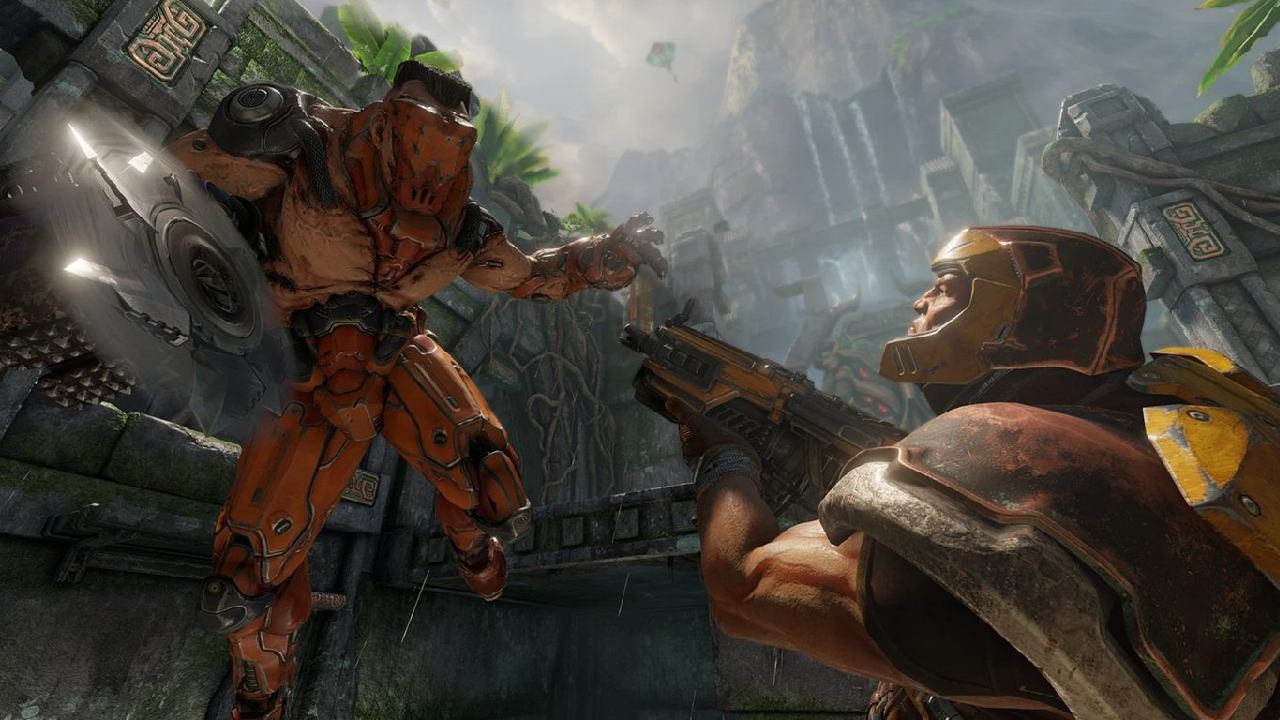
For now, uncertainty remains over the future of the engine team outside the United States. The layoffs arrive just as Doom: The Dark Ages continues expanding with its newly released Revelations DLC.
Early impressions suggest the expansion adds substantial new mechanics and feels closer to a standalone experience than a typical add-on.
That continues a pattern many players have noticed over the past decade, in which every new Doom release introduces another major twist to the formula rather than simply repeating what came before.
As discussion around the layoffs continued, another report surfaced detailing projects id Software was reportedly developing before Microsoft's restructuring. According to GamesBeat, the studio had multiple ideas in various stages of development.
Those reportedly included the recently released Revelations expansion, a multiplayer co-op Doom game, support work on the Perfect Dark reboot following The Initiative's closure, a brand-new IP codenamed Fury inspired by John Wick with sci-fi noir, cyberpunk, and gun-fu gameplay, and another new project called Ironwood, described as a robot-themed Western survival game inspired by Westworld.
The future of all those projects is now uncertain following the layoffs. Among them, Fury has attracted particular attention because it represents an entirely new franchise. Many players have argued that both Xbox and PlayStation need more original IP alongside their established series rather than relying so heavily on sequels and remakes.
Reports have also suggested Microsoft intends to concentrate more heavily on established franchises such as Doom, Quake, and Wolfenstein.
That strategy has faced criticism, however, as a number of people who helped build those franchises have reportedly been laid off as part of the restructuring. That contradiction is one of the biggest talking points around Microsoft's latest moves.
For many fans, id Software has always been known for maintaining a clear creative identity. Its games rarely stray from what they promise, but each release still manages to find room for new mechanics without losing touch with the series' winning formula.
That consistency has helped make the developer one of the most respected shooter studios in the business.
Some commentators have even stated that Microsoft might have expanded the reach of id Software instead of reducing it. With Halo transitioning away from the Slipspace Engine toward Unreal Engine, there are those who believe id Software's technical expertise could have played a much larger role across Xbox's first-party portfolio.

Instead, Microsoft's latest restructuring has left the future of both the studio and its technology uncertain. Unlike many of the rumors circulating online, the layoffs themselves are no longer speculation. The workforce reductions have been confirmed, and the impact is already visible through public filings and statements from former employees.
Exactly what id Software looks like from this point forward remains unknown.
Whether the studio continues leading Doom, Wolfenstein, and Quake, evolves into a support developer, or undergoes even more structural changes in the months ahead will become clearer over time.
For now, one of gaming's most influential shooter studios is entering one of the most uncertain chapters in its history, with more questions than answers for both its workforce and its long-term creative direction.
Senior Editor, NoobFeed
Related News
No Data.