
AMD Ryzen AI Halo Mini PC Outperforms Steam Machine, but Costs Nearly $4,000
A Ryzen AI Max Plus395 mini PC running SteamOS outperformed the official Steam Machine across every benchmark tested.
Hardware by Shinji Okazaki on Jul 09, 2026
Mini PCs built around powerful integrated graphics continue to blur the line between dedicated gaming hardware and general-purpose systems. One such device, built around AMD's Ryzen AI Max Plus 395 processor and marketed primarily as an AI workstation rather than a gaming machine, was installed with SteamOS to see how it compares against Valve's own Steam Machine.
Despite lacking dedicated graphics or GDDR6 memory and relying entirely on an integrated GPU, the results show it outperforming Valve's hardware running the same operating system. The Halo mini PC packs meaningful hardware into a compact one-liter form factor.
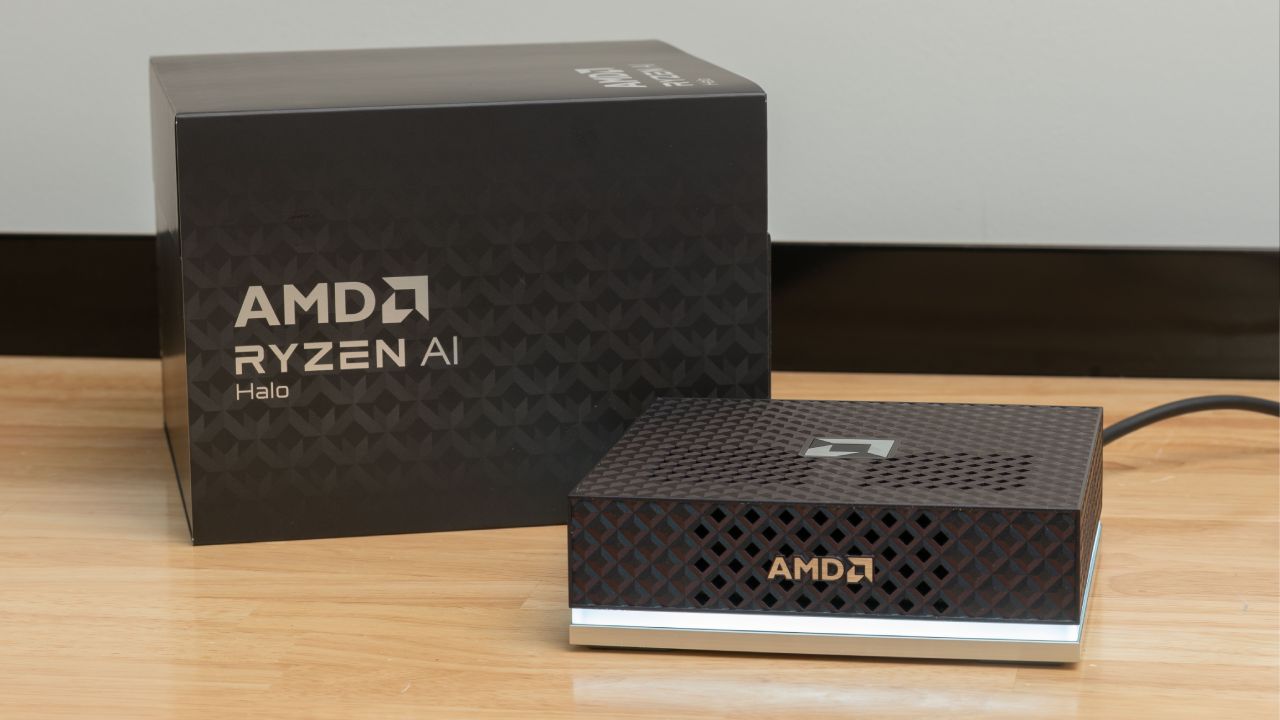
Ryzen AI Max Plus395 Halo Mini PC Specs and Design
It runs on the AMD Ryzen AI Max Plus 395 processor, offering 16 cores and 32 threads at up to 5.1 GHz. The integrated GPU is the Radeon 8060S, based on the RDNA3.5 architecture with 40 compute units, and is currently among the most capable integrated graphics solutions available.
The system includes 128GB of unified RAM running at 8000 megatransfers per second, with up to 96GB of that pool dedicated directly to the iGPU. Out of the box, the system ships with either Linux or Windows, though for this comparison, SteamOS was installed in place of the default operating system.
Installing SteamOS on the Halo mini PC proved straightforward, using the same stable release image available directly from Valve's website for the Steam Machine and Steam Deck, which was installed from a USB drive. The system booted immediately after installation, with the same performance overlay, frame limiter, and VRR and tearing controls available as on official Valve hardware.
TDP control was left to the system's BIOS rather than being manually configured. Decky was also installed to enable further customization, and while the interface looks noticeably different from that of the Steam Machine or Steam Deck, WiFi, Bluetooth, and sleep functionality all worked correctly.
Sleep and Wake Support With the Steam Controller
One of the more notable results was full sleep-and-wake support with an official Steam Controller connected via the system's USB-C ports. Putting the system to sleep caused its front LED to shift from white to a pulsing light blue, and pressing the Steam button on the controller successfully woke the system back up, restoring the display shortly after.
This kind of wake functionality is uncommon among non-Valve systems running SteamOS, making setups like this a realistic option for a living room, even though the hardware itself carries a premium price for that use case. With SteamOS running on the stable channel, version 3.8.14, a series of built-in benchmarks were run at maximum settings across several games, with no upscaling enabled on either system to keep the comparison consistent.
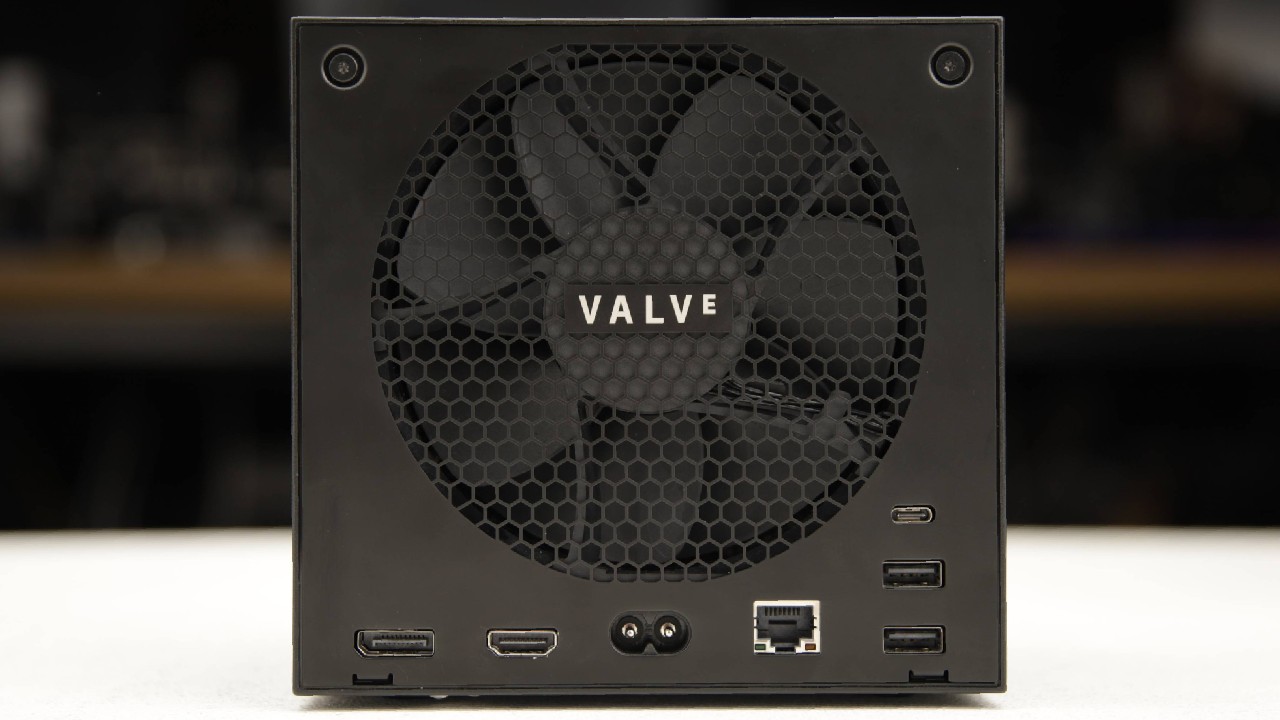
In Shadow of the Tomb Raider, the official Steam Machine averaged 118fps at 1080p, compared to 138fps on Halo, a gain of about 17%. At 1440p, the Halo held a 20% advantage, and at 4K, that gap widened to 41%. In Cyberpunk 2077 at ultra settings with no FSR enabled, the Steam Machine averaged around 74fps at 1080p, a fully playable result on its own, while the Halo reached 84fps, a 14% gain.
At 1440p, the Halo's advantage grew to 16%, and at 4K, the gap reached 50%, with the Steam Machine dropping to around 18fps without any upscaling at that resolution. In Horizon Zero Dawn Remastered at very high settings with no FSR, the Steam Machine averaged 58fps at 1080p compared to 72fps on Halo, a 24% gain. At 1440p, the advantage was 17%, and at 4K it reached 23%, a smaller gap than expected, given that this particular title tends to be demanding on integrated graphics generally.
Real World Gaming Performance Across Additional Titles
Beyond the direct comparison benchmarks, several additional titles were tested to evaluate real-world performance on the Halo specifically. Forza Horizon 6 performed particularly well, running at 1440p ultra settings with no upscaling at all while still averaging above 70fps, a stronger result than typically expected without FSR enabled on integrated graphics, aided in part by the game favoring AMD hardware.
Elden Ring ran at high settings with no upscaling, occasionally dipping to around 58 fps, though a variable-refresh-rate display kept the experience smooth without noticeable tearing. Doom The Dark Ages, a title known for heavy VRAM demands, required dropping to high settings with FSR set to balanced at 1440p despite the system's 96GB of iGPU-dedicated memory.
Spider-Man 2 performed inconsistently between sessions, a pattern common to this title on SteamOS generally, running well at 1440p with high settings and FSR set to quality. However, disabling FSR caused frame rates to dip below 60 fps. This particular Halo configuration, built around 128GB of unified memory, costs approximately $3,999, compared to the Steam Machine's starting price of $1,049.
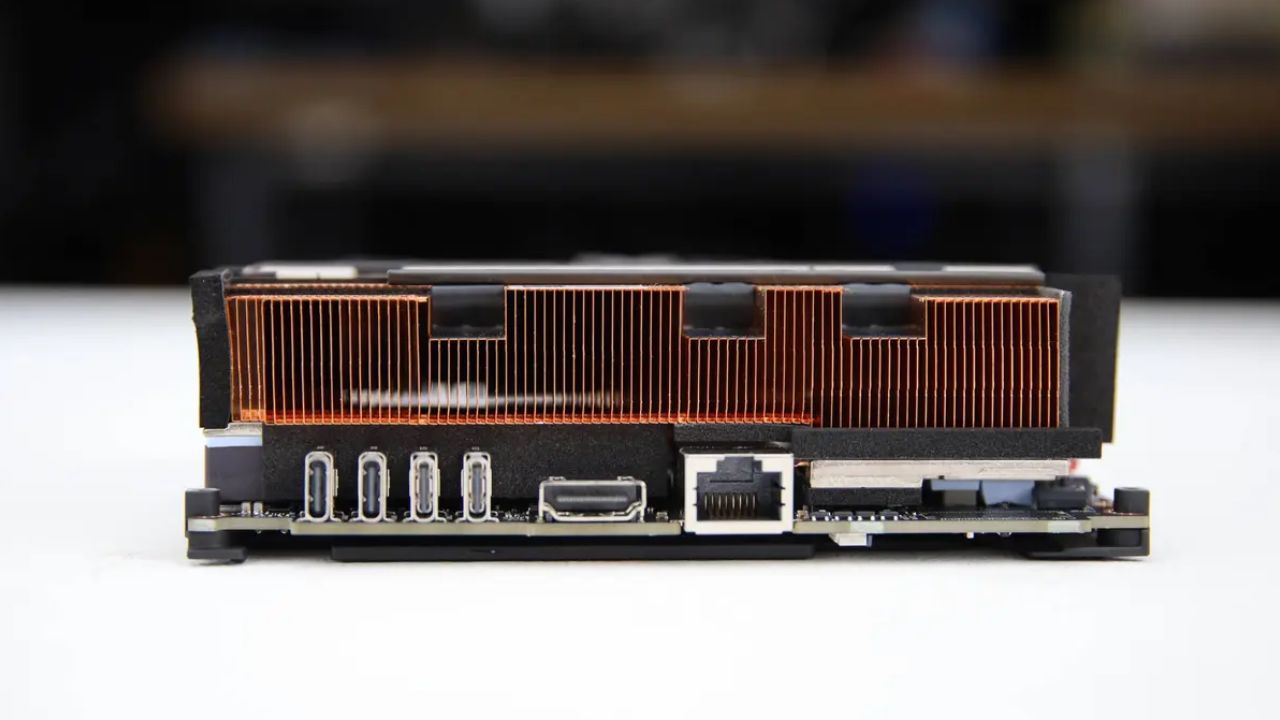
That means the performance advantage documented here comes at close to four times the cost.
It makes the Halo a difficult recommendation purely as a gaming device. Buyers specifically seeking this iGPU with a lower memory configuration can find the same Ryzen AI Max Plus 395 chip in other mini PCs for around $1,999. However, those configurations typically ship with 64GB of memory rather than 128GB, limiting how much can be allocated to the iGPU as VRAM.
Given that allocating more than 32GB of VRAM appears to offer diminishing returns for current games, the cheaper configuration likely delivers similar real-world gaming performance at roughly half the price of the unit tested here. For anyone specifically shopping for a gaming device, the Steam Machine remains the far more cost-effective option despite the lower benchmark numbers.
Editor, NoobFeed
Latest Articles
No Data.