
Rue Valley Review
PC
Rue Valley – Loops, lives, and layers of the mind.
Reviewed by Maisie Scott on Nov 15, 2025
The company that developed Rue Valley, Emotion Spark Studios, has been slowly making a name for itself in the narrative RPG genre by making worlds that are both immersive and emotionally charged. Although the company is fairly new to the gaming world as a whole, it has already gotten a lot of attention for its story and ambition, often being compared to games that defined a genre like Disco Elysium.
Together with Owlcat Games, known for making well-made and thought-provoking independent games, Rue Valley is both a continuation and a step forward for the company. This isn't like other RPGs, where you have to be good at fighting or collect all the loot. Instead, it's an exploration of the mind, repetition, and the human state.
.jpg)
The idea for the game originated from a demo released earlier this year. It showed a time-loop storyline that was deeply connected with character psychology.
Early reviews got a lot of attention from narrative RPG fans, mostly because it had undertones of Disco Elysium but looked through its own unique lens. When making the game, a lot of thought went into how personality, feeling, and player choice would interact with the time-loop system. The result is a world that feels alive and responsive, even though it's only in a 47-minute loop.
In Rue Valley, players take on the role of Eugene Harrow, a guy who is sent to a small, rundown town for therapy. Eugene almost immediately realizes that he is stuck in a 47-minute loop that starts at the end of his therapy session and ends with a huge explosion that alters the past.
The story is told through conversations, observations, and exchanges with the people who live in the town. Each of them has their own habits, quirks, and hidden agendas. The player has to piece together Eugene's personal story as well as the mysteries of Rue Valley. This means facing hard facts and exploring themes such as regret, mental health, and self-discovery.
The writing does a great job with mood and ambiguity. The game doesn't tell players directly why they are in the facility or why the loop happens. Instead, it lets you figure it out by interacting with other players, observing what's going on, and gathering "memories" that serve as hints.
The mystery parts are seamlessly woven into the daily repetition, which keeps players interested and helps them feel like they know the characters. Every person in Rue Valley, from therapists and motel receptionists to locals with mysterious goals, adds to the richness of the town's world. This makes it feel like a living, breathing organism stuck between the normal and the strange.
The narrative method allows different meanings to coexist, encouraging the player to bring their own ideas to the story. One loop may suggest that the town is cursed, another could mean that Eugene is dead or dreaming, and a third could mean that this is all part of a large therapy session. This tale that doesn't finish keeps the game fresh between loops and backs up the premise that it's just as hard and unexpected to comprehend other people as it is to understand yourself.
.jpg)
Rue Valley is mostly about exploring, talking to other people, and keeping track of time during the 47-minute runs.
Each loop starts in the same place, usually Eugene's therapist's office, and lets the player move around town, go to different places, and talk to people who live there. Time only moves forward when the player speaks, performs certain actions, or engages in "time-wasting" activities. This gives the player complete control over the pace and tactics.
Players must carefully watch how the people in the town go about their daily lives and keep track of when and where conversations can lead to new insights. Eugene is adding to his growing amount of knowledge, which is kept track of by a mind map or memory system.
This method is similar to Sherlock Holmes' mind palace in that it organizes clues, memories, and plans as nodes that are linked to one another. Willpower is needed to unlock some memories. You can gain willpower through conversation, exploration, and certain acts.
Spending time looking at things, thinking about talks, or trying out different dialogue options are all examples of things that can help you follow a certain line of inquiry. The mind map also lets you go back and look at choices you've already made, which gives you a sense of progress even though the loops are repetitive.
Personality traits are another important part of the game. At the start of the game, players give Eugene trait points for making choices, getting along with others, and feeling emotions. The choices you can make about what to say, how to investigate, and the results of certain activities are all affected by these traits.
These traits don't stay the same like other RPG stats do. The game, the setting, and the player's decisions all have an influence on them. For instance, being wet in the rain could make you more irritated, while consuming alcohol might make you more sociable but less caring for a short period. You can't simply utilize one build since Eugene's talents change depending on the environment. You have to change since this system is always changing.
.jpg)
Rue Valley isn't a combat-heavy game, but it does have some light puzzles that involve managing time, being aware of your surroundings, and making choices about what to say. Players often have to figure out how to get into a locked room, get information from a character, or make sure they do everything at the right time within the loop.
These puzzles are rarely about trial and error, but rather require observation, critical thinking, and creative problem-solving. From time to time, Eugene's social, emotional, or decisional stats are used to trigger skill checks that tell you whether the action you chose worked or not.
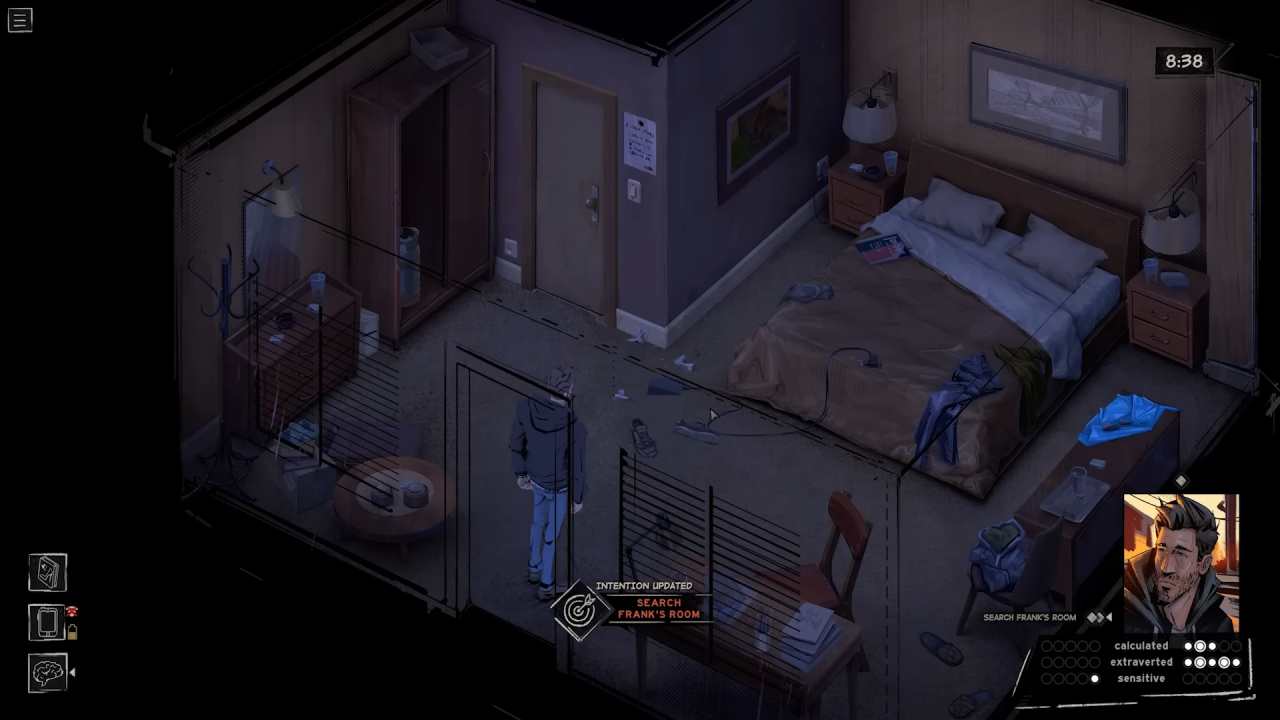
The best thing about this puzzle creation is how well it fits into the story. Almost every challenge reinforces character development or advances the story, making problem-solving feel meaningful rather than arbitrary. For instance, sneaking into a motel room to look for clues not only gives information but also has an effect on Eugene's mental health or image.
Some tasks, on the other hand, can get boring rapidly, especially near the end of the game. Certain missions need you to do the same loop over and over again to get certain results, which can be frustrating and make the game feel less new. Additionally, the time-based aspect of the tasks can sometimes be frustrating if you don't accurately gauge the timing of your interactions with NPCs or environmental occurrences.
Unlike most RPGs that focus on leveling up, getting loot, or fighting, Rue Valley tracks progress by measuring emotional growth, memory resolution, and willpower. Willpower is both a resource and a guard. It gives players access to critical memories or enables them to explore particular leads in an inquiry.
Every action—successful dialogue, exploration, or completion of tasks—feeds into this system, influencing not only the choices available but also Eugene's personality traits and overall state of mind. This method of progression reinforces the game's narrative themes. Instead of grinding for items or power, players "level up" their knowledge of themselves and the environment.
.jpg)
The feedback loop between discovery, discussion, and memory unlocking makes players want to try new things and take chances in each loop, which makes the game more replayable and immersive.
Even acts that don't work out provide players with information, as the time loop ensures that players retain what they learned before, allowing them to adjust their strategy without being punished too harshly for failures.
Rue Valley is really pretty to look at. The art style uses sketchy lines and slight motions to give the impression of instability and discomfort. Characters shake a little, as if they are vibrating out of sync with the world. This is a visual way to show worry and emotional stress.
The environments, which range from wrecked motel rooms to peaceful views, are well described to give both story context and visual clues for investigation. The color palettes change based on the mood and situation, which enhances the plot without overwhelming the player.
Some people might find the choppy animations disturbing at first, but they actually help to show how unstable the town is and how strange it is. In general, scene changes are smooth, but sometimes they stutter or take a long time to load, which might break the immersion for a short time.
The sound design in Rue Valley goes well with the story and the images. Sounds in the background, such as mild static, the hiss of a soda machine, or footsteps in the distance, help convey the passage of time and create the impression of space.
The music is simple but powerful, mixing sad, gloomy tones with subtle, humorous themes when things are lighthearted or exploratory. For a small studio, the voice acting is surprisingly good, with unique performances that make each character seem real.
The music really makes players feel like they're in Rue Valley's world, from a gas station clerk telling her family's story to a receptionist who can't stop thinking about key cards. Some environmental sounds, especially those from occurrences that are far away, are not always used correctly, which makes some parts of the game feel less lively.
Rue Valley is a very interesting and thought-provoking narrative RPG that looks at how psychology, repetition, and human connection all work together.
The time-loop mechanics, adaptive personality system, and memory-based development make for a gameplay experience that is both intellectually challenging and emotionally powerful. The puzzles and investigations, though often boring, help to support the main story by pushing people to pay attention, try new things, and think about what they see.
The art and sound design of the game work well with the plot, transforming the dull setting of a rundown town into a vibrant, living stage for Eugene's mental journey. Some late-game loops and rough technical parts may annoy players, but these are minor issues in an otherwise great experience.
Editor, NoobFeed
Verdict
Rue Valley is a great narrative RPG that combines time-loop mechanics, complex individuals, a well-written story, and mystery-driven exploration in a way that is both interesting and psychologically deep.
78
Related News
No Data.