
The Outer Worlds 2 Review
PC
The Outer Worlds 2 asks the daring question: what if the true bad guys weren't the corporations, but the people who continued accepting their lies?
Reviewed by Zahra Morshed on Oct 30, 2025
The Outer Worlds 2 had to live up to a lot of expectations ever since it was revealed. Obsidian Entertainment, known for games like Fallout: New Vegas and Pillars of Eternity, became famous for its sharp writing, storylines with clear consequences, and biting humor. As a proof of concept, the first Outer Worlds was fun and safe.
It was a pulp-fueled space western that never quite hit the daring heights of Obsidian's best work. That will not happen in The Outer Worlds 2. Released in 2025, The Outer Worlds 2 emerges not just as a sequel but as a statement of refinement. This game, built with Unreal Engine 5, adds Arcadia to the series' world, now a separate city from Halcyon's corporate wasteland.
There is a leap in both story and technology. Under Microsoft's guidance, Obsidian has grown into a multi-project giant that has put out three big games so far this year. Despite that, The Outer Worlds 2 feels carefully crafted, confident in its scope, and distinct in its personality. It's not revolutionary, but it is purposeful, a spacefaring RPG that values integrity over innovation.
The second part of The Outer Worlds starts in the Arcadian system, which has some of the same retro-futuristic charm as the first game but feels more real and political. You are in charge of a commander for the Earth Directorate, a self-proclaimed faction of order and justice waging ideological war against oppressive corporations and radical cults.
The story begins aboard a doomed space station, where a mission to recover a mysterious skip drive leads to disaster. After a decade in cryosleep, the protagonist awakens to find Arcadia fractured; its governments authoritarian, its corporations merged into the grotesque conglomerate Auntie's Choice, and its people clinging to survival through faith, profit, or despair.
Triangular conflict exists in Arcadia between the Protectorate, which is very religious, Auntie's Choice, which is very business-minded, and the Order, which is very moral. Despite the dimensional cracks tearing the system apart, each one thinks it has the key to rescue. This triad of ideologies drives your moral compass, and The Outer Worlds 2 lets every choice ripple outward, shaping alliances, endings, and even which companions remain loyal, or alive.
Obsidian's trademark writing shines here. Every dialogue tree feels deliberate, layered with humor and irony, often forcing you to question their own morality as much as the game's. The comedy is sharp and knows what it's doing. At its best, it makes The Outer Worlds 2 a reflection of modern greed and red tape. But that same fun can sometimes make it less emotional. The jokes often make terrible choices seem less serious. It's a tone dance that kind of works. You shouldn't take yourself too seriously because the game doesn't either.
Still, the narrative arc succeeds where it matters most. The central mystery surrounding the rifts and the political chess between factions sustains momentum throughout its 30-hour runtime. It never aims for the cosmic gravitas of Mass Effect, but it captures something rarer: an RPG that thrives on personality rather than pomp.
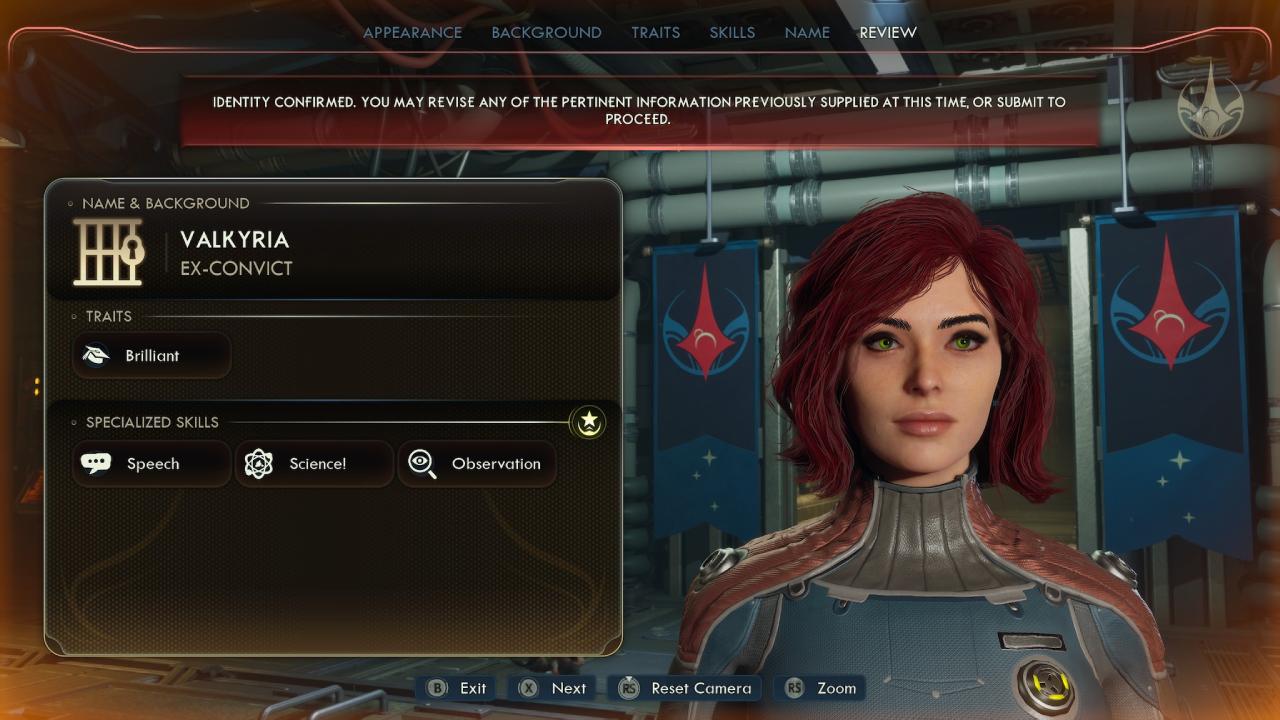
The Outer Worlds 2 is not a new game; it is a planned evolution of the first game. It no longer has the crowded feature charts of its predecessor. They have been replaced by twelve skills that are easier to use and a perk system that rewards loyalty over ease of use. You pick out traits, backgrounds, and tagged skills that are good and bad.
These affect not only the dialogue but also how people respond in the world. There's no respec feature, and that permanence adds gravity to every decision. Building your character feels less like optimization and more like authorship.
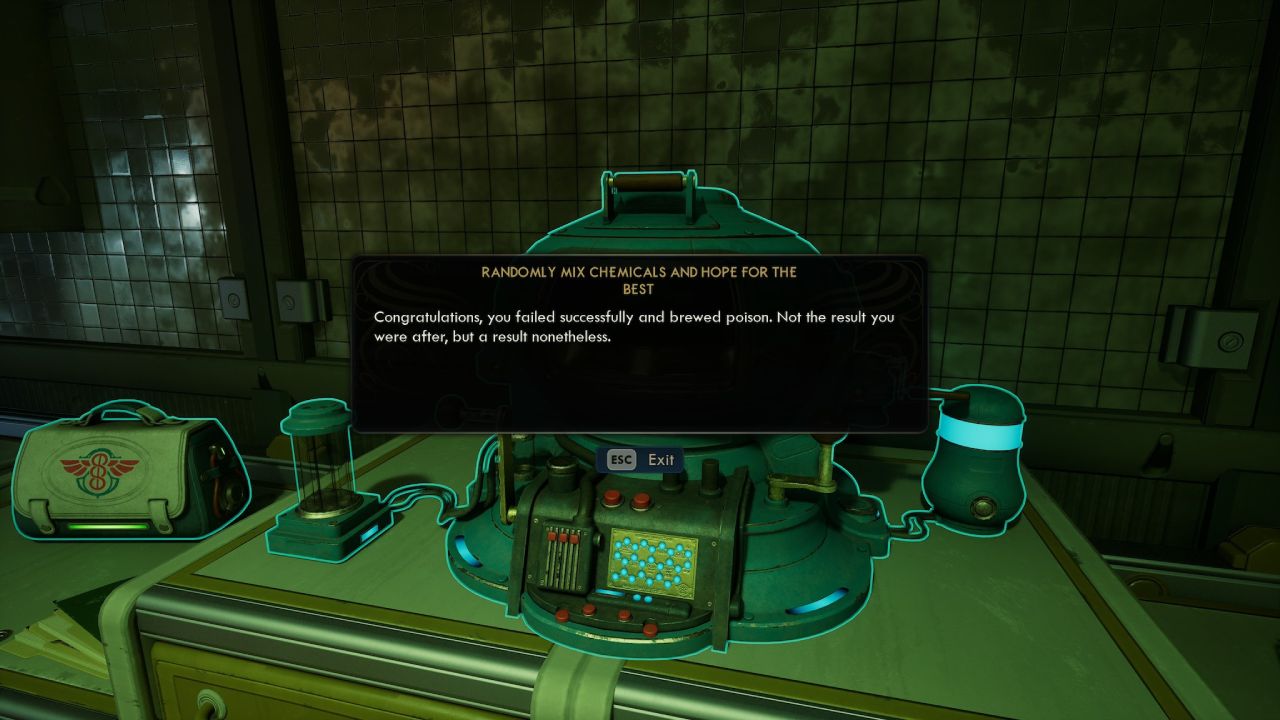
The game trusts you to think. Hacking, Engineering, Medicine, and Speech all have tangible effects beyond combat. An NPC's fate can be changed by having a high medicine skill. An engineer with high engineering skills can shift power and open up secret paths.
Obsidian has adopted a design philosophy that encourages people to be curious rather than to follow orders. There is no hand-holding based on waypoints. You could follow a line of broken power poles to an empty substation, fix its circuits, and find a secret item to collect, all without getting any new quests. The Outer Worlds 2 remembers that discovery is the soul of role-playing.
The flawed system, largely dismissed in the first game, returns with a new purpose. Flaws manifest dynamically based on your actions. If you steal too much, kleptomania sets in, and your character will accidentally pilfer in settlements, angering guards.
If you skip too many dialogues, you'll get Foot in Mouth Syndrome, a bug that gives you extra experience but makes you have to make choices about dialogues quickly. It's Obsidian's most original idea: a system that shapes not just how you play, but how the game perceives your habits.
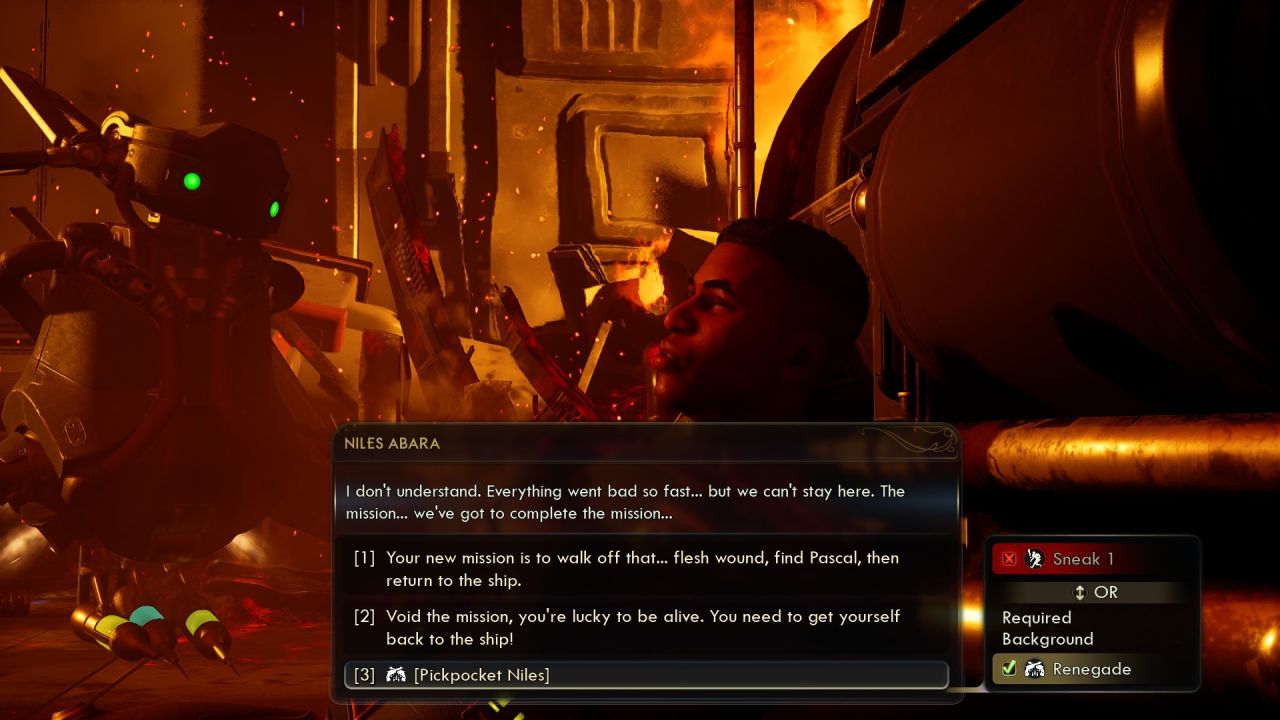
Companions are once again central to the rhythm of The Outer Worlds 2, though their impact is uneven. Characters like Tristan Rao: the hammer-wielding zealot, and Niles Abara, the straight-laced Earth Directorate soldier, are richly voiced and sharply written.
They fight, joke around, and question your choices. The interactions in this game feel more reactive than they did in the first one, but there is still no romance. That absence makes it harder to connect emotionally, leaving friendship where closeness could have made the story more powerful.
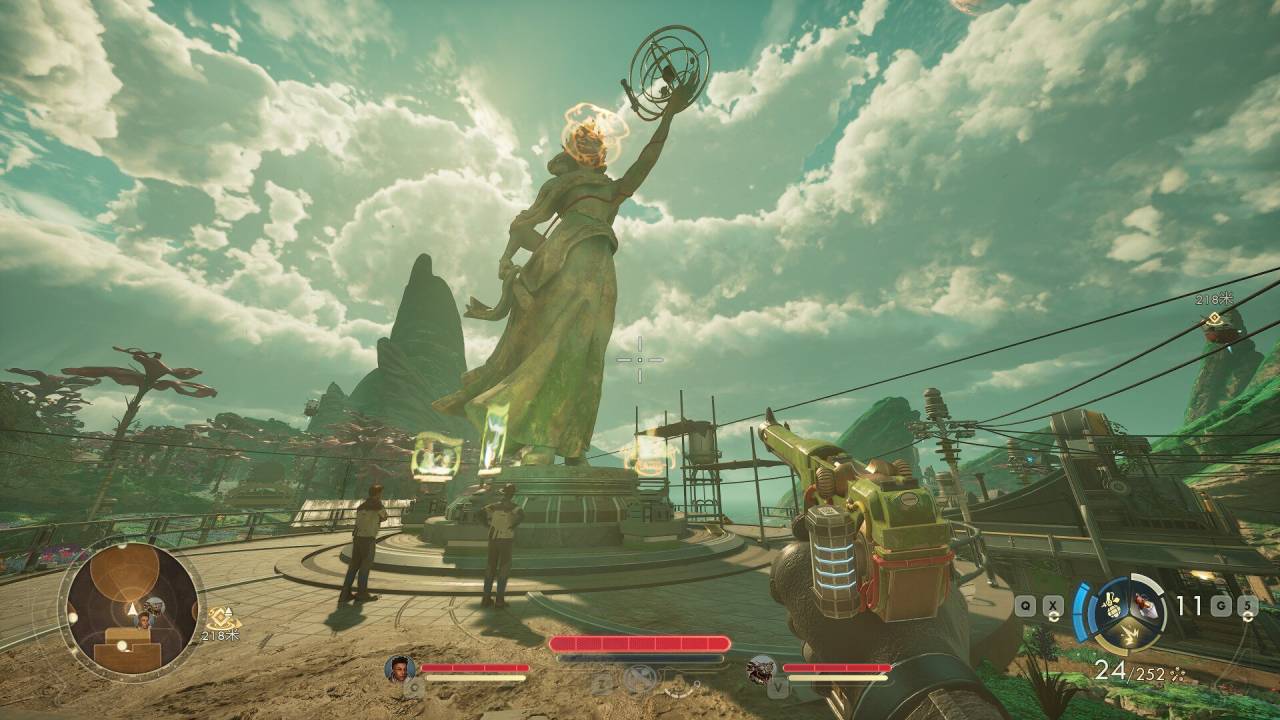
There are several semi-open planetary zones that you can explore. Each has its own look and subzones with quests. You can't drive cars around in the big, open world. Instead, things move quickly thanks to quick travel, stacked maps, and rooms that don't stick together. It's an RPG that prefers density to spread, which can be annoying at times, but never gets dull.
There is a thin line between making the battle better and making it the same in The Outer Worlds 2. The second one is much better than the first, but it still has beats that people are used to hearing. It sounds like the gun is firing more accurately, and feeling things gives you more information. A lot of damage is done by melee weapons, especially the new powered clubs and blades.
Yet, irrespective of the upgrade, melee still feels clunky at times, its hit registration is imprecise, and its momentum is inconsistent.
The game's combat loop is flexible, supporting stealth, ranged, and hybrid builds. A new gadget system amplifies tactical creativity. You can slow time, double-jump, or use dematerializing acid sprays to dissolve bodies mid-mission. Other gadgets like the N-Ray scanner reveal invisible enemies and traps, bridging stealth and exploration in inventive ways.
Unlike many RPGs, these tools remain useful throughout the campaign rather than serving as one-time gimmicks. What elevates combat is how it intertwines with the RPG systems. The skill checks and perks feed directly into how fights unfold. Putting a lot of money into Speech can increase the damage of long weapons, which can surprise charisma-driven builds in new ways.
Engineering and Science can improve elemental weapon mods by adding plasma or corrosive effects that make fights look like crazy explosions of energy and smoke. The balance isn't stable, though. The Outer Worlds 2 suffers from a reverse difficulty curve, challenging in its early hours, trivial by midgame, and suddenly punishing again when new enemy types appear.
This uneven pacing undermines the sense of mastery. Enemies oscillate between cannon fodder and lethal bullet sponges, and the absence of a stamina or encumbrance system removes any need for restraint. You can carry an arsenal's worth of weapons and consumables, turning inventory management into an afterthought. While liberating, it also diminishes tension.
Still, there's undeniable satisfaction in experimentation. Weapon modding is deeper than before, with multiple tiers of rarity and elemental customization. A silenced plasma pistol can kill whole squads before they can respond, and an assault rifle with two barrels feels heavy and works well.
The method rewards people who stick with a certain brand or type of weapon. In-game dialogue even makes fun of the builds you choose, with friends commenting on how violent or peaceful you are.
The Outer Worlds 2's combat is intense because it can be changed quickly. It matters what the player does, whether they're sneaking through vents or blasting through hallways. Firefights are more fun now that tools and better gunplay have been added, and the environments often look great with these changes. But AI that doesn't work right is still a pain.
Companions can go from being very useful to not being able to do anything at all, and they often fall apart like rag dolls in a fight. The enemy can also be hard to spot, and they sometimes don't even notice when you're being stealthy.
The moral weight that marks Obsidian's Speech doesn't fully carry over into battle. Violence doesn't seem to have any effect; bodies don't stay around for long, and towns don't remember killings for much more than a few reputation points lost. For a game that preaches agency, its world sometimes forgets to react to it. That disconnect keeps The Outer Worlds 2 from achieving the immersive brilliance of games like Baldur's Gate 3 or Disco Elysium.
Experience in The Outer Worlds 2 comes from what you do and how you feel about it. XP isn't just given for fighting; it's also given for good conversation, successful stealth, and even failure, so progression stays the same no matter how you play. When you level up, you get skill points and sometimes extra benefits. It's a simple rhythm that's tough to learn. You can't get any more XP after level 30. This takes away the reason to grind. It's a strange choice that slows things down after the game, but it shows that the person who made it values well-thought-out design over endless fluff.
Because the art direction is better than the physical force, The Outer Worlds 2 looks great. Arcadia has a lot of bright colors and silly sci-fi buildings. Because of the full day-night cycle, the views are always changing and are often beautiful.
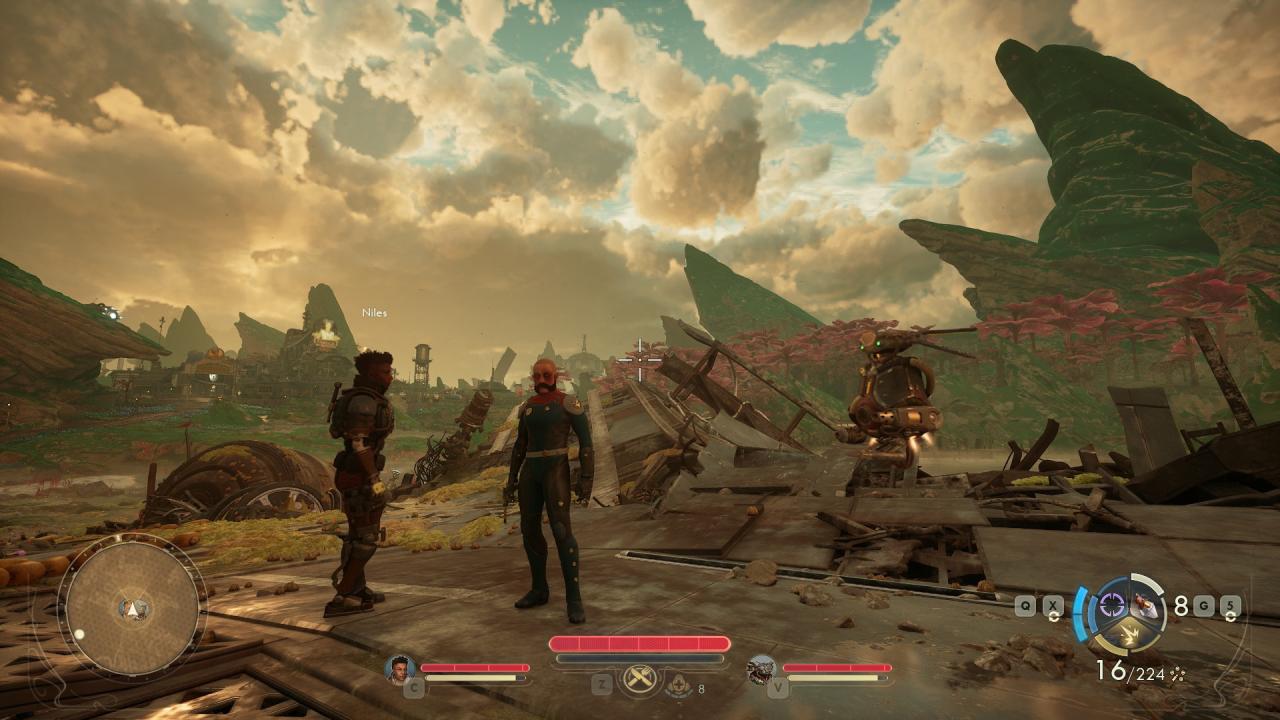
With the same level of skill, Unreal Engine 5 can power detailed scenery, neon towns that sparkle, and labs that are too small to fit everyone. The game runs smoothly at 4K and 100 frames per second on a PC with up-to-date hardware. On Xbox Series X, performance mode locks a mostly stable 60 FPS, while balanced mode delivers richer lighting at minor frame dips.
Character models are improved but not flawless. Close-up conversations occasionally dip into uncanny territory, their animations slightly too mechanical. Yet the overall presentation exudes identity, a retro-futuristic aesthetic that channels mid-century propaganda filtered through corporate absurdity. The Outer Worlds 2 doesn't aim for realism; it embraces stylization, which makes it timeless.
The audio design in The Outer Worlds 2 is an understated masterpiece. The music alternates between symphonic bombast and ambient sadness, setting the mood for both planetary exploration and tense diplomacy. The primary tune, both sad and happy, beautifully captures the series' duality: hope imprisoned by cynicism.
The voice acting is great all around. Each companion has its own personality, and their performances are solid and full of heart. The voices of merchants, guards, and spectators should all sound distinct, avoiding the tiresome repetition that early RPGs featured. The sound effects, particularly for energy weapons and environmental cues, make the game seem more authentic.
Gunfire has a bassy sound, explosions echo, and footfall sounds vary depending on the surface. It's creating a world with music. The Outer Worlds 2 is good because it builds on what the first game did well and finally does what it failed to do. It's clever without being childish, big without being empty, and sure of itself without being cocky.
The story is smart and has many layers, even though the humor sometimes falls into parody. Even though the gameplay isn't perfect, it gives you the freedom that most current RPGs try to fake. The game's flaws, unfair challenges, companion AI glitches, and abrupt ending slides are annoying, but they're understandable.
This isn't an exhibit about chasing animals. You can be smart and still enjoy this role-playing game. It shows that story depth and mass appeal can live together. It's not as daring as Baldur's Gate 3 or as experimental as Disco Elysium, but it stands proudly among them as a polished, deliberate work of craft.
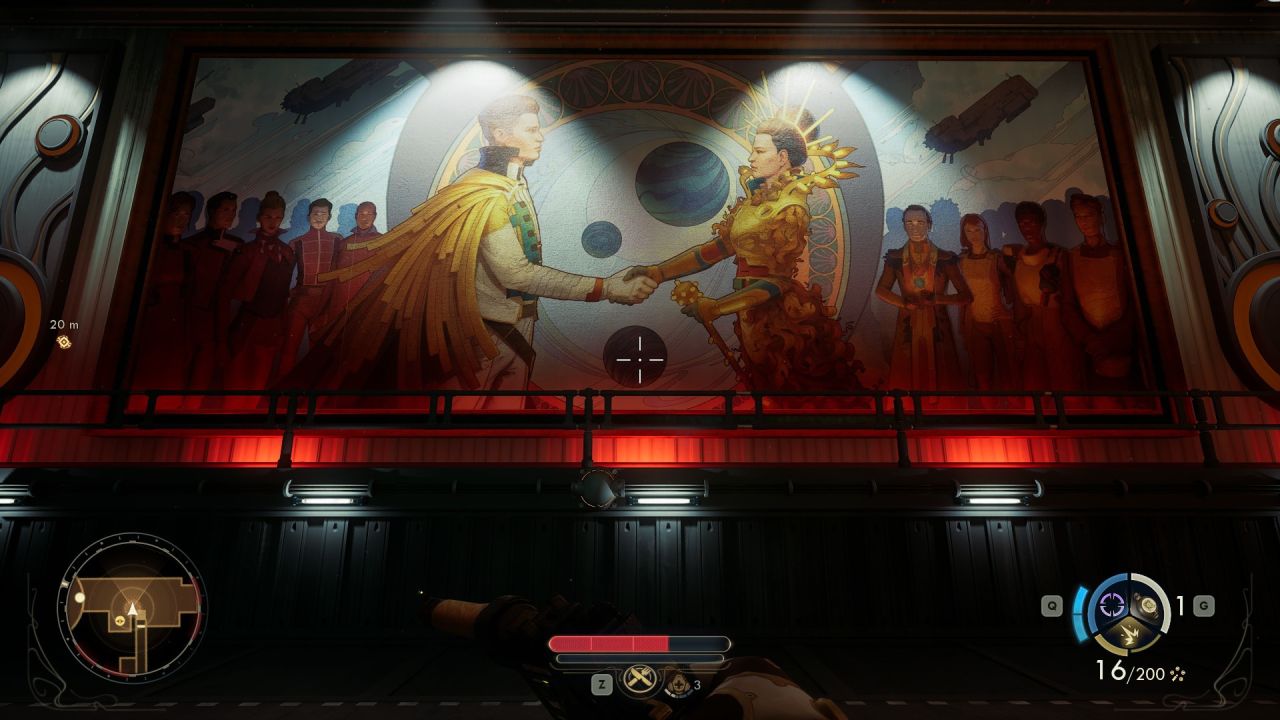
Obsidian has created a game that feels less like a sequel and more like a reclamation of identity. The Outer Worlds 2 doesn't reinvent the studio; it refines it. The moral choices sting, the humor lands, and the universe feels vast enough to lose yourself in. When the credits roll, you're left not with exhaustion but curiosity, an urge to see what outcomes your next set of lies, alliances, and betrayals might bring.
The final act still ends with the series's trademark slideshow epilogue, summarizing your decisions through text rather than spectacle. By today's standards, it's very old-fashioned and maybe even lazy. But it seems to fit. This sequel to The Outer Worlds isn't trying to be a movie; it's just happy to be Obsidian.
If The Outer Worlds 1 was a rough draft, The Outer Worlds 2 is the finished product. It is sleeker, more daring, and much surer of its humor. It's not perfect, but it's very different in a field where everything is trying to be the same. That alone makes the time worth it.
Contributor, NoobFeed
Verdict
A confident, witty, and deeply reactive sequel that turns satire into sincerity, The Outer Worlds 2 proves Obsidian's brilliance still burns brightest among the stars.
81
Related News
No Data.