
RuneScape: Dragonwilds Review
PC
Jagex takes the familiar RuneScape formula and turns it into a survival adventure filled with crafting, magic, dangerous monsters, base building, and plenty of nostalgia.
Reviewed by Maisie Scott on Sep 15, 2026
RuneScape: Dragonwilds is one of those games that sounds strange at first. RuneScape has spent decades being associated with MMORPGs, skill grinding, quests, equipment upgrades, and a massive shared world, so turning that formula into a survival-crafting game seems like a risky decision.
Instead of following the traditional MMORPG structure, Dragonwilds drops you onto a dangerous continent ruled by dragons and asks you to survive with almost nothing, then gradually build yourself into a powerful adventurer.
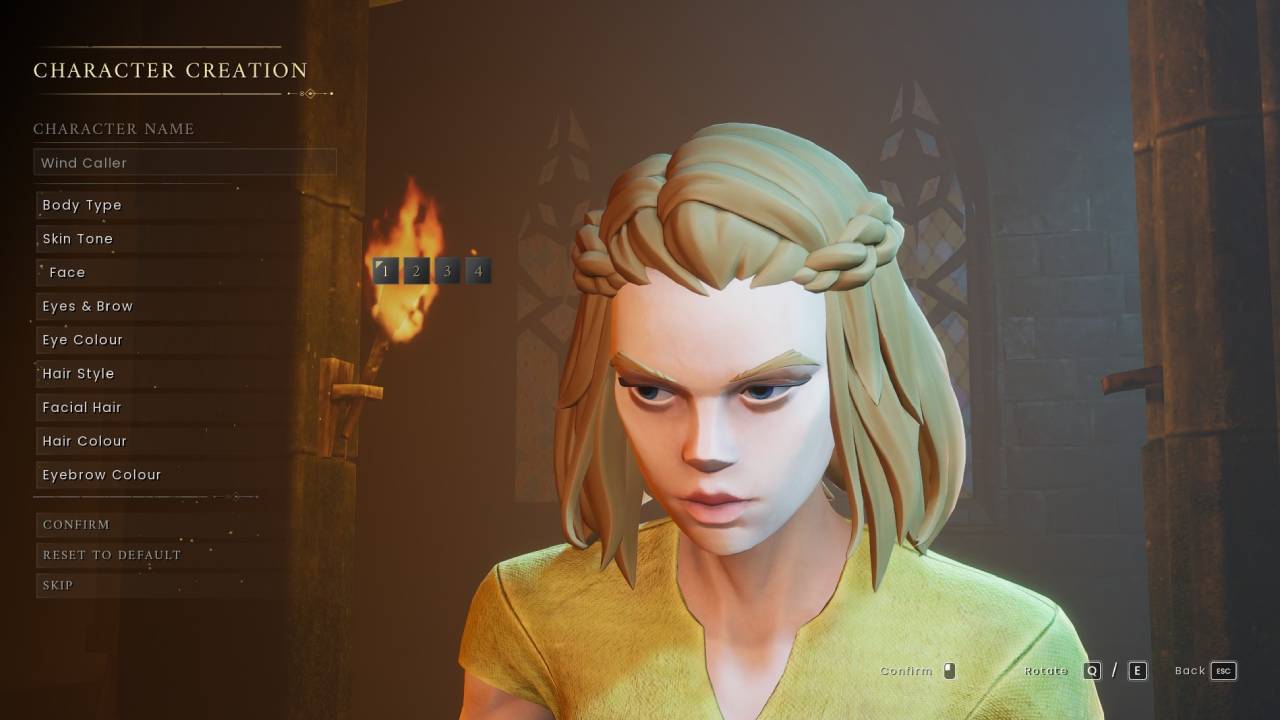
The interesting part is that the game does not simply strip RuneScape of its identity and replace it with generic survival mechanics.
Jagex carries over many things longtime players recognize, including familiar materials, monsters, quests, magic, weapons, progression systems, music, and references to classic RuneScape content. At the same time, you chop trees, mine rocks, build structures, manage resources, repair equipment, explore dungeons, and defend your home from enemy attacks.
That mixture gives RuneScape: Dragonwilds its own identity. You can immediately see influences from games like Valheim and Enshrouded in the core survival structure, but the RuneScape progression system makes the experience feel different.
The story takes place on a new continent in the RuneScape universe, where dragons have become a major threat. You start with little and must establish yourself in this unfamiliar environment before taking on the stronger enemies that control the region.
The narrative isn't the main reason you will keep playing, but the RuneScape references give it more personality than you would normally expect from a survival game. Throughout the experience, you will encounter familiar quests and characters, including references to Dragon Slayer, Doric’s Quest, and The Restless Ghost.
For veteran RuneScape players, these references aren’t just fan service; they help make familiar survival mechanics feel like they’re part of something bigger. Discovering a familiar material or a recognizable creature can instantly bring back the hours you spent with the original game.
RuneScape has decades of quests and lore that this format can adapt. Classic adventures such as Desert Treasure, Monkey Madness, Vampire Slayer, and Witch’s Potion would fit naturally into the world, while locations such as Falador and Seers’ Village could eventually provide much larger areas to explore.
The world also helps communicate the story without constantly interrupting gameplay.
You can find abandoned structures, enemy-controlled locations, citadels, dungeons, and other remnants of what happened in the region. Rather than relying solely on long conversations, the environment gives you reasons to explore and discover what is happening around you.
That said, the story has some limitations. NPCs have little voice, and many communicate only in short sounds or brief greetings. Such limitations can make some conversations seem less important than they probably are. The narrative is better as an exploration while playing, rather than a traditional story campaign that leads you from one cinematic scene to another.
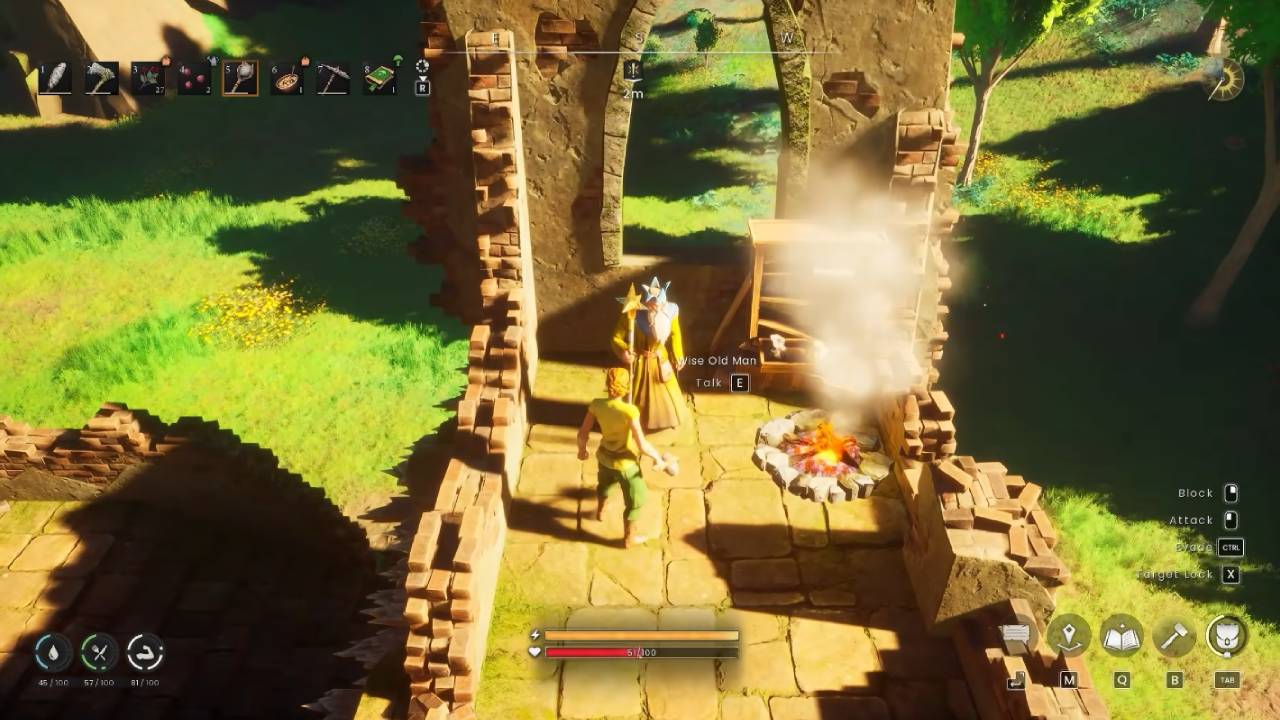
The main gameplay loop is simple: gather resources, build your base, craft better equipment, explore more, defeat stronger enemies, complete quests, and use your earnings to keep progressing.
First, you gather basic supplies like wood and stone. You use these to make crafting stations, tools, weapons, armor, and other handy equipment. There, it slowly ramps up its crafting requirements and the toughness of its materials.
This phase is where RuneScape: Dragonwilds feels most like a classic survival game. You spend your time cutting down trees, mining rocks, gathering materials from animals and enemies, and looking around the environment for resources. The difference is that the RuneScape skill system is layered on top of this loop.
One of the best ideas in the game is the magic system. Magic is not limited to combat. Spells can actually change the way you relate to the world. One spell lets you chop down several trees in a row; another can blow up mining nodes. You can accelerate some crafting, improve your movement, survive dangerous falls, and protect yourself from attacks.
This makes magic feel like an organic part of survival, not just something that matters in combat.
Runes are used to cast spells and can be found throughout the world or crafted yourself. Because they are relatively plentiful and don't take up much inventory space, you are encouraged to use your abilities.
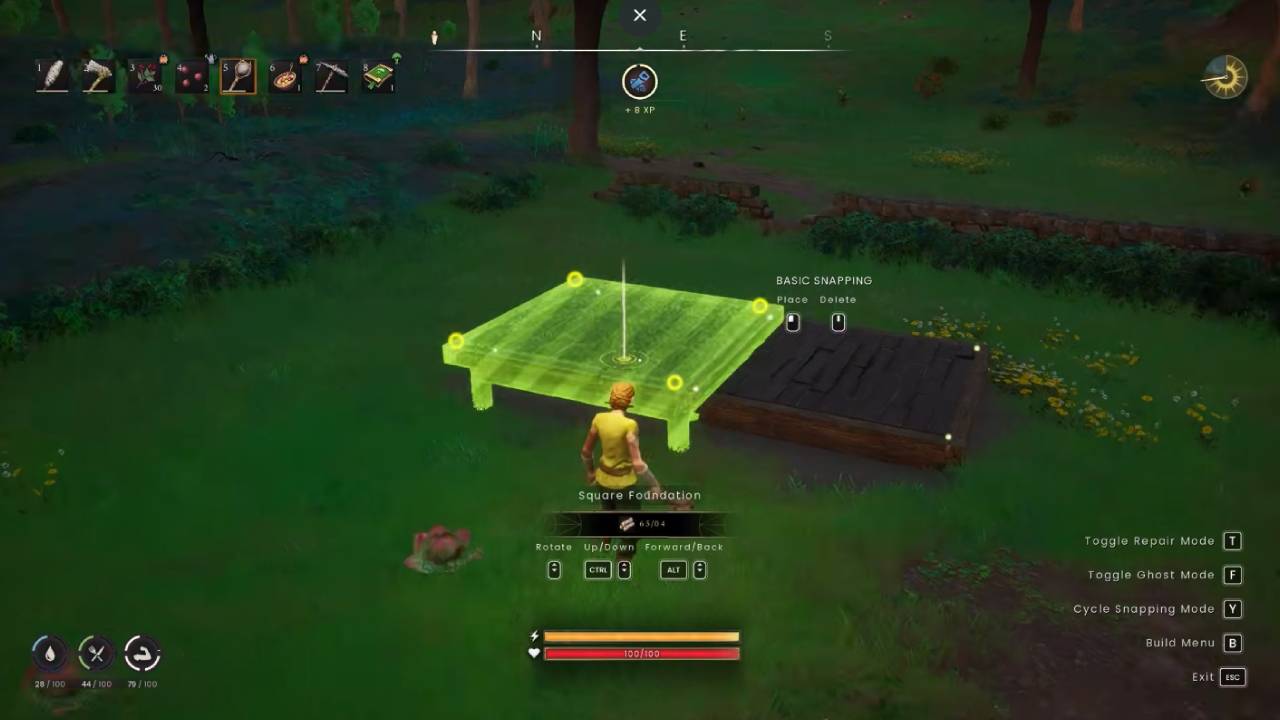
Building is another major part of the experience, and this aspect is arguably one of RuneScape: Dragonwilds’ strongest areas. Floors and walls snap into place easily, letting you build everything from a basic shelter to a much larger base. Blueprint mode lets you plan structures before spending resources, while a free-camera building ability makes it easier to position pieces from awkward angles.
Your base is also more than a place to store your equipment. You may have to defend it from goblin raids, and dragon attacks may turn a peaceful building session into a fight for survival. Knowing enemies are coming gives your base a real purpose beyond just being a place to store things.
Exploration is just as important. The world is hand-built, not randomly generated, which makes key locations feel purpose-built. As the map gradually opens up, you will discover abandoned buildings, enemy bases, dungeons, vaults, and rich resource zones.
The dungeon design follows a fairly straightforward structure. You enter an area, work your way through enemies and environmental obstacles, find a way to a locked section, activate a mechanism such as a lever, and eventually reach a boss encounter. These areas also contain important resources and currencies that help with later progression.
Loadstones make traveling around the world considerably easier.
You can set up teleportation points and use law runes to return to them. More importantly, you can dismantle a loadstone and recover its materials, meaning you are not permanently committed to where you initially placed it. This makes exploration less frustrating because you can establish temporary waypoints as you push into unfamiliar territory.
The game also includes survival systems such as hunger and thirst. These add pressure to exploration but sometimes feel more like maintenance than meaningful gameplay. Momentum can be broken when you are trying to explore a dungeon or build a large structure and repeatedly stop to attend to basic needs.
Another obvious weakness is inventory management. Crafting doesn't always use resources stored in nearby chests, so you often have to manually move materials into your inventory before crafting. Once you have accumulated large quantities of resources, the process becomes tedious.
Limited stack sizes and the number of different crafting stations you eventually need make the problem worse. Instead of focusing on exploration or progression, you find yourself constantly moving between storage containers and crafting benches. This is a quality-of-life issue that doesn't ruin the game, but it becomes harder to ignore the longer you play.
Combat starts simple, but it becomes more interesting as you progress. Melee fighting revolves around attacking, dodging, stamina management, and parrying. The parry system is especially satisfying because successful timing produces a strong visual and audio response and can create an opportunity for a stronger counterattack.
You can kill many enemies with careful movement, but stronger creatures will eventually need better equipment. This matters because not all fights in RuneScape: Dragonwilds are a true test of a player’s skill. Entering an area with poor weapons and armor can significantly increase the time it takes to kill enemies and the amount of damage you sustain.
Weapons also have different attack speeds, damage values, and special attacks.
Magic and ranged combat give you more options. Ranged progression adds faster attacks and good audio feedback; magic adds offensive and defensive abilities. The familiar RuneScape hit-splat graphics are also present in combat, giving fights another little nod to the original game.
The enemies are varied enough that there is no sense of repetition in the encounters. Every region has its own creatures; some enemies bring specific dangers, such as poison. This means that sometimes you need to prepare the right potions or gear before entering an area.
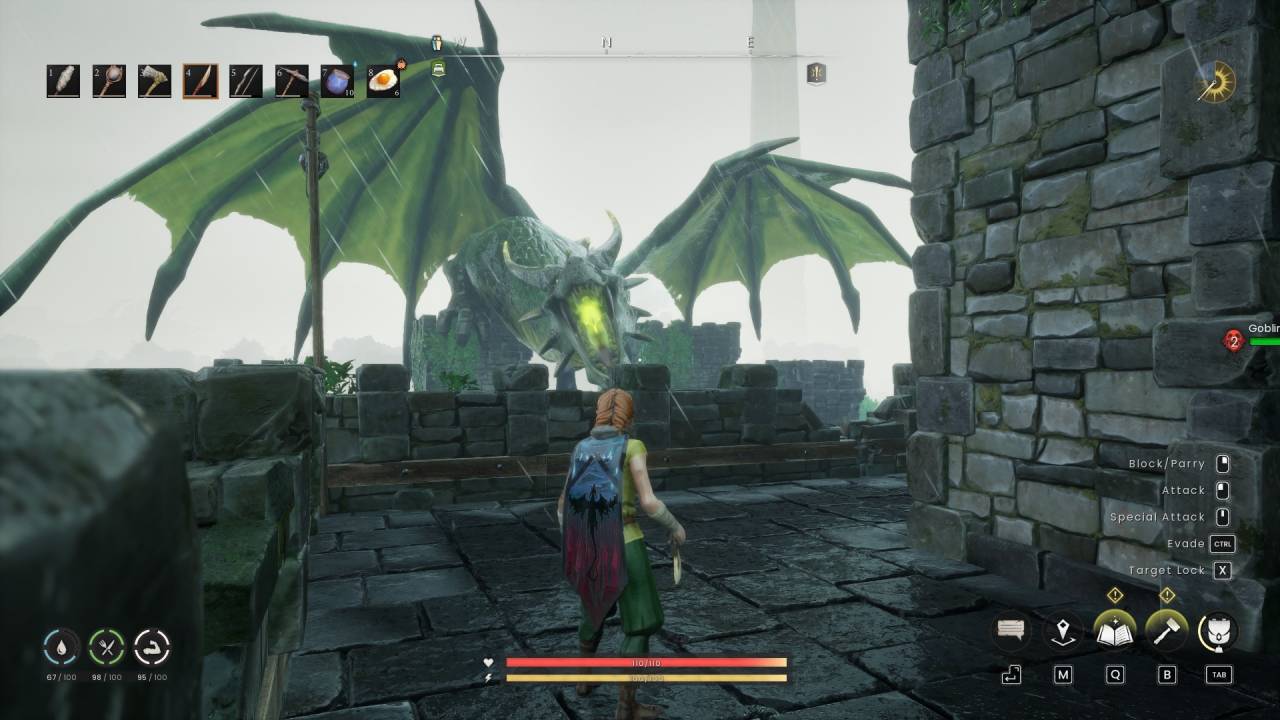
Another interesting aspect of the combat system is dragon attacks. Even when you are not actively exploring, dragons can fly over your area and drop poisonous attacks to the ground, creating danger. They make dragons feel like a constant presence in the world, though the attacks can be frustrating at times when poison seeps into areas you expect your base to protect.
Death also has consequences. Losing your equipment and having to retrieve your belongings creates tension without making the entire progression system feel excessively punishing. A mistake during an expedition can turn into a frantic trip back to your gravestone, which adds a little more weight to exploration.
Progression is probably the area where RuneScape: Dragonwilds feels most like RuneScape.
Your skills improve through the activities you actually perform, creating a natural reason to keep playing. Instead of simply completing a checklist of objectives, you gradually become better at the things you spend time doing. This produces the same “one more level” mentality that makes RuneScape so addictive.
The difference is that the grind is much more approachable. You are not expected to spend an enormous amount of time repeating one activity just to make a tiny amount of progress. Instead, your skill development is closely connected to survival, crafting, exploration, and combat.
Equipment progression follows a familiar path as well. You start with basic leather equipment, then move through bronze and iron, and finally reach stronger materials and more specialized gear. With every upgrade, you get another reason to visit places that were once too dangerous.
Quests fit into this system quite nicely by directing you to new locations and objectives. You can complete main and side quests, take down bosses, find new resources, and upgrade your gear as you slowly make your way deeper into the world.
The RuneScape link becomes even more obvious when you consider future progression.
There is already a vast arsenal of weapons, armor, skills, monsters, quests, and locations in the universe to draw inspiration from. RuneScape: Dragonwilds has the groundwork for a much bigger adventure without losing what makes RuneScape, RuneScape.
Visually, RuneScape: Dragonwilds takes a different approach from the traditional RuneScape aesthetic. The environments are colorful enough to remain readable but still detailed enough to make exploration interesting.
The world is handcrafted, which helps the presentation because big structures and landmarks appear intentionally placed. Abandoned buildings, enemy-controlled areas, forests, caves, and dungeons each offer distinct environments to explore, and the lighting helps distinguish them.
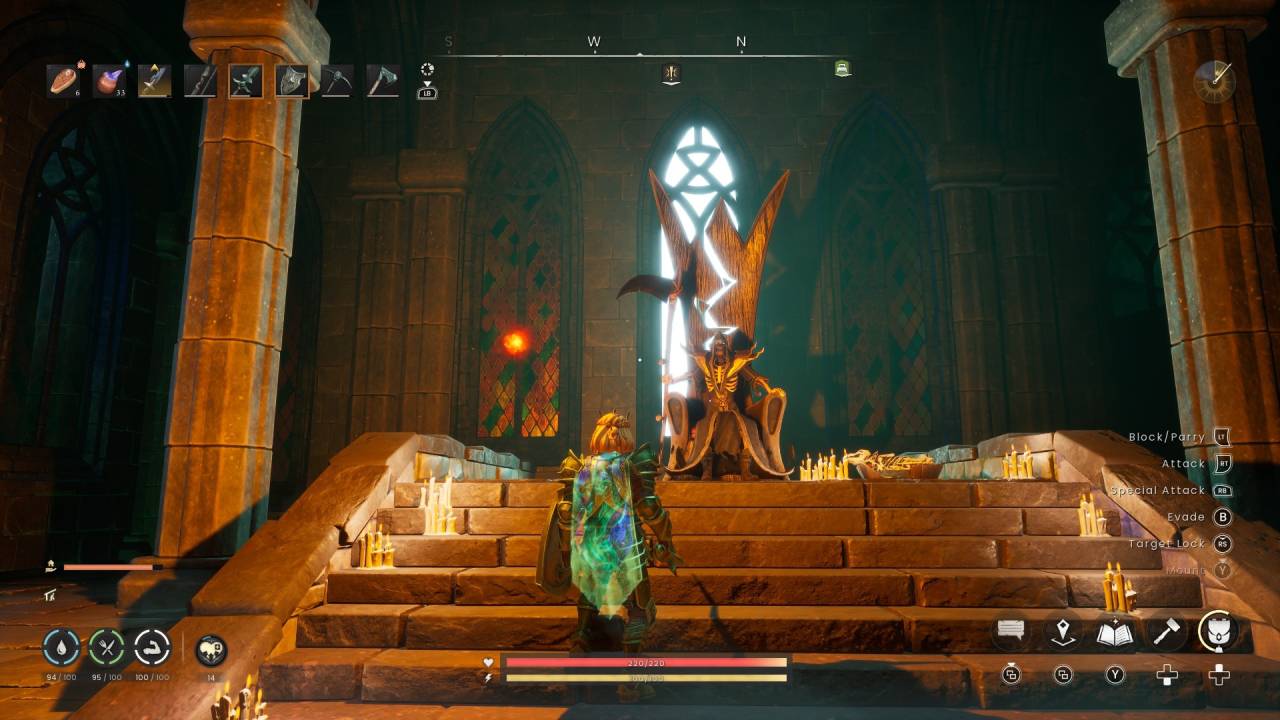
The game can become quite dark in certain areas, but that darkness also contributes to the atmosphere of underground locations and dangerous regions. The world generally feels strongest when you explore somewhere unfamiliar and discover a structure or enemy camp for the first time.
The soundtrack brings the game even closer to RuneScape. RuneScape: Dragonwilds has new music, featuring remixed RuneScape tracks and a balance of nostalgia and a new identity. Longtime players will instantly recognize familiar musical ideas, but the new tracks keep the game from feeling like a rehash of the past.
There are some technical and visual flaws in the game.
There are odd glitches, such as weird terrain interactions and alerts to something happening when there’s nothing obvious around you. These issues are noticeable, but they do not completely undermine the overall presentation.
You gather resources to get better equipment. Better equipment lets you enter more dangerous areas. Those areas contain new materials, quests, enemies, and bosses. When you do those activities, your skills improve, and you unlock even more options.
Magic makes exploring easier and gathering faster. Base building gives you a place to put everything you gather. It also gives you more freedom to organize your resources and create a setup that suits your playstyle.
That loop works because it combines the strongest parts of RuneScape with the freedom of survival crafting. Each activity naturally leads into the next, making exploration, resource gathering, and progression feel connected rather than separate systems.
The game still has problems. Inventory management needs improvement, crafting should interact more naturally with storage, some survival mechanics feel unnecessarily demanding, and certain dungeons could use more interesting challenges and rewards. The world also leaves you wanting more locations and more of the RuneScape universe.
But those weaknesses are surrounded by a surprisingly strong foundation.
Combat is simple without being boring, progression gives you plenty of reasons to keep playing, building is flexible, magic adds a genuinely interesting twist to gathering and exploration, and the RuneScape references are handled well enough to satisfy longtime fans without requiring you to know everything about the franchise.
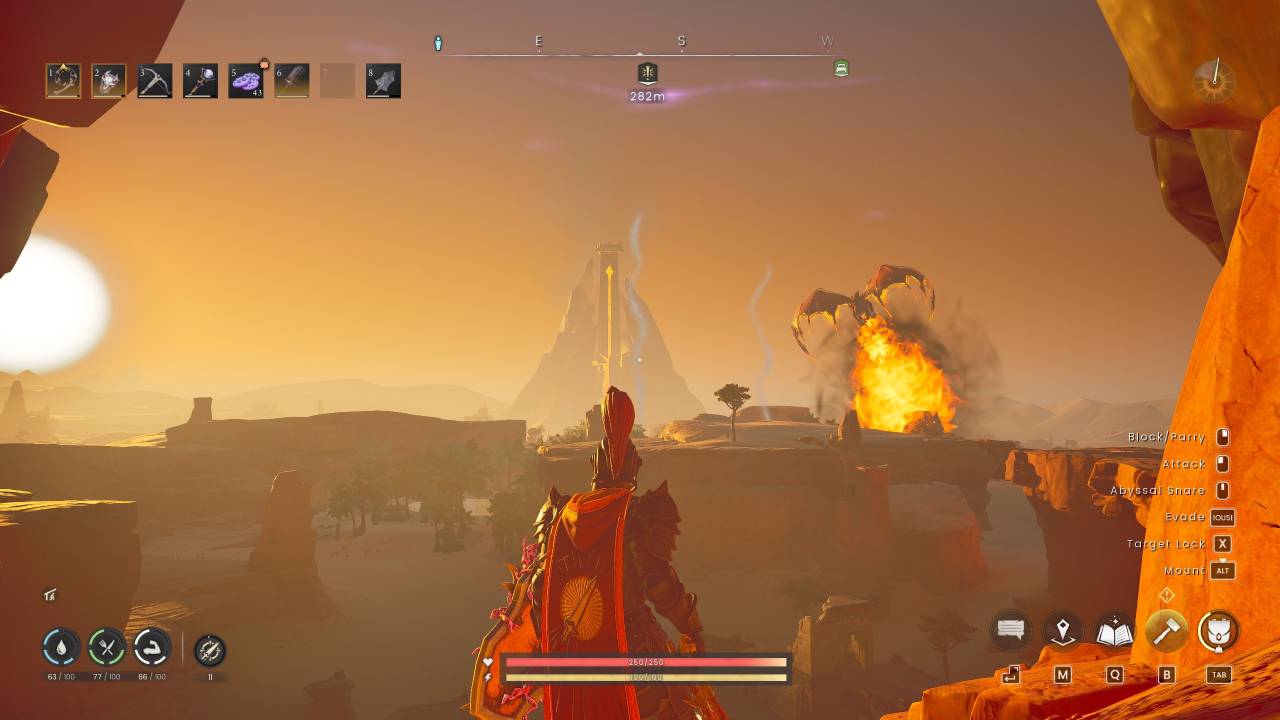
For RuneScape players, RuneScape: Dragonwilds is especially appealing because it offers a familiar universe with a completely different gameplay structure. For survival-game fans, it provides a progression system that feels more purposeful than simply collecting materials for increasingly expensive crafting recipes.
It doesn't replace RuneScape, and it doesn't need to. Instead, it takes the parts of RuneScape that make progression satisfying and places them inside a world where you have to build your own shelter, explore dangerous regions, defend yourself from monsters, and prepare before taking on something much stronger than you.
That makes RuneScape: Dragonwilds feel like more than a RuneScape spin-off. It feels like a genuine attempt to find another way to experience this universe, and when its systems work together, it is surprisingly effective.
Editor, NoobFeed
Verdict
RuneScape: Dragonwilds successfully transforms the familiar RuneScape formula into an enjoyable survival adventure. The magic, progression, combat, exploration, and building all blend well together.
80
Related News
No Data.