
Silent Hill: Townfall Review
PlayStation 5 Pro
A first-person descent into a fog-choked Scottish nightmare.
Reviewed by Asura Kagawa on Sep 22, 2026
You enter Silent Hill: Townfall already aware of the weight it carries. This marks the third year in a row that Konami has released a major entry in the revived series, after the Silent Hill 2 remake in 2024 and last year's Silent Hill f, and you find yourself wondering whether the studio can keep that momentum going instead of letting it run out of steam.
This time, the developer is Screen Burn Interactive, a Glasgow-based team that used to go by the name No Code, the studio behind Stories Untold and Observation. Anyone who has played those earlier games knows this team has a habit of recreating obsolete technology with an almost obsessive level of care. That habit is seen all over Silent Hill: Townfall.
Screen Burn's obsessive craft shapes the town you're about to enter.
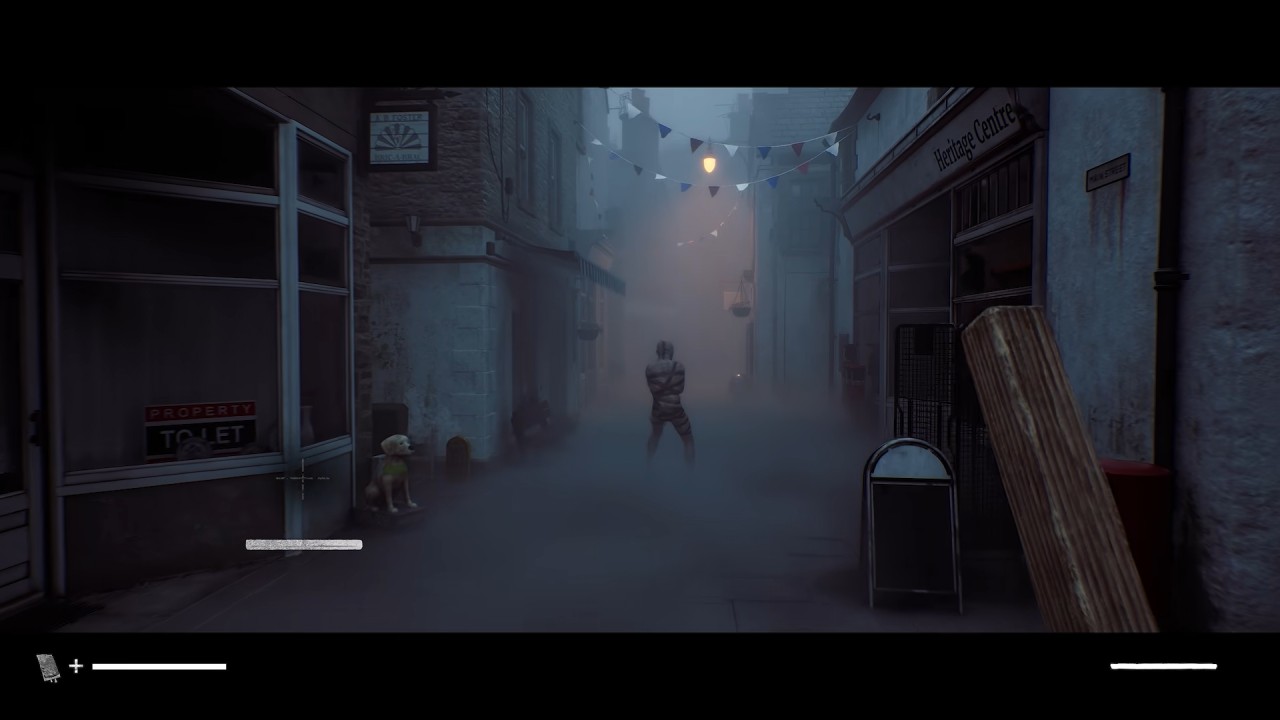
Rather than sending you back to the familiar American town the series is named after, Screen Burn sets its story in its own backyard, along the Scottish coast, and you can tell fairly quickly that the choice comes from genuine affection for the setting rather than a gimmick.
The dread creeps in exactly as expected, but this time it's filtered through a first-person perspective the mainline series has never fully committed to. Priced in line with most other major releases this year, Silent Hill: Townfall doesn't ask you to expect anything flashy on PS5, and that restraint works in its favor.
It genuinely takes a while before Silent Hill: Townfall even shows you a proper title screen, since the intro sequence stretches on with quiet exploration and scattered dialogue before anything resembling a menu shows up. That slow start sets the tone for the rest of the campaign, which rarely rushes you anywhere and instead lets dread build gradually rather than throwing you straight into danger.
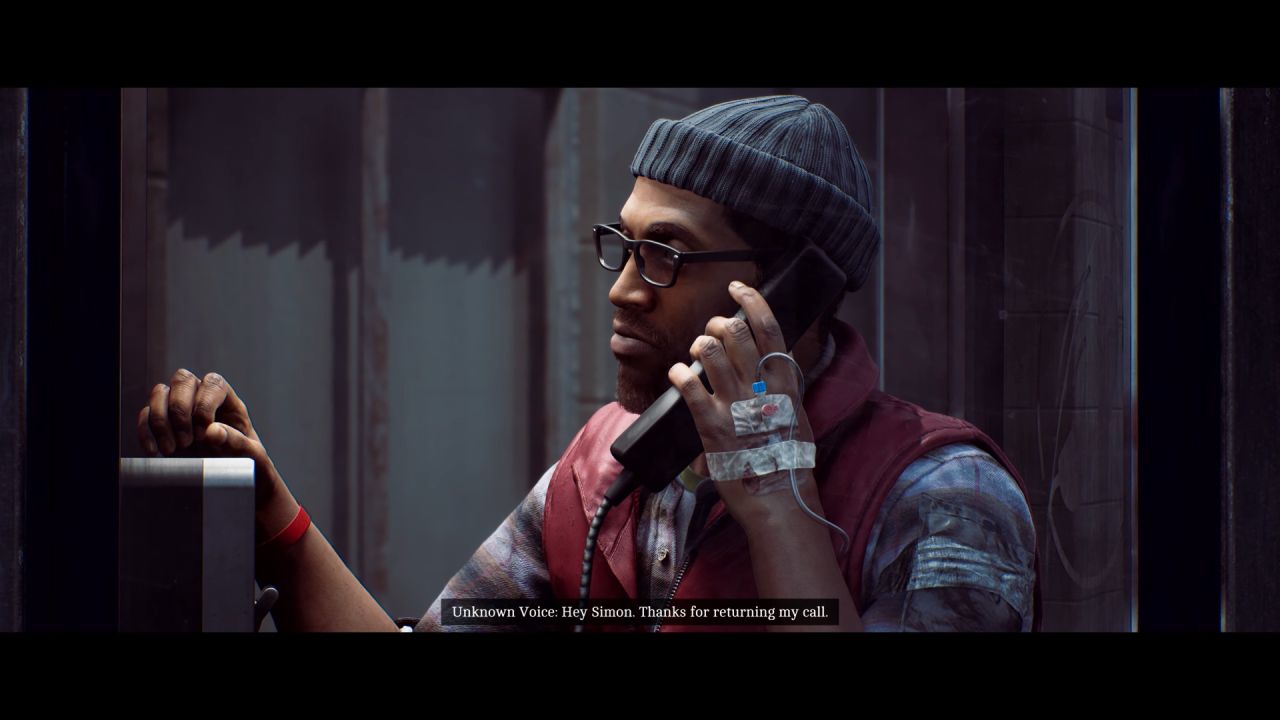
You start as Simon Ordell, and the opening minutes drop you on the shoreline of St. Amelia with no real explanation for how you got there, just a hospital tag around your wrist and an IV line still stuck in your arm. You're told, in the vaguest way possible, that you've returned to "put things right," and from there you're left to piece together what that actually means.
The town itself is empty, wrapped in a heavy fog, and littered with details that hint at a slow unraveling before you ever arrived.
Protest signs aimed at something called the Chapman Energy Group, boarded storefronts, and scattered notes suggesting the local hospital staff was pushed past their limit by some disaster. As you keep digging, you start connecting your own fragmented past to a missing nurse named Zoe Ellis, and eventually you get to step into her shoes directly, seeing her side of events and the guilt she's been carrying.
Later on, you also take control of an older man named Richard, whose section fills in more of the picture from yet another angle. Simon himself comes across as fairly flat and reserved early on. Still, you find yourself warming up to that restraint as his despair gets peeled back layer by layer, especially next to how theatrical some of the earlier protagonists in this series could get. Silent Hill: Townfall doesn't rush any of this.
It doles out information in small pieces, mixing personal trauma with heavier themes like corporate negligence and environmental fallout. By the time you reach the credits, you're left with a story that trusts you to sit with its ambiguity rather than spelling everything out.
There are five possible endings in total, three of which you can reach on a first run, with the remaining two locked behind a New Game Plus playthrough, so the game clearly wants you to come back and pick at the mystery again. Mechanically, the biggest shift is that you see everything through Simon's eyes rather than watching him over his shoulder, and it changes how you move through St. Amelia.
This first-person shift reshapes how you move, hide, and fight.
The town is laid out as a series of connected, semi-open areas rather than one sprawling map, and since there's no waypoint arrow guiding you, you end up relying on the paper map and your own memory of the streets. By default, the game frames everything with cinematic black bars, though you can turn those off outside of cutscenes if you'd rather have the full screen while exploring.
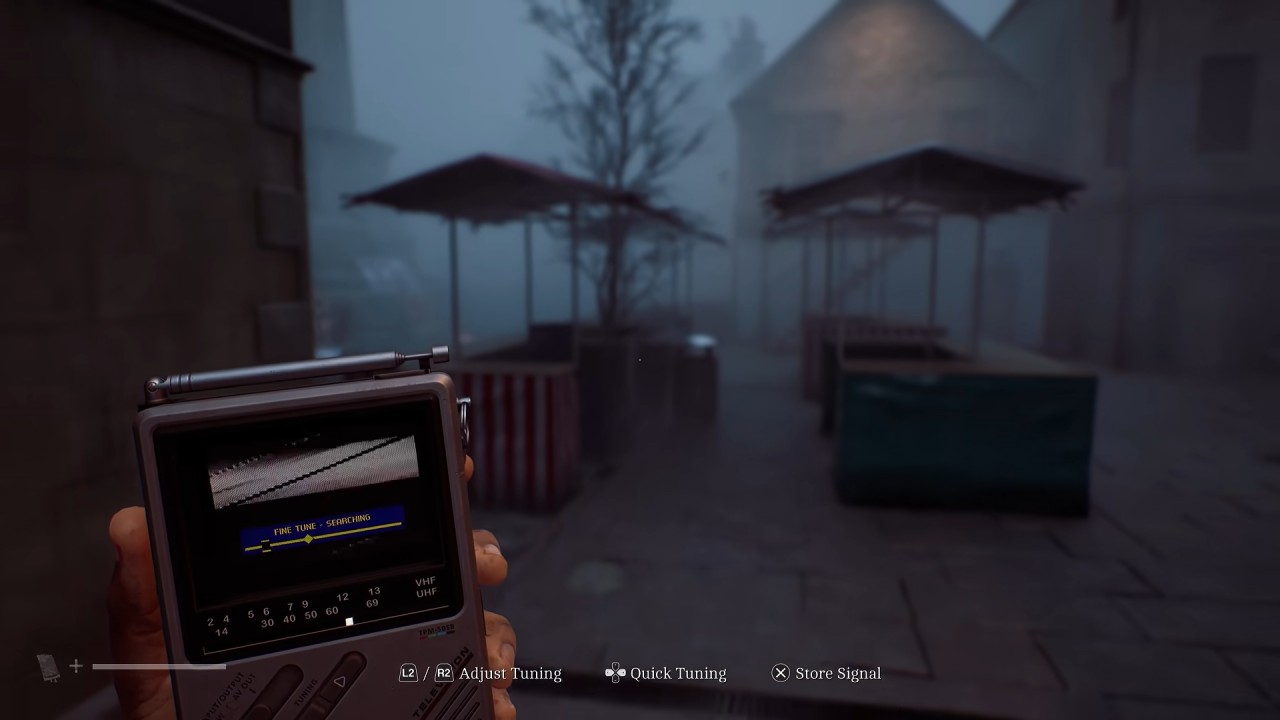
Your main tool for most of the campaign is a handheld device called the CRTV, a combination flashlight, radio, and analog television that you tune by physically twisting the controller to lock onto different frequencies. Once Zoe becomes playable, you swap that device for her pager, which relies on vibration cues instead of a screen.
It gives her sections a slightly different rhythm, even though the underlying idea is the same. Inventory-wise, you're kept fairly lean: only one melee weapon and two throwable items at a time, though there's no cap on how much ammo or how many medkits you can carry, which barely matters given how scarce both tend to be.
You can also craft slightly better healing items by combining bandages with alcohol or antibiotics you find lying around, and equipping an IV bag on Simon gives you a one-time safety net that partially revives you instead of ending your run outright.
Combat in Silent Hill: Townfall keeps things intentionally simple.
You block with one trigger and swing back with the other, using improvised weapons like wooden planks and metal pipes that wear down and eventually snap after a handful of hits, forcing you to keep scavenging for a replacement. Firearms show up eventually in the form of a revolver, a flare gun, and later a shotgun.
Still, ammunition stays limited throughout; reloading is slow because you load rounds one at a time, and firing draws in anything nearby because each shot is so loud. More often than not, you're better off avoiding a fight altogether, which is where bottles and bricks come in as distractions, or flipping on a nearby radio or television to pull an enemy's attention somewhere else.
Hiding works too, whether that's ducking into a wardrobe or peeking around a doorframe. Still, you have to actually break an enemy's line of sight before you tuck yourself away, because at least one type of stalking enemy will pull you right back out of hiding if it saw where you went, in a way that immediately reminded you of how relentless the hunting creature in Alien: Isolation could be.
The monster designs throughout lean more toward unsettling and psychological than outright gory, favoring wrong, misshapen human silhouettes over shock-value gore. Silent Hill: Townfall spends much of its creative energy on puzzle design, and it leans heavily on the game's 1996 setting.
You're not solving abstract riddles so much as solving grounded, everyday problems.
Fixing a valve using a computer terminal, tracking down a set of keys someone left at a neighbor's house, or mixing components to prepare a blood transfusion. One later puzzle has you working with an X-ray machine, and the trick is viewing the readout from a vertical angle instead of the horizontal one you'd naturally assume, which trips you up for a while before it clicks.
Another sequence puts you through a tense surgical procedure guided by a voice over an intercom, and reading a vital sign incorrectly triggers an unpleasant buzz that chips away at your health, which keeps you locked in and paying attention.
A lot of the smaller puzzles revolve around period-accurate tech like floppy disks, slide projectors, and a chattering dot-matrix printer, along with a small electric top-up card that fits the setting perfectly.
One particular gadget, a microcassette recorder, lets you nudge a single house backward and forward through time to access rooms that only exist in one version of the timeline, which is one of the more inventive ideas in the whole campaign.
The CRTV factors into a lot of this too, feeding you short looping clips that hint at where to go instead of just marking a destination outright, and if you'd rather skip the mental effort, there's a hint toggle in the options menu. What Silent Hill: Townfall gets right with its puzzles is that they almost always stay logical, even when they're elaborate. Hence, the satisfaction of finally connecting the dots never feels cheap.
The scarcity of ammo and healing items also keeps tension high, since you're constantly weighing whether a fight is worth the resources it'll cost you.
Combat eases up a touch in the back half of the game once you've learned how each enemy type behaves, but unsettling designs like an axe-headed brute or a creature that launches an IV needle as an attack keep most encounters worth your attention.
Richard's later section leans generous with supplies, giving you a bit of breathing room before the finale. A stretch of contraption-based puzzles near the end asks a lot of you, and a handful of Otherworld sections lean dark and mazelike enough to test your sense of direction, the kind of ambition that comes with a game willing to push its ideas further.
Choices like these feel less like design flaws and more like deliberate pacing decisions that give the campaign room to breathe. Silent Hill: Townfall doesn't have a traditional experience-point or leveling system, so you don't grind for stat boosts between story beats.
Instead, you progress by finding new weapons, unlocking additional crafting combinations, and picking up new CRTV frequencies as the story moves forward. Hence, the game controls your growth almost entirely through scripted discovery rather than repetition. That scarcity does the job a leveling system normally would, keeping you cautious even in the later chapters, when you're technically better equipped than you were at the start.
Visually, Silent Hill: Townfall is one of the better-looking horror games you've played recently.
Running it on PS5 Pro in quality mode, targeting 30 frames per second with PSSR upscaling handling the extra detail, gives you a smooth, stable experience throughout. There's also a 60fps performance mode available if you'd rather prioritize responsiveness over fidelity, which is worth switching to if you find the slower frame rate makes tracking fast enemies during a chase harder than it needs to be.
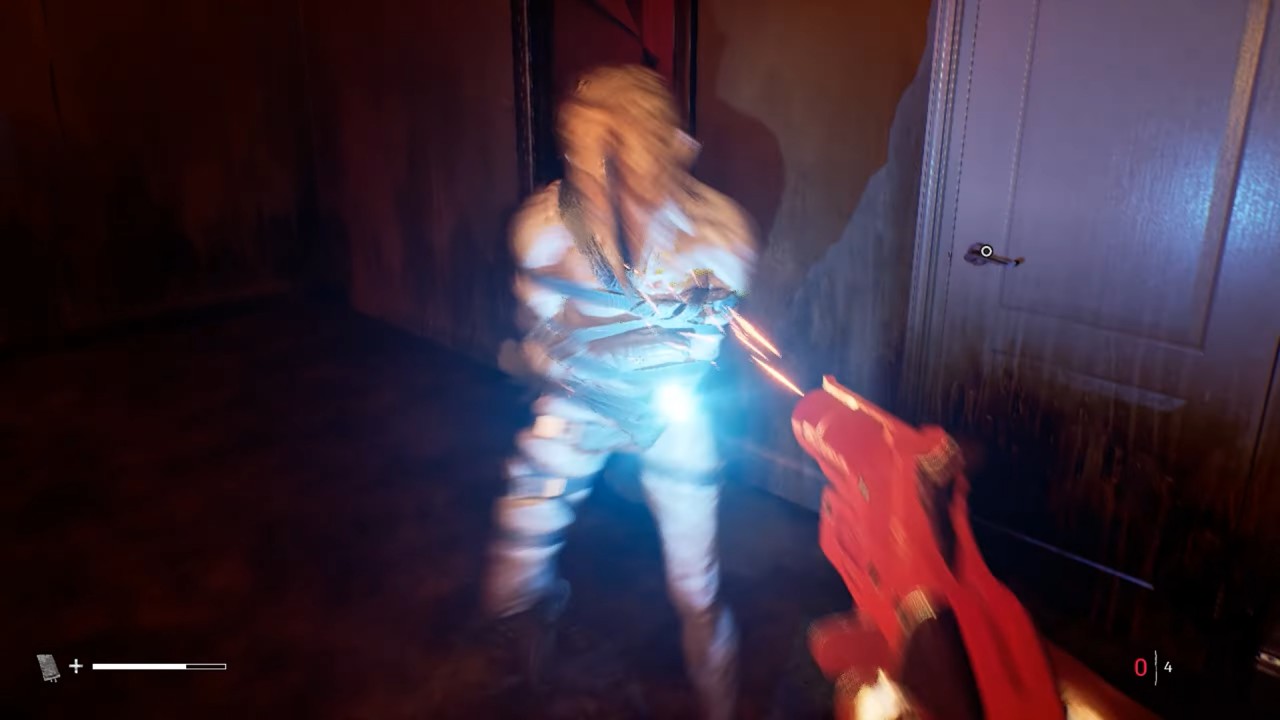
Interior rooms are built at a realistic one-to-one scale, and the decision pays off. Apartments and offices feel like actual lived-in spaces. They don't feel like game-sized approximations built for convenience. St. Amelia's abandoned homes are especially effective.
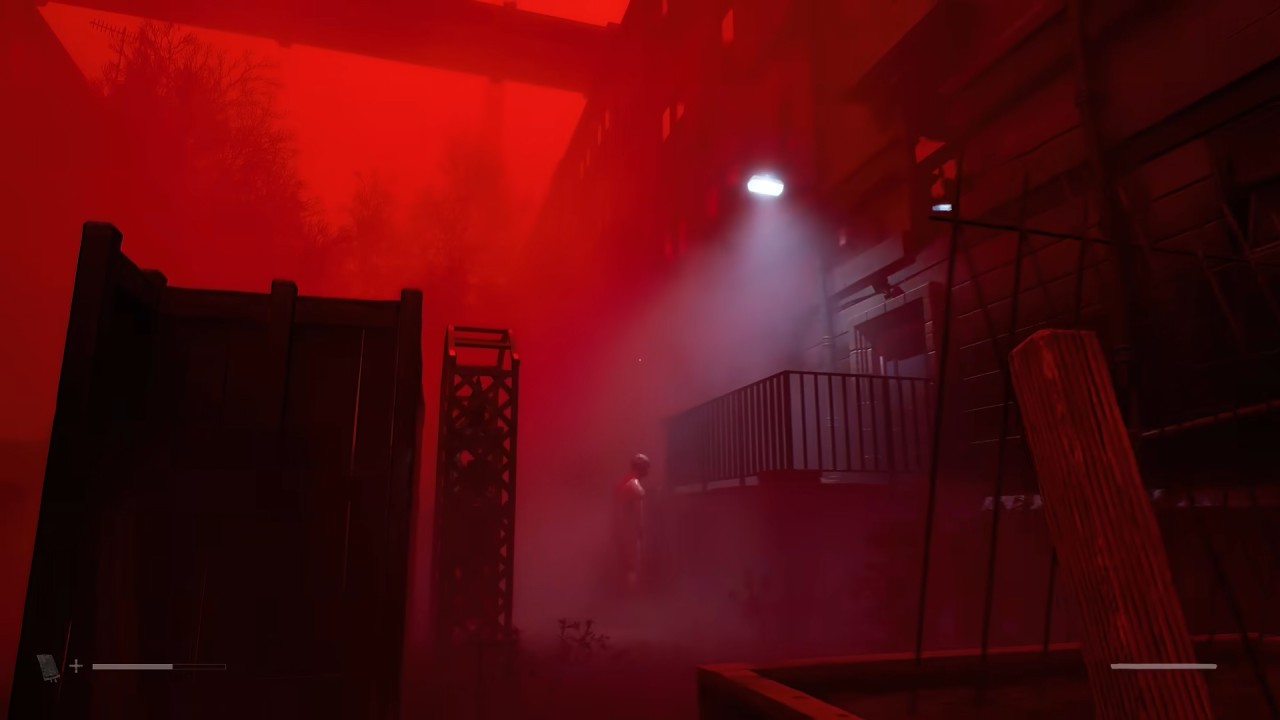
They're still furnished with everyday clutter, like everyone just stepped out instead of vanishing. You end up feeling a little guilty every time you rifle through someone's kitchen drawers looking for supplies. The Otherworld sequences swing hard into the surreal, soaked in red light, with industrial piping crawling through the streets and, at one point, a towering creature dragging itself across rooftops above you.
Performance stays impressively smooth throughout your playthrough, and load times stay snappy from start to finish; the rare brief crash or scripted event that needs a quick reload comes and goes without costing you real progress.
Sound is arguably the single strongest part of Silent Hill: Townfall.
The town is so quiet by default that every small noise- a creaking floorboard, wind moving through an empty street, waves hitting the shore- ends up carrying real weight, and directional audio genuinely helps you figure out roughly where a threat is coming from before you can see it.
The score stays restrained until danger is close, then ramps up in a way that keeps you on edge without leaning on cheap jump scares. Even the static and distorted video on the CRTV was apparently produced by running real footage through actual analog equipment, and it shows in how authentically grimy the effect looks and sounds.
The voice cast pulls its weight too, with Jovan Adepo playing Simon's quiet, worn-down grief convincingly, Kezia Burrows giving Zoe's guilt real weight, and Terry O'Quinn rounding things out as Richard, all of it delivered without slipping into over-the-top horror-movie theatrics.
The small, brief lines of internal thought that pop up in the corner of the screen for Simon and Zoe add another quiet layer to that performance work, giving you a sense of what they're thinking in a given moment without breaking the pacing to spell it out through a full cutscene.
By the time you finish Silent Hill: Townfall, what sticks with you most is the atmosphere and the mystery surrounding Simon, Zoe, and St. Amelia itself, both of which carry the experience even through its rougher patches. The puzzle design is inventive and grounded in a way that fits the 1996 setting perfectly, and the sound work alone makes it worth playing with headphones on.
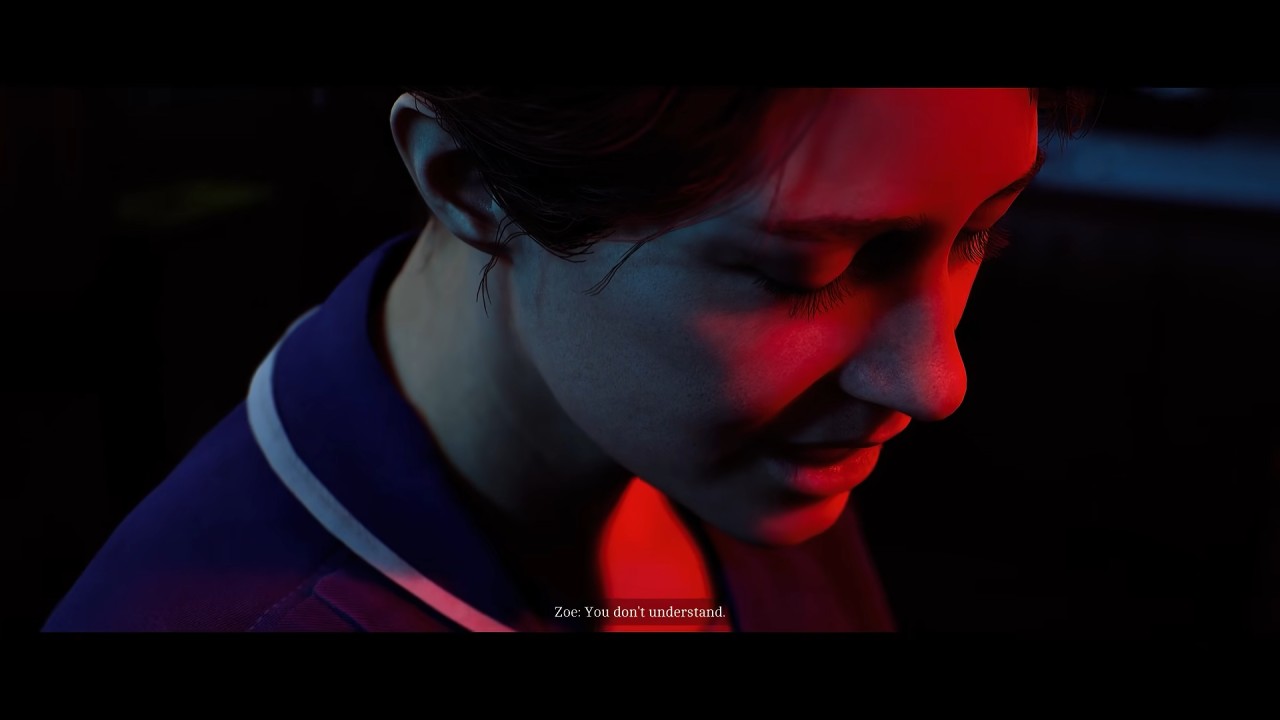
Strong atmosphere and sound carry the game through every stretch of the journey.
The combat and the CRTV's usefulness settle into a steady rhythm once you've found your footing, and a few puzzles and Otherworld stretches lean into more obtuse or disorienting territory for those who want the extra challenge.
It also helps that the campaign doesn't overstay its welcome, running somewhere around a dozen hours depending on how thoroughly you comb through each area for notes and side details, which feels about right for a story this deliberately paced. Through it all, Silent Hill: Townfall still carves out its own distinct identity.
It holds onto the dread that's kept this series relevant for decades, rewarding patience over reflexes rather than quick reactions or aggressive play. This doesn't feel like a retread of what came before. It's its own strange, quietly devastating chapter, built on a coastal town that feels genuinely lived-in even as it falls apart around you.
The mystery of what happened to St. Amelia, and to Simon along with it, lingers long after the credits roll. That alone makes the slower stretches and rough edges easy to forgive, especially with a second run and two more endings still waiting to be uncovered.
Staff Writer, NoobFeed
Verdict
Silent Hill: Townfall earns its place in this revival era through atmosphere, sound, and story, carrying that strength all the way to the credits.
91
Related News
No Data.