
The Liar Princess and the Blind Prince Review
PC
The Liar Princess and the Blind Prince on PC is a beautiful, painful story wrapped in simple gameplay.
Reviewed by Asura Kagawa on Mar 19, 2026
You are not entering a typical modern game when you sit down to play The Liar Princess and the Blind Prince, now that it’s on PC. You are playing something that seems more ancient than video games themselves, akin to a tale passed down through the ages and refined into a playable form. This project was created because someone truly wanted to tell a beautiful story that indie games like this don’t usually offer.
It was first released in Japan in 2018 by Nippon Ichi Software, then globally in 2019, and finally on PC in 2026. Nippon Ichi has always had a reputation for making games that sit just outside the mainstream, sometimes rough around the edges, but often full of personality. You can feel that history here. This is not a game that is chasing trends or trying to be bigger than it is.
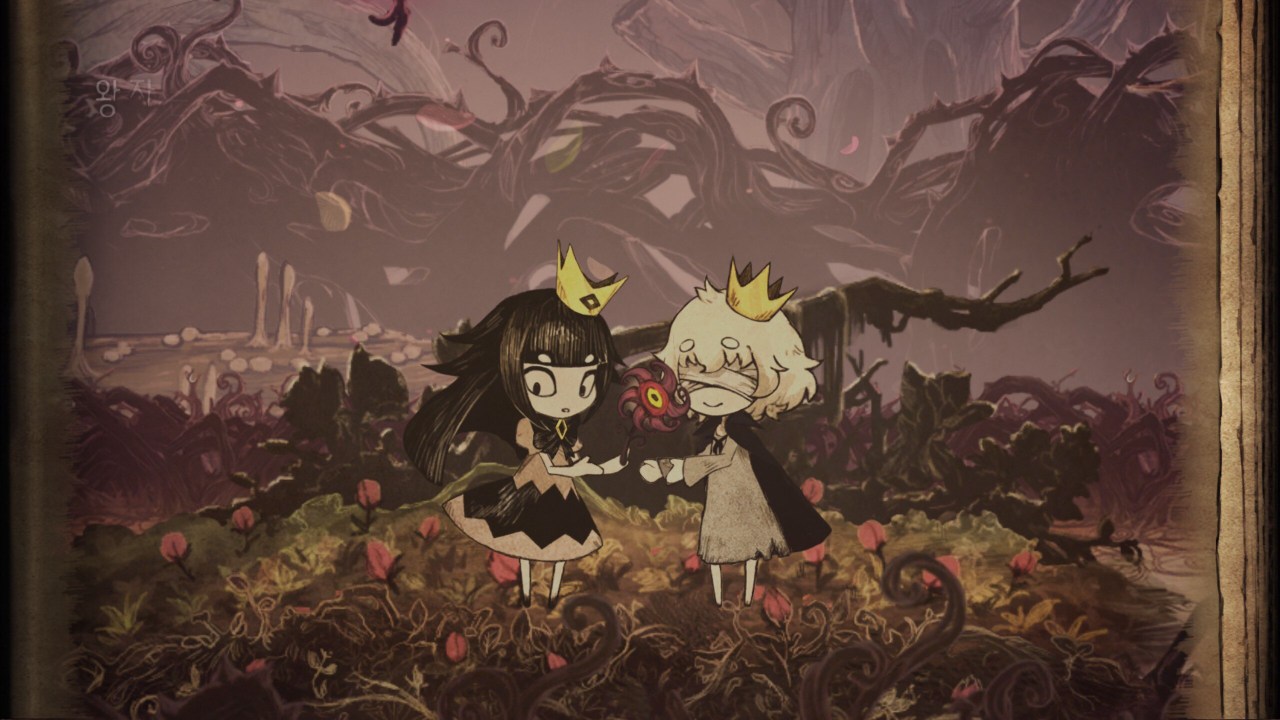
It's a small indie game that focuses heavily on story. And on PC, it comes almost exactly the same, which is honestly the right thing to do. This is not something that needed reinvention. It just needed to be on another platform so that more people could find it by accident.
The setup is easy to grasp, but even then, it’s surprisingly deep for a game of The Liar Princess and the Blind Prince’s stature, by which I mean no disrespect; it makes me even more impressed. So what happens is that a wolf sings in the woods at the beginning of the story, and a prince is drawn to the sound.
One night, he can't help but be curious, and when he finally goes up to the wolf, she gets scared and attacks him, blinding him. From there, things go out of control. The wolf, feeling guilty, gives her voice to a witch in exchange for the power to become human. She then dresses up as a princess and leads the now-blind prince to the same witch to get his sight back.
That sounds like a fairy tale by itself, but what makes it stick is how it won't soften anything.
This story doesn't give me any comfort; it’s tragic, in fact. It feels more like a scary bedtime story where every choice matters and every second feels like it could break down under its own emotional weight. The story is by far the best part of the whole experience, and everything else in the game is there to help it.
As you play, you quickly realize that this is a story built on mistakes, guilt, and misunderstandings. The wolf is trying to fix something she caused, but she is doing so through a lie that grows heavier the longer it continues. The prince, on the other hand, is kind and curious, but he is also carrying trauma from losing his sight, even if he tries to stay hopeful.
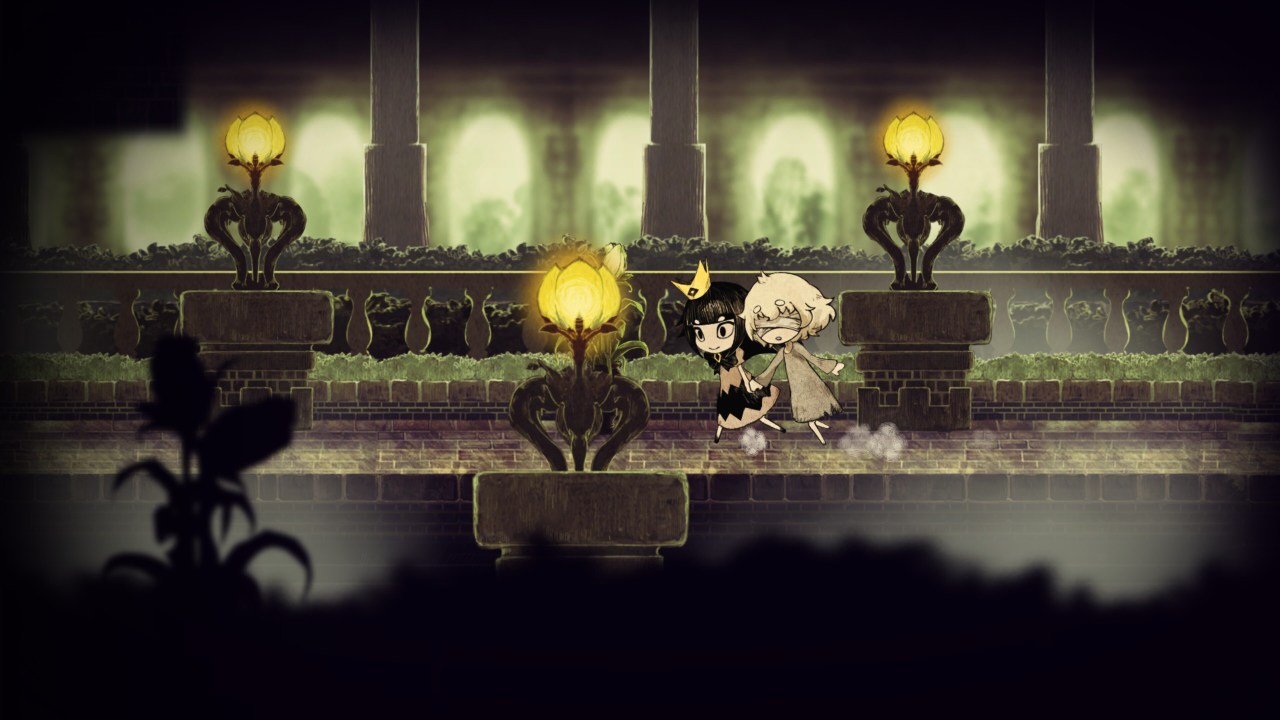
What makes their relationship work is how flawed both of them are. You are constantly aware that this journey is fragile. It feels like watching something that could fall apart at any second, and that tension drives the story forward. Every time the game gives you a softer moment, you already know it is not going to stay that way for long. It is like seeing a bad outcome coming and being unable to stop it, which somehow makes those moments hit harder.
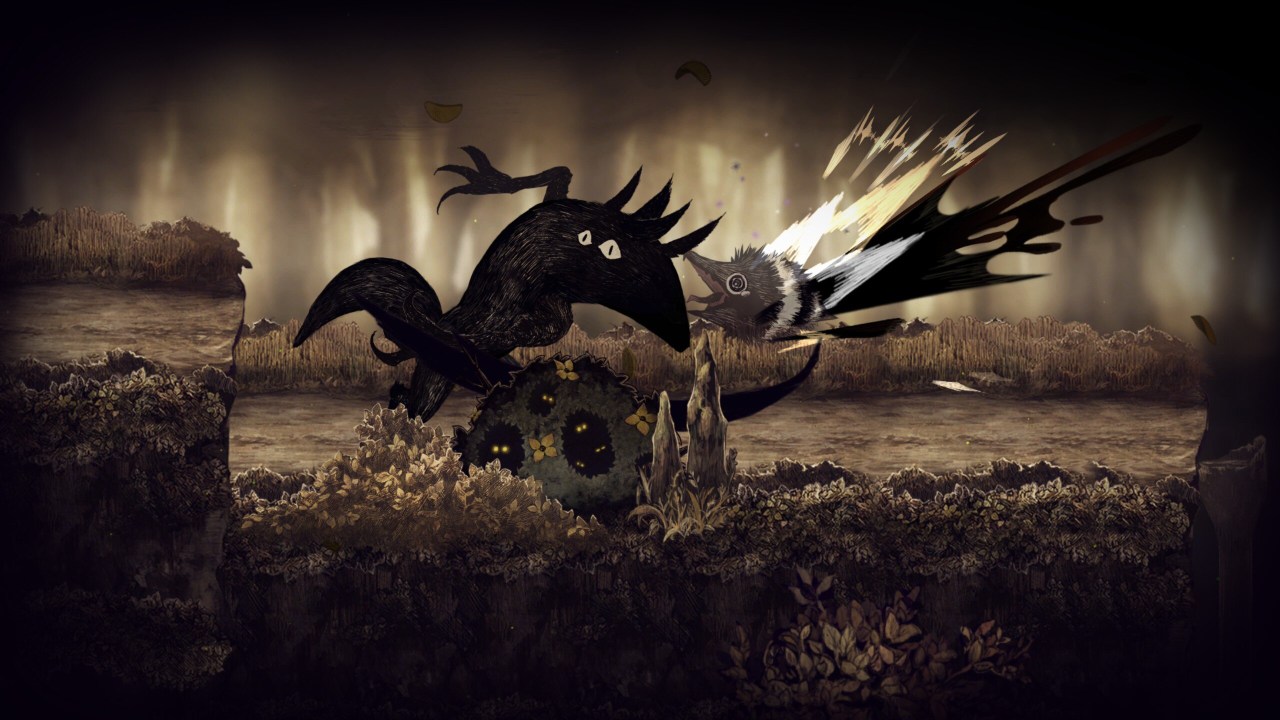
The way the story is presented reinforces that feeling. Instead of fully animated cutscenes, you mostly get still, hand-drawn images paired with narration. One voice handles everything, describing actions and dialogue like someone reading a story aloud.
It is a bold choice, especially when those scenes can run long and require you to read through them like a visual novel. But it works, and that's what sets The Liar Princess and the Blind Prince apart, at least in terms of story. I don't want to spoil you guys any further on the story, so I urge you to try it yourselves.
The whole experience feels like sitting by a fire, listening to a tale told for generations.
Once you move past the narrative and actually start playing, the game shifts into a 2D puzzle-platformer structure. You are tasked with escorting the prince from one end of a stage to the other. He cannot see, so he cannot move safely on his own. That means you are responsible for guiding him, protecting him, and clearing the path ahead.
The key mechanic is the ability to switch between two forms. When you're a wolf, you're strong, fast, and able to fight off enemies or get to higher places. As a princess, you are weak, but you can hold the prince's hand, show him around, and interact with some parts of the environment. This duality is what makes the game fun. You are always left weighing safety against risk.
The idea itself is strong, especially because it ties directly into the story. The wolf cannot safely guide the prince in her true form, which reinforces the lie at the center of everything. Every time you switch forms, it is not just a gameplay action. It is part of the elaborate narrative. The problem is that while the concept is solid, the execution never fully evolves. Most of what you do is fairly simple. You guide the prince, solve straightforward environmental puzzles, and occasionally deal with enemies.
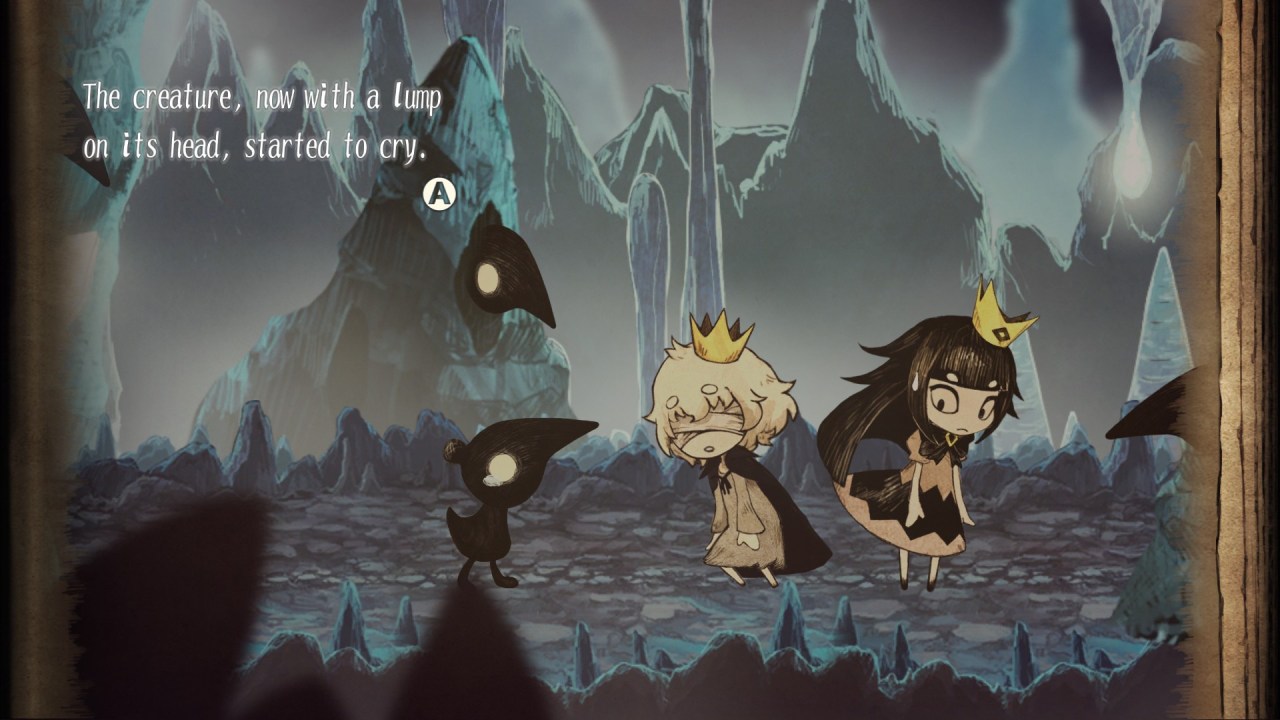
The game introduces new elements over time but rarely pushes them far enough to become truly engaging on their own.
Puzzle design mostly revolves around positioning. You might need to place the prince on a switch, use your wolf form to move objects, or figure out how to reach a certain area without putting him in danger. It works, but it rarely surprises you. Once you understand the pattern, it becomes predictable.
Combat is even more basic. You can attack enemies while in wolf form, but most of the time, you just have to hit a button a few times until they are gone. It doesn't really have any depth, and it never becomes the game's focal point. It is more of a barrier to overcome than a system to learn.
Platforming is somewhere in the middle, though. You will have to jump over gaps, use things in the environment like mushrooms to get to higher places, and avoid dangers. It works, but it never gets to the point where it feels very exciting.
The gameplay is at its best when it makes you multitask. Later parts show you how to give the prince orders from a distance while doing something else at the same time. These sequences finally make the different mechanics work together in a way that feels more alive. You are thinking about safety, timing, and positioning simultaneously. This gives you an idea of what the game could have been like if it had stuck with these mechanics from the get-go.
Progression itself is fairly light in The Liar Princess and the Blind Prince.
There isn't a lot of customization or a deep leveling system. You collect things like petals instead, which unlock more story fragments that help you learn more about the characters and their past. It's not so much about getting better at the game as it is about getting a better grasp of the story. That fits with the overall design, but it also means that if the story doesn't grab you, there isn't much else to keep you going.
One thing the game gets right is its pacing. The entire experience is relatively short, often around five hours, which works in its favor. It never overstays its welcome, and the mechanics' simplicity feels more acceptable because of that. If it were much longer, the lack of depth would become harder to ignore.
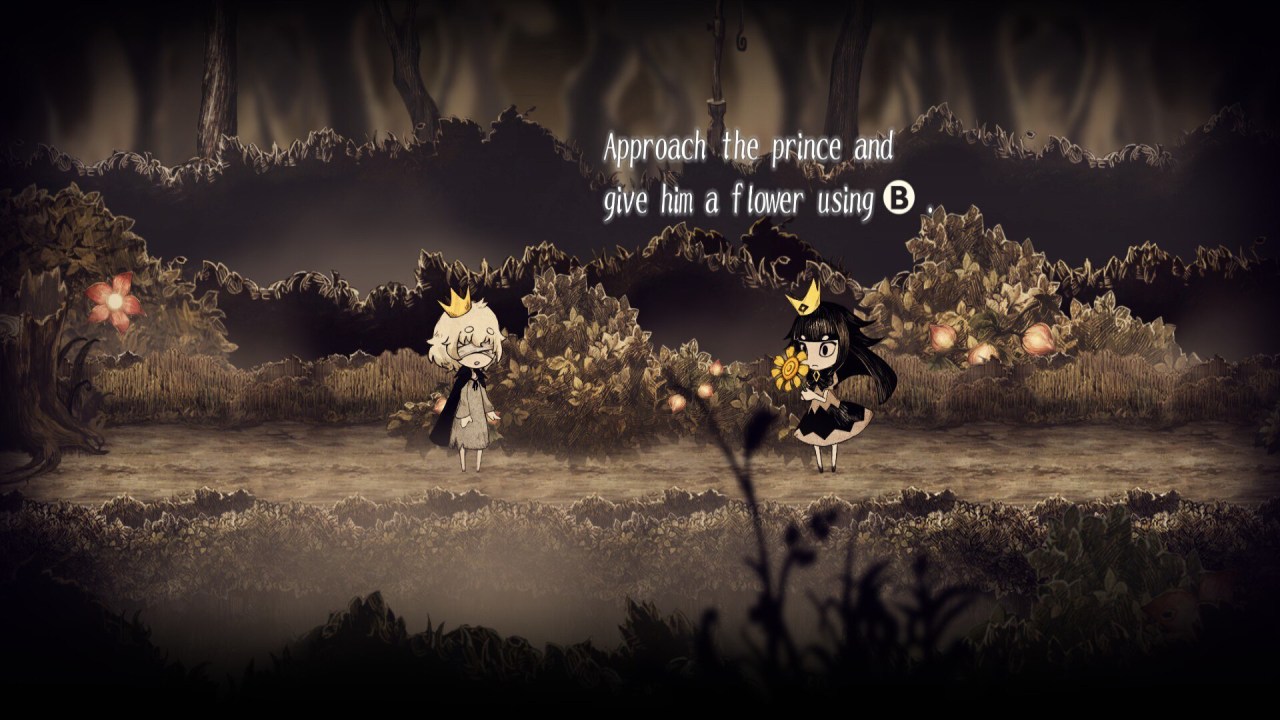
Visually, the game is one of the strongest entries in this genre and has been since its inception in 2018. Everything is hand-drawn, with a style that looks like it came straight out of a storybook. The environments, characters, and even the UI all share that same illustrated quality. It is not about technical complexity. It is about consistency and mood.
The art style reinforces the fairy tale tone, making every scene feel like a page from a dark children’s book.
Even when nothing is moving, there is a sense of atmosphere that carries through the entire game. The use of still images during cutscenes might sound limiting, but they are composed well enough that they do not feel cheap. Instead, they lean into that illustrated aesthetic, letting the narration do the heavy lifting while the visuals set the tone.
Sound design plays a huge role in selling the experience. The music leans heavily into orchestral arrangements that match the emotional weight of the story. It is often soft and melancholic, reinforcing the feeling that something is always slightly off, even in calmer moments.
The narration, delivered entirely in Japanese, is another defining element. It might be a barrier for some, especially during longer scenes where you are reading subtitles for extended periods, but it also adds to the authenticity of the experience. It feels deliberate, like the game is fully committed to its storytelling style rather than trying to make it more accessible at the cost of its identity.
By the time you reach the end, it becomes clear what The Liar Princess and the Blind Prince is trying to do. It is not trying to be the most mechanically engaging experience. It is not trying to compete with larger, more complex titles. It aims to tell a specific kind of story in the most niche way possible, with everything else built around that goal.
That also means your enjoyment will depend heavily on what you are looking for. If you want deep gameplay systems, challenging puzzles, or complex combat, this will probably feel underwhelming. But if you are open to a more narrative-driven experience, there is something here that sticks with you.
There is also something refreshing about how focused The Liar Princess and the Blind Prince is.
In an industry that often leans toward bigger and more complicated projects, the choice to design the game the way Nippon Ichi has sends across a message that you don't need to be flashy in order to deliver a good story; rather, all you need is to know your strengths when it comes to making a game, and that is exactly what the developers have aced.
The Liar Princess and the Blind Prince on PC is a story-first experience that leans heavily into emotion and atmosphere. Its gameplay is simple, sometimes too simple, but it serves the narrative very well to keep things moving. This is not a game for everyone, but for the right player, it makes an indelible mark.
Staff Writer, NoobFeed
Verdict
In The Liar Princess and the Blind Prince, the story is more important than the gameplay, even though it's short. This is worth your time if you like narrative-driven games, but not everyone will enjoy its simple mechanics.
75
Related News
No Data.