
The Planet Crafter Review
Xbox Series X|S
A mesmerizing survival odyssey that replaces combat with creation and turns an empty planet into a living monument to persistence.
Reviewed by Maisie Scott on Jul 22, 2026
For years, survival games have conditioned players to be terrified of deadly planets but The Planet Crafter takes a radically different approach. It does not ask you to violently conquer an alien planet; it asks you to slowly make it a place where life can exist. That simple change in perspective is what makes this game different from a lot of others of the same genre.
Miju Games has taken familiar crafting principles and redesigned them to focus on mending the world rather than destroying it. The Planet Crafter was slow to cross platforms. After years of development on PC, it took years of early access changes and post-launch enhancements to get it ready for Xbox and PlayStation.
You can tell that extra development time is paying off in the console version with the refined interface and seamless co-op merging. The Planet Crafter does not feel like some experimental indie project when it launches. Instead, it is more like a finely tuned survival game that has already learned from its fan base.
What makes the time even more interesting is the current state of the survival genre.
Many games are based around battle loops, enemy raids and threats that get progressively worse. The Planet Crafter, however, works well by purposely taking away most of those expectations. The game understands that tension is not solely derived from constant combat, such as oxygen management, exploration and long-term planning.
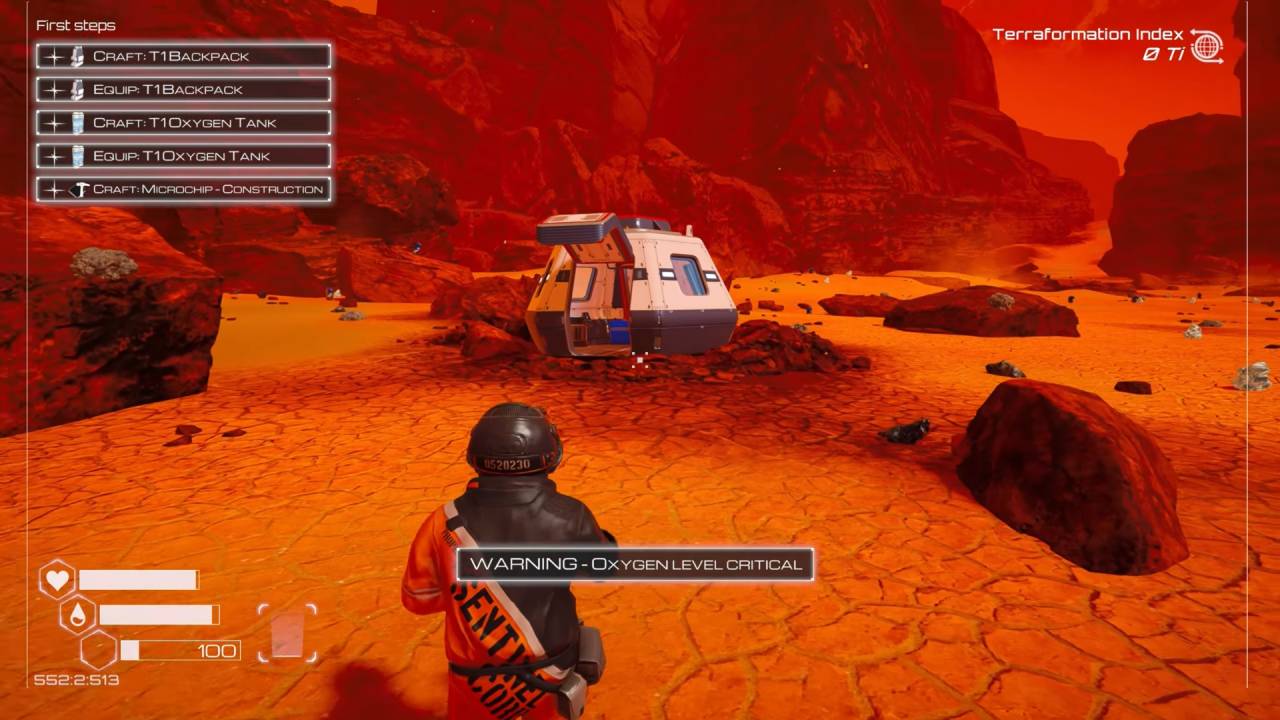
That trust in the design imbues the encounter with a unique sensation from the moment the escape pod opens up onto the crimson desert. And the story is very simple, on purpose, and it works to the game's advantage. You are an astronaut stranded in space, thrown onto a bleak Earth. Their major objective is to make the planet habitable for humanity.
The Planet Crafter does not give you a lot of background information all at once. Instead, it tells the story through abandoned ships, enigmatic buildings, scattered communications and the slow revelation of what happened before. This strategy produces an astonishingly powerful sense of loneliness.
The quiet of the planet is part of the story and each building found alludes to prior missions, failed attempts or lost goals. The game is not a tightly structured character plot. Instead, the primary story arc is your arc. This is not about saving a kingdom or beating a bad person. It is about the inexplicable transformation and knowing that every machine in the sand makes a future environment conceivable.
The environmental drama is especially good because it caters to your interests. Exploring is more fun without forcing it. Hidden caves, flooded ruins, frozen passages and procedurally generated wrecks. The results feel deserved, not simply handed to you by a task marker. As you play, you can slowly piece together the world and the quietly rewards you for it.
There is a peacefulness to the experience from that amount of detail you just do not get in a lot of survival games. The Planet Crafter's opening hours leave you susceptible in a very effective way. You begin with a basic suit and a mining tool and a small escape pod that can be utilized as a short-term oxygen source.
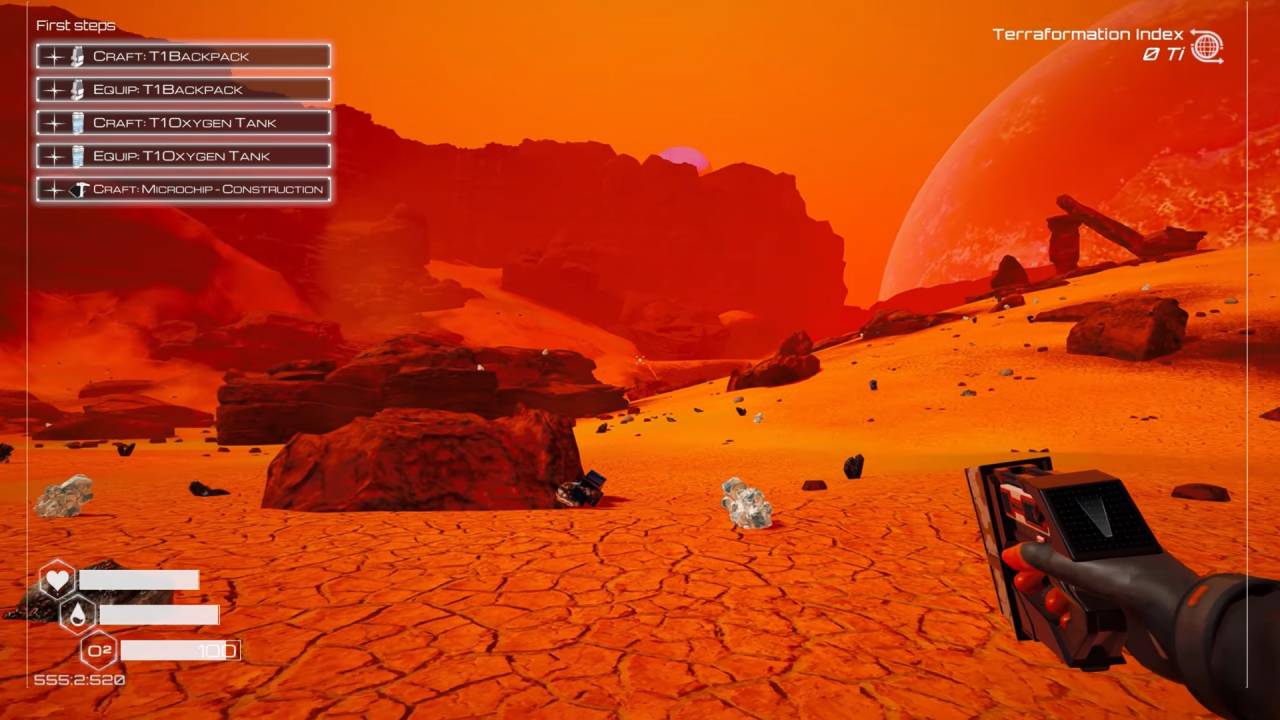
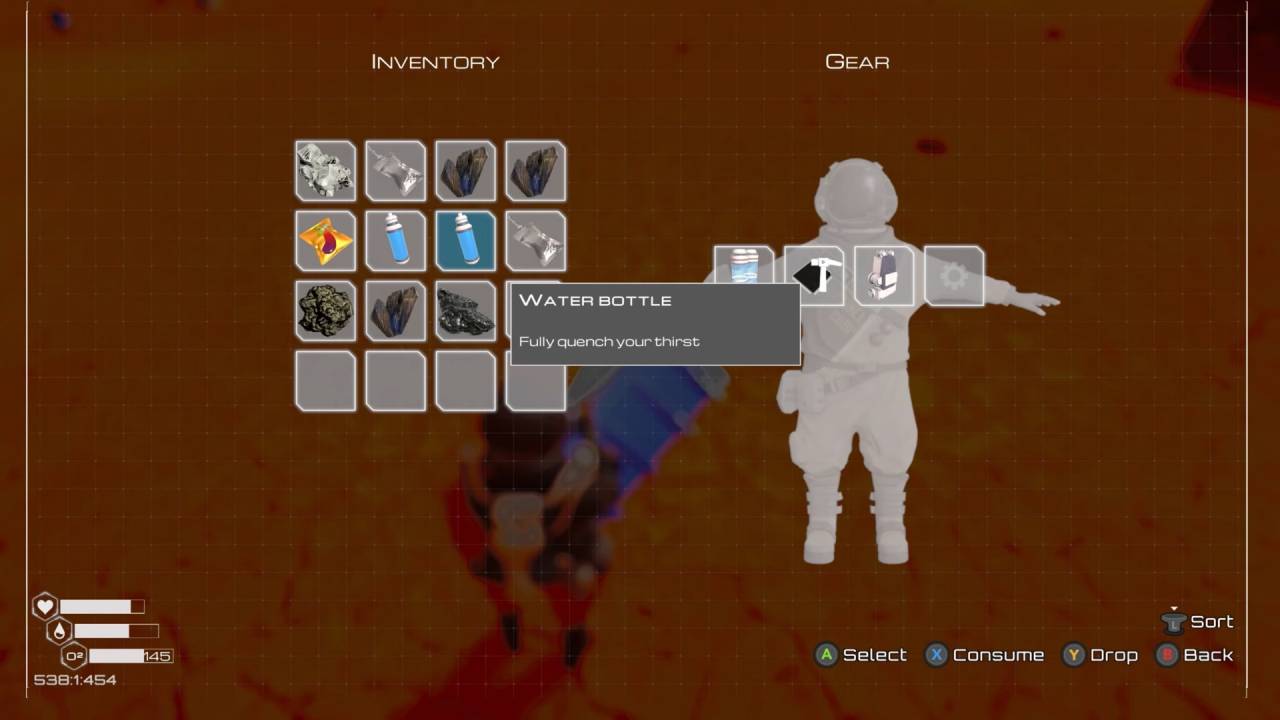
Every early mission is controlled by an air meter that constantly beeps, turning even small resource runs into strategic decisions. You need iron, silicon, titanium, cobalt, ice and other minerals to stay alive, and the game quickly teaches you the importance of being prepared.
One of the best decisions the game has made is that resource collecting is intentionally easy.
The Planet Crafter does not have a lot of complex systems to throw at you. Instead, it presents them gently with clear goals and logical progression. Mine materials, build tools and shelter, create energy, increase temperature and pressure, add additional oxygen and develop new technologies. Each step is a natural follow-up to the previous one, creating a loop in the game that feels deliberate instead of random.
The base building sits in the middle of that loop. Shelters are metal boxes, initially, to keep people safe and provide air. Over time, they become massive research hubs with biodomes, labs, storage networks, production facilities, launch platforms and housing sections that are only for show. The building interface is clean and responsive, making the expansion fun, not stressful.
There is a reason each new room is added and the notion of making a permanent home on an exotic world is enhanced. The game is all about making new worlds. A Global Terraformation Index tracks the way the Earth is changing. It consists of heat generators, drills, oxygen producers, biomass systems and rockets. At first, it is practically impossible to perceive progress.
Small gains in numbers make it feel like meaningful change may be too far off. Thus the world begins to respond. When the weather turns cooler, clouds appear in the sky, rain falls on the desert, lakes form in dry basins, moss grows on rocks, trees sprout roots, critters show up and ultimately animals start to roam the region.
The Planet Crafter is one of the best examples of a game that shows how you can grow. The emotional payoff of returning to your area from hours ago and seeing it overgrown with grass, water and plants is powerful because it is directly tied to your actions. The world maintains track of all the choices that happened along the road. It makes ordinary crafting feel really profound, especially when you see it all the time.
Another layer of satisfaction comes from automation. Mining is slowly being replaced by ore extractors, drones, automatic transportation networks and large-scale industrial systems.
Your function shifts from scavenger to industrial architect; therefore, you have to manage infrastructure rather than manually carry all resources. There is a peaceful satisfaction in watching a well-planned network perform as it should, just like playing management simulators, only this time the purpose is to heal the globe.
Since the world is built on discovery rather than empty traversal, exploration stays engaging throughout the game.
When spacecraft crash, they drop valuable blueprint chips, rare resources, seeds and advanced gear. Meanwhile, temperature-dependent caves can only be opened when a certain amount of work has been done in terraforming the planet. The Planet Crafter skillfully links exploration to the evolution of the planet, so as the world evolves, new locations open up. That connection keeps the map feeling alive even after dozens of hours.
Co-op support massively increases the potential of the game. Together, up to eight players can team up to gather resources, develop, research and go on adventures. The group works and of course the tasks are shared among them. One of you might be busy producing energy, while another is off searching distant lands for rare materials. Since there is no PvP combat, the main goal is still cooperation. This means that big building projects are more about teamwork than competition for resources.
There is hardly any traditional combat and that absence is The Planet Crafter's primary design statement. Rather than fighting enemies, the game tasks you with solving puzzles around logistics, environment management and space planning. What to build, where to build it and how to power it. Which terraforming statistic needs the greatest work at a particular time. That is the hard part. Combat Mechanics: Oxygen, heat, pressure, biomass and energy.
This method puts a different kind of stress. Early discovery is very scary as a wrong turn can have you running back to safety, watching your oxygen level drop to zero. Food and water are tougher for folks but not too tough. Often failure feels like bad planning, not unfair enemy behavior. This is why deaths are surprisingly informative rather than just annoying.
The puzzle side becomes better in the middle of the game. You have to identify the optimum spots to put machines, balance output vs energy use, decide when to pull apart outdated equipment and figure out how to best make rockets and complex terraforming technologies operate.
Certain rare materials like superalloy, iridium, uranium, osmium and sulfur create bottlenecks that drive people to research and prioritize strategy. It's always about solving manufacturing problems for you, not conflicts to fight.
The system, however, is not flawless.
Later game resource management can get boring because you have to make a lot of trips between storage containers, production buildings and mining sites. Sometimes building placement does not snap into what seem like obvious spots, leading to unnecessary moments of fiddling. Some of you may find that the lack of deadly critters makes
The Planet Crafter less fascinating over time, especially once sophisticated equipment makes oxygen and survival issues easier to deal with. This style is nice since it is simple and straightforward to use. The game makes it so easy to identify what needs fixing next and everything you do is working towards a clear world goal.
The unfortunate part is that the difficulty curve progressively starts to drift from a condition of survival to waiting for big-scale systems to achieve enough progress for the next unlock. With limited resources and the need to make choices instantly, the opening hours are generally the busiest.
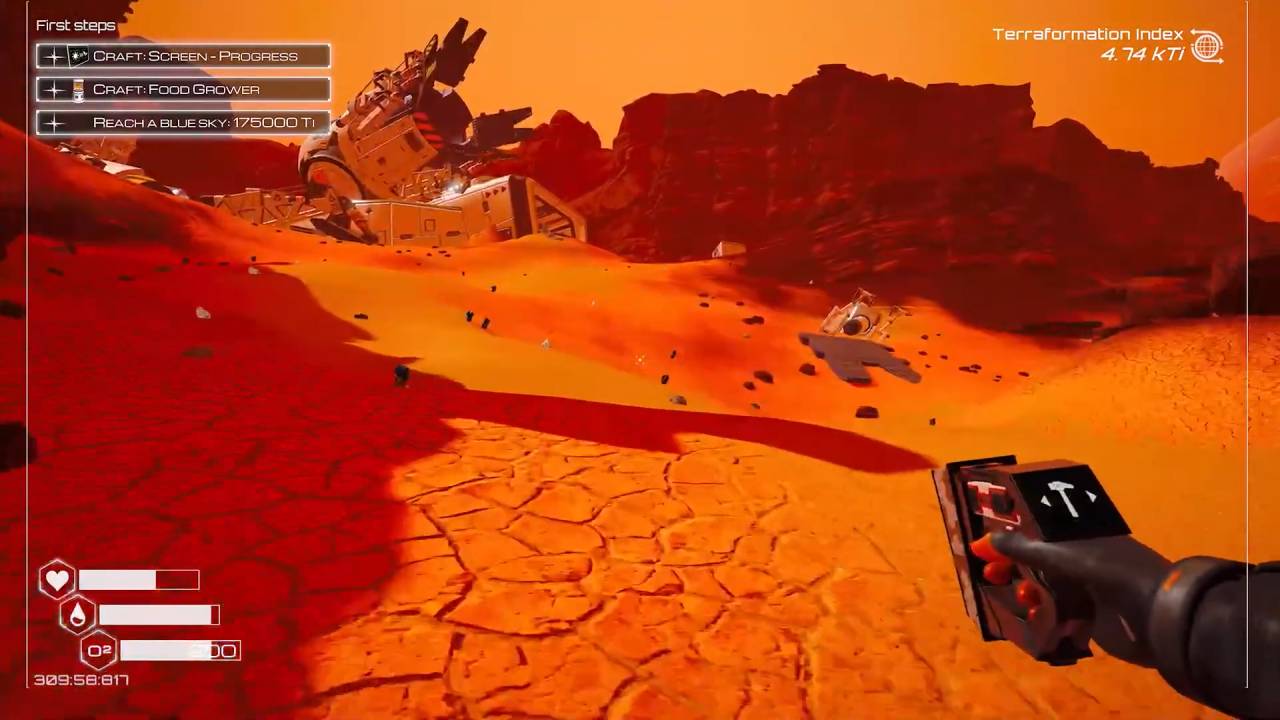
The game doesn't have experience points like most games, but the method you progress through the game is comparable, with the terraformation index and blueprint unlocks. Oxygen, heat, pressure, and biomass levels increase. This increases the total score of the world. This creates the possibility for new technologies, machines, vehicles, automation systems and biological projects.
Every machine we build is an investment in the future of what we can do. This progression model is very addictive because you feel like you are always moving forward. Everything we do, from sowing seeds to launching rockets, digging for resources, examining wrecks or developing infrastructure, is geared toward the next technology milestone.
The Planet Crafter rarely leaves you without a clear short-term goal. That makes it very simple to keep playing just one more unlock, only to realize several hours have passed. You can actually hear it grind in the later steps.
The early blueprints emerge swiftly, which stimulates discovery and experimentation. But the terraformation thresholds are substantially higher for advanced technologies. You can wait over long periods of time for the global index to climb, building machine networks and enhancing production. Automation helps relieve the burden, although the pace is certainly slower than during the bustling opening hours.
A key element is that the progression process is fairer to hard labor than in many survival games.
You can dismantle structures to reclaim the materials they were built from, you can upgrade old gear rather than throwing it away and exploring always yields useful items. Even as the game gets harder, it rarely feels like progress is being actively hindered. The slowdown is due to plans to grow, not clear attempts to make money or extra padding.
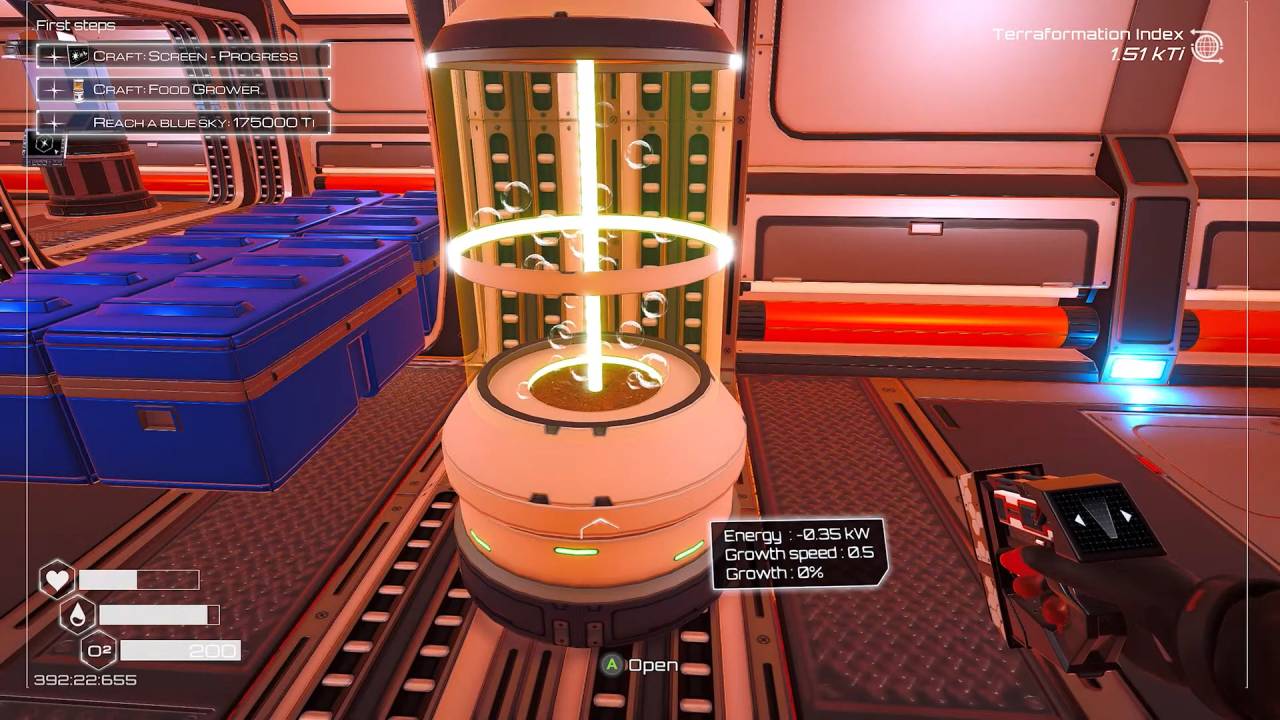
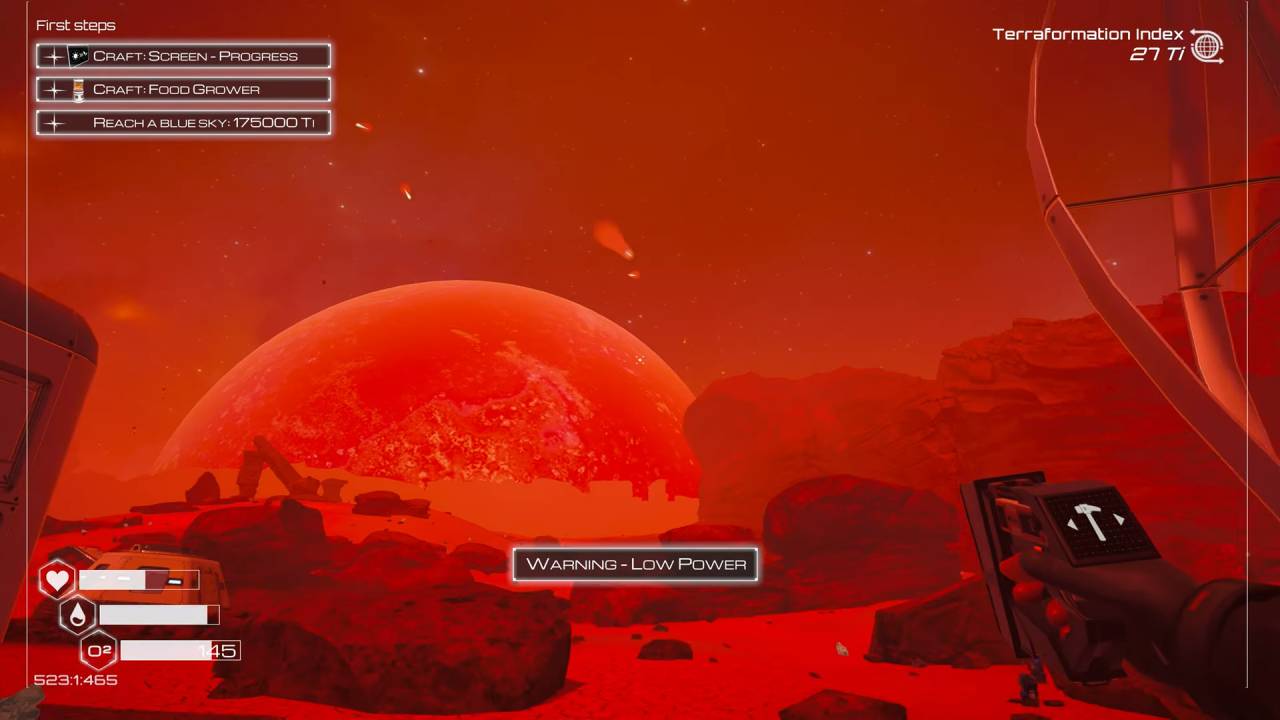
The Planet Crafter is not so much about how realistic the graphics are but how they can be changed. The environment you start in is designed to be brutal. Red skies, dusty plateaus, sharp cliffs, rubbish from factories. It is important to start with a harsh reality because that is the benchmark for all future progress. The folks who do the art know contrast is stronger than spectacle.
The variations in appearances as terraforming progresses are simply remarkable. The horrible orange atmosphere is replaced by blue skies, rain makes the ground reflect light, lakes shape the land in new ways and plants introduce bright greens that were not present at all during the opening hours. The Earth gradually turns from a dangerous wasteland into a plausible biosphere. The change does not seem out of place; it seems natural.
The character models and movements are quite rudimentary, one of the few things showing The Planet Crafter's indie roots. But it is the changes to the environment, the effects on the climate and the enormous changes to the planet that drive the program. It's a hit. You are looking at the planet you are changing more than the images of your faces.
The Xbox version runs great. According to reports, frame rates are stable. The game loads swiftly, controls function properly and even the console port is remarkably polished. The third-person mode makes it easier to see your fortress while you are developing it and makes multiplayer games feel more communal. Graphics would not be the best in the most expensive AAA games but they combine well and are easy to understand, which makes the game even better.
The sound design fits the relaxing feel of The Planet Crafter.
Wind, distant industrial, rain, ambient hums and delicate atmospheric textures all combine into a powerful sense of place without being too much. In the early stages of exploration, silence is employed purposefully to emphasize the vastness of the planet.
Music often makes you feel good without calling attention to itself. Tracks frequently focus on wonder, being alone and eventually finding out new things, which helps you feel like you are a part of something broader than merely creating bases. The soundtrack is notably good during terraforming milestones, as the visual changes along with joyful music contribute to the memorable moments of accomplishment.
The sound effects are well done and easily understood. Mining effects, machine activations, oxygen refills, crafting interactions and changes to the terrain all provide great input while maintaining the laid-back atmosphere of The Planet Crafter. With no continual combat sounds, there is room to breathe, which helps maintain the tranquil rhythm that makes the experience what it is.
The Planet Crafter is one of the most quietly engrossing survival games to come out in a while. By removing the fighting and making the whole experience about changing the surroundings, Miju Games has crafted a game that is both calming and incredibly engaging. Every machine that is built has a clear purpose, every journey can find crucial new information and every hour spent influences the planet in a visible way.
There are several issues with the game, and it slows down towards the end; maintaining resources can be boring, and placing structures can go awry at times. It may be too slow for some who crave action all the time. There are issues, sure, but they are always overshadowed by the great delight of seeing a lifeless environment become a thriving ecosystem with hard work and good planning.
What makes The Planet Crafter stand out from so many games in the category is the emotional satisfaction of creation. Survival games often reward you with better weapons, better defenses or more loot. This time the payoff is substantially bigger. The reward is to be on top of a cliff and look out over forests, lakes, rainstorms and animals. You then realize that none of this was here before you started building. That feeling of authorship is shockingly rare in modern games.
To Xbox players, this system release feels less like a compromise and more like the beginning of a full-fledged experience. The Planet Crafter has a momentum to it that is hard to stop once it gets going. It can be played as a peaceful personal endeavor by yourself or as a collaborative terraforming adventure with others.
This game understands the importance of obvious results and that understanding turns simple chores like gathering materials into one of the most satisfying experiences in the survival genre today.
Editor, NoobFeed
Verdict
A brilliant, addictive survival experience replacing combat with creation, delivering one of the most satisfying progression loops through visible planetary transformation, smart automation systems, and a surprisingly polished console debut.
81
Related News
No Data.