
Transport Fever 3 Review
PC
Transport Fever 3 keeps the series' deep logistics systems intact while making the jump from horse carts to modern railways much easier to understand.
Reviewed by Sarwar Ron on Sep 30, 2026
Transport Fever 3 feels like the kind of sequel that knows exactly what made the series work while also recognizing where new players could get lost. The Transport Fever games have always been about watching transportation evolve, starting with simple horse-drawn vehicles and eventually progressing to faster trains, boats, and more complex logistics networks.
That basic idea remains at the heart of Transport Fever 3, but this time the experience feels much easier to get into. If you've played the previous games, the overall structure will feel familiar. You still build transport routes, connect towns and industries, move passengers and resources, take on debt, expand your network, and gradually work your way toward more advanced technology.
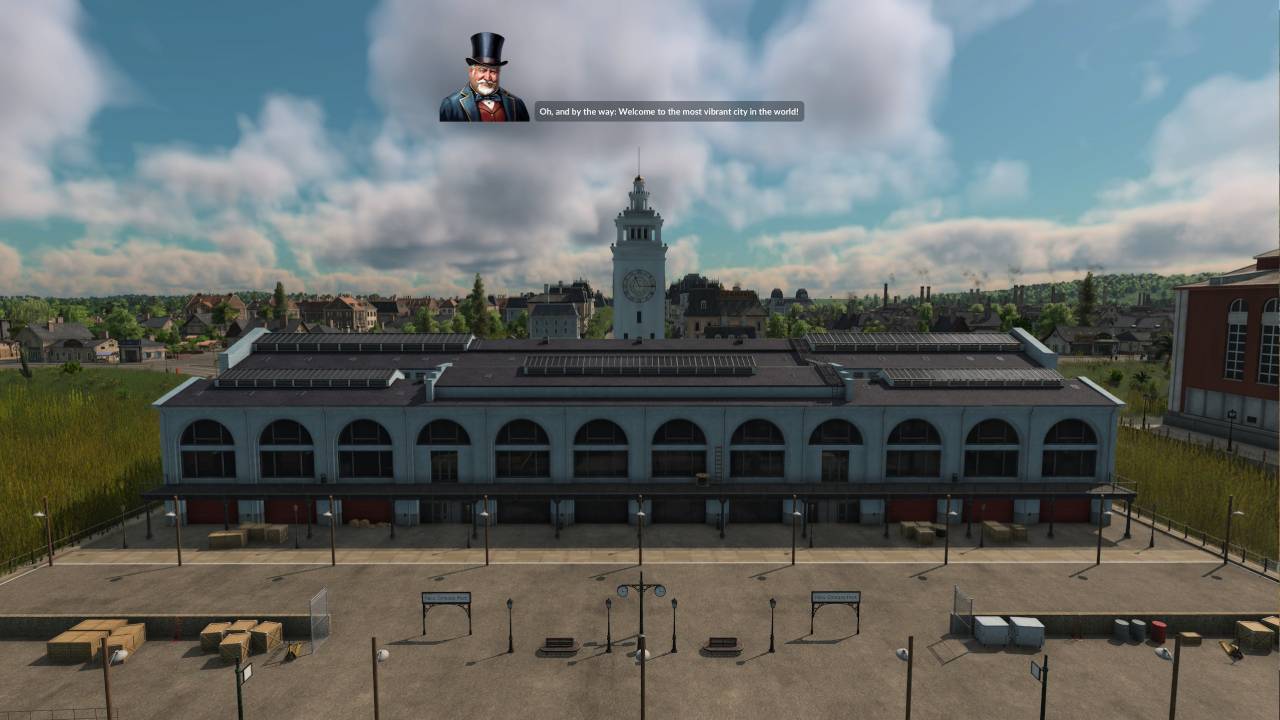
The difference is that Transport Fever 3 does a better job of explaining what all those systems are actually asking you to do. That matters because Transport Fever can be a difficult series to understand at first. Its systems are logical once you understand them, but getting there can take some work.
Transport Fever 3 makes that initial learning curve less intimidating with a cleaner tutorial and several small quality-of-life improvements that clarify what the game expects. Plenty of depth remains for players who want to spend hundreds of hours building enormous networks, but you don't need to understand every part of the game to enjoy it.
You can start small, learn how supply and demand work, and gradually build your way toward a much larger operation. Transport Fever 3 doesn't really have a traditional story. Instead, you're given a sandbox where the world itself becomes the challenge.
You start with a relatively undeveloped transportation network and decide where your company goes from there. Depending on your choices, you might spend your early years connecting nearby towns with horse carts before eventually replacing those routes with buses, ships, and trains.
Subsidies and smaller missions also give you specific objectives to work toward.
For example, a town might ask you to establish a transport connection between two locations. Completing the job earns you money, while failing to do so can result in a fine. These tasks give you something to focus on when the sandbox feels too open, although they can also encourage you to expand before your technology and finances are ready.
That is one of the first traps you'll encounter. You need to invest money and sometimes take on debt to grow your company, but spending too much too early can leave you struggling to keep everything running. A mission might look attractive because it promises extra money, but if it requires a long route that your early vehicles can't handle efficiently, you can end up spending more than you earn.
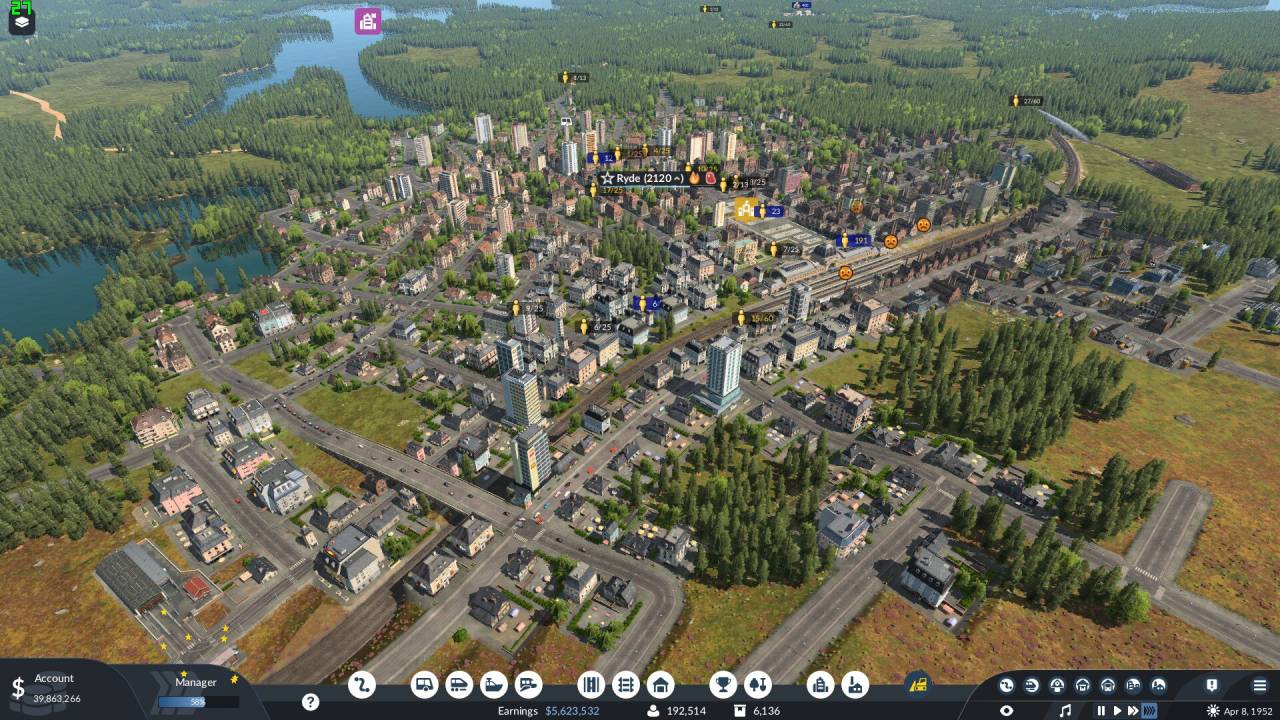
That financial balancing act is part of what makes Transport Fever 3 work. You're constantly deciding whether to expand now or let your existing routes generate more revenue first.
At its simplest, Transport Fever 3 asks you to look at a town and figure out what it needs. Towns are divided into different areas, including residential, commercial, and industrial zones. People need transportation between these areas, and resources need to reach where they're demanded.
Once you understand that basic relationship, setting up a route is surprisingly straightforward: you can place bus stops around the relevant areas, build a depot, create a route between those stops, and then assign a suitable vehicle. The improved interface makes this easier because vehicle filters can narrow your options based on what you're trying to transport.
That might sound like a small change, but it matters when you're learning the game. Instead of looking through every available vehicle and trying to remember which ones can carry passengers or specific cargo, you can use the right filter and quickly see what works with your current technology.
The same principle applies to larger supply chains.
You might have a fishery producing resources that need to reach a commercial district, while another industry produces goods that need to reach an industrial area. Your job is to connect all these points efficiently and make sure the right vehicles are available in the right places.
This is where Transport Fever 3 gradually becomes more complicated. A bus depot doesn't just determine where you buy buses. Its location can affect how efficiently your vehicles operate. If you create a route 100 kilometers from your only depot, a newly purchased bus still has to travel all the way from the depot before it can begin servicing the route.
That means you'll eventually need to build additional depots around your network. These buildings can also handle maintenance for nearby vehicles, so placing them intelligently becomes part of managing your transportation system.
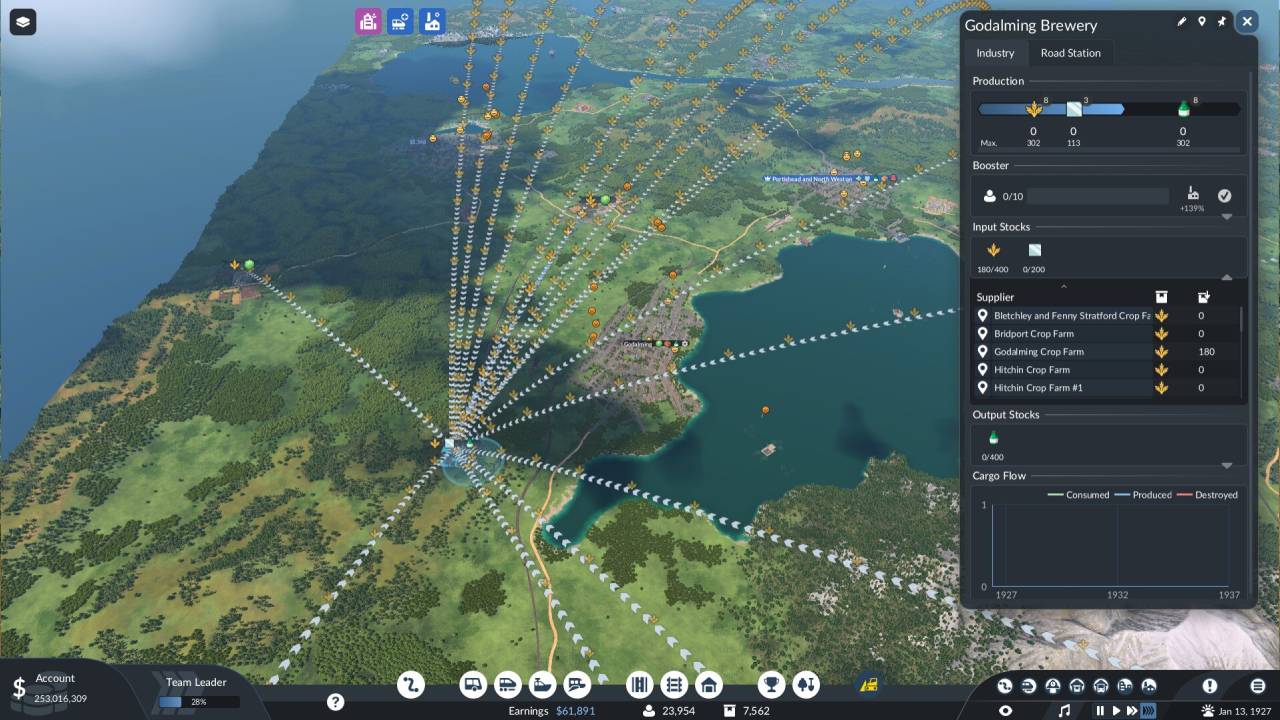
Cargo introduces another layer.
Universal storage facilities can act as connecting points between different parts of your network. When cargo arrives at a port, for example, you can place it in nearby storage. Other vehicles can then collect it and take it toward the relevant destination.
The key is that the game gradually teaches you to think in terms of supply and demand rather than manually controlling every shipment. Once you understand the logic, the systems start working together. You identify where something is produced, where it needs to go, and what transportation method can connect those locations.
You will still encounter situations where things don't work as expected. A route might be facing the wrong direction, a bus stop might not connect properly, or you might try to link incompatible transportation infrastructure. These moments become a kind of troubleshooting exercise. The good thing is that the rules remain consistent, so once you understand why something failed, you can usually fix it without having to relearn the entire system.
Transport Fever 3 also gives you more ways to build and adjust your networks as they become larger.
Road junctions, dedicated lanes, rail priorities, cargo handling, warehouses, trams, and tram-trains all become increasingly important as your operation grows. The further you progress, the less you're simply connecting two points and the more you're managing an interconnected transportation system.
Passenger transportation can become a balancing act in itself. A growing city needs enough vehicles to keep people moving, but not so many that you waste money on unnecessary capacity. Cargo works similarly. You need enough transportation to satisfy demand, but building too much infrastructure too early can put your finances under pressure.
The game also lets you experiment with different difficulty settings and map setups, so you can decide how much economic pressure you want. The sandbox structure means there isn't a single correct way to build your network. You can take a slower approach or push yourself into larger investments earlier.
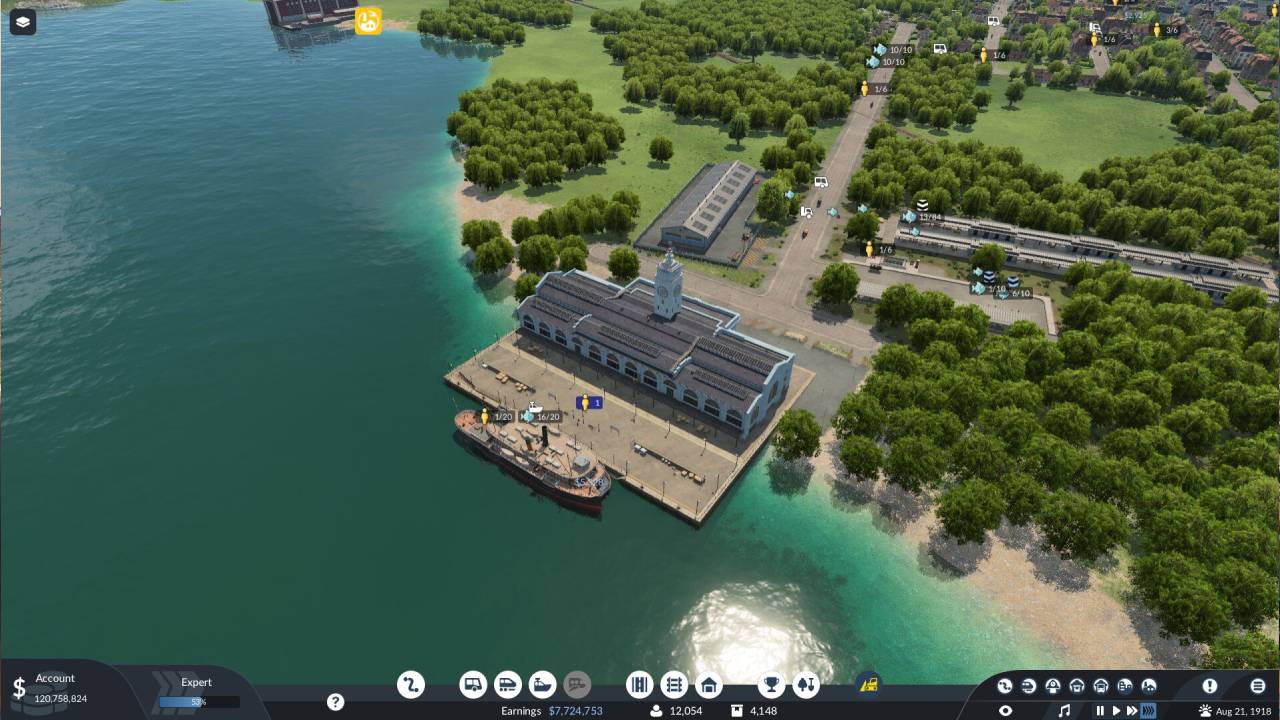
The world map gives you plenty of room to experiment. You can choose different climate environments, including temperate, desert, and subarctic settings, and the game generates a map with roads, water, towns, and industrial sites spread across it. The default maps are already large enough to give you plenty of space to plan your network. Your starting location matters because placing your headquarters can boost growth in the nearby town.
From there, you're encouraged to study the map before committing to your first major routes.
That early planning matters because not every resource is worth transporting over long distances when you're still using basic vehicles. Moving goods hundreds of kilometers with horse carts might technically be possible, but the costs and travel time can make it a poor decision.
The game constantly pushes you to consider what your current technology can realistically support. As your cities develop, their demands increase, and your transportation network expands with them. What starts as a simple route between two neighboring towns can eventually become a much larger logistics chain.
You also progress through transportation technology, though it isn't a traditional XP-grinding system. You don't repeatedly defeat enemies or complete identical activities to earn experience points. Instead, your progression is tied to technological advancements and the revenue you generate from your transportation business. As your network grows, you gain access to better ways to move people and cargo.
This progression gives the game its sense of momentum.
A horse-and-cart network might be enough to establish your first profitable routes, but eventually you'll want something faster and capable of carrying more. Trains represent a major step forward because they can move larger quantities of cargo and passengers much more efficiently.
They also come with much higher infrastructure costs. Building a railway through a mountain can cost millions, while taking a longer route around it might be significantly cheaper. Terrain therefore becomes another factor in your financial planning. The most direct route isn't always the smartest one.
This creates a constant cycle where your finances can change quickly. You might feel comfortable after a few profitable routes, only to spend heavily on new railway infrastructure and suddenly find yourself struggling again. Taking out loans can help you make large investments, but you also have to repay them.
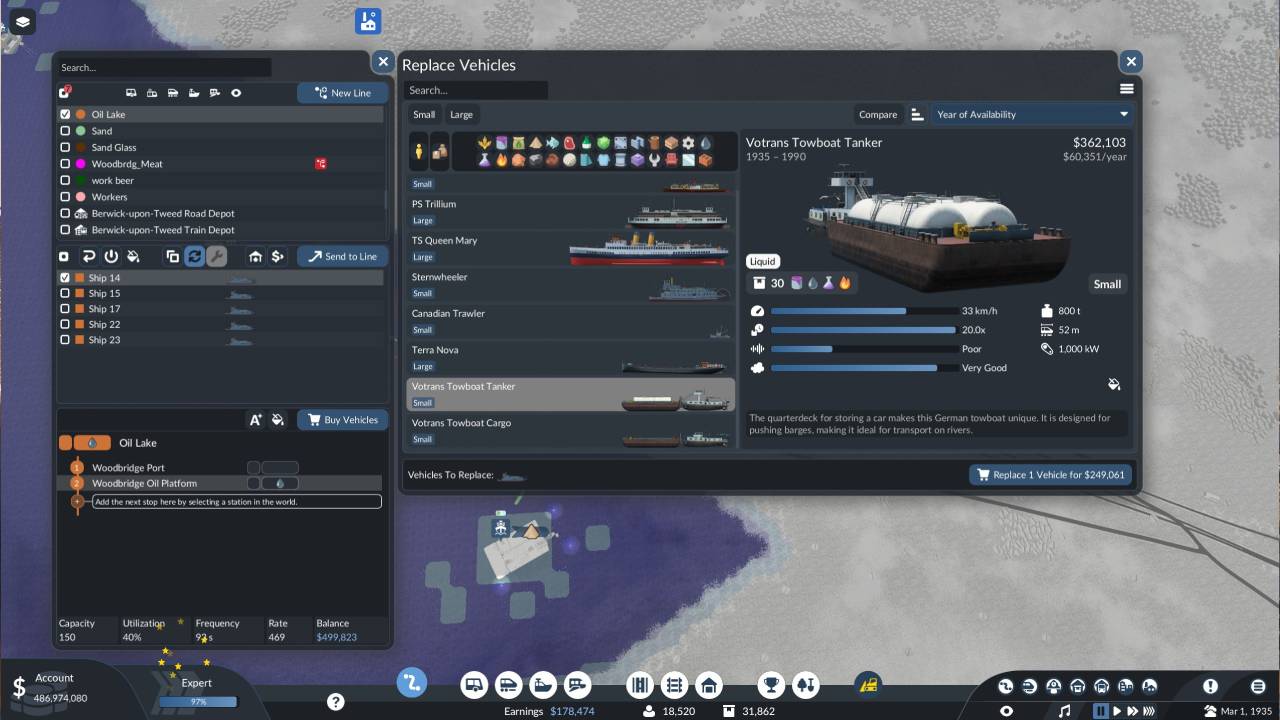
That economic progression is arguably one of the most important parts of the gameplay because it gives meaning to every expansion. You're not just building a prettier transportation network. You're deciding whether the next piece of infrastructure will actually make your company stronger.
Visually, Transport Fever 3 focuses more on giving you a clear view of your transportation network than on delivering a highly cinematic presentation.
The world is designed to make roads, towns, industries, vehicles, and infrastructure easy to read. The improved interface is especially useful here, with color-coded information helping you understand what is happening inside a city.
Heat-map-style information can show you why a town isn't growing and which areas lack transportation or resources. That kind of visual feedback matters in a management game because it reduces the guesswork involved in diagnosing problems.
The game also supports different environmental settings, while the changing world, day-and-night cycle, weather, and broader presentation help make the maps feel less static as you spend more time in them. The scale of the maps gives you plenty of room to watch your network develop from a few simple routes into a much larger transportation system.
Sound plays a quieter role here. Transport Fever 3 isn't built around a soundtrack or dramatic audio moments. Instead, vehicle and world sounds support the management experience without getting in the way. Since you spend so much time planning routes, checking finances, and building infrastructure, the audio works more as background atmosphere than a major feature.
What ultimately makes Transport Fever 3 stand out is how familiar it feels, which makes the experience more approachable.
If you already know the series, the fundamentals haven't suddenly been replaced. You're still building routes, managing supply chains, watching your finances, and gradually moving from basic transportation toward more advanced systems.
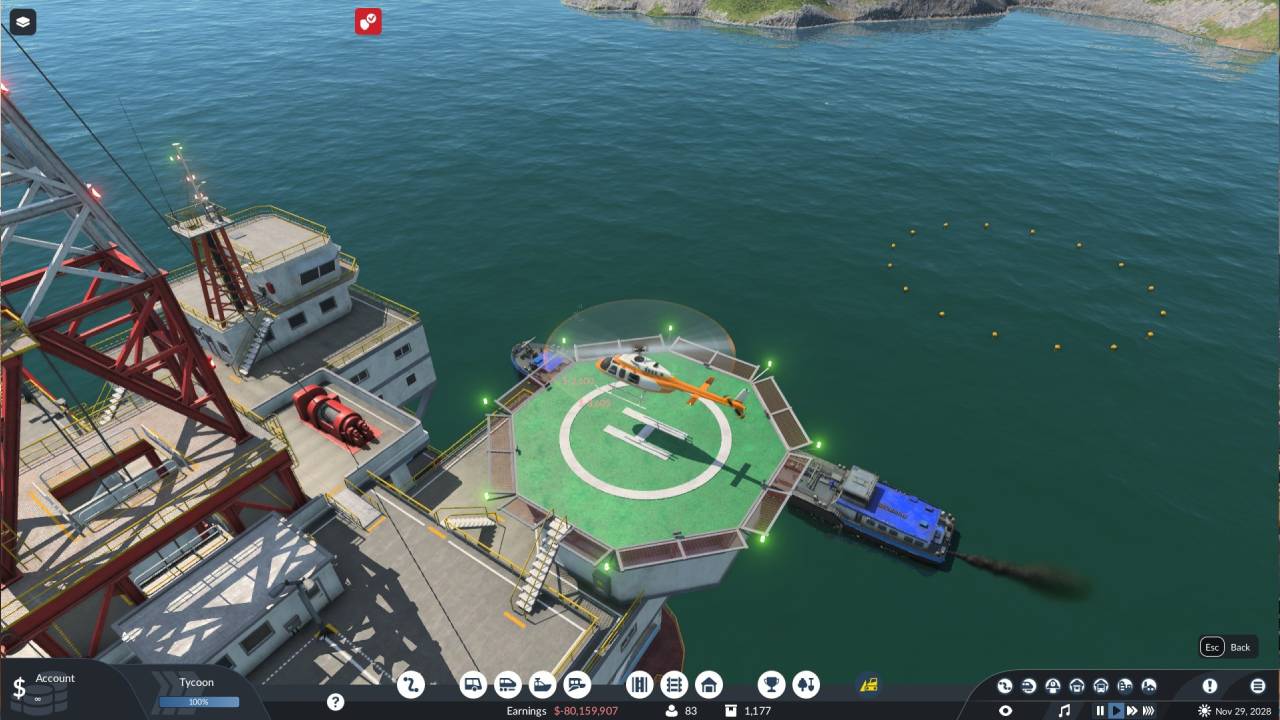
For newer players, however, the onboarding improvements make a noticeable difference. The tutorial is cleaner, the interface does a better job of pointing you toward appropriate vehicles, and the game's logistics systems are easier to understand once you start connecting different parts of the map.
There are still moments where you have to stop and figure out why something isn't working. The game doesn't completely remove the complexity that has always been part of Transport Fever. It simply does a better job of guiding you into that complexity.
That is particularly useful because Transport Fever 3 is the kind of game where understanding the basics can lead to much deeper systems later. You can start with a couple of buses and a simple passenger route, then move on to cargo, ports, storage, ships, trains, larger cities, and increasingly complex logistics.
The biggest improvement over the previous games is therefore less about changing what Transport Fever is and more about making it easier to reach the part that longtime players already enjoy. The familiar systems are still here, but the early experience feels less likely to leave you wondering what you're supposed to do.
You can still make expensive mistakes.
You can still overexpand. You can still bury yourself in debt after deciding that running a railway through a mountain is a good idea. But those mistakes feel like part of learning the game rather than simply fighting against the interface.
Transport Fever 3 doesn't need to reinvent the series to work. Its greatest changes are the ones that help you understand the existing formula. Once you get into the flow of connecting supply and demand, watching cities grow, adding new routes, and eventually replacing horse carts with more advanced transportation, the appeal becomes clear.
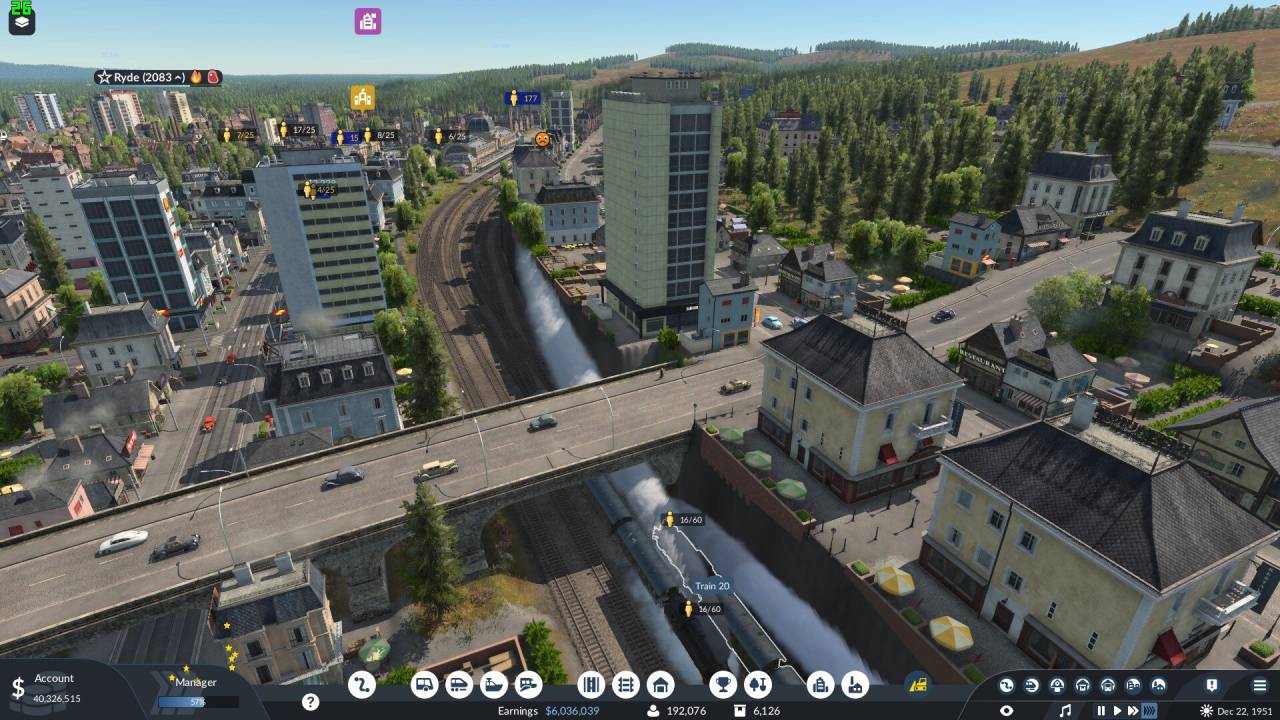
If you've previously bounced off Transport Fever because it felt too complicated, Transport Fever 3 gives you a much smoother way back in. And if you've already spent hundreds of hours with the series, the deeper systems are still there, waiting for you to build on them.
The result is a sequel that feels less like a complete departure and more like a refined version of the same transportation sandbox.
You still have to learn the logic, manage your money, and accept that one ambitious railway can completely change your financial situation. But getting to the point where those decisions become enjoyable is much easier this time around.
Admin, NoobFeed
Verdict
Transport Fever 3 retains the series' deep logistics while improving its onboarding, interface, and quality-of-life features, making the jump from simple routes to complex transport networks easier to grasp.
84
Related News
No Data.