
Yerba Buena Review
PlayStation 5
A puzzle-driven experience set in 1970s San Francisco with transferable object physics.
Reviewed by Adeela Tas on May 26, 2026
Yerba Buena offers an interpretation of the seventies San Francisco that right away looks interesting in its construction, offering the viewer a world that seems to be somewhat unstable, like it had been put together but hasn’t found a stable form yet, and that's where the player comes in.
In Yerba Buena, players control Barb, a character who moves to San Francisco in search of better luck, only to discover she is in a city where nothing seems to work as it should. The corporate world leaves its traces everywhere in the game, while numerous visual glitches affect how the world works. Moreover, throughout the gameplay, one can sense that the entire system isn’t quite working.

Yerba Buena uses the simulation-based narrative framework to its benefit in embedding the player in a story.
The realization of the narrative's artificiality occurs almost immediately. From the start, one realizes that they are dealing not with a stressed-out city but with a simulated environment within an incomplete video game. This isn't even a narrative that centers on Barb, who wasn't meant to be the hero of this universe. In other words, you are watching a character who shouldn't even be awake in a malfunctioning system.
As one progresses through Yerba Buena, the narrative continues to oscillate between interactions with characters and more abstract thoughts regarding simulation, incomplete development, and the dysfunctional systems at play. Barb is transported by and moves about with characters such as Russell, but from the start, the series of events that initiates the main plotline begins in disarray.
The protagonist misses out on a job interview, gets into the wrong cab, is nearly kidnapped right away, and comes into possession of something seemingly inexplicable: the Oscillator. At that point, Yerba Buena transitions from simply existing in the city to knowing how the city works. The Oscillator is the key feature that you deal with throughout the entire game, defining almost all of your actions.
It sounds rather easy in concept: you scan for motion or object properties in the environment, then apply them to other things. Should an object move upwards, then this motion will be copied and applied to some other object. Should it rotate, then this rotation will also be transferred to another object. Physical features can also be imprinted in the same way. Yerba Buena constructs virtually any puzzle using this principle.
From the very beginning of Yerba Buena, there is an understanding that there will be no boundless freedom.
Only certain objects can be interacted with; most likely, the ones that exhibit a glitching behavior within the environment. These are the only objects that can be scanned and modified, and at times Yerba Buena even directs the player's gaze to them. However, when scanning becomes possible, Yerba Buena assists in identifying such an object, though not effortlessly. It may take several tries to pinpoint what should be done.
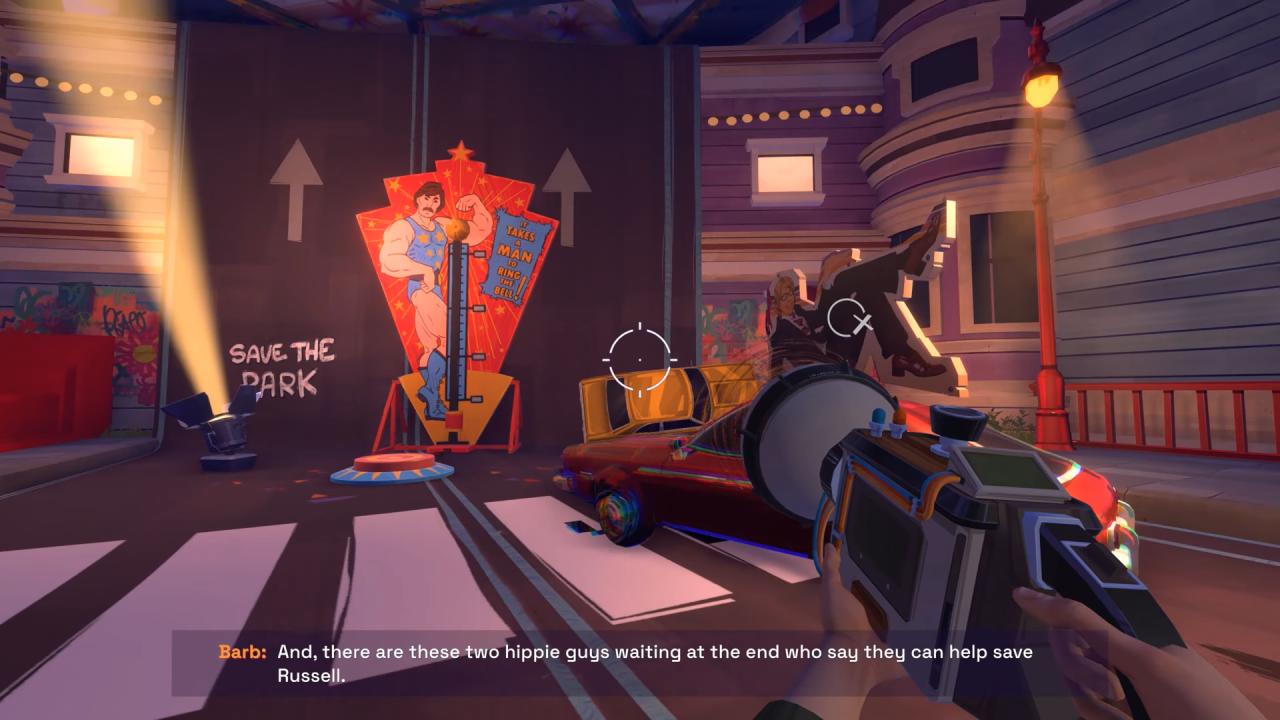
As soon as you begin using the Oscillator regularly in Yerba Buena, you will begin to recognize the systematic restrictions of this tool. The tool allows saving only one property at a time, so you have to go back each time to scan the same object again. This becomes a routine. Moreover, no matter how well you get to know a puzzle and its mechanics, there always seems to be a need to come back and perform the same action all over again.
And then there is the limitation that Yerba Buena puts on how and where you use different applications. It’s not like you can create whatever you wish based on what you observe. Instead, the game leads you towards particular interpretations and areas of application of certain phenomena. This is when Yerba Buena begins to look more like a solution-based game, where the player chooses among several predefined paths, rather than a puzzle in which the solution can be absolutely any and different from everyone else’s.
The game reaches a point where the Oscillator allows for fun spatial reasoning. Players could potentially rearrange parts of structures and buildings, and even modify the motion of environmental objects to circumvent certain challenges. The ability to manipulate space in innovative ways in some puzzles can be quite rewarding once figured out.
It would also be possible to combine certain traits, such as movement and bounciness, to enable new paths through the level.
Yerba Buena does provide some of those “aha” moments from time to time. However, Yerba Buena does not always sustain the clarity throughout the game. In some riddles, the objects to be found might be hidden or placed in an unconventional manner, requiring the player to look through everything they see until something finally stands out.
This forces the player to scan everything in front of them rather than interpret the room logically. There is platforming in Yerba Buena, although it’s not in the foreground. The player can move by jumping and navigating the environment, though precise movement isn’t really incorporated into the gameplay mechanics.
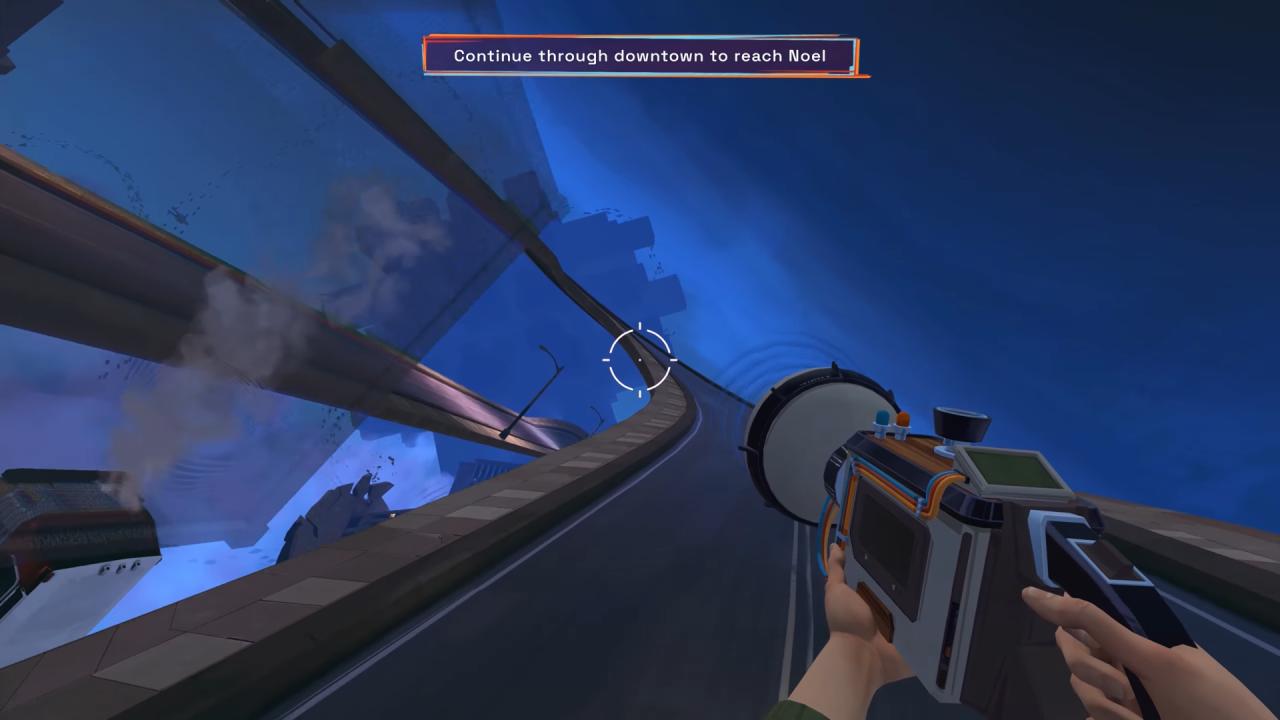
Rather, platforming aids puzzle-solving, though it can be somewhat challenging with timing and positioning. Nevertheless, it never reaches the point of becoming an independent mechanic. Often, it’s just a byproduct of solving a specific puzzle that requires the player to reach certain spots. The Yerba Buena gradually evolves the Oscillator by introducing additional features.
Along with simply copying motion, players learn to manipulate objects' intangibility and bounce physics. Allowing players to think creatively about the traversal mechanic is greatly helped by integrating these new aspects with previous mechanics. It is possible that an obstacle requires both movement in one direction as well as bounce physics, and Yerba Buena forces players to consider this in sequence.
As the game progresses, Yerba Buena, the structure of each level becomes more intricate.
The initial levels may be approached quite freely by the player, but the latter parts focus on creating increasingly long and intricate puzzle sequences. The player will have to find several effects across various parts of the game and use them in the correct sequence within a particular puzzle area. Adding more strain on the brain results in awkward pacing.
The atmosphere in Yerba Buena changes depending on the stage of game progression. The early stages have a slightly humorous tone, as players can freely manipulate their surroundings. You might find yourself using the Oscillator to make objects move in ridiculous ways or reshape small areas of your surroundings to navigate past certain obstacles.
It seems the system encourages some experimentation for players, even if in moderation. Yerba Buena becomes significantly more structured later in the game, adding more puzzle sequences that seem like a pre-designed gauntlet to players. One such example is a running sequence in which you need to modify your surroundings in real time as you run through them.
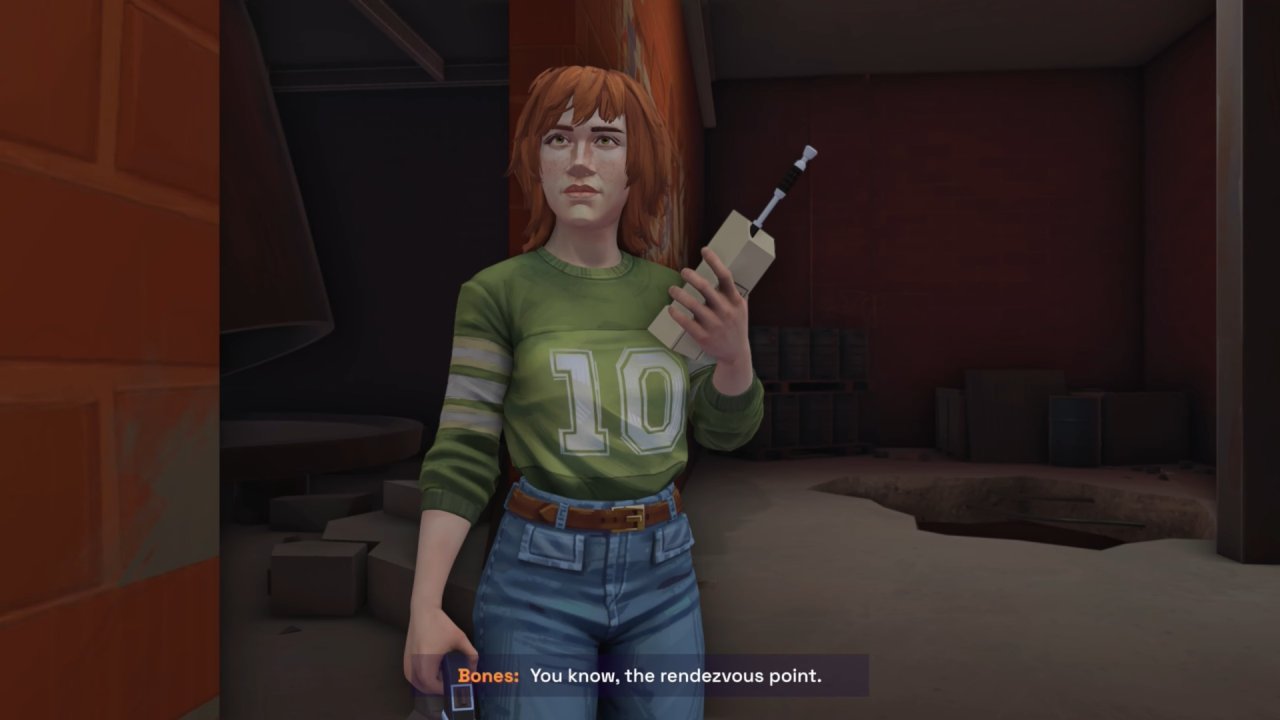
As opposed to solving each space before moving on, you need to keep track of changes to the space you're moving through while also finding out what you can scan and manipulate. There are parts of Yerba Buena where the game mechanics feel less polished. In those places, some objects will not respond consistently during the scan, and interactions do not always feel complete or smooth.
Sometimes you may find yourself unable to perform certain expected mechanics, which can cause you to lose significant progress in the section and force you to start again.
Glitches are often highly intrusive on immersion, especially when they occur during prolonged puzzle chains. Sometimes Yerba Buena seems like a game, balancing ambition and execution. Yerba Buena is also strongly focused on the concept of the world inside the game. At various times, it seems as though some characters are aware of their game's existence, and glitches occur not as accidents but as part of that reality.
There are many audio logs that provide more information about how this place was created and later abandoned, making Yerba Buena a world created by developers and left unfinished by them. This artificiality is used to tell Barb’s story, but it does not always convey the narrative effectively.
The game features numerous dialogue sequences in which you find yourself trapped in conversation, with the game controlling the timing of your actions. Yerba Buena is fond of disrupting your ability to act to convey exposition to you, requiring you to wait for certain intervals of time until you can interact again. Such disruptions are likely to break immersion, as you will have to listen to the narration repeatedly.
However, despite some problems, the writing in Yerba Buena has both merits and drawbacks. The plot idea behind it, becoming an NPC aware of their role in a flawed game world, is good and intriguing. However, the game’s writing leaves much to be desired, with many instances of exposition delivered through lengthy conversations.
Visually, Yerba Buena offers a somewhat stylized depiction of San Francisco through a painted, slightly comic approach to the game environment and character models.
Everything looks a bit off, which, given this world's artificial context, is actually quite fitting. Glitch effects reinforce the idea that things are not working properly and make it clear when they are not. Yet some aspects of animation don’t work as well; for instance, some character movement and cutscene facial expressions appear awkward.
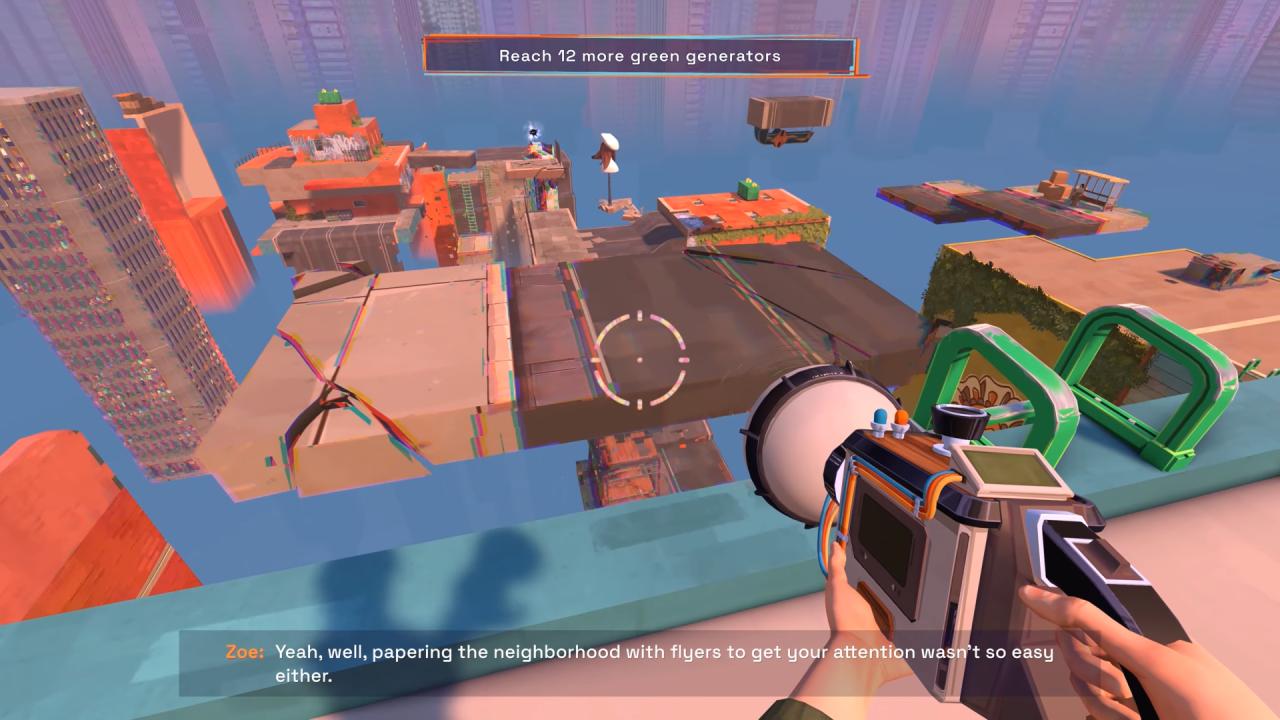
The audio in Yerba Buena is mostly utilitarian, not very memorable, and often loops, especially in certain parts of the music. It is a problem that does not detract from the overall enjoyment of the game. Voice acting ranges from passable to rather inconsistent, which can be distracting at times due to poor alignment between vocal performance, tone, and the situation.
In terms of performance, Yerba Buena operates pretty well on today’s computers. Mostly, it is characterized by process stability; however, it sometimes suffers from fluctuations during complex sequences. Occasionally, loading screens may appear even during transitions that don’t seem to require them; however, this does not impede gameplay.
One might also notice a difference in pace between the early and late parts. At the beginning of Yerba Buena, the player is given freedom to experiment and get familiar with the Oscillator's effect on the scenery; later, this opportunity becomes extremely limited. In particular, rather than experimenting, you start doing multi-step tasks following instructions.
This style of gameplay presents its own challenges, but it’s a different way to experience Yerba Buena's mechanics.
The environmental set pieces feature mechanical structures and amusement-park-like elements that impressively enhance the visual scale and add complexity to the spaces' experience. Generally, you know what the game wants you to do, but sometimes it takes a little longer to determine exactly what sequence of actions to take. The design of the game has real ambition, and it expresses its ideas in a bold, expressive way.
The basic premise of Yerba Buena stays strong throughout. The Oscillator remains the focal point in keeping the experience together, despite the rest of the game being of uneven quality. Copying movements, duplicating rules in real life, and altering object behaviors still create a satisfying gameplay experience when everything comes together. Yerba Buena just doesn’t always manage to pull it off.
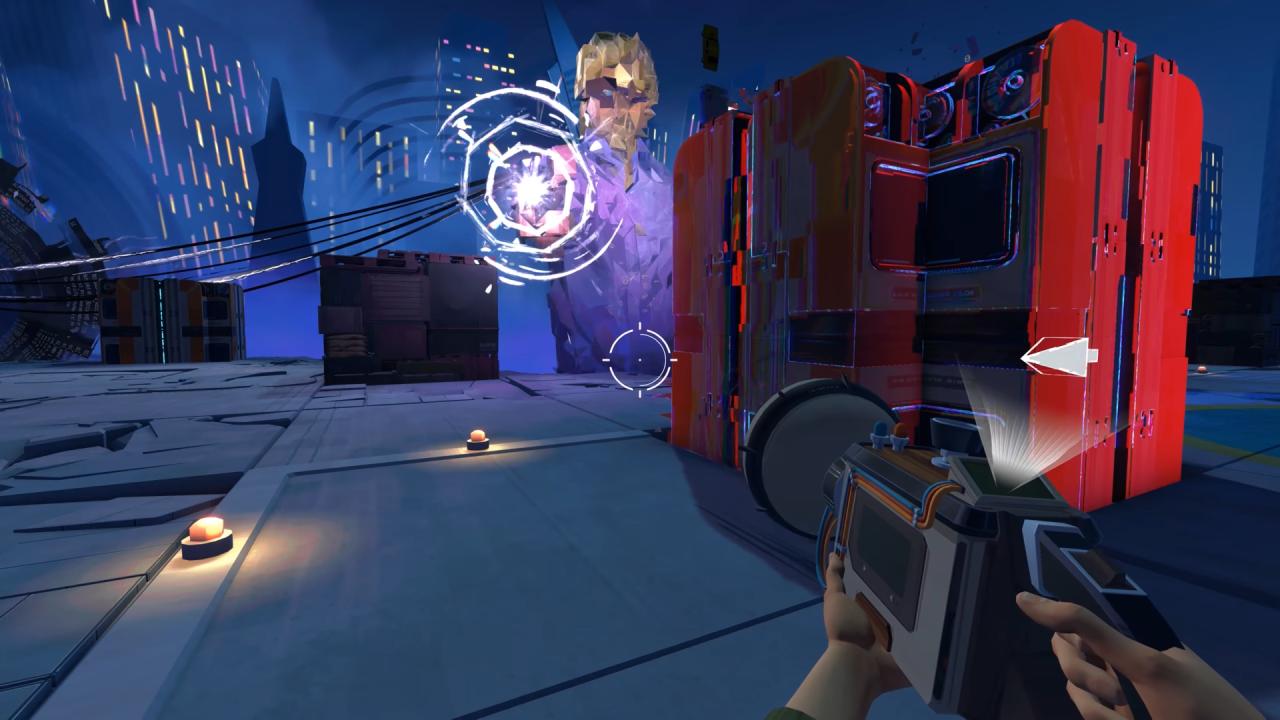
The overall impression is a combination of good conceptual design and sometimes patchy implementation. The Oscillator itself is always a captivating mechanic, even if some of the puzzles surrounding it are uneven or overly directed by the player. The notion of copying reality and reproducing it elsewhere still seems intriguing, particularly because the game allows combining these effects in unusual ways.
On the other hand, there are sometimes issues with the game design itself regarding this concept. While navigating an unrealized version of San Francisco, the player encounters elements that are both creative and restrictive. In such scenarios, it might get difficult for the player to maintain the balance, but the principle holds true.
Editor, NoobFeed
Verdict
Yerba Buena is a novel puzzle-platform game with a unique gameplay concept, which offers an opportunity to play around with real-world physics; however, its weak points include poorly designed puzzles and interruptions.
70
Related News
No Data.