
16GB RAM vs. 32GB RAM for Modern Gaming: Performance and Stability
Modern AAA titles increasingly utilize higher memory capacities, demonstrating the benefits of 32GB RAM during intensive workloads.
Hardware by Masaru Hoshino on Aug 28, 2025
The question of whether 16GB of RAM is still sufficient for high-end gaming in 2025 remains a topic of debate, as modern titles become increasingly demanding and resource-intensive. With new releases pushing hardware limits further than ever, the debate often centers on whether upgrading to 32GB of memory delivers meaningful gains beyond what 16GB can provide.
While the average FPS may not always shift dramatically, the real difference can be seen in smoother gameplay, lower 1% lows, and fewer stutters during intense in-game moments.
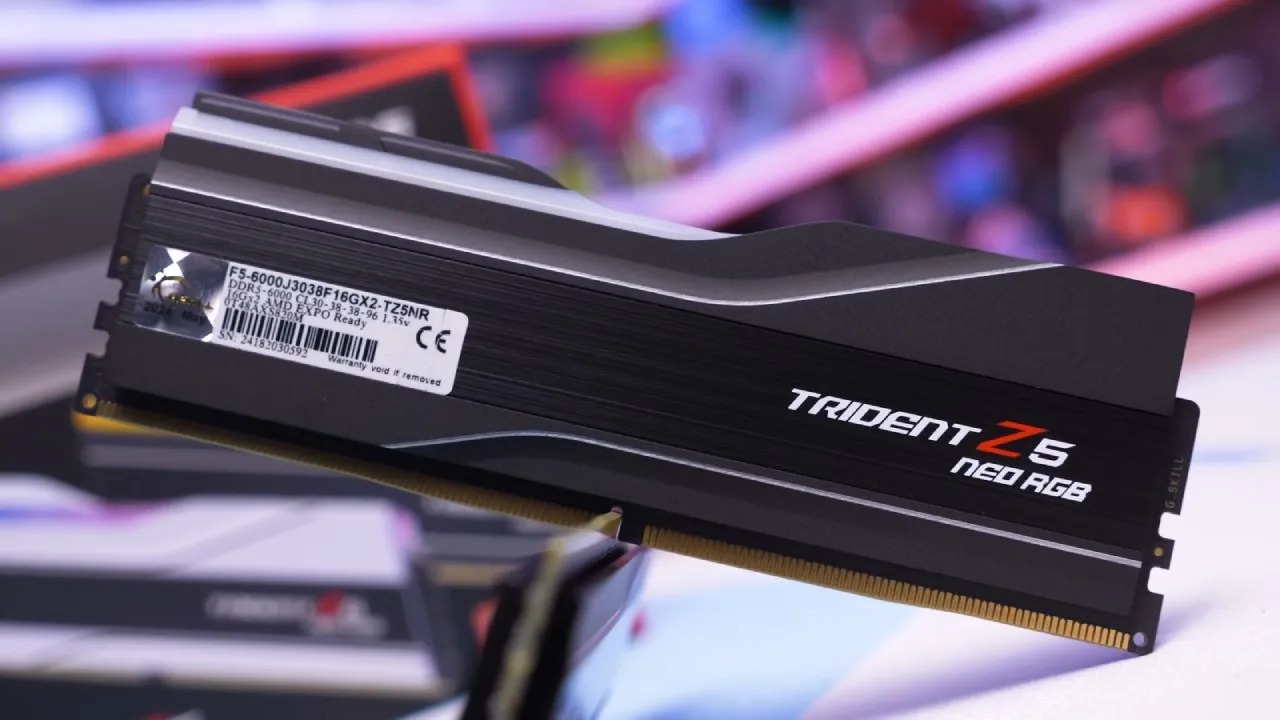
The decision between 16GB and 32GB for gamers creating or updating their PCs ultimately comes down to balancing cost, performance, reliability, and long-term future-proofing.
Configuration for the Test
In this comparison, an AMD 5800X3D and an Nvidia 4080 Super Founders Edition were installed on an MSI B550A Pro motherboard. The machine initially had 32GB of RAM, but half of it was removed for testing to compare the performance of 16GB and 32 GB of RAM.
Various benchmarks were conducted to identify any advantages or disadvantages.
Benchmark for Forza Horizon 5 (4K, Extreme Preset)
The averages between 16GB and 32GB at 4K Extreme settings differed only slightly. Indeed, there were times when 32GB even fell below 16GB. But the 1% lows were the crucial difference. The lows were more consistent with 32GB, avoiding sharp drops that cause jerky games.
Smooth gameplay is not always ensured by a high average FPS, but higher 1% lows ensure consistency.
Cyberpunk 2077 Benchmark (4K, RT Ultra Preset)
In Cyberpunk at 4K RT Ultra, averages again remained similar across both memory capacities. However, the 16GB kit experienced stutters at the start of the benchmark, with 1% lows approximately 10fps lower than those of the 32GB kit. As the test continued, the numbers recovered, but the difference in stability was clear.
The averages didn't show much variance because the GPU remained the primary bottleneck; however, the extra memory allowed for smoother performance at critical points.

F1 23 Benchmark (4K, Ultra High Preset)
In F1 23, there was virtually no difference between the two configurations. Minimum, average, and maximum FPS were all within 1fps of each other. This highlights how some titles are less dependent on RAM capacity and more on GPU power.
Call of Duty: Modern Warfare 3 (4K, Ultra, DLSS Quality)
With Modern Warfare 3, the difference was stark at the beginning of the test. The 16GB kit dropped its 1% lows down to 16fps, creating a massive stutter, while the 32GB kit held steady in the 80s. Although averages were nearly identical later on, the lows told a different story.
This illustrates how additional memory helps absorb heavy workload spikes, avoiding sudden dips.
Cyberpunk 2077 In-Game Testing (4K, RT Ultra Preset)
When actually playing Cyberpunk rather than running a benchmark, RAM usage on the 32GB kit hovered around 17.9GB. In comparison, the 16GB kit stayed near 14GB. Even with this difference, performance remained GPU-limited, resulting in similar averages.
However, the occasional micro-stutters on 16GB highlighted the advantage of having headroom with 32GB.
Forza Horizon 5 In-Game Race (4K, Extreme Preset)
In a real-world race scenario, both memory setups again produced nearly identical averages and 1% lows, primarily due to limitations of the GPU.
With less RAM, unpredictability can seep in, as demonstrated by the stutter that developed on the 16GB kit during prolonged testing but was not present on the 32GB model.

Benchmark for Cyberpunk 2077 (1080p, RT Ultra Preset)
Reducing the resolution to 1080p alleviated the pressure on the GPU and increased the RAM's influence. In this case, the 32GB kit utilized somewhat more than 16GB of RAM, whilst the 16GB configuration remained at 14.4GB.
The difference in 1% lows was noticeable, with the 32GB kit delivering smoother gameplay and slightly higher average frame rates. This demonstrates that once GPU bottlenecks are alleviated, RAM capacity has a greater impact.
Cyberpunk 2077 In-Game Testing (1080p, RT Ultra Preset)
In gameplay, the 16GB kit experienced stuttering with a 0.1% low of 21fps. In comparison, the 32GB kit maintained stable lows of approximately 10fps higher. The averages were also better on the 32GB model, showing that more demanding titles do indeed benefit when crossing the 16GB threshold.
Microsoft Flight Simulator 2020
A noticeable difference was seen in previous Microsoft Flight Simulator testing. Stuttering occurred during landings and taxing at detailed airports with 16GB, frequently coinciding with control inputs such as throttle adjustments.
These issues completely disappeared when I switched to a 32 GB model. Although the average FPS wasn't significantly higher, the larger 1% and 0.1% lows resulted in smoother, more engaging gameplay.

Final Thoughts
So, would 16GB be enough for demanding gaming in 2025? Your situation will determine the reaction. You won't have a poor experience if you're on a limited budget, as 16GB will still provide good performance in the majority of games. However, 32GB doesn't necessarily increase average FPS by a large margin—it improves stability, keeps 1% lows higher, and eliminates stutters in heavier workloads.
If you value smoother gameplay and want to future-proof your system, investing in a 32GB option is a worthwhile choice. However, if an additional $50–70 would significantly impact your build budget, 16GB remains a perfectly acceptable choice, as long as your motherboard provides an upgrade path.
Also, check our other hardware articles:
- AMD Ryzen 9 9950X3D Review: Setting The Standard For 2025 Gaming CPU
- Amazon Luna 2025 Review: Is Prime Gaming's Cloud Service Your Go-To For Casual Fun?
- AMD RX 9070 XT Review: AMD's RDNA 4 Champion for 1440p Gaming
- GeForce Now Ultimate: Ditching Your Gaming PC For Cloud RTX 4080 Power?
- NVIDIA GeForce RTX 5080 Review (2025): Still A 4K Gaming Powerhouse?
- Intel Core Ultra 9 285K Review And Performance Breakdown (2025)
- AMD Ryzen 7 9800X3D Review: 3D V-Cache Goes God Mode with Stunning Gaming Performance
- Intel Core Ultra 9 285K vs AMD Ryzen 7 9800X3D: In-Depth Gaming Performance and Benchmark Comparison
- NVIDIA GeForce RTX 5080 Super Performance In Cyberpunk 2077: Path Tracing & DLSS 4.0 Tested
- RTX 5090 Performance Testing In GTA 5 – 1080p, 1440p, and 4K Max Settings Benchmark
- AMD Radeon RX 9070 XT In Cyberpunk 2077: Ray Tracing & FSR 4.0 Tested
- Intel Arc B580 Review: The $250 GPU Revolutionizing 1440p Gaming
- Intel Arc B570 Vs. B580: Value, Specs, And Real-World Gaming Performance
- Intel Arc B570 Review: Efficient Xe2 Performance At An Affordable Price
- RTX 5090 Laptop Vs. M4 Max MacBook Pro: Ultimate Raw Performance Vs. Battery Endurance
- Intel Arc b580 Vs. RTX 4060: Game Performance And Value Analysis
- RTX5090 Hell Is Us Demo 4K Ultra Benchmark: DLSS Vs. Native Performance Guide
- NVIDIA RTX 5070 Review: Mid-Range Muscle or Marketing Hype?
- Nintendo Switch 2 Review: Handheld Performance, Features & Value Breakdown
- RTX 5070 Ti Review: Performance, Thermals & Power Efficiency Tested
- Samsung Odyssey OLED G81SF Review 2025: Ultimate 32-Inch QD-OLED Gaming Monitor
- AMD RX 9070 Performance Review: Thermals, Clocks, and Real-World FPS
- AMD Ryzen 5 7600 Review: Best Budget Gaming CPU of 2025?
- AMD Radeon RX 7800 XT Review: RDNA 3 Power For Midrange Gaming
- Asus ROG RTX 5090 Astral OC Vs. Founders Edition: The 4K Gaming Benchmark
- ASUS ROG Astral RTX 5090 OC Edition Review: 32GB GDDR7 & 4K Gaming Benchmark
- Intel Core i5-13400F Gaming Performance: Still Worth It in 2025?
- ASUS GeForce RTX 5090 LC Liquid Cooled GPU Review: Unmatched Silence & Speed
- ASUS ROG Ally X Handheld Review: Double the Battery, Double the Comfort
- Lenovo Legion Go S Review: The Ultimate Steam Deck 2 Alternative
- Sapphire NITRO+ AMD Radeon RX 9070 XT Review: The Ultimate 4K Gaming GPU
- Alienware 16 Area 51 Review: The Ultimate 2025 Gaming Laptop
- Alienware Area-51 Review: Unmatched 4K, Thermal, and Acoustic Performance
- AMD Ryzen 7 7800X3D: Delivers Gaming Performance Far Beyond Expectations
- AMD Ryzen 9 7900X Review: Powering the AM5 Era with DDR5 & PCIe 5.0
- Intel Core i9‑14900K vs. AMD Ryzen 7 7800X3D: Power Profiles & Gaming Benchmarks
- Intel Core i9 14900K: Specs, Benchmarks, and Competitor Comparison
- ASRock Radeon RX 7800 XT Challenger OC Review: Best Price-to-Performance GPU of 2025
Editor, NoobFeed
Gaming Hardware Updates
No Data.