
BOOK OF HOURS Guide | Beginners Guide
Here’s a Beginner’s Guide to Controls, Interactions, Skills, and Early Progression
Game Guide by Subaiyta Jahan on Nov 22, 2025
The opening of Book of Hours places the protagonist on a storm-lashed shore, beginning a slow and methodical journey into a world shaped by memory, ritual, and forgotten knowledge.
The game explains its rules through symbols, cards, and experimentation. Understanding how interactions, skills, assistants, and rooms work early on creates a smoother path through Hush House and the surrounding village.
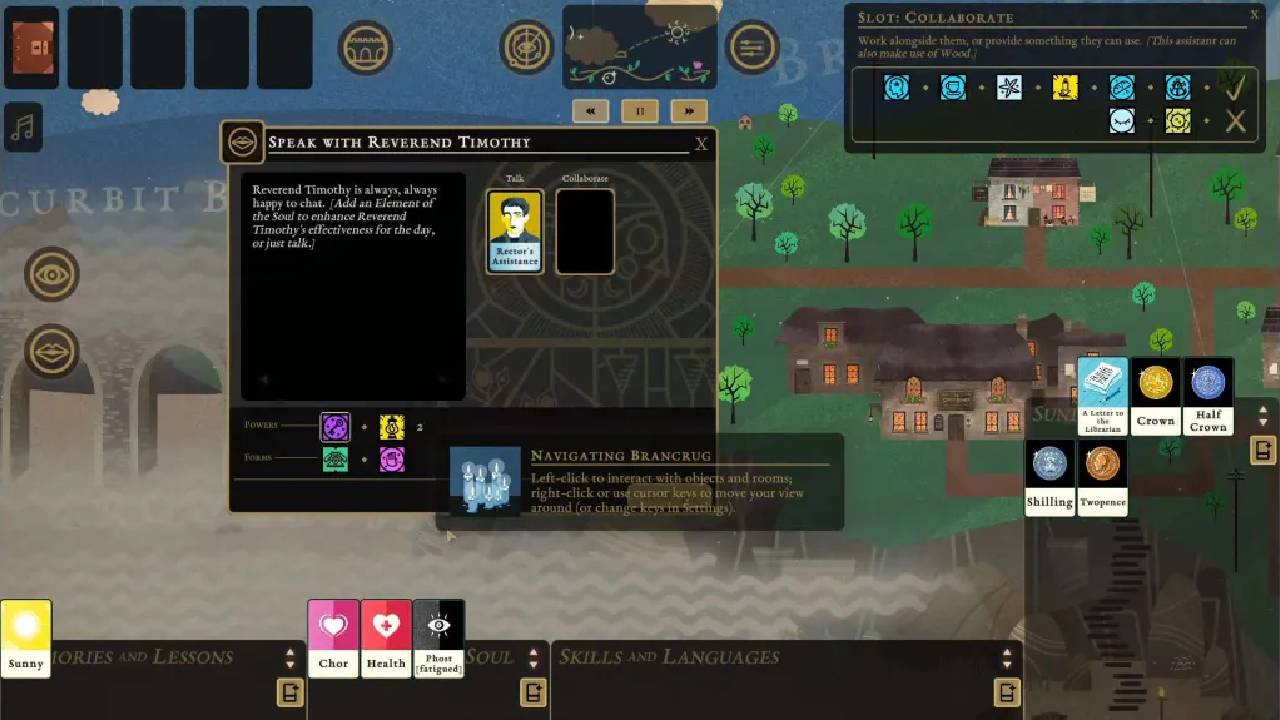
Basic Interface and Controls
Reading Messages & Managing Information
Events and actions are communicated through text boxes that appear across the screen. These notices explain discoveries, changes, and results of interactions. Some messages are simple observations, while others hint at what must be done next.
Inventory and Interaction Fields
Two central panels handle most interactions:
Item Interaction Field: Used to inspect, read, or examine objects.
World Interaction Field: Appears later and is used for actions connected to the environment around Hush House.
The inventory panel next to it displays temporary goods, memories, and items found during exploration. This field is always changing depending on what is happening around.
Understanding How Objects Interact
Clicking on the World
If you click on anything, a small text bubble will appear, indicating what you're looking at. Many things have icons that provide suggestions on how to use them. These icons form the symbolic language of the game.
Locks and Requirements
When examining a locked object or location, an empty slot appears.
This slot requires:
A correct memory, skill, assistant, or item
One or more specific aspect icons
If the slot is grey, the requirement is not met. If nothing in the inventory highlights when hovered, the correct element has not been found yet.
First Steps After Arrival
Choosing Between the Book and the Storm
After reaching the shore, the first two actions offered are:
Reading the salvaged book, or
Thinking about the storm
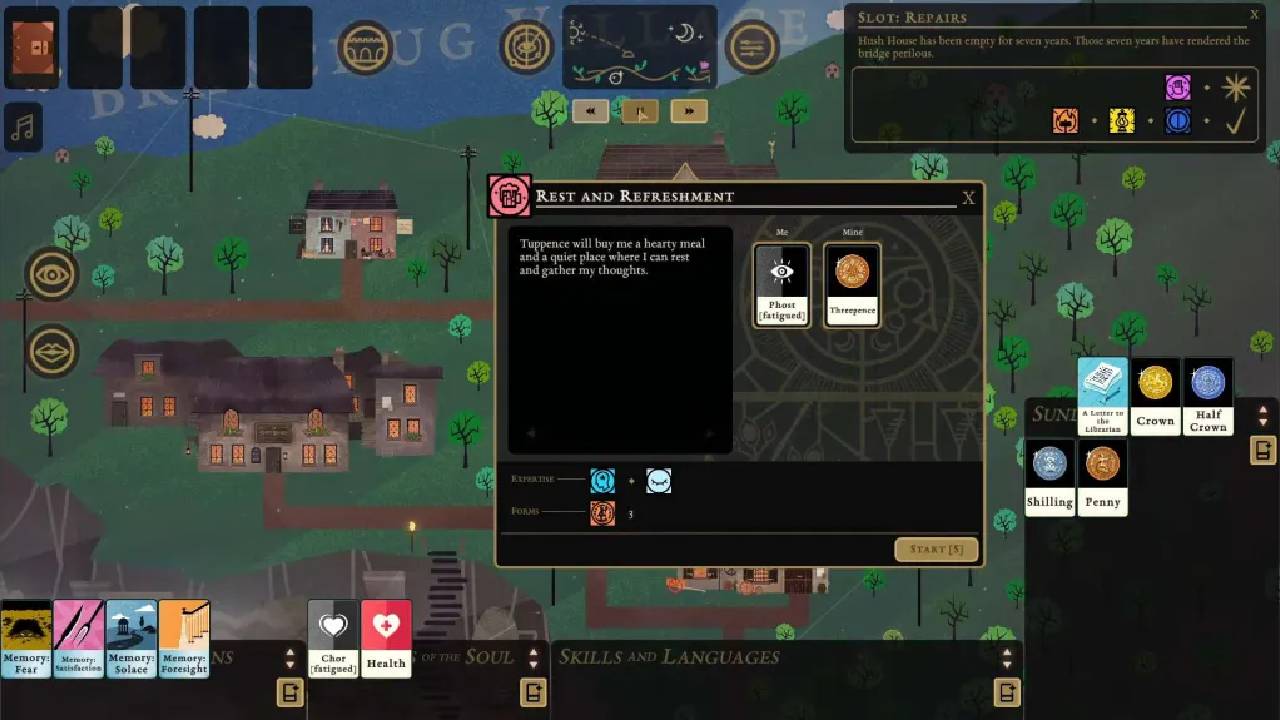
The game guides toward reading the book, as it unlocks the next stage of progression. To read it, the book must be paired with something containing the correct aspects—often a memory produced moments earlier by examining the storm.
Once paired correctly, the reading process begins.
Beginning Skill Selection
First Skill Choice
Completing the opening ritual leads to a set of skill books. Each skill represents a thematic path that influences the style of the journey. None of the early choices can be considered wrong; they simply shape later opportunities.
Upon selecting:
Choose the book
Insert the required memory.
Allow time to pass
Receive a brief narrative describing the results.
Expanding Skill Capacity
After the sequence, several skill cards appear. These represent fragments of the soul. Soul fragments influence the number of actions that can be performed each day and the types of rituals or tasks that can be completed.
Memories, Soul Cards, and Temporary Items
Memory Behavior
At the end of each day, memories start to fade. They stand for feelings, memories, or sensations. Because they are temporary, precise scheduling is required. Until an appropriate memory is formed, the majority of early activities cannot be completed.
Permanent vs Temporary Cards
Soul cards and skills are permanent.
Memories and situational objects are temporary.
Understanding the difference helps prevent confusion during longer tasks.
Making Early Progress in the Village
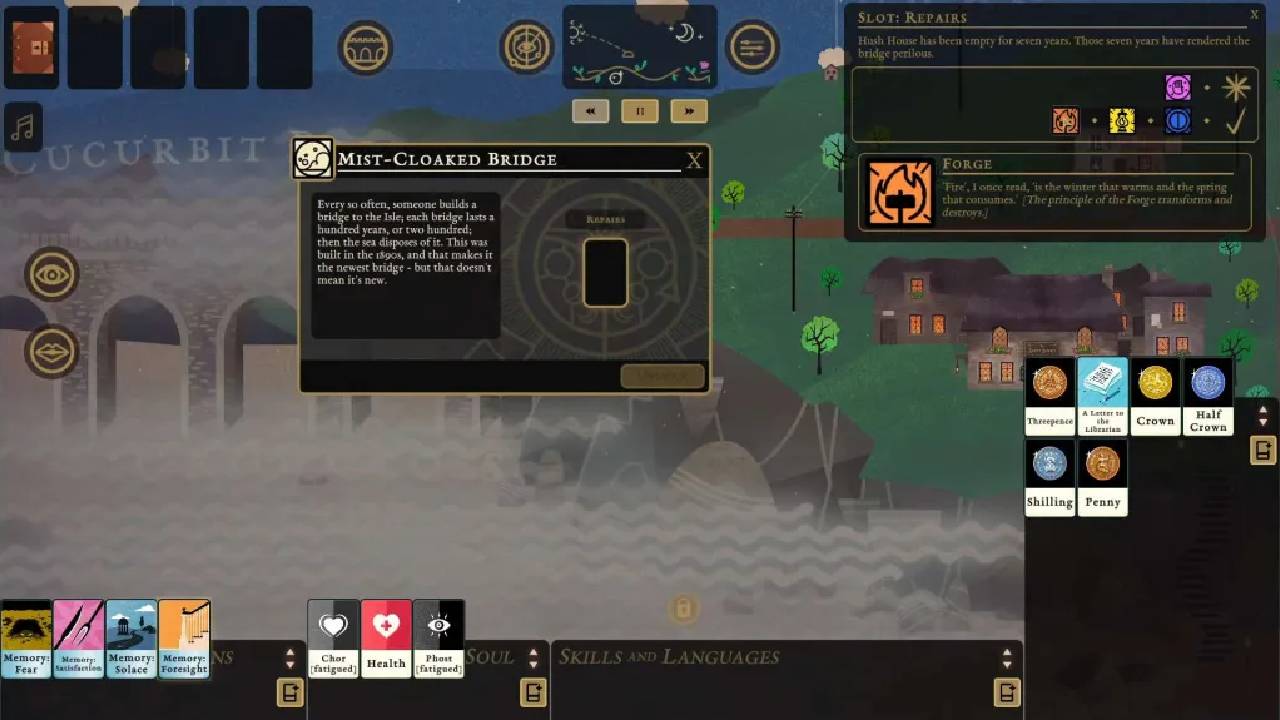
Meeting the Fisherman
Later, a fisherman appears. This is the first encounter designed to explain challenge icons. A challenge always lists:
Icons, the card must have.
Icons, the card cannot have.
Icons, the card must have at least one of these.
The fisherman initially has the correct aspects but also carries a forbidden one, making him unsuitable. This teaches that social tasks often require removing skepticism by speaking with a person first.
Unlocking Red Rock Village
Once the fisherman's skepticism is removed, he becomes the key to reaching the village. Interaction unlocks Red Rock Village, opening new areas and characters.
Working With Locals
Understanding Introductions
Villagers distrust outsiders. Most homes and buildings are locked. Each lock shows which aspect is required and whether an introduction is needed. An assistant with the correct icons can open doors on the protagonist's behalf.
Using the Reverent, the Smith, and Others
After establishing friendships:
The Reverend assists with Lantern or Knock aspects.
The Smith offers Forge and Edge aspects.
Others provide Winter, Grail, or Heart aspects depending on the time of year and path chosen.
Unless they are already regarded as friends, each helper costs 12 pence. Opening doors, overcoming social obstacles, and reaching deeper regions all require assistance.
Using the Tavern and Refreshing Skills to Restore Soul Fragments
Soul fragments naturally replenish themselves at the end of each day after being used. For urgency, the bar also provides compensated repair. This is mostly helpful for timed jobs and is optional.
Hiring Assistance
The tavern provides a rotating group of seasonal helpers. These temporary assistants can be hired for a small fee and are often necessary when permanent allies lack required icons.
Enhancing Assistants Temporarily
Infusing Assistants
Assistants can be strengthened for one task by combining:
A soul fragment
A memory
A consumable object (candles, food, etc.)
Each assistant can receive only one upgrade per category for a single challenge. This helps meet aspect requirements that would otherwise be impossible to fulfill.
Unlocking New Areas
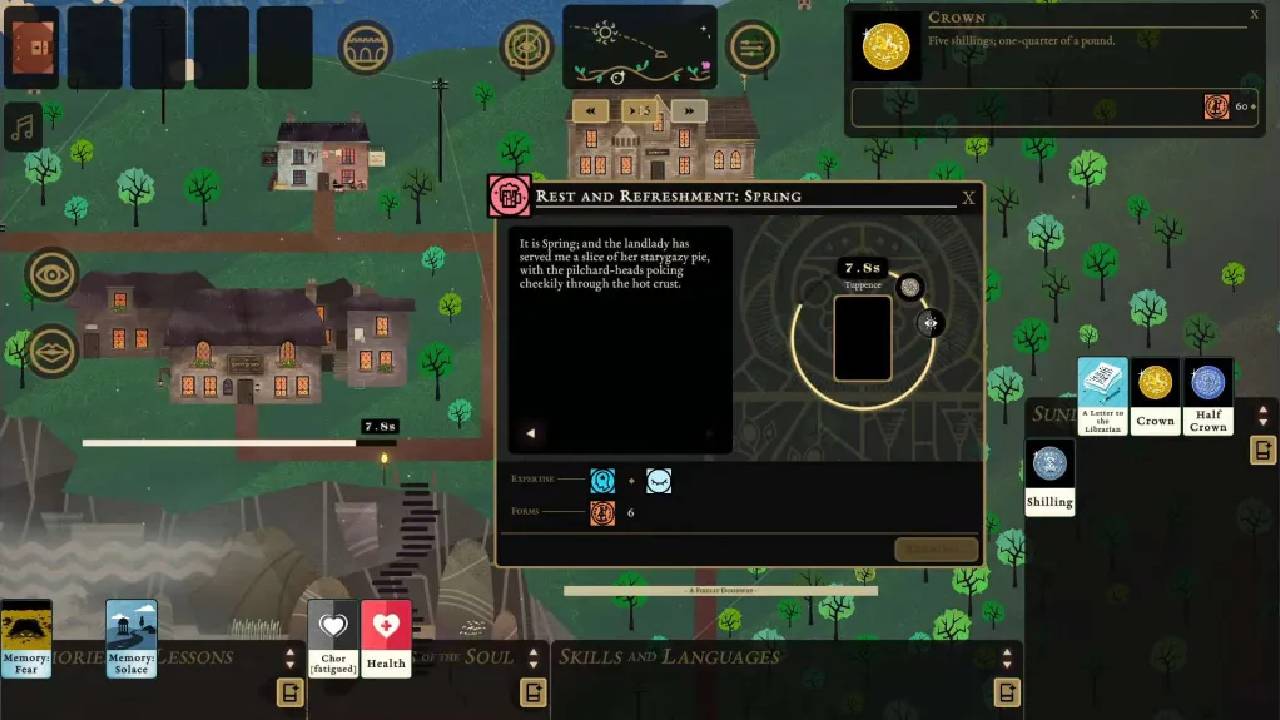
Opening the Bridge Gate
Some areas require an assistant with very specific icons. Using the Smith—or another villager with the right set—unlocks the bridge and leads deeper into the region.
Entering Hush House
Finding the Key
Inside the newly revealed structure lies the Key to Hush House. Using it unlocks the entrance to the main library.
Exploring the Library
Each room in Hush House is filled with objects to explore, study, clean, or repair. Every door in the library uses the same lock-and-icon logic as the village, requiring the right assistant or aspect combination.
The library framework is the heart of the game's progression. Every room contains tools and books used for research, crafting, and unlocking deeper lore.
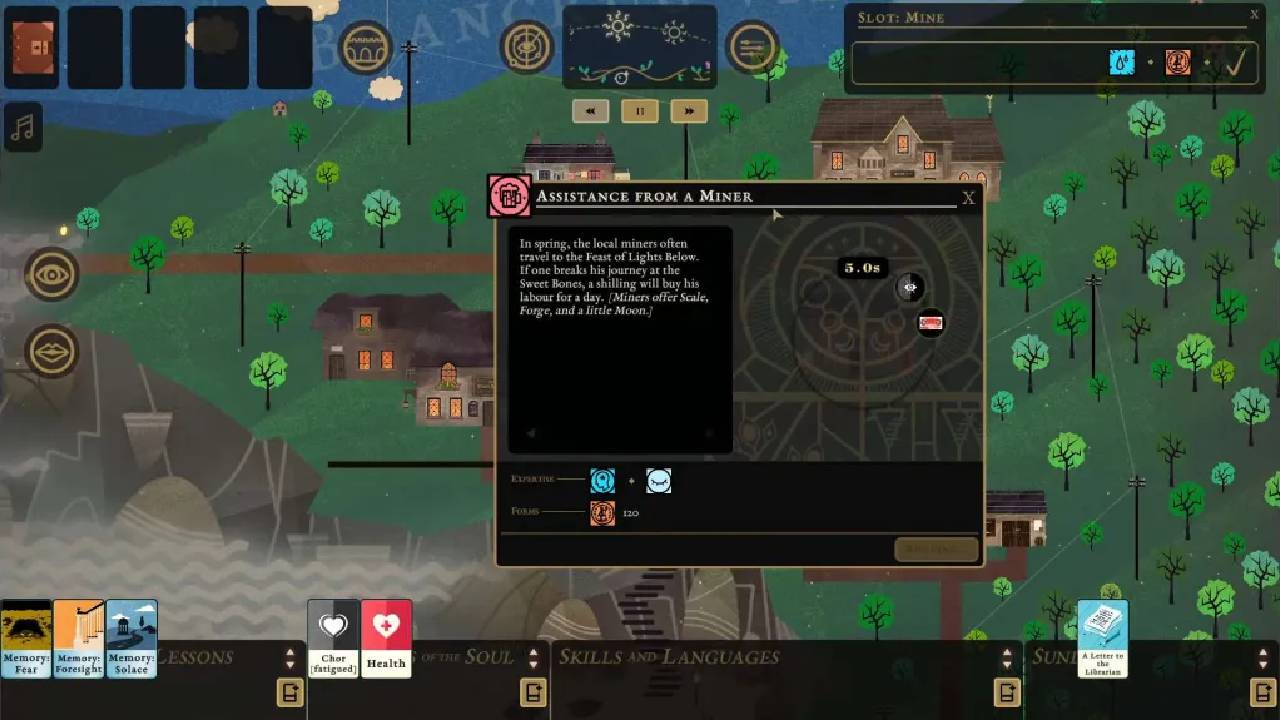
The symbolic language of locks, memories, talents, and assistance is introduced in the early hours of Book of Hours. The way inside Hush House becomes progressively accessible through experimentation with combinations, as one discovers the meaning of each emblem and forges relationships within the hamlet.
A solid basis for solving the many mysteries of the library is created by understanding the interaction fields, challenge requirements, and the transient nature of memories.
Also, check our BOOK OF HOURS review and other guides below:
Contributor, NoobFeed
Latest Articles
No Data.