
Intel Core Ultra 5 vs. Ultra 7 Plus Gaming and Streaming Performance Breakdown
Balanced performance and pricing position Core Ultra 5 and Ultra 7 processors as competitive options for gaming and multitasking systems.
Hardware by Shinji Okazaki on Apr 17, 2026
The market for PC hardware has changed, and companies are now more than ever trying to make sure their goods meet the needs of users. When it comes to new processors, there is a balance between price, speed scaling, and software integration.
Intel Core Ultra 200S Plus series is a refresh that focuses on better value, more cores, and better speed through software enhancements, but it doesn't claim to be a new generation.
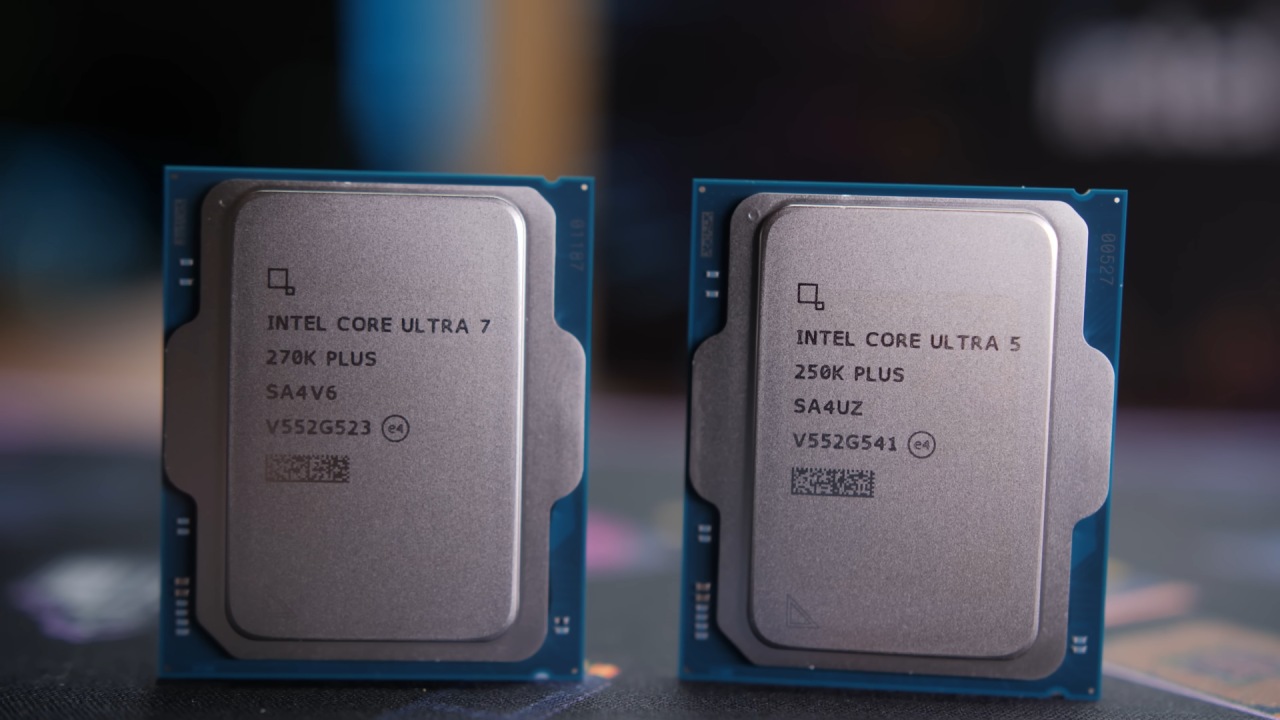
Intel Core Ultra 200S Plus Overview
Over the past few years, it's been hard to say a company is listening to its customers. Myopia has, in many cases, favored short-term returns over long-term user satisfaction. The introduction of the Intel Core Ultra 200S Plus series takes another turn. It adds additional cores and performance at reduced prices, as well as a new software layer that will improve IPC on the fly. Rather than renaming it a new 300S series, Intel chose a Plus naming strategy that indicated an improvement but not an architectural change.
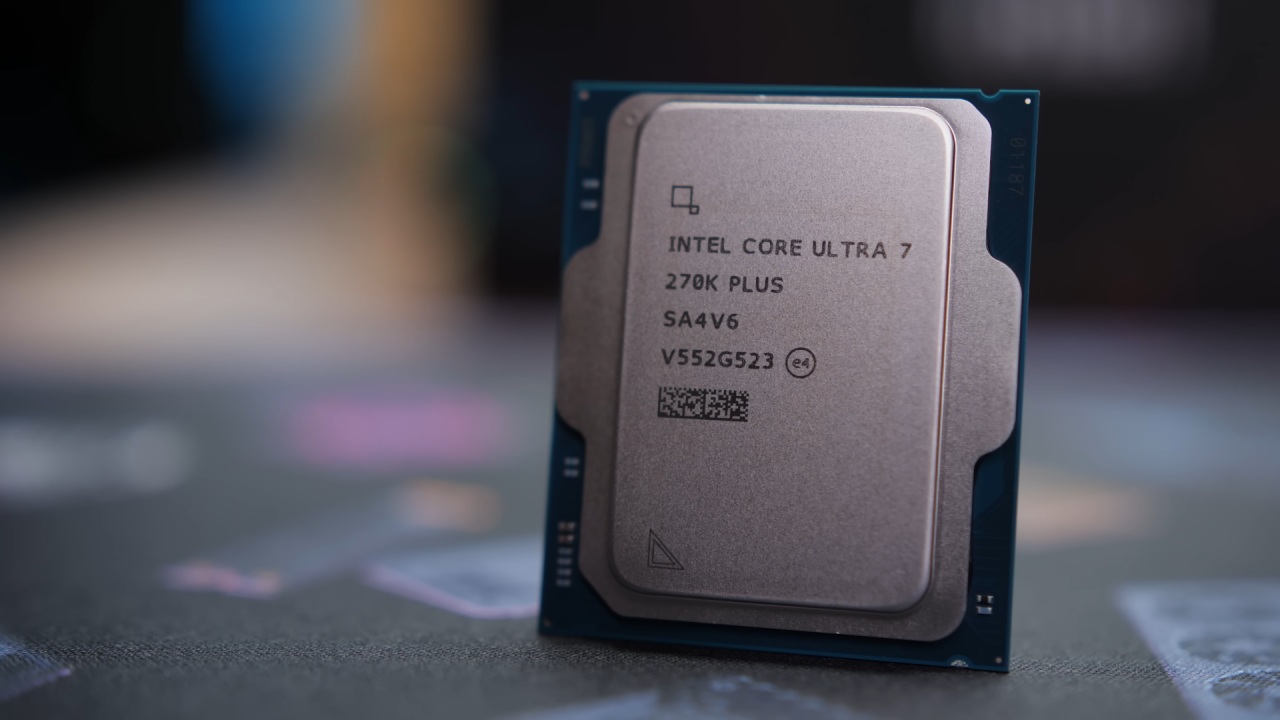
We tested the Core Ultra 7270K Plus and the Core Ultra 5250K Plus to determine what this refresh offers. The Ultra 7 has 24 cores (8 performance cores and 16 efficient cores), which gives it good burst performance and multitasking. Ultra 5 has 18 cores: 6 performance cores and 12 efficient cores, providing a balanced configuration for gaming and general workloads.
Creating a Streaming System
We developed a system that is workload-oriented in streaming and multitasking. The specification was straightforward: good encoding speed and sufficient cores to support various background tasks. The final build was based on the Ultra 7270K Plus, as it has more cores, and the Ultra 5250K Plus was used for benchmark comparisons.
The motherboard was coupled with the ASRock Z890 Taichi Aqua. You also have a wide connectivity of 10USB-C ports on the I/O back, and 5GB, 10GB, and Thunderbolt 4 configurations. It is also equipped with Wi-Fi 7 and fast Ethernet up to 10GB. Storage was equipped with a Gen5 SSD, which ensured high throughput via the motherboard's M.2 slot.
The platform supports DDR5-8000 with overclocking, but we set up the system with DDR5-7200, which meets the officially supported specifications.
Intel Programming and IPC Optimization
The Intel binary optimization tool is one of the greatest additions to this series. It is included in the platform performance package. This tool optimizes interactions between applications and the CPU by modifying software.
We installed the platform's performance package to access the optimization tool and the accompanying utilities. It is simple: you only need to install and configure the supported applications. Upon activation, the system implements optimizations that enhance performance for gaming and other workloads.
Intel reports a 20 percent improvement, but real-world figures depend on application support and workload characteristics.
Gaming Performance Results
We experimented with and without the binary optimization tool using various titles. Internal Intel data indicates an average increase of approximately 8% in the number of supported games, and our findings were within that range.
During Cyberpunk testing, the Ultra 5 and Ultra 7 performed within a 1-2 percent range. Although quantifiable, the gains were not felt during play. In Hogwarts Legacy, it was approximately 3% higher, likely due to the graphics card constraints in our test.
More noticeable gains appeared in other titles. With optimization enabled, Far Cry 6 showed about a 10% improvement in performance. Shadow of the Tomb Raider also provided returns of 10-12 percent on Ultra 7270K Plus. In the Ultra 5250K Plus, there was a 5-8 percent improvement.
All of these are accomplished via software, and only a toggle and a system restart are required once optimization for supported applications is enabled.
Between Ultra 5 and Ultra 7 Value Positioning
Core Ultra 5250K Plus performs significantly better in gaming than its higher-end counterpart. Sacrifices are a few cores, yet gaming performance is close, and it is also a viable option when the need to multitask is moderate.
We have seen that you do not need to spend money on the most expensive model to get good gaming performance. Ultra 5 is the middle ground, while the Ultra 7 is more competent for workloads characterized by streaming, multitasking, and intensive background processing.
Platform Features and Expandability
The Z890 platform is compatible with all processors. You have high-speed networking with Wi-Fi7 and multi-gig Ethernet, peripheral connections via Thunderbolt, and high-speed memory configurations.
The platform also has a futuristic nature. As more applications support Intel optimization tools, performance can still improve over time through software upgrades.
Final Thoughts
Intel is placing greater emphasis on software to enhance hardware capabilities. The binary optimization tool is a step in the right direction toward improved performance without requiring hardware modification. This can be compared to the new trends in GPU optimization, where precompiled shaders have improved performance consistency.
Core Ultra 200S Plus series indicates a refresh that's a little more hardware and a little more software. Rather than trying to market it as a new generation, Intel has been keen on refining the existing architecture, making it more affordable, and adding features that directly affect the user's experience.
The outcome is a platform that delivers quantifiable benefits today without sacrificing the potential for additional benefits through sustained software support.
Also, check our other hardware articles:
- AMD Ryzen 9 9950X3D Review: Setting The Standard For 2025 Gaming CPU
- Amazon Luna 2025 Review: Is Prime Gaming's Cloud Service Your Go-To For Casual Fun?
- AMD RX 9070 XT Review: AMD's RDNA 4 Champion for 1440p Gaming
- GeForce Now Ultimate: Ditching Your Gaming PC For Cloud RTX 4080 Power?
- NVIDIA GeForce RTX 5080 Review (2025): Still A 4K Gaming Powerhouse?
- Intel Core Ultra 9 285K Review And Performance Breakdown (2025)
- AMD Ryzen 7 9800X3D Review: 3D V-Cache Goes God Mode with Stunning Gaming Performance
- Intel Core Ultra 9 285K vs AMD Ryzen 7 9800X3D: In-Depth Gaming Performance and Benchmark Comparison
- NVIDIA GeForce RTX 5080 Super Performance In Cyberpunk 2077: Path Tracing & DLSS 4.0 Tested
- AMD Radeon RX 9070 XT In Cyberpunk 2077: Ray Tracing & FSR 4.0 Tested
- Intel Arc B580 Review: The $250 GPU Revolutionizing 1440p Gaming
- Intel Arc B570 Vs. B580: Value, Specs, And Real-World Gaming Performance
- RTX 5090 Laptop Vs. M4 Max MacBook Pro: Ultimate Raw Performance Vs. Battery Endurance
- Intel Arc b580 Vs. RTX 4060: Game Performance And Value Analysis
- RTX5090 Hell Is Us Demo 4K Ultra Benchmark: DLSS Vs. Native Performance Guide
- NVIDIA RTX 5070 Review: Mid-Range Muscle or Marketing Hype?
- Nintendo Switch 2 Review: Handheld Performance, Features & Value Breakdown
- RTX 5070 Ti Review: Performance, Thermals & Power Efficiency Tested
- Samsung Odyssey OLED G81SF Review 2025: Ultimate 32-Inch QD-OLED Gaming Monitor
- AMD RX 9070 Performance Review: Thermals, Clocks, and Real-World FPS
- AMD Ryzen 5 7600 Review: Best Budget Gaming CPU of 2025?
- AMD Radeon RX 7800 XT Review: RDNA 3 Power For Midrange Gaming
- Asus ROG RTX 5090 Astral OC Vs. Founders Edition: The 4K Gaming Benchmark
Editor, NoobFeed
Gaming Hardware Updates
No Data.