
DLSS 4.5 Ray Reconstruction Brings AI Upgrades To Every RTX GPU
NVIDIA extends an advanced ray reconstruction upgrade to older graphics cards instead of limiting the feature to newest hardware.
Hardware by Shinji Okazaki on Aug 05, 2026
AMD has put forward its most serious challenge yet to NVIDIA's position in AI hardware. The new system is not a gaming graphics card but an entire server rack designed to behave like one enormous GPU. The bigger question is whether AMD has the memory, bandwidth, and software maturity to pull AI companies away from NVIDIA's ecosystem.
AMD's new Helios design connects 72 Instinct MI455X accelerators with EPYC Venice CPUs, Pensando networking, and ROCm software. Each MI455X carries 432GB of HBM4 memory with up to 23.3TB/s of memory bandwidth. Put a full rack together and AMD states the system reaches 31TB of HBM4, 2.9 exaflops of FP4 AI compute, and 260TB/s of scale-up bandwidth.
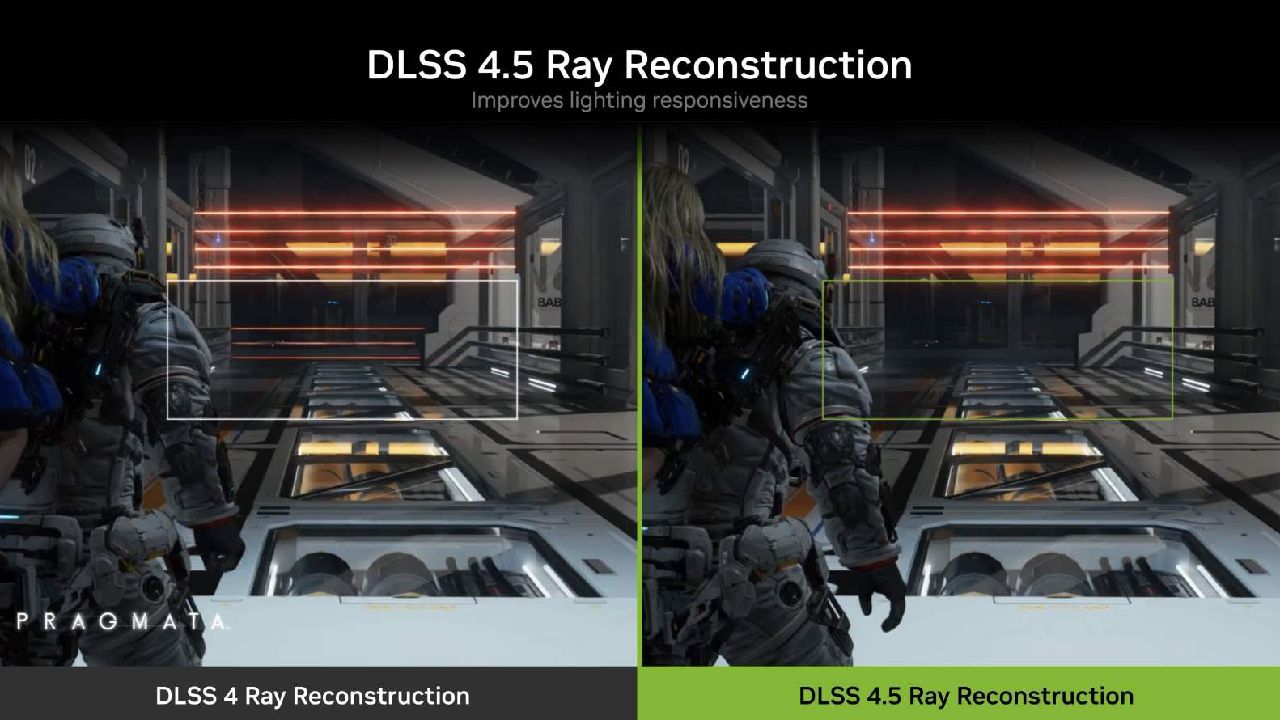
DLSS 4.5 Ray Reconstruction Comes to Every RTX Generation
NVIDIA's newest gaming update is not a new graphics card. It upgrades hardware people already own. NVIDIA says DLSS 4.5 Ray Reconstruction arrives in August for every GeForce RTX GPU, including older generations, not just the RTX50 series. Ray reconstruction replaces traditional denoisers with an AI model that rebuilds lighting, reflections, and shadows from ray-traced data.
NVIDIA states the new transformer model uses 20% more parameters and 35% more compute capability while keeping performance in line with the previous version. This doesn't mean that performance is free. The major change is that ray-traced and path-traced games now look better and are more stable.
Memory space and the speed at which GPUs can talk to each other are becoming bigger problems for big AI models. Bigger models can fit in a single machine with more memory, and GPUs don't have to wait as long for data when interconnects are faster. AMD claims that Helios will have 15% more peak FP4 compute power and 50% more HBM capacity than NVIDIA's Vera Rubin NVL72.
SEGA Investment That Helped Save NVIDIA
These numbers come from AMD's own predictions, not from independent benchmarks. Large-scale launches are planned for the second half of 2026. On paper, the hardware case is strong. However, how well the software works and how mature it is will determine whether AMD can really catch up to NVIDIA in AI infrastructure.
Roughly 30 years ago, NVIDIA was a young graphics company working with SEGA on technology meant for a future console. That partnership did not work out. NVIDIA had focused on rendering techniques such as curved surfaces and forward texture mapping, while SEGA's Dreamcast needed a more traditional polygon-based approach. Instead of walking away entirely, SEGA approved a $5 million investment.
According to Huang, that funding helped NVIDIA survive long enough to develop the RIVA 128, the chip that gave the company its first major commercial success. The partnership has now come full circle. NVIDIA says SEGA will support its new RTX Spark platform, including the upcoming Virtua Fighter Crossroads.
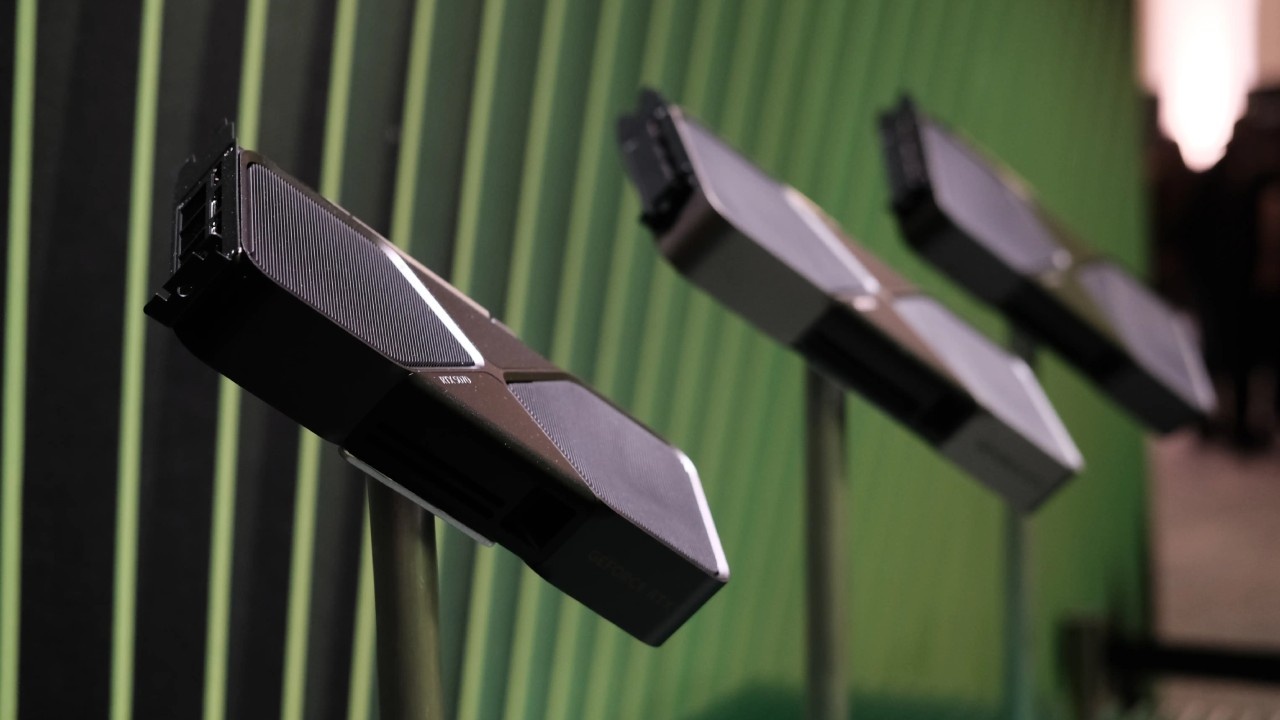
Older ray tracing-capable graphics cards gain sharper lighting and reflections.
One failed console project ended up helping preserve the company that would go on to define modern PC graphics, CUDA computing, ray tracing, and now AI acceleration. NVIDIA's biggest breakthrough traces back to a failure that forced both companies to rethink their direction.
It doesn't add more VRAM, fix CPU problems, or turn a mid-range GPU into a high-end one, but it can make older RTX cards look much better without upgrading the hardware. NVIDIA now supports more than 1000 RTX games and apps, and games like Marvel Rivals, Phantom Blade Zero, Squad, and Where Winds Meet have been proven to support DLSS 4.5.
Also, ray reconstruction should be added to Blender 5.3 for 3D processes. AMD is pushing hard at the AI infrastructure level with Helios; SEGA's early investment helped shape NVIDIA's survival decades ago, and DLSS 4.5 now extends the useful life of existing RTX GPUs without forcing an upgrade.
Editor, NoobFeed
Gaming Hardware Updates
No Data.