
RTX 5050 vs RTX 4060 Laptop GPU: Power Efficiency, Frame Rates and Gaming Results
Performance testing across multiple modern games compares frame rates, efficiency and value between RTX 5050 and RTX 4060 laptop GPUs.
Hardware by Tanvir Kabbo on Mar 15, 2026
Choosing between the RTX 5050 and RTX 4060 for a gaming laptop can be confusing, especially when both GPUs appear similar on paper. A comparison across 25 games at 1080p and 1440p reveals how these GPUs actually perform and whether spending more on the newer option makes sense.
The older RTX 4060 laptop GPU has 20% more CUDA, Tensor and RT cores than the newer RTX 5050. Both GPUs include 8GB of VRAM with a 128-bit memory bus, but the newer RTX 5050 uses faster GDDR7 memory with more bandwidth.
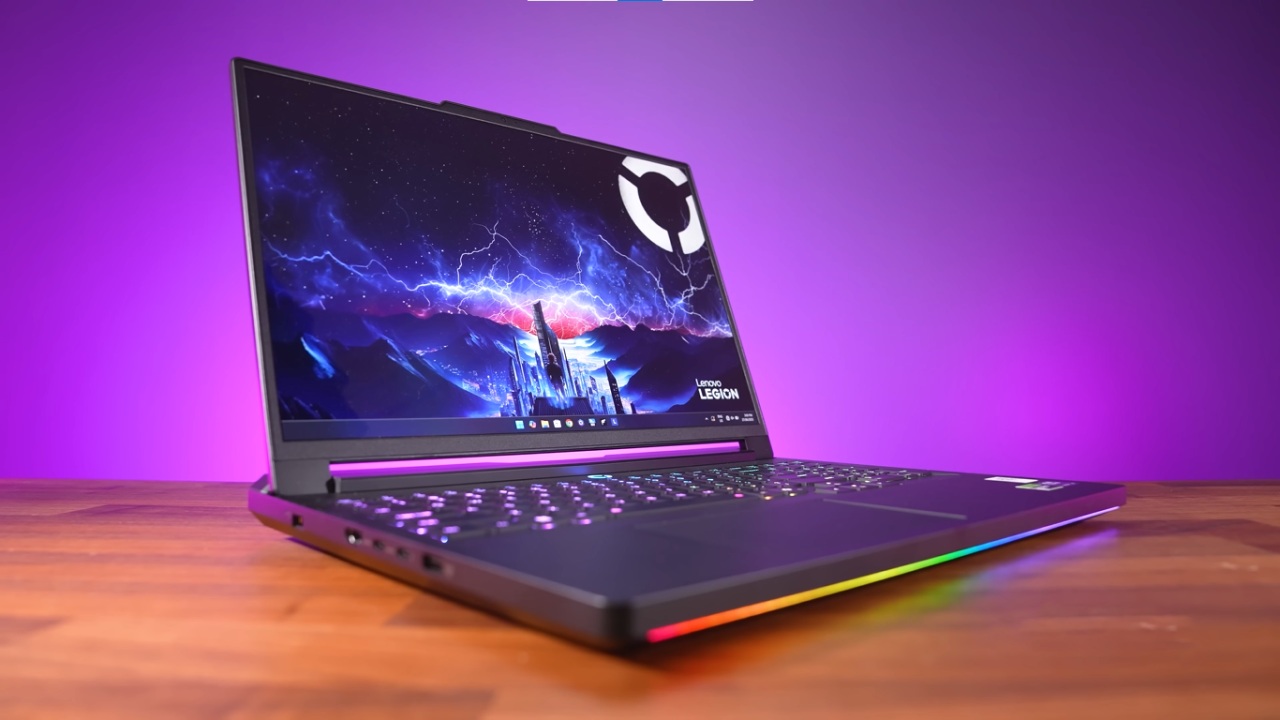
The RTX 4060 has a higher power limit on the spec sheet, but in real-world gaming the RTX 4060 rarely goes much above 100W, so both GPUs can generally be considered 100W–115W parts. That matters because more power typically equals more performance.
Power Scaling and Synthetic Performance
3DMark Time Spy graphics scores show how performance changes at different power levels. When the GPUs run between 35W and 60W, performance is very close, with the RTX 4060 scoring only about 1%–2% higher than the RTX 5050.
That means performance differences are smaller in thinner or budget gaming laptops that usually operate at lower power limits. However, when both GPUs run at 100W, the RTX 4060 gains a larger 9% performance lead. At 115W, that lead increases to 11%.
Two different gaming laptops were used for testing because those were the available systems. Their cooling systems differ slightly, but both laptops allow the GPUs to run at full power. That still provides a fair comparison of gaming performance between the two GPUs.
Power Efficiency and Thermal Behavior
During testing, the RTX 4060 used more power in six different games, consuming anywhere from 18% to 24% more power than the RTX 5050. Because of that, the RTX 5050 wins in performance-per-watt efficiency. Even when the RTX 4060 produces higher FPS, the RTX 5050 delivers more frames per watt.
Temperatures were quite close between the two GPUs, though the RTX 4060 generally ran slightly warmer. The RTX 5050 reached higher clock speeds, which matches what the specifications suggest.
Power behavior during gaming also differed slightly. The RTX 4060 used more power in most titles, while the RTX 5050 frequently reached its voltage limit and could not boost further.
Game Performance Comparisons
Performance differences vary depending on the game being played.
In Apex Legends at maximum settings, the RTX 4060 laptop GPU was 13% faster than the RTX 5050 at 1080p. That was the second-largest difference among the 25 tested games. At 1440p, the RTX 4060 remained about 11% faster. The bigger difference appeared in 1% lows, where the RTX 4060 delivered a 25%–30% improvement, meaning fewer frame drops and a smoother overall experience.
Cyberpunk 2077 showed almost no meaningful difference between the GPUs. The RTX 4060 was only 5% faster at 1080p, which translates to less than 4fps. At 1440p, the difference was effectively negligible. With ray tracing and DLSS enabled, the RTX 4060 gained a slightly larger advantage, though it still remained relatively small. Even so, the 14% lead at 1440p with ray tracing enabled was actually the biggest difference observed at that resolution across all games tested.
Space Marine 2 performed nearly identically on both GPUs with no real difference at either resolution. The same pattern appeared in Spider-Man 2, especially at 1080p, while the RTX 4060 was only about 3fps faster at 1440p.
Horizon Forbidden West showed above-average differences. The RTX 4060 achieved a 10% higher average frame rate at 1080p and extended that lead to 14% at 1440p, which ranked as the third-largest difference at that resolution.
Kingdom Come Deliverance II showed similar average FPS results, but the RTX 5050 experienced noticeably worse 1% lows. Both laptops used the same processor at the same power level and the exact same RAM configuration, suggesting the GPU itself caused the difference.
Microsoft Flight Simulator produced similar behavior. At 1440p, the RTX 5050 experienced a larger drop in 1% lows even though average FPS stayed relatively close. That meant the RTX 4060 delivered a smoother and more consistent experience at higher resolution.
Interestingly, Hogwarts Legacy reversed that pattern. The RTX 5050 achieved higher 1% lows at both resolutions while the RTX 4060 maintained higher average FPS. The reason is unclear, though the RTX 5050’s faster memory may benefit this game.
Forza Horizon 5 was the only game where the RTX 5050 achieved a higher average frame rate than the RTX 4060. The difference was small at about 4fps, or roughly 6%, but it still represented a win for the newer GPU.
.jpg)
Average Gaming Performance Across 25 Games
Averaging results from all 25 tested games provides the clearest picture.
At 1080p, the RTX 4060 laptop GPU was almost 8% faster than the RTX 5050. The results at 1440p were nearly identical, with the RTX 4060 maintaining about the same 8% average performance lead.
The difference may not appear dramatic, but the RTX 4060 consistently produces higher FPS across most games.
Multi Frame Generation and New Features
One advantage of the newer RTX 5050 is support for multi frame generation, a feature exclusive to the RTX 50 series. Both GPUs support standard frame generation in 2x mode, where one AI-generated frame is inserted for every real frame.
With multi frame generation, the RTX 5050 can also use 3x mode, generating two AI frames for every real frame, or 4x mode, generating three AI frames for each real frame.
Frame generation can improve smoothness when used correctly, especially in single-player games that are not latency sensitive and already run around 70fps–80fps before frame generation. The RTX 5050 can reach those conditions in supported titles, often at 1080p with slightly reduced settings.
Frame generation can produce a smoother experience, but AI-generated frames are not identical to real rendered frames. They may slightly reduce visual accuracy and increase latency. Because of that, comparing raw frames to AI-generated frames is not always an apples-to-apples comparison.
The RTX 4060 can still use standard 2x frame generation, which may already provide the smoothness many players want.
.jpg)
Price and Value
Pricing plays a major role when choosing between these GPUs.
RTX 5050 gaming laptops currently start above $1000 and increase from there, although some discounts occasionally bring them down to around $800–$900. Meanwhile, RTX 4060 laptops frequently appear between $650 and $900.
Because the RTX 4060 delivers higher average performance while often costing less, it offers better cost-per-frame value. Spending $900 on a laptop with either GPU generally results in better value with the RTX 4060.
Even if a 4060 laptop costs about $100 more in some cases, the improved performance still keeps the value comparable or better.
Final Thoughts
The RTX 5050 arrived more than two years after the RTX 4060, yet it typically costs more while delivering slightly lower gaming performance when multi frame generation is not considered.
As long as RTX 4060 laptops remain widely available, they are generally the better choice for gaming performance and value. The RTX 5050 may become more attractive once prices drop or availability of RTX 4060 systems declines.
When buying a gaming laptop that will be used for several years, making the right GPU choice is important. Comparing real gaming performance and overall value helps ensure the system delivers the experience expected over the long term.
Also, check our other hardware articles:
- AMD Ryzen 9 9950X3D Review: Setting The Standard For 2025 Gaming CPU
- Amazon Luna 2025 Review: Is Prime Gaming's Cloud Service Your Go-To For Casual Fun?
- AMD RX 9070 XT Review: AMD's RDNA 4 Champion for 1440p Gaming
- GeForce Now Ultimate: Ditching Your Gaming PC For Cloud RTX 4080 Power?
- NVIDIA GeForce RTX 5080 Review (2025): Still A 4K Gaming Powerhouse?
- Intel Core Ultra 9 285K Review And Performance Breakdown (2025)
- AMD Ryzen 7 9800X3D Review: 3D V-Cache Goes God Mode with Stunning Gaming Performance
- Intel Core Ultra 9 285K vs AMD Ryzen 7 9800X3D: In-Depth Gaming Performance and Benchmark Comparison
- NVIDIA GeForce RTX 5080 Super Performance In Cyberpunk 2077: Path Tracing & DLSS 4.0 Tested
- AMD Radeon RX 9070 XT In Cyberpunk 2077: Ray Tracing & FSR 4.0 Tested
- Intel Arc B580 Review: The $250 GPU Revolutionizing 1440p Gaming
- Intel Arc B570 Vs. B580: Value, Specs, And Real-World Gaming Performance
- RTX 5090 Laptop Vs. M4 Max MacBook Pro: Ultimate Raw Performance Vs. Battery Endurance
- Intel Arc b580 Vs. RTX 4060: Game Performance And Value Analysis
- RTX5090 Hell Is Us Demo 4K Ultra Benchmark: DLSS Vs. Native Performance Guide
- NVIDIA RTX 5070 Review: Mid-Range Muscle or Marketing Hype?
- Nintendo Switch 2 Review: Handheld Performance, Features & Value Breakdown
- RTX 5070 Ti Review: Performance, Thermals & Power Efficiency Tested
- Samsung Odyssey OLED G81SF Review 2025: Ultimate 32-Inch QD-OLED Gaming Monitor
- AMD RX 9070 Performance Review: Thermals, Clocks, and Real-World FPS
- AMD Ryzen 5 7600 Review: Best Budget Gaming CPU of 2025?
- AMD Radeon RX 7800 XT Review: RDNA 3 Power For Midrange Gaming
- Asus ROG RTX 5090 Astral OC Vs. Founders Edition: The 4K Gaming Benchmark
Senior Editor, NoobFeed
Gaming Hardware Updates
No Data.