

AMD’s CPU Roadmap Revealed as Zen 6 and Zen 7 Promise Massive Performance Gains
AMD balances legacy platform support with future architectural advancements across multiple processor generations.
Hardware by Godrics01 on Jun 05, 2026
As with the desktop CPU and GPU market, the enterprise market is constantly evolving, with both manufacturers revisiting current and older products and major architectural changes on the horizon. The short-term decisions AMD has made on the Ryzen 7 5800X3D re-release and the new Zen-based graphics card, the RX 9070, are part of the equation, as are the long-term technology roadmaps.
Although it still costs a lot, it is at least $100 less than the processor's 2022 launch price. Compared to a product that is several years old, the new release is definitely more affordable than some prices currently on the market. If the user is not planning to move off of AM4, it is a further upgrade.
.jpg)
AMD Reengineered the Ryzen 7 5800X3D
The re-release had to be done in a manner more complex, however, than many anticipated. AMD senior vice president and general manager of Radeon and Ryzen, David McAfee, said: McAfee is not discussing the newer Ryzen 9000X3D processors that put the L3 cache below the processor cores, which is considered a second-generation cache. Rather, he's talking about how TSMC has integrated the silicon components.
The new manufacturing process radically altered the nature of the silicon bonding and stacking, McAfee said. After the original stacking process was phased out, AMD had to redesign the chip to be compatible with TSMC's newer manufacturing process. Either way, the situation isn't as bad as a market where used 5800X3D's are selling for even higher than the re-released 5800X3D.
New RX 9070 Graphics Card is Having a Pricing Problem
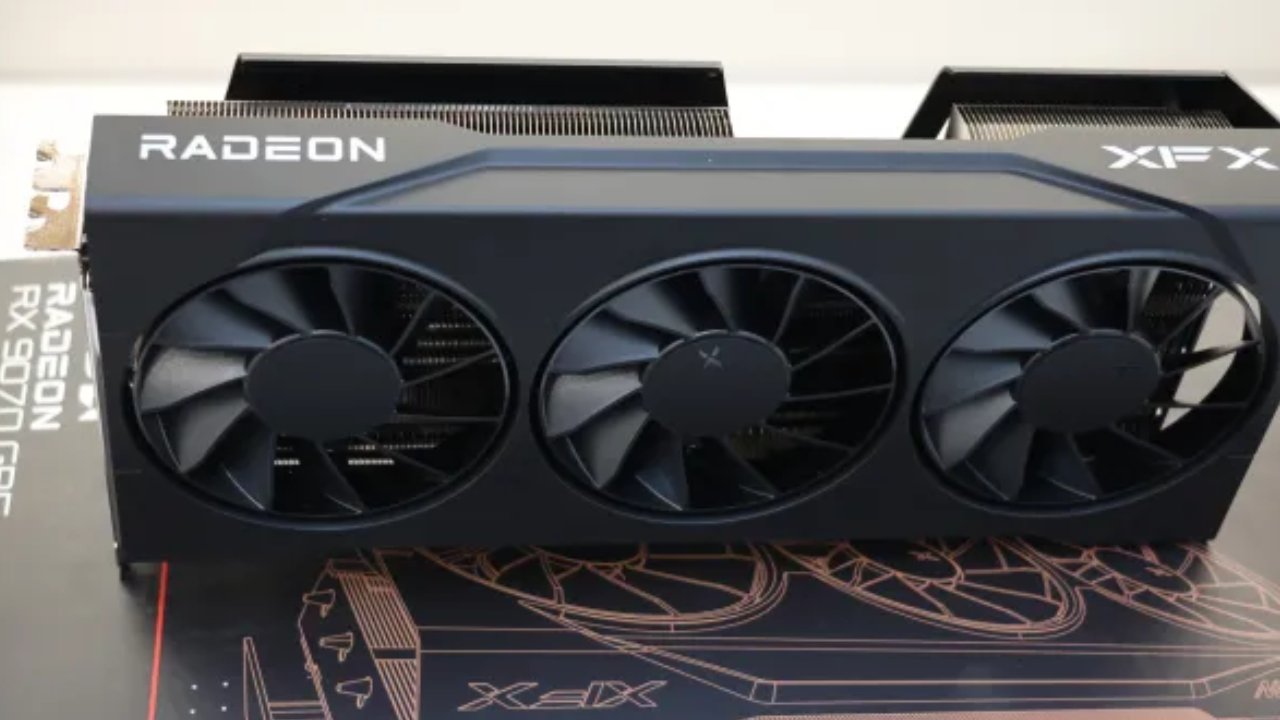
RX 9070 GRE is an original product launched between the RX 9060 XT and the RX 9070. This model was first introduced to another market and later announced for a broader launch by AMD. The issue, as it happens, is that AMD released the card at nearly the same price as the RX 9070 non-XT, an all-but-as-potent graphics card that packs 16GB of memory instead of the XT's 12GB, and more compute power.
Benchmark results indicate that the RX 9070 is virtually 19% faster at 1440p gaming performance. RX 9070 GRE at a comparable price point makes this a clear value issue. A big retailer's sales figures indicate the card failed to gain traction right out of the gate. The product failed to meet even the minimum reporting threshold during the launch period, based on available sales data.
The pricing scheme is even harder to defend when the non-XT version, the RX 9070, is available at nearly the same price. In some instances, the standard RX 9070 has been offered for less, yet almost 19% more performance. How such pricing got to the market is hard to fathom. Speculating about why they decided to do this will only clarify the obvious: Users who look at the specifications and performance of the two cards have little reason to prefer the RX 9070 GRE overall.
The U.S. market is showing signs of improvement, but there are still obstacles to clear. RX 9070 GRE seems slightly more competitive in the U.S. due to area pricing. The standard RX 9070 typically costs about $600, further widening the price difference between the two products.
Another problem persists even then. RX 7900 GRE is still available and performs very well in rasterization. In fact, it can slightly outperform the RX 9070 GRE in traditional rasterized workloads, and it is just a bit behind in ray-tracing performance.
You Can also Find RX 7900 GRE at a Lower Price
For this reason, the RX 9070 GRE value proposition will be heavily influenced by your geographic location and the availability of competing products. If AMD had pushed the card towards $510, there might have been a different discussion about when the card would be made available.
Ryzen 10000 may provide a significant performance boost. The first big release is likely to be the Zen 6-based Ryzen 10000. The architecture will be built on TSMC's 2nm process and will feature more cores, as per the latest leaks.
According to the reports, Zen 6 will have 12 CPU cores per CCD, so 12-core Zen 6s will provide up to 24 cores for mainstream desktop processors. In addition to an increase in core counts, there are expectations of higher clock speeds and improved instructions-per-clock performance.
Zen 7 and Grimlock Architecture Take the Win
Even though Zen 6 has yet to be released, reports are already circulating about AMD's Zen 7 architecture, code-named Grimlock. Based on the latest updates, Zen 7 may leverage the upcoming A14 manufacturing process from Taiwan Semiconductor Manufacturing Co. Ltd. This is a step into so-called angstrom-class process technologies.
Semiconductor naming conventions no longer directly reflect transistors' actual dimensions, but A14 is still considered a significant manufacturing improvement and a full-node transition for AMD. Zen 7 will also be denser. There are reports that AMD might increase the number of cores per CCD to 16.
If so, at some point in the future desktop processors will be offered in 32-core configurations, as with a hypothetical Ryzen 11,950X. Other reported support includes AVX10, a new instruction set that builds on AVX512 and AVX2, extending support for existing workloads. Zen 7 is also said to introduce a new device-interrupt model to reduce system-level latency.
In his recent announcements, AMD has highlighted two goals.
On the other hand, the company aims to launch new products to market, such as the reengineered Ryzen 7 5800X3D. Meanwhile, AMD is rolling out other bold architectural and manufacturing developments with Zen 6 and Zen 7.
From the redesigned 3D V-Cache processors to the questionable GPU pricing to the next-generation desktop processors featuring up to 32 cores, AMD's roadmap indicates several generations of major hardware changes in rapid succession.
Editor, NoobFeed
Latest Articles
No Data.