
The Next 3D Mario Might Not Stop at Open World
If Switch 2 is the real leap, Nintendo could be aiming for something bigger, stranger, and way more connected than Odyssey.
News by Mahi Araf on Feb 15, 2026
For a long time now, many fans have been wondering why people keep talking about the next 3D Mario when Nintendo has not officially revealed anything. You often see comments saying that it is too early and that nothing is coming anytime soon.
However, when you look at Nintendo’s history and the way the company has handled Mario for decades, that argument does not really hold up. Mainline Mario games have almost always launched within the first two holiday seasons of new hardware. This pattern has remained consistent for nearly forty years, so expecting Switch 2 to suddenly break that tradition would mean ignoring a very reliable track record.
When you also consider development timelines, the idea of a new 3D Mario coming soon becomes even more reasonable. The EPD team responsible for Super Mario Odyssey released that game back in 2017. Since then, the only major title connected to that group has been Donkey Kong Bananza.
On top of that, several key members of the Odyssey team do not appear in Bananza’s credits. This suggests that another large project has likely been in development behind the scenes for quite some time. Because of this, whether current rumors are accurate or not almost becomes irrelevant. Logic alone points toward a new 3D Mario being closer than many people think.
The more important question is what kind of game Nintendo is preparing.
Many signs suggest that the next 3D Mario will be more open and more expansive than anything before it. Rather than being a simple sequel, it is expected to be designed specifically around the power of Switch 2.
Nintendo's design choices are heavily influenced by hardware, and this new system is said to be much better than the last one. NVIDIA has said that Switch 2 is about ten times more powerful than the original Switch. Ongoing talks about DLSS support show that Nintendo has more technical freedom than ever before.
Despite this, Nintendo has not yet fully demonstrated what Switch 2 can truly do. Many recent titles began as Switch 1 projects and were later enhanced. Games like Donkey Kong Bananza and Mario Kart World are impressive, but they were not built exclusively for the new hardware.
Even Metroid Prime 4 Beyond, which looks visually stunning, is still rooted in earlier development. This means that the first major, fully Switch 2-focused Nintendo title may still be ahead of us. Many believe that this role will be filled by the next 3D Mario.
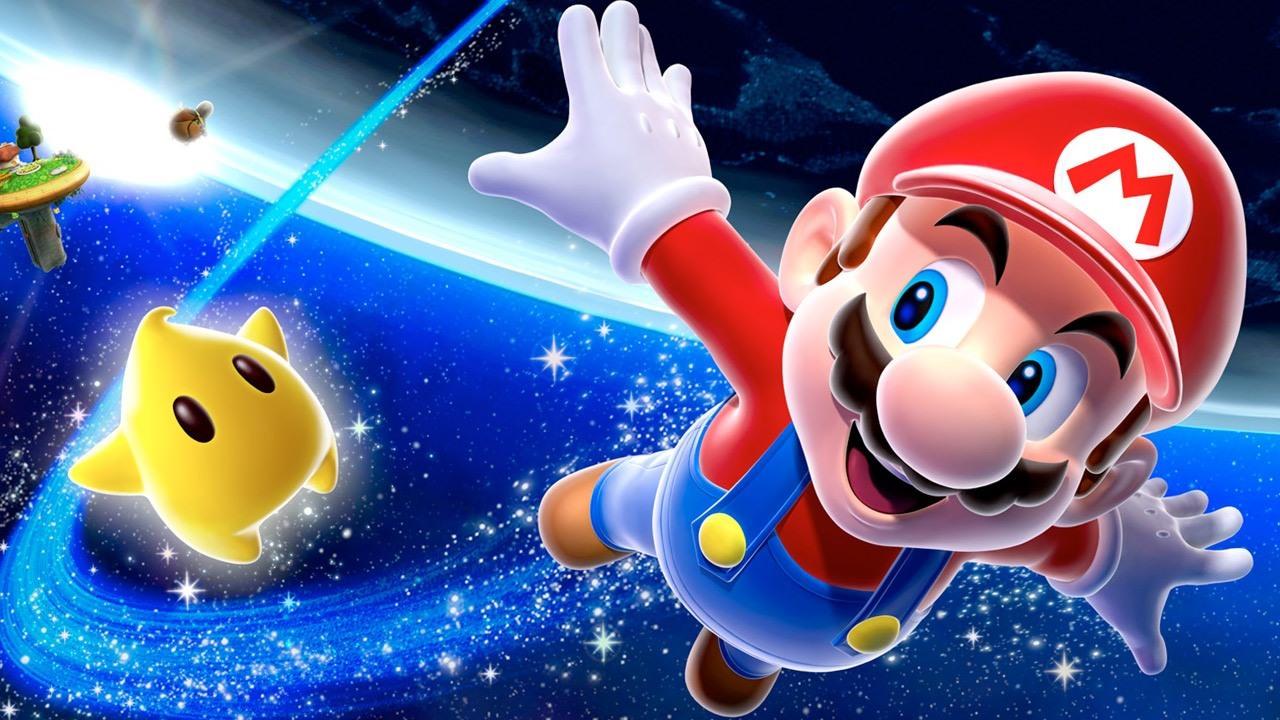
To understand where Nintendo might be heading, it helps to look back at Super Mario Galaxy. In past interviews, the developers spoke about how working with spherical planets encouraged players to look toward the stars and feel curious about what lay beyond. That sense of discovery became a defining feature of the Galaxy games.
But those titles were also limited by the technology of the time. The Wii struggled with large worlds, so Nintendo made smaller planets and more controlled areas. These small levels made the games look better, but they also made it harder to explore.
Camera controls were another factor. With only one analog stick, free camera movement was limited, further restricting how players could explore. As a result, Galaxy delivered the feeling of space and wonder within fairly tight boundaries.
With modern hardware, Nintendo could revisit this concept and expand it by offering larger areas, smoother transitions, and full camera freedom.
That doesn't mean fans should expect a direct sequel like Mario Galaxy 3. Nintendo doesn't often keep the same number of entries across generations. Super Mario Bros. 3 came before Super Mario World, not Super Mario Bros. 4.
The sequel to Galaxy stayed in the Wii generation. Nintendo's history shows that it likes to reinvent things rather than just keep going with the same formula, even with Galaxy-themed movies and recent re-releases.
Instead, the next Mario may borrow ideas from Galaxy while presenting them in a new form. Nintendo is known for reshaping familiar concepts rather than repeating them. One example of this is the transition from Galaxy to Super Mario Odyssey.
Odyssey returned to large environments, and many players welcomed that change. The sales figures clearly reflect this. While Galaxy’s 12.8 million copies sold is impressive, Odyssey has surpassed 30 million, making it the most successful 3D Mario to date.
This pattern is visible across Nintendo’s other franchises as well. The Legend of Zelda expanded dramatically with Breath of the Wild and Tears of the Kingdom. Kirby found new life in three-dimensional spaces with The Forgotten Land.
When Nintendo embraces larger, more open designs and executes them well, the results are often extremely successful.
Although Odyssey’s kingdoms were large, they were still mostly separate. After the opening areas, players traveled between them using the Odyssey ship and a menu. Only the first two regions were directly connected.
By contrast, Donkey Kong Bonanza experimented with larger, interconnected layers that flowed into one another. Each layer felt like part of a continuous structure rather than an isolated stage. This suggests that the EPD team has been actively exploring ways to build more connected worlds.
Bowser's Fury is another big clue. This Super Mario 3D World add-on featured a single, open world that grew as players moved through it. At first, it was small, but it slowly opened up to give players a more open-world-like experience. Adding a design like that to a game that is otherwise linear seems like a deliberate choice on Nintendo's part, as if they were testing how players would react to a more open Mario format.
Bowser’s Fury also introduced Plessie as a mount, which brings attention to another important theory: the growing role of Yoshi. In recent years, Yoshi has been heavily featured in Mario-related media and releases.
Some people think that Nintendo is making Yoshi a regular character in the next 3D Mario game. Yoshi could follow Mario on his whole adventure instead of just showing up in certain levels.
In this case, players could ride Yoshi when they needed to and get off when they didn't, and Yoshi would keep following them. This setup would let you create more complex puzzles, explore in new ways, and play with others.
Nintendo has consistently included co-op features in its platformers, and a companion-based system would naturally support that approach.
Even if the next Mario adopts a more open structure, Nintendo is unlikely to label it as an "open-world" game. In a 2016 interview, Shigeru Miyamoto and Bill Trinen explained why Nintendo avoided using that term for Breath of the Wild.
Miyamoto emphasized that Nintendo does not want to chase industry trends or labels. Instead, it focuses on using technology to create unique experiences. Trinen added that Breath of the Wild’s world was not just a backdrop but an integral part of the adventure. This philosophy led to the term "open air" instead of "open world."
It is likely that Nintendo will apply a similar mindset to Mario. Rather than simply calling the next game open world, the company may frame it around a different concept. One idea that has emerged is "open space." This would involve returning to the theme of planets, but on a much larger scale. Instead of small spheres, players would explore massive planetary environments comparable in size to Odyssey’s kingdoms.
In this model, each major area would be like a big planet, and players could look up at the sky to see other places they could go. They would eventually be able to visit new worlds, making it feel like a never-ending journey through space. Traveling between planets could be done in a creative way, perhaps by using new traversal mechanics tied to Yoshi or other transformations.
Some even imagine Yoshi gaining the ability to fly or transform to carry Mario between worlds. While this remains speculative, it illustrates how Nintendo could turn movement and exploration into core gameplay features rather than simple transitions.
All of this is also part of Nintendo's bigger business plan. The business has invested heavily in promoting itself through movies and other media. The Mario movie that came out in 2023 boosted game sales, and Nintendo followed up with Mario Wonder to capitalize on that. It would make sense from a business point of view to release a big new game around the same time as another Mario movie.
When you look at all these things together, a clear pattern emerges.
Nintendo has new, powerful hardware that hasn't been fully used yet. A team of developers has been working on interconnected environments for it. It has tried out open-style gameplay with Bowser's Fury. It has strong sales data that shows bigger Mario games do better. It has a long history of changing genres instead of sticking to them.
Because of this, the next 3D Mario is likely to be more than just another sequel. It will probably be larger and more ambitious than anything before it. While it may resemble an open-world game on the surface, it will almost certainly be shaped by Nintendo’s unique design philosophy.
Senior Editor, NoobFeed
Related News
No Data.