
PS5 Pro Could Finally Make Consoles Feel Like Magic—But It Might Break Everything
Sony’s frame-generation tech promises smoother, faster gameplay, but missteps could create visual chaos, making the next console upgrade both thrilling and terrifying.
News by Zahra Morshed on Feb 09, 2026
Some rumors about the PS5 Pro have become more specific and interesting. There is an interesting idea in the middle of the talk. Setting up frames. With the release of a new version of PlayStation Spectral Super Resolution, a technology that has been used in high-end PC graphics cards may be getting closer to being used in consoles.
As expected, the response has become polarized. Some people worry that fake frames, extra delay, and visual artifacts will ruin the performance of consoles. It's normal to feel that way. Frame generation that isn't done right can make things feel detached and unstable.
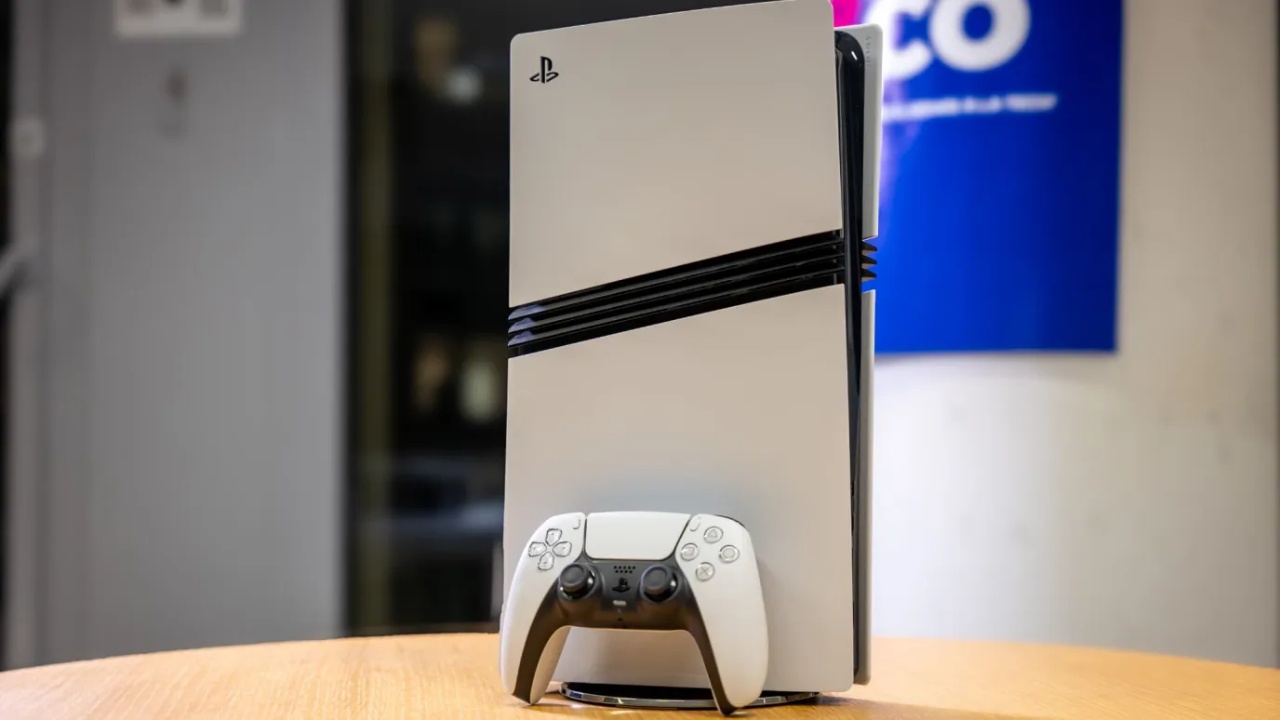
But when used right, it turns into something completely different.
There is a speed multiplier that changes more than just how smooth a game looks. The difference is in the results at the start. The process of making frames works best when the internal frame rates are already high.
When a game's original frame rate is higher than 60 frames per second, generated frames can make it smoother while keeping the responsiveness. Most of the time, input delay stays the same or even gets better as frame rates get faster.
When the technology is added to low internal frame rates, especially ones close to 30, problems start to show up. This is where a lot of the misunderstanding starts. Some new console games already use reconstruction methods to show a target frame rate that doesn't feel quite right.
When internal speed drops too low, doubling or tripling the frames shows artifacts and makes you feel like you're floating.
The way people think about that event has changed. Technology doesn't fail because of itself; it fails because of how it is used. If frame generation comes to the PS5 Pro, it won't be the only thing that has it. The PSSR custom upscaling solution from Sony was made from the start to be a machine learning-based system that fits with AMD's overall plan.
Mark Cerny, the lead engineer, has said in public that PSSR is the first step toward more advanced features that will be in later versions of FidelityFX Super Resolution. Later, AMD stated that FSR 4 would have frame generation for hardware that supported it.
This angle adds to the guesswork.
With careful integration, a console that can run many games at a stable 60 frames per second could possibly make those experiences go up to 120. The jump would mean something. When compared to the last generation, the base PS4 hardware often had trouble keeping 30 frames per second at levels lower than 1080p near the end of its life.
But still, nothing is certain. Memory bandwidth, latency budgets, and developers' freedom are all severely limited in console settings. Frame generation would probably only come out for games that already meet certain speed standards.
Sony has always liked controlled rollouts better than big drops of features.
Performance isn't something you fake; it's something you build on when the base is solid. When used as a crutch, it doesn't work. When used as an amplifier, it changes. It's no longer a question of whether the tech works. On PC systems, that argument is pretty much over.
The question is about following rules. Will developers accept the conditions that make frame generation shine, or will they try to get big numbers at the cost of how things feel? If the PS5 Pro doesn't rush this feature out, console gaming could be about to enter its most fluid age yet.
Contributor, NoobFeed
Related News
No Data.