
ANTHEM#9 Review
PC
Puzzle chains and tactical decks — ANTHEM#9’s stylish roguelite experiment.
Reviewed by Maisie Scott on Feb 10, 2026
ANTHEM#9 is the kind of independent project that shows both personal growth and risk-taking in art. The game was developed by Koeda, who worked in an office and had no formal training in game development. He worked on it as a hobby in his spare time, mostly on the weekends and in the evenings.
SHUEISHA GAMES became interested in what began as test prototypes, focusing on character ideas and puzzle-based fighting. This happened through the Shueisha Game Creators Camp contest. With help from publishers and localizers, the project grew into a fully realized roguelite experience that blends different game types into something that works surprisingly well together.

Many roguelikes use the same basic ideas over and over again, but ANTHEM#9 stands out because it tries to combine match-3 puzzles with deck-building strategy and turn-based battle. It's a strange combination that shows right away the creator is ready to try new things rather than copy others. As a result, the game feels both influenced by genre classics and driven to make its own name.
From the start, ANTHEM#9 makes it clear what it's trying to be: it's not just an easy puzzle game that looks like a roguelike-deckbuilder. Instead, it wants to keep the fast-paced decision-making tension of puzzle games while pushing players to think carefully, plan, and learn through repetition, which are all typical of the roguelite genre.
The story of ANTHEM#9 is purposely kept simple; it's more of a background piece than a major plot point.
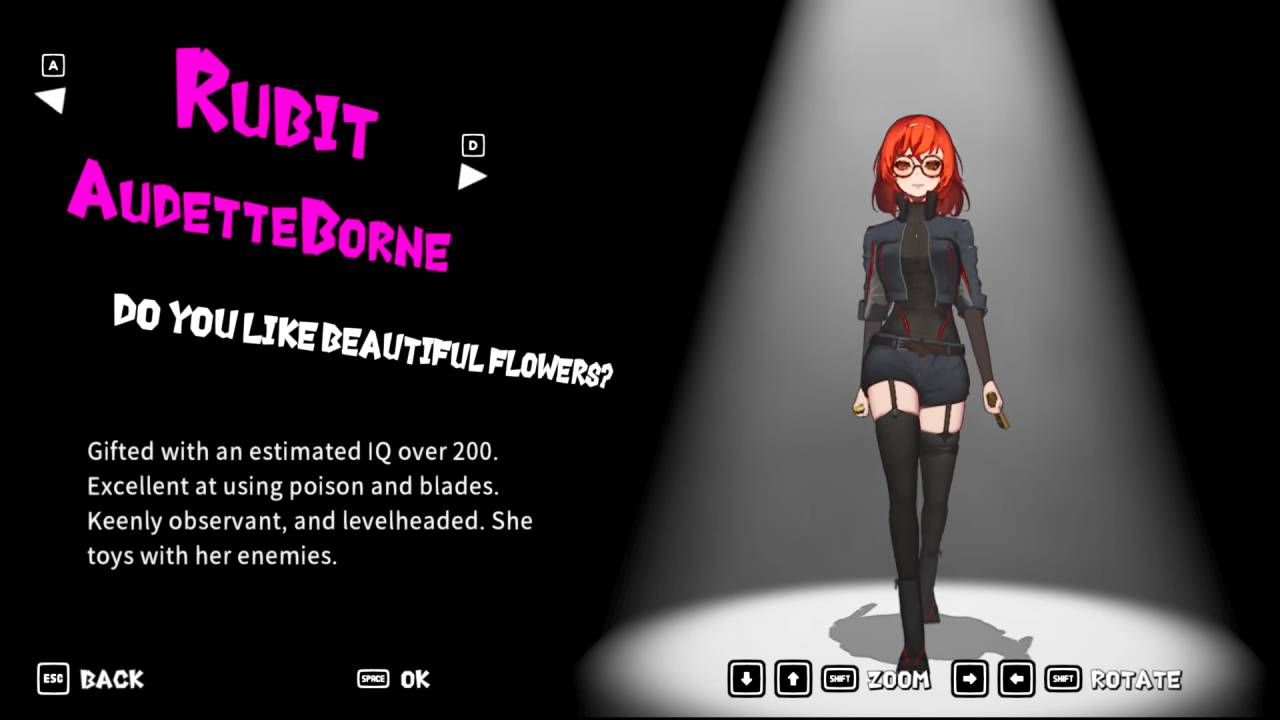
The game takes place in a world where a secret group working in the background has to keep things in balance. Players take on the role of an agent whose job is to eliminate threats that could upset this delicate balance. Rubit is the main playable character whom you meet early on. She is an adaptable agent whose tasks slowly reveal a larger struggle beneath the surface.
Instead of long cutscenes, task descriptions, character interactions, and environmental presentation build the world. Other spies, with different personalities and fighting styles, work with Rubit. Beni is a disciplined martial artist who focuses on strength and endurance, whereas Phannie is a flashy risk-taker who loves high-stakes games. Together, they form a small but colorful group that adds more personality to the game without slowing it down.
This limited way of telling stories works well for the game. ANTHEM#9 doesn't try to overwhelm players with story; instead, it focuses on pace and mechanical engagement. The story seems more like a framework for trying new things in the game than the other way around. This way, there is room for future growth while still focusing on strategy and progress.
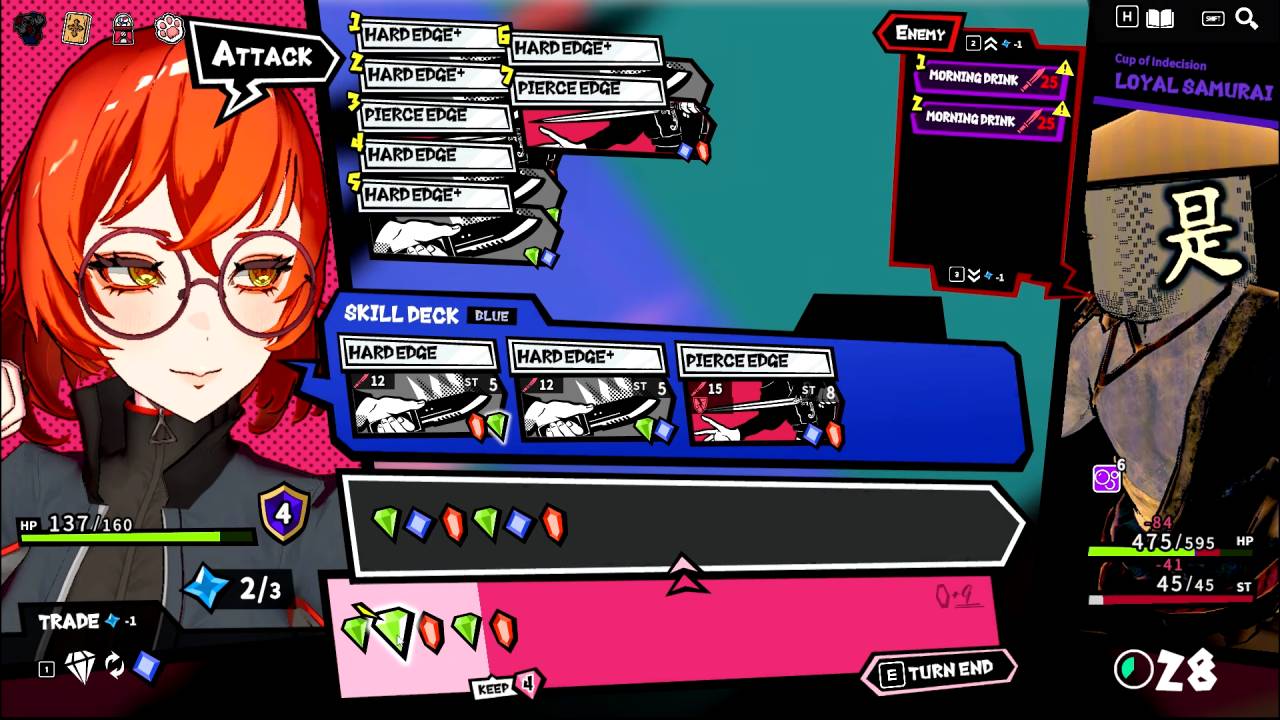
At its core, ANTHEM#9 is a roguelite game where you run through randomly created dungeons that are shown as branching maps. Players move from encounter to encounter, choosing routes that lead to battles, shops, upgrades, or special events. Fans of deck-building roguelikes, especially those who like to plan paths and keep track of long-term strategy, will be familiar with this way of moving forward.
You get new skills, gifts, and upgrades every run, which change how their deck looks over time. In ANTHEM#9, it's more important to have smaller, more intentional loadouts than to have big collections of cards. Each player builds two decks with three skills, and during battle, they switch between them. This restriction gives each option real weight, which encourages exploration without making things too hard to understand.
Customization is a big part of moving forward. You can improve, change, or replace skills, and the number of gems needed for some skills can be changed to fit a player's plan better. Not only do these choices affect individual battles, but they also change the general direction of a run.
Once the main tasks are finished, new challenges with tougher enemies, stricter rules, and character-specific skills become available. These harder modes make the game more fun to play again and again and force players to learn how it works.
When it comes to combat, ANTHEM#9 really stands out.
In each fight, there is a grid of colored gems that players must match to use their skills. In contrast to most match-3 games, the objective is not just to clear the board, but also to use skills in the best order possible. At the start of their turn, players are given a random set of gems and a short amount of time to move. You can use skills that are linked to those colors when you match three or more rocks.
The way in which abilities are used is very important because chaining them together makes powerful combos that can do a lot of damage. Action Points (AP) are another part of the plan. Depending on the character, players can spend AP to change gems' places, split pairs of gems, or even change their colors.
These characteristics let expert players recover from faulty gem distributions and keep their combos going. Enemies also put strategic pressures on you. Some assaults can be stopped with well-timed combos, but others need to be dealt with or slowed down with a defense strategy. Boss fights make these difficulties worse because they have more health and more intricate attack patterns.
The puzzle's logic and tactical sequencing are combined in a way that rewards planning and flexibility over quick reactions alone.
The best thing about ANTHEM#9 is the puzzle-combat mix. It makes a feedback loop of thinking, reacting, and improving that keeps fights interesting even after many runs. Successfully chaining several skills together gives you a satisfying sense of power, which is boosted by animations that move quickly and damage that gets worse.
The fact that gem manipulation abilities are flexible also keeps players from getting frustrated. Players usually have ways to recover and gain momentum, even when the board looks bad. But this level of complexity can also be scary. It takes longer to get good at than most puzzle games, and the user interface doesn't always make all the important information clear.
In the beginning, sessions may feel wild until players figure out how the order of gems in their decks affects how they play. The timer makes things more exciting, but it can also cause mistakes, especially when players are still getting used to how the game works. Some people will find this stress exciting, while others may find it too much to handle.
im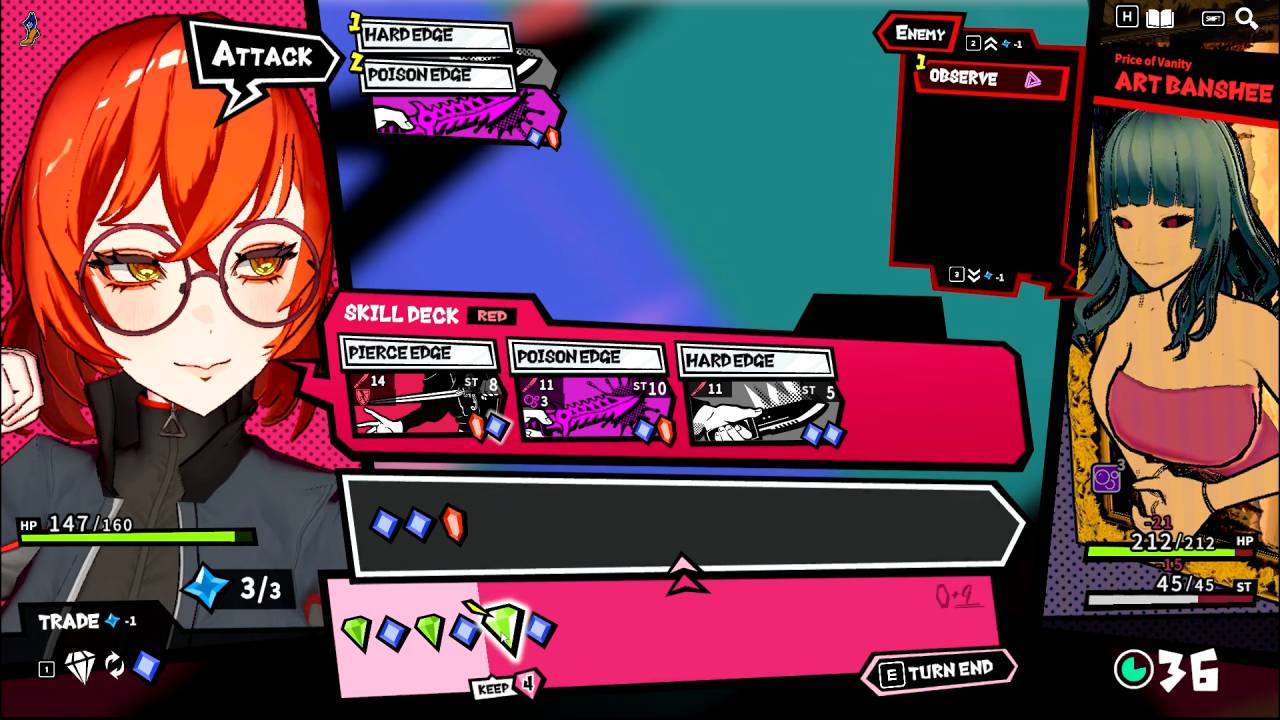 age
age
Progress in ANTHEM#9 follows the roguelite idea that you get better over time by playing it over and over. When you finish battles and missions, you get access to new skills, blessings, and customization choices that make your strategy more flexible. Instead of grinding experience like most games do, you get better by discovering new things and trying them out.
With each run, you get more chances to improve your deck, get stronger abilities, and try out new character tactics. During runs, blessings act as temporary improvements that help players make decisions based on the upgrades available. Long-term progression goals are set by character-specific tasks and higher difficulty levels, ensuring that players keep learning to use the combat system.
This way of doing things keeps routine from getting boring. The way ANTHEM#9 looks is influenced by anime, with bright colors and a styled user interface. With its moving panels, expressive character art, and comic-style battle framing, the presentation is a lot like current JRPG interfaces.
When a skill is activated, it's joined by good visual effects that draw attention to combo chains and make planning a successful plan even more satisfying. The designs of the enemies range from humanoid foes to more odd creatures, which keeps the visuals interesting.
The interface can feel crowded at times, but the game's strong artistic character gives it life and personality.
The art style complements the strategic games by giving each action a strong sense of impact. The music is a big part of keeping things moving. The fight themes and electronic-inspired music give the game a sense of urgency that complements the timed puzzles. The music adds to the game's stylish mood without being overbearing.

During battle, especially during combo chains, sound effects give pleasant feedback that makes matching gems and activating skills feel better. The sound design supports both the strategy and arcade-like aspects of the experience. ANTHEM#9 is a unique and bold roguelite that does a good job of combining puzzles and deck-building strategy.
Its combat system encourages experimentation, planning, and flexibility, creating a difficult yet rewarding gameplay loop. There are some rough spots, mostly in the layout and the learning curve at first, but the creative nature of the core design makes up for these problems. The game doesn't try to be accessible to everyone. Instead, it focuses on giving players who are willing to deeply engage with its features a thoughtful strategic experience.
ANTHEM#9 is an exciting independent game that looks great, has creative gameplay, and can be played over and over again. It might not follow the usual rules for its genre, but that desire to try new things is what makes it stand out.
Editor, NoobFeed
Verdict
ANTHEM#9 is a stylish, challenging roguelite that blends gem-matching and deck-building. Its deep, rewarding combat and tactical depth make each run engaging, offering satisfying complexity for players who enjoy thoughtful, strategic gameplay.
82
Related News
No Data.