
Coffee Talk Tokyo Review
PC
Rain soaked midnight conversation about loneliness, healing, and the quiet art of listening.
Reviewed by Asura Kagawa on May 21, 2026
People enjoyed the first Coffee Talk not for its exciting storylines or big-budget visuals, but for the way it made them feel close to the characters. Toge Productions has adapted the familiar ritual of providing warm drinks into a deeply thoughtful tale structure. Fantasy creatures talk about current anxieties in a shockingly honest way.
Coffee Talk Tokyo reinforces that identity by bringing the familiar late-night café feeling to Japan. It does this by adding yokai mythology, urban seclusion, and emotional vulnerability to an already smart visual novel that prizes honesty above all else.

Coffee Talk Tokyo is faithful to its promise of restraint, unlike many iterations that aim to get bigger and scarier.
There are no world-ending stakes, dramatic warfare systems, or big-picture role-playing systems aimed to make the game more exciting than it really is. Instead, the game focuses more on mood, dialogue, and emotional depth. It’s less like playing a regular game and more like being in a little emotional oasis hidden underneath the neon-lit streets of Tokyo while it rains nonstop.
Coffee Talk Tokyo retains the main ideas of its predecessors but greatly improves on them, both in terms of look and more. The art for the characters is more expressive, the environments feel more full, and the music has a more polished lo-fi sound without losing the signature warmth of the series. The creators obviously knew what consumers appreciated about the original recipe, and it would be unwise to upset that emotional rhythm too much.
But Coffee Talk Tokyo also highlights the weaknesses of an idea that is largely talk-based. The absence of involvement still shocks, the growth mechanisms feel inadequate and your control rarely exceeds creating drinks the appropriate manner. The game says again and again that talking and making drinks can really impact the story, but you mostly do things that don't really change the experience.
The mood of the game is still very high. Few new movies comprehend the emotional architecture of safety like this one. Soft rain drums on window panes, low-fi jazz drifts through darkened rooms and mentally disturbed characters slowly dismantle pieces of themselves over coffee-stained worktops. Coffee Talk Tokyo works not because it invents a new form of storytelling but because it understands the significance of moments of silence, when they are created with compassion and discipline.
Coffee Talk Tokyo is set in a small, late-night café where people, yokai, ghosts and legendary entities gather to try and survive the hardships of modern city life. The unidentified barista is back in the role of the player, serving beverages and silently observing customers face personal problems, emotional tiredness, shattered relationships and existential dread.
The structure of the plot is based on returning visitors whose experiences slowly intertwine over several evenings. Every customer has mental baggage from both myth and reality. A kappa salaryman loses the home he grew up in on a river and faces cultural displacement. Ayame is a ghost searching for memories from her unfinished life that she has not yet dealt with. Jun is a world-famous singer, but wears away under the stress of being perfect in public and losing touch with his art.
One of the best stories is Vin’s long-term illness and physical pain. There is no melodrama in the writing, and the text is very particular and authentic regarding disabilities, yet it nevertheless acknowledges the difficulty of adapting to a new body and lifestyle. Coffee Talk Tokyo is most emotive when it embraces this genuine sensitivity rather than leaning too much on fantastical metaphor.

It's not the dramatic buildup but the ability to connect with the feelings of the characters that makes these stories so compelling.
The characters nearly never have to contend with magical catastrophes. Instead, they grapple with grief, artistic burnout, identity issues, loneliness, and the pressures of society. The scene is magnificent, but the troubles feel extremely real.” That emotional truth weighs an astonishing amount during the course of the experience.
Also commendable is the way yokai lore is integrated into the narrative, adding to the characters without making the story too hard to follow. Kitsune hybrids, marebito ghosts, and kappa that live in rivers all organically co-exist with modern Tokyo culture. Coffee Talk Tokyo doesn't exploit these identities like a show, but thoughtfully uses them to talk about feeling alone, being uprooted, and adjusting to a new culture.
But the writing distracts from how vivid the feelings are at times. Too often, conflicts are resolved too fast with flowery oratory that sounds more like group therapy than actual dialogue. Characters will typically resolve years of emotional struggle in one discussion after receiving some light advice from the barista or other supporting actors. It’s not that these resolutions are really won, but that they make you feel good about yourself.
The fundamental difficulty is that the game is obviously capable of a lot of subtlety elsewhere. Some lectures are so intimate and believable that they sting, and others go way too far into polished emotional idealism. Coffee Talk Tokyo sometimes confuses sincerity with emotional depth, polishing away the rough edges that could’ve made some of the relationships feel more real and true.
There are some issues with the tale, but the characters feel real, so it's engaging. Every new customer creates fresh feelings, difficulties, or ways of working with connections that are worth exploring. There are surprisingly few terrible connections in the ensemble cast, even if the pace is slower. This helps to keep the story exciting for most of the campaign.
As for how it plays, Coffee Talk Tokyo is a visual novel with some light-making components mixed in between extended discussions. Most of the time, you read discussions, choose the components for beverages, serve customers, and sometimes browse social media-inspired in-game apps that contribute to the characters’ backgrounds in a subtle way.
The drinking system is intentionally simple. Drinks are created by mixing ingredients such as coffee, tea, milk, ginger, chocolate, and a range of flavorings in a particular order. Some clients will tell you exactly what drink they want, while some may say vague things, and it will be up to you to figure out what the customer means based on emotional cues or contextual suggestions before creating the proper drink.
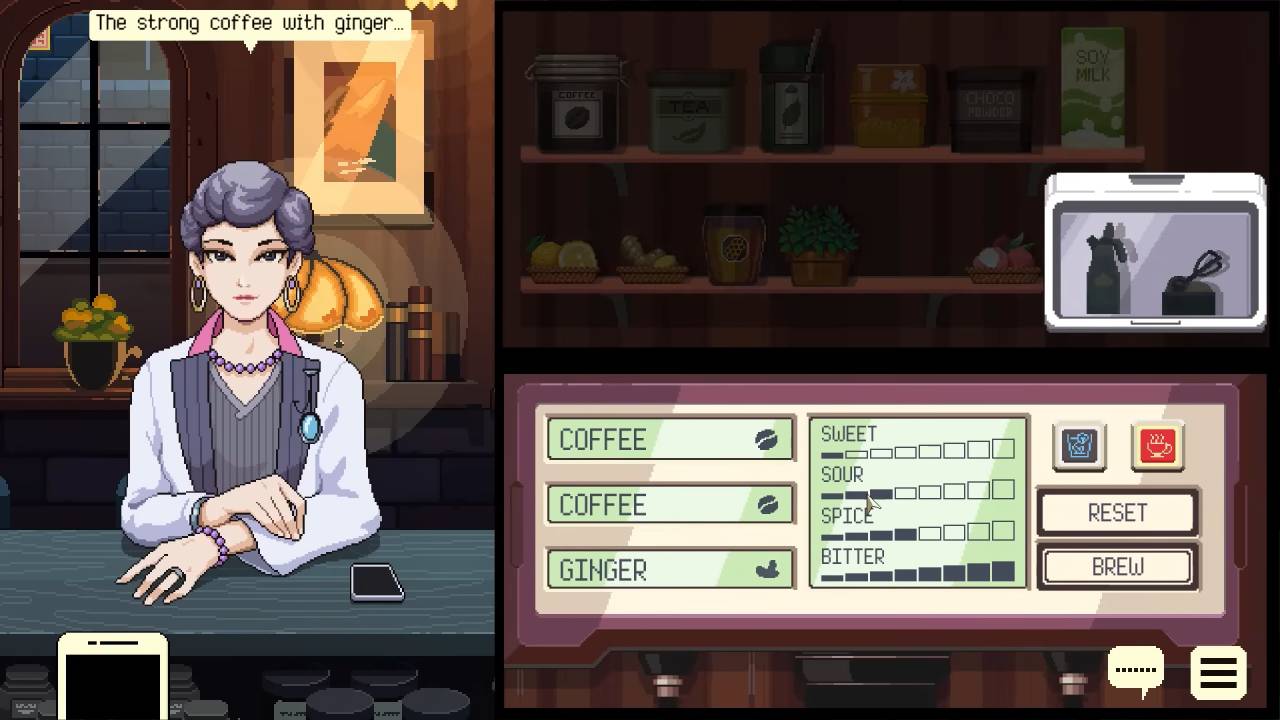
The system feels excellent to the touch at first.
The game’s fascinating atmosphere is lovely in the way of latte art, steaming ingredients, and brewing coffee. The process is like the slow, quiet beat of café culture feeding the story's need for slowness. Coffee Talk Tokyo understands that a good atmosphere may make a routine more emotionally resonant.
But the feeling of actual contact is an illusion. There’s hardly anything you can do to influence the story, other than make cocktails. There is not much choice for conversation, and a lot of scenarios play out the same way, no matter what you did before. The game often feels like there are alternative endings and storylines that you may choose from, but the real number of options is still disappointingly low.
When this happens, it makes it even more difficult to try to restart. Often, the perfect finale is more about getting specific drinks correct than making emotional or story-based choices. Unfortunately, the game doesn’t always make it clear when a perfect answer has been reached, so you have to try things out and see what works or ask an outside guide for help.
The narrow gameplay loop also hampers game progression. Most nights are spent reading passively for extended stretches of time, taking little breaks to make drinks every once in a while. It’s a framework that may appeal to those who enjoy visual novels, but those who desire more active engagement may struggle to stay interested through the slower periods.
But the simple mechanics do the mood justice. Coffee Talk Tokyo is not meant to be difficult or tricky to play. Rather, each mechanism is meant to protect emotional connection and to keep the conversation flowing. How immersive or underwhelming this limitation feels relies a lot on how much you value the tone of the story over direct engagement.
There's no combat in Coffee Talk Tokyo, and the developers were smart not to tack on any additional action elements to the game's pensive framework. The nearest we get to solving a puzzle is to get a good idea of what the customers want and to make drinks that are emotionally or contextually appropriate for them.
Throughout the procedure, the way the drink is created is like a subtle type of emotional language. There are several drinks that aid characters going through a tough time, making them more willing to talk about their issues or give more positive solutions. The mechanics suggest that you act as an emotional adviser, and the customer’s outcome is strongly influenced by your care.
Action, unfortunately, seldom does it full justice.
Many requests still are uncomfortably vague, which makes the act of making drinks feel random and not natural. The customer could ask for something snug, comforting, or nostalgic without giving you enough background information to assist you in making a decent choice. Sometimes discussions over improper drinks are hilarious, but when they happen again and again, they quickly stop being charming and start becoming tiresome.

The lack of clear feedback further erodes participation. The game often doesn’t let you know you’ve achieved the best results until a long time after the fact, and the game doesn’t give you a lot of information about how your choices affect how the tale unfolds. Those who wish to see all endings may be quite disappointed, as there are no clear methods to go on.
But sometimes the way the drinks function leads to some really fun moments. It can be very satisfying to be able to read someone’s body language and make them just the right drink. Coffee Talk Tokyo works best when the gameplay and story merge quickly into one emotional experience, rather than two separate systems awkwardly thrown together.
However, there are occasions when the game’s ease works to its advantage. It avoids complex mechanics, keeping the tale on track and focused on sensation. The pace is leisurely enough that talks happen naturally, without the extra effort that would otherwise destroy the vibe. This design mindset will definitely resonate with those who desire comfort over challenge.
The game does, however, risk becoming too inactive. For hours, you can't do much more than click through dialogue and mix drinks sometimes. Sometimes, Coffee Talk Tokyo feels less like being in tales and more like observing them from behind the bar. How contrived or restricting that emotional distance seems depends on what you are expecting.
The thing about Coffee Talk Tokyo that’s most amazing is the sincerity. The game’s protagonists are always treated with kindness and tolerance, allowing for honest conversations about matters such as mental health, handicap, artistic exhaustion, bereavement, and identity that aren’t designed to shock. Even fantastical creatures feel real because their problems are so painfully ours.
The atmosphere is another massive achievement. The sound of rain, the warm lighting, the gentle, low-fidelity compositions and the realistic character portraits make for a wonderfully immersive emotional setting. You rarely find a game that makes you feel so comfortable in your environment. Coffee Talk Tokyo transforms peaceful silence into its own brand of storytelling.
The writing also succeeds because it is lucid.
Vin’s story about a long-term illness, Jun’s story about being too tired to make art, and Ayame’s story about broken memories all have emotional details that feel lived in, not just studied. Those things are what make the story more than just a pleasant vacation; they make it more emotionally impactful.
The lack of fun, however, cannot be denied. There isn’t much interactivity aside from making cocktails, and the decisions you take don’t have nearly as much effect on the tale as the game makes it seem like they do at first. This split makes the game a lot less fun to play again and over again, and can be disappointing for gamers who were hoping for stronger branching stories.

In lengthy rehearsals, the tempo shifts also without warning. The gameplay loop doesn’t change much over time, so the speed of progress depends only on how strong each conversation is. When the chat is interesting, the experience is hypnotically absorbing. When talks become repeated emotional reassurance, the slower structure gets very tiresome.
The plot is too straightforward in the endings, which sometimes makes it less dramatic. For real emotional conflict, there’s often some leftover anger, perplexity, or worry that is unaddressed. Sometimes Coffee Talk Tokyo finds too elegant solutions to challenging problems, abandoning truth for a good-feeling emotional closure.
But the whole experience is very memorable, because the earnestness never feels fake or like it's trying to fool people. There are even weaker moments that stem from actual sympathy and not artificial emotion. It’s a little jerry-built, but that emotional honesty makes the game seem incredibly pleasant.
Coffee Talk Tokyo is lacking many of the traditional methods of progression. No experience points, no combat upgrades, no skill trees, no ways to deal with resources that determine how far you can go. Progress isn’t about that. It’s about learning stories, establishing relationships, and unlocking alternative outcomes by making good drinks.
This simple approach meshes well with the main concepts of the game. In Coffee Talk Tokyo, emotional understanding is treated as growth; you may want to be mindful of the intricacies of dialogue, personality attributes, and how people connect with each other as opposed to number systems. Knowledge is the major way to reward people.
But the same lack of mechanical depth makes long-term interest much less likely.
There aren't many systems that vary over time; the replay value is primarily dependent on wanting to discover alternate endings and chats missed. When the emotional novelty wears off, there's not much more desire to play for longer in the game mechanics.
Completionist players may sometimes get irritated as it is not always obvious how they are progressing. Often, you are required to mix drinks in a particular fashion for flawless finishes, but the game does not always make success obvious. You can accidentally miss the finest outcomes without any external support and not notice their blunders until much later.
Still, that modest architecture does a wonderful job of supporting the café ideal. As clients come in, conversations start up, beverages are made, and eventually, over time, emotional relationships are formed. Coffee Talk Tokyo is deliberately about atmosphere and not progression addiction. It is about emotional thought, not compulsive progress.
Visually, Coffee Talk Tokyo is a huge leap forward for the company. The characters’ portraits are much more detailed, a lot more emotional nuance, and a lot more expressive design language than in the previous games. Fashion selections and color palettes subtly reveal personality and emotional tone, helping each customer feel visually unique.

The café itself feels warm through the fall sunlight, the rain-stained windows, the subtle reflections, and the carefully placed environmental detail. The scenario is somewhat static, yet the mood is never dull, thanks to the lighting, weather effects, backdrop movements, and the slight movement of all of those things when people are chatting.
The characters’ design is a plus, with the mythology-inspired style seeming inventive without being overly busy. Kitsune hybrids, ghosts, and yokai creatures all work well with the modern Tokyo environment and create a world that is both mystical and realistic.
The drinks presentation also becomes quite amazing. Drinks are made with detailed latte art, attractive stylized patterns that make touching coffee even more enjoyable. Even accidental drink mixes have their own visual character, so it’s really enjoyable to experiment, even if the rules are pretty easy.
There still isn’t much animation, but that works well with the visual novel’s framework.
Small gestures, lively blinking, and slight changes of stance give enough individuality to keep presentations visually entertaining without the pricey movie-style presentation. The game is also technically well done so it runs nice on both mobile devices and PCs.
The simple layout does not need any complicated hardware, thus the performance is stable without influencing the quality of the photographs. Coffee Talk Tokyo understands being able to set the right tone with the best of them without the technical excess.
One of the best things about the game is the sound creation. The lo-fi music of Aremy Jendrew suits the cozy vibe of the café. Mellow percussion, a wet background, and subtle jazz influences create an infinitely pleasant soundscape. Musically, it sounds contemporary, but keeps the emotional closeness that is the core of the experience.
The sound effects of rain are also praiseworthy, for they always add to the mood of being alone at night and thinking quietly. The tapping on the windows is quiet and produces an almost hypnotic ambiance. It makes even the most boring of chats seem to be taking place in a true way.
The sounds of brewing coffee provide a slight sensation of touch reality. The noises of frothing milk, pouring espresso and clattering china cups all add to the sensation that you’re in a working café and not just reading a visual novel. These minor sound aspects contribute to the immersion throughout the event.
It’s fascinating that not having voice acting usually doesn’t make people less emotionally committed. Written and scored in a manner that creates an atmosphere where dialogue is unnecessary. You look at the characters, and you know what their personalities are, you know how the story moves, you know where they are.
Certain things get on your nerves, like the sound effects that keep playing over and over as doors open and close, and don’t go away when scenes change. These tiny glitches don’t significantly detract from the overall richness of the soundscape either. Coffee Talk Tokyo somehow always manages to make silence an emotional experience with sound.
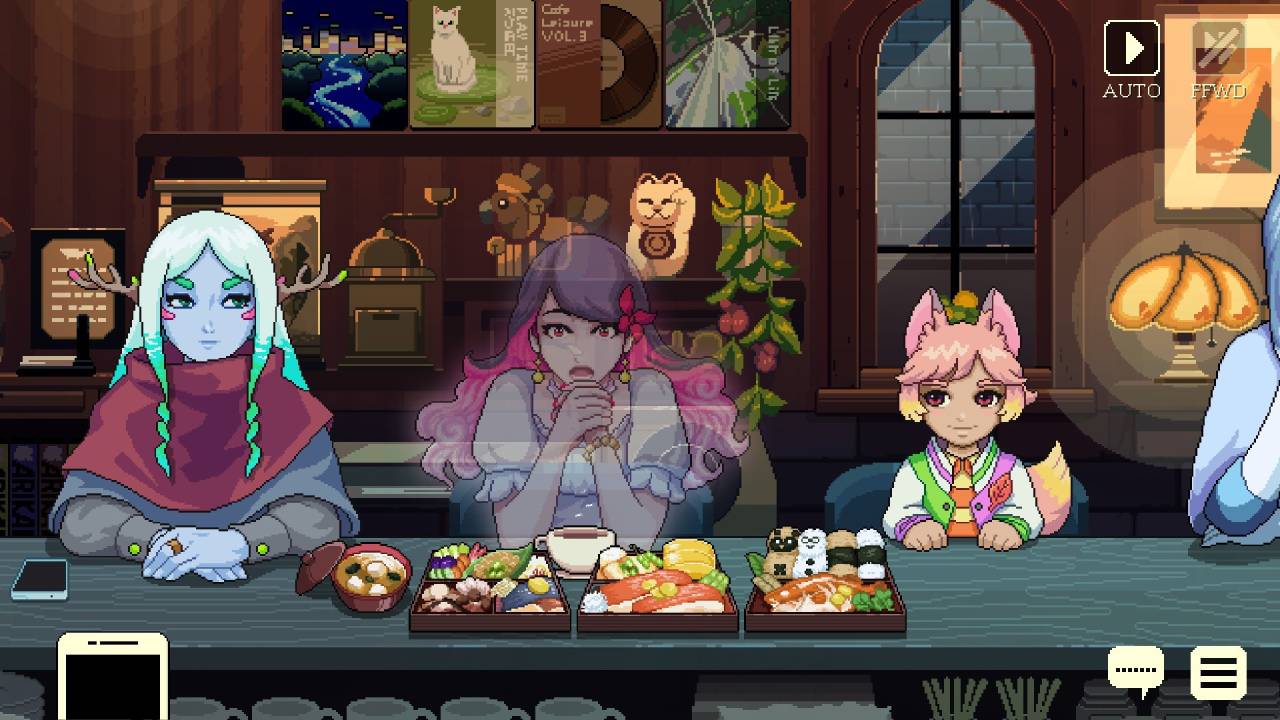
Coffee Talk Tokyo is not about excitement, but about emotional presence. It encourages you to slow down, listen closely and locate the quiet vulnerability concealed inside regular conversation. That absence of control is, in an industry that’s increasingly obsessed with scale, urgency, and infinite advancement systems, somehow refreshing.
The emotional details of the game are the best parts and make them pop. Vin’s reflections on his long-term illness, Jun’s artistic burnout, and Ayame’s fractured memories are all honest in a way that lingers long after the lecture is ended. The stories ring true, since they appear to emerge out of an understanding, not an aloof observation.
At the same time, it's obvious that the experience isn't excellent because there isn't much interactivity, and the plot doesn't progress at a consistent rate. Gameplay mechanics don’t vary very often in a meaningful way, player choice is exaggerated, and some emotional endings happen in a way that is too clean. Coffee Talk Tokyo occasionally blurs the line between a calming chat and genuine emotional depth.
Despite these problems, however, the mood remains very interesting. There are not many games that create such emotionally inviting locations or that care so much about their characters. Under the dark lighting and incessant rain, the café is a sanctuary for magical animals and weary people.
In the end, Coffee Talk Tokyo works because it prioritizes emotional intimacy above spectacle. It may not be what you want from a mechanical depth or dramatic escalation perspective, but for those prepared to submit to the peaceful cadence of the game, it becomes something unexpectedly vital. Its warmth stays long after the last cup is passed, as the perfect late-night coffee sipped amid harsh talks.
Staff Writer, NoobFeed
Verdict
A narrative experience elevated by empathetic writing, stunning visual design and exceptional music. Coffee Talk Tokyo lacks meaningful gameplay depth, but its emotional sincerity and unforgettable characters make the journey quietly powerful.
70
Related News
No Data.