
OPUS: Prism Peak Review
PC
Sigono’s Return — From Echo of Starsong to OPUS: Prism Peak.
Reviewed by Wasbir Sadat on Apr 17, 2026
Sigono has quietly become known as one of the most sensitive independent companies in recent years. OPUS: Echo of Starsong made an impression on players when it came out in 2022, not because it was long or hard to play, but because it knew how to be restrained. The game didn't have many systems or information, but the story was well-told and focused on emotion over scale.
Many players became fans of the game right away, and for some, it set the standard for writing a good story. People were naturally excited about the studio's next project. After four years of delays that seemed to stem from a desire to improve rather than problems, Sigono returned with OPUS: Prism Peak. The game was published with the help of Shueisha and is now available on PC and Switch.
It is not a straight sequel to OPUS, but rather a separate story set in the same world.
That difference is important. This is not the next part of Echo of Starsong, nor is it a JRPG with battle systems or party development. For now, it's a story-driven adventure game that focuses on feeling, memory, and observation. If players are expecting action or standard RPG elements, it might feel strange at first, but that's what makes it unique.
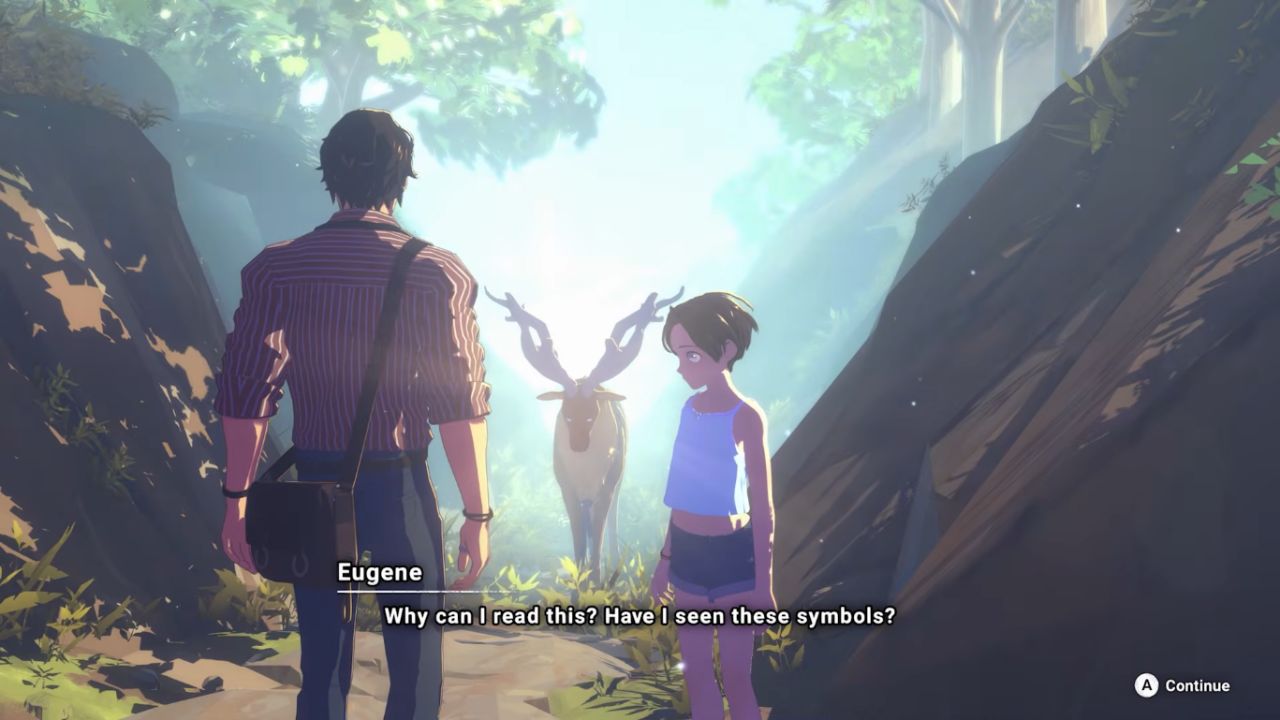
At its core, OPUS: Prism Peak is about Eugene, a 40-year-old man whose life has already been changed by thought and sorrow before the story even starts. Eugene is going to his grandfather's funeral at the beginning of the game. His grandfather played a big role in his becoming a photographer. After a sad beginning, things quickly go horribly wrong when Eugene crashes during a storm and wakes up in a strange, new world.
Huge mountain ranges, vast expanses, and a creepy silence make this world unique. Only the voices of animal ghosts speaking human language break the silence. There is a young girl with Eugene who has lost all of her memories. She thinks she needs to get to the top of a faraway mountain, but neither she nor Eugene knows how or why.
They set out together to find the Nameless City, where a person called the Seer is said to live, though no one has ever been there. The way the story mixes grounded emotional realism with fantastical images is what stands out right away. Eugene himself is very cynical. He is negative about his past and sees his successes, relationships, and mistakes as part of a simple story of falling apart.
But as the trip goes on, the game keeps making that interpretation harder to accept. Memory is not shown as a set fact, but as something broken up, personal, and often lacking. Photography becomes the main story and a way to mechanically connect things. Eugene's camera is more than just a tool; it's a way to connect with the wonders of the world.
Taking pictures of ghosts and places where they live brings back pieces of lost memories.
These memories don't just fill in blanks in the story; they change how people and events are understood, making Eugene and the player rethink what is real and what is just their interpretation. OPUS: Prism Peak doesn't have standard RPG systems or combat.
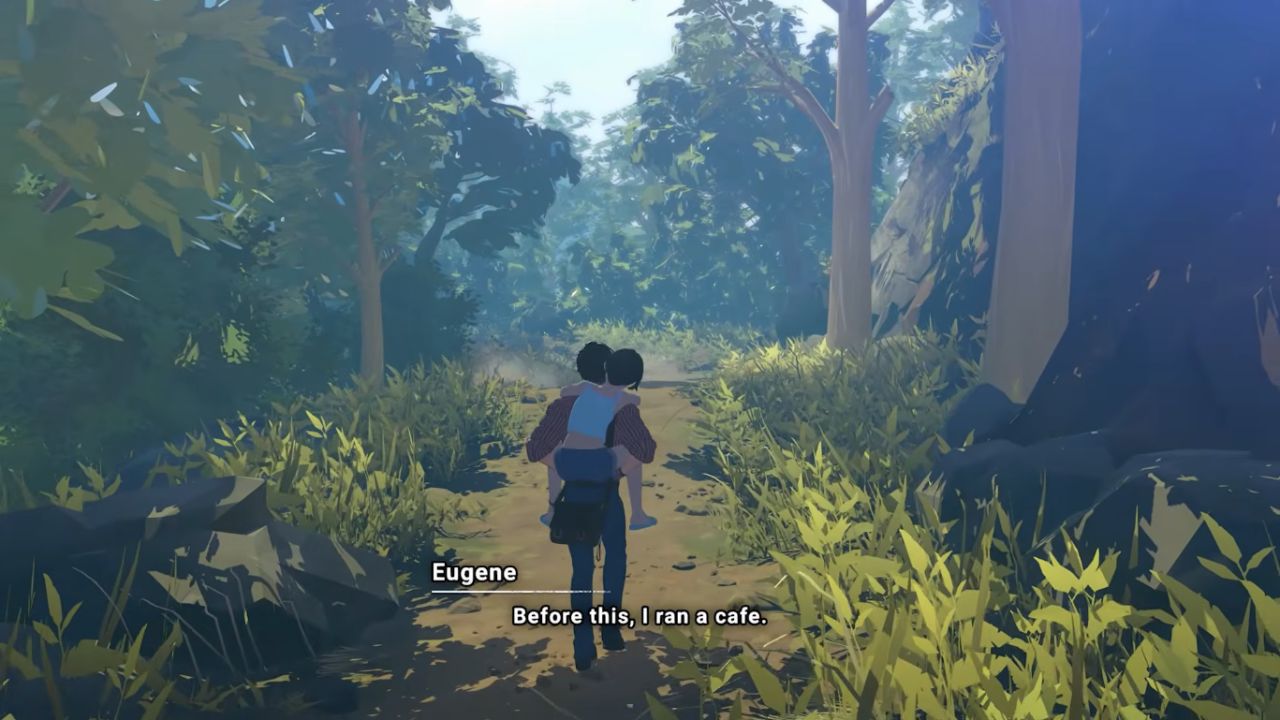
OPUS: Prism Peak is based on exploration and photography.
You don't have to fight, level up, or control your stats. Instead, progress is only made when people are interested and pay close attention to the details. Players move around small, well-planned areas where they can look at or take pictures of almost anything.
At first, the game slowly guides the player by pointing out things that can be collected for information. Over time, this becomes a more complex system in which photography is necessary to solve environmental puzzles and advance the story. Eugene uses a Prisma camera, which gets more useful over time.
In the beginning, it's pretty easy—players can just take normal pictures and trust focusing. As the trip goes on, more features become available, such as manual focus, exposure adjustments, and special lenses that reveal hidden aspects of the environment. You don't have to grind or get experience points to get these upgrades. Instead, you earn them by exploring, interacting with other players, and finding new things.
One important part of the game is dealing with spirits and "fire rituals," in which players must give certain photos that match up with puzzles or pieces of memory. Some people find it easy to match a clearly described object, like a telescope or a vending machine, while others need to carefully read symbolic clues.
These puzzles aren't so much hard in the usual sense.
Instead, they're more about noticing things and thinking about them in a bigger picture. The gathering of "seeds," which happens when the world changes, is another recurring mechanic. Then, these seeds are traded at a hub-like center to get new tools, better cameras, and bigger albums.
This method replaces RPGs' usual progression loops. Instead of grinding for experience points, players are told to fully explore the world and interact with optional story fragments that are spread out there. The pace is meant to be slow. Even though there are times when you feel like you need to act quickly, like when Ren is around and slowly disappears, the game is set up to encourage patience.
.jpg)
It's possible to skip parts of the story or get different results when pictures are missing, but the game doesn't punish trying new things too harshly. In fact, it makes the point that memory isn't perfect and that no single playthrough can catch everything. There are several endings, including many minor bad endings and a few major story conclusions.
The "true" ending can only be reached by carefully exploring and correctly interpreting photographic hints. This makes the game fun to play again and again without using standard RPG repetition loops. The puzzles in OPUS: Prism Peak are closely tied to how the game takes pictures. Instead of normal battles or enemy encounters, development is controlled by puzzles that require you to figure out what something means.
When spirits give questions, the player has to answer by using the right photographic memory.
For instance, a spirit might only vaguely describe an object, and the player would have to remember where that object showed up in the world and capture it properly. In this way, exploration changes from passive traversal to active mental work. The problem is not automatic reflexes, but paying attention and remembering things.
The fact that this method fits into story themes is what makes it work. The game keeps pushing the idea that memory is broken up and not always accurate. Even putting together puzzles can be seen as a metaphor for rebuilding one's identity. But the method does have some flaws. There are times when it feels like development isn't always clear, and players may move forward without finishing optional story threads.
This lack of clarity seems intentional, but it can be hard to understand at first. There isn't a normal XP system. The story is the only thing that drives progression, and you get new tools and powers by reaching certain exploration goals and completing puzzles. This design emphasizes emotional pacing and environment involvement above optimization.
Visually, OPUS: Prism Peak stands out for its art style rather than its difficulty.
Wide perspectives, gentle lighting, and a stylized appearance evoke genuine and magical things. Fantastic animation has had an influence. Some of the music and landscape remind me of Studio Ghibli films: calm, expansive, and emotive.
Character models are simple but expressive enough to evoke emotions. Locations vary, making exploration never feel repetitive, while Eugene's mental journey is shown by theme variations. The game runs at the same frame rate on mid- to high-end hardware. Collision faults and visual mismatches in movies don't ruin the experience. After the debut, some early issues were fixed via patches, suggesting the designer will support the game.
.jpg)
Sound design is a game strength. The calm but atmospheric music enhances the emotional tone without overpowering it. Environmental sound is a big part of absorption; it makes every place feel alive, even if it's empty. The game specifically tells you to use headphones, and you can tell the difference.
Voice acting is good across all three languages (Japanese, English, and Chinese), adding depth to the characters without making them seem over-the-top. Notably, the Japanese cast includes veteran voice actors whose performances lend greater emotional weight to important characters, especially Eugene and Ren. Their delivery strengthens the relationships and helps ground the story's more magical elements.
OPUS: Prism Peak isn't really a game about saving the world or beating danger from outside sources.
Memory, regret, perception, and the fragile ways that people rebuild their pasts are all part of the story. The most important thing for Eugene on his trip is not to conquer or achieve, but to learn what it means to remember wrongly, incompletely, or selectively. Every part of the gameplay supports this idea. Photography is both a tool and a symbol.
Puzzles aren't problems; they're ways of looking at things. Even the fact that it has more than one finish shows that there isn't just one right way to understand what happened. There are some technical problems with the game, and the pace is sometimes hard to tell, but the emotional purpose is always strong.
OPUS: Prism Peak doesn't offer simple answers. Instead, it asks the player to be open to doubt, pay close attention, and understand that memories are always incomplete.
Contributor, NoobFeed
Verdict
A deeply emotional, slow-paced narrative adventure that blends photography mechanics with memory-driven storytelling. Despite minor technical flaws, OPUS: Prism Peak delivers a haunting, reflective experience that lingers long after completion.
89
Related News
No Data.