
Shuten Order Review
Nintendo Switch
A murder mystery reborn.
Reviewed by Adiba Manha on Sep 07, 2025
It would be difficult for Shuten Order to establish itself. Kuzutaka Kodaka, best known for Danganronpa, Rain Code, and Hundred Line; Takumi Nakazawa, known for Ever 17 and Root Double; and Takekuni Kitayama, known for Rain Code and Danganronpa Kirigiri, were emphasized in the marketing as the creative forces behind this visual novel.
These associations carried baggage for many. Their previous work was either inspiring or annoying, depending on your point of view. Initially, it appeared that Shuten Order might take the same crooked route.

It's crucial to remember that the script wasn't created by only the three individuals on the box. Only the prologue and one character route were written by Kodaka, who mostly concentrated on Shuten Order's premise and story framework while working with a group of TooKyo Games authors.
This truth alters your perception of the finished product, but it only becomes evident after the credits roll.
Assuming that Kodaka, Nakazawa, and Kitayama composed Shuten Order, the entire tale raises expectations, while the truth shows a more extensive creative effort.
A corpse falls from the sky on January 1, marking the start of the story. What lands is a dismembered torso rather than a whole person, which was later determined to belong to the country's Founder as well as the Shuten Order, a religious order. The residents greet each other with a "Happy New End" as the body falls, ushering in the new year.
"168 days until the end of the world" is displayed grimly on screens throughout the city. The clock is clearly ticking away for humanity. Shortly after, Rei Shimobe, the main character, wakes up in a hotel room without her memory. She is told by two entities who identify as angels that she has been resurrected by heavenly force and is indeed the Founder's reincarnation.
The catch is that she only has four days to complete the resurrection and regain her lost memories because her body is only temporary. She needs to find the killer, get a confession, and have them put to death to succeed.
Five Ministers of the Shuten Order, each in charge of a crucial area of government, are the suspects. Rei looks into each Minister in turn, attempting to regain her past and find the murderer. The truth is concealed among the five suspects, five viewpoints, and five branching tales.
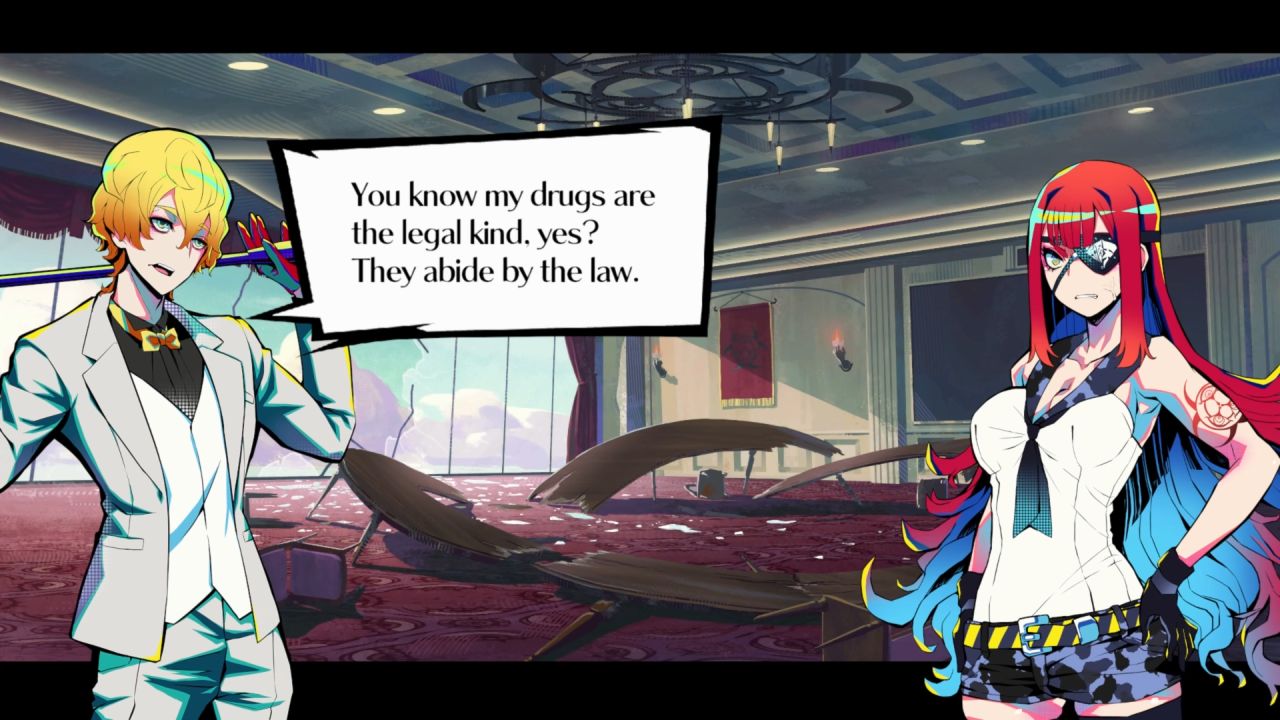
The arrangement transforms well-known visual novel tropes. Although the amnesiac lead is a common tool, in this case, it adds to the main mystery. Every thread is connected by Rei's status as the country's renowned Founder. Even if each Minister's account deviates from the actual murder, it inevitably returns to the more general query of what the Order is and why its system is in place.
In contrast to Danganronpa, revelations occur more naturally when there is no killing game structure.
Routes gradually increase the level of tension by adding details until the whole picture is revealed. The story revolves around the Ministers themselves. Both are portrayed as having erratic, deranged personalities, which causes them to constantly conflict when they are on stage together.
But their relationship with Rei serves as a strong anchor in Shuten Order. She was the only thing that kept them together when she was the Founder, and her reappearance makes loyalty more difficult. They are willing to deflect, quick to accuse, and rarely reluctant to sacrifice one another to survive.
The Ministers' investigations function as both local and macro narratives. On a smaller scale, you find certain bits of evidence along their paths. Comparing details from several stories on a bigger scale allows you to identify overlaps and discrepancies that allude to more profound realities. The jigsaw slowly begins to take shape.
Rei is more erratic herself. She effectively embodies the paradoxes of faith, identity, and power, both as a narrative device and a thematic metaphor. However, she frequently comes across as unimpressive when it comes to dialogue.
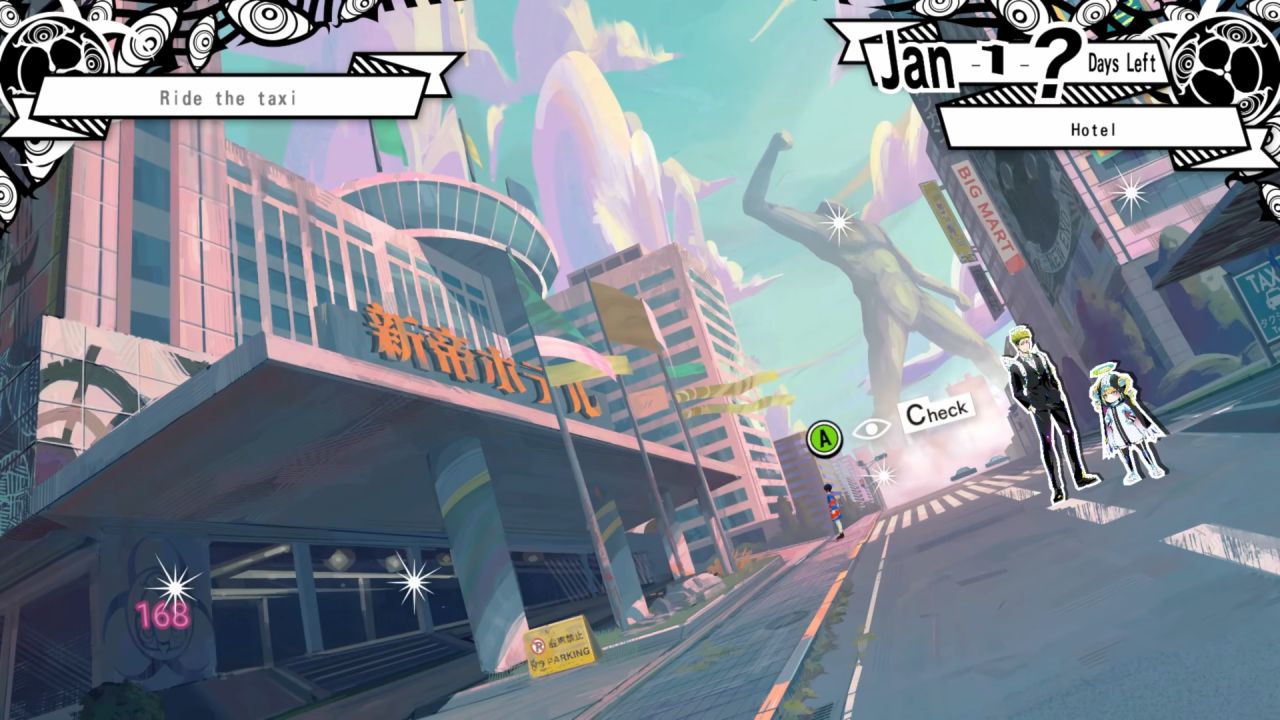
Her inner voice is mostly reduced to recurrent perplexity, which is initially comprehensible but becomes exhausting after five full campaigns. One of the story's most fascinating threads, however, is her attempt to make sense of her current situation and her past self.
Shuten Order is great at telling stories about religion as a way of governing.
Its criticism paints a more complex picture than just saying "no". People who disagree with theology are called heretics. Some crimes are grounds for condemnation, while others show how bad the Order has been. Devotion can turn into brutality, as demonstrated by the punishment meted out to citizens who are born differently just for existing.
Shuten Order also doesn't hesitate to surprise. One path includes a trans character whose narrative harnesses religion's wider control as a mirror rather than reducing them to their identity. In another, the hierarchy's hypocrisy reveals how elites circumvent the law to serve their own interests, while exposing common followers to unattainable norms. These components transform the story into something provocative.
On the surface, Shuten Order advertises that it has five different "systems." That label is a stretch in reality. In reality, you get three simple visual novel types: one that delves into stealth horror, and one that has little exploring. Since the plot is the primary draw, this won't be a problem for many, but you should not expect drastically different gameplay.
Every path demonstrates a unique strategy. Kitayama and Nakazawa's Ministry of Justice path is most reminiscent of a traditional detective visual novel. The story swiftly shifts from a reading of an inheritance to suspicion and murder. Investigation, obtaining clues, and confrontations like those in a courtroom are the main focus here.
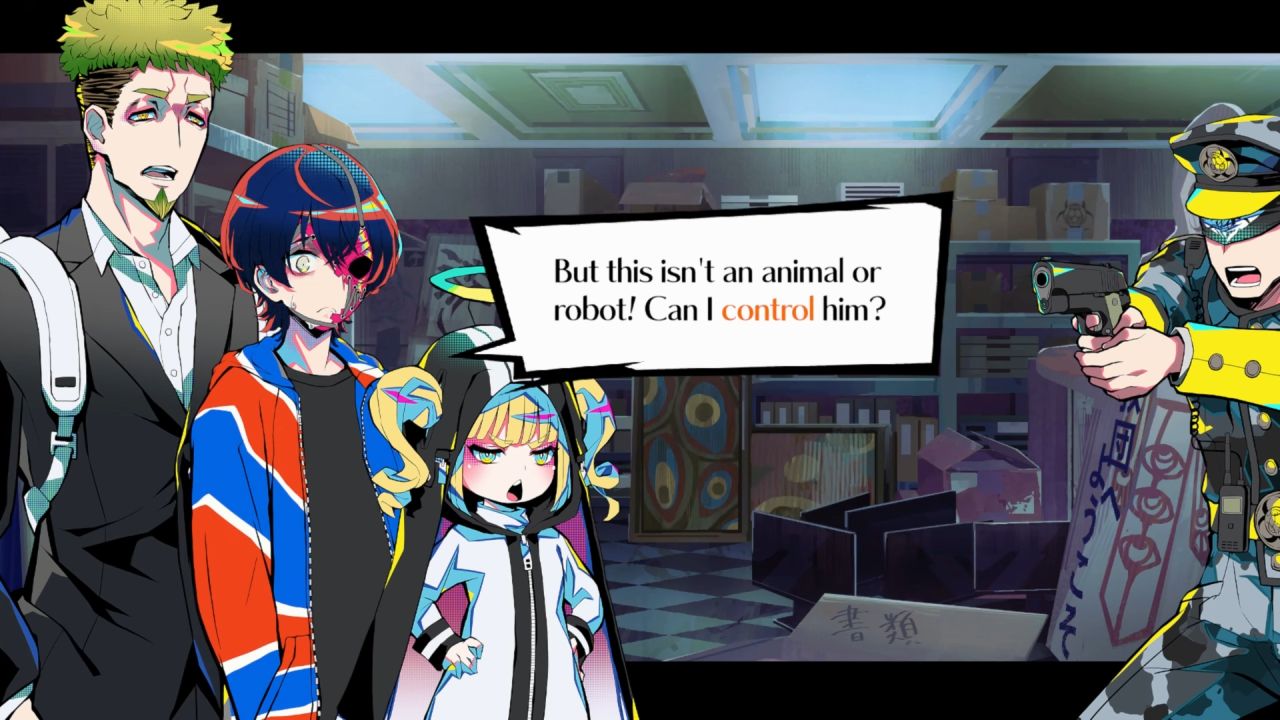
Other approaches emphasize dialogue and slow discoveries and are more reliant on narrative choice.
While one breaks the pattern with stressful stealth sections where you must evade notice while discovering crucial information, the other adds light wandering segments that provide the impression of spaciousness.
The majority of Shuten Order's puzzle-like components are found in the Ministry of Justice route. A feature known as "Snapping" enables Rei to highlight specific terms in testimony or supporting documentation when conducting investigations. Similar to the detective fiction "aha" moment, finding the proper term reveals new information.
Theoretically, it's a creative method to provide the impression that discovery is interactive. It is inconsistent in practice.
There are instances where the right term seems redundant because it restates what is previously understood. At other times, making the obvious choice penalizes you by diminishing "Trust," a credibility-related health-like metric.
To make matters worse, certain intriguing lore drops are concealed behind "incorrect" snaps that don't cost Trust, giving the impression that rewards and penalties are given arbitrarily. The "Meeting" phases begin when investigations are complete. You use evidence to reveal lying in these streamlined trials.
Like Ace Attorney or Danganronpa, they are satisfying when you can disprove a suspect's alibi with the correct evidence. But their dependence on "Evidence Puzzles" complicates matters. To solve these puzzles and reconstruct the logic of the case, pieces of information must be inserted into panels.

Longer ones regurgitate fundamental truths under the pretense of fresh disclosures, but they are initially tolerable. Additionally, overlapping descriptions lead to needless confusion because some pieces of evidence sound nearly identical. Unnecessary frustration was caused by one puzzle that even contradicted itself by asserting that two strings of different colors were identical.
The problem is made worse by the absence of an easy-to-use menu for evidence reviews. Without easy access, it becomes challenging to piece things together beforehand, depriving you of the joy that comes from connecting on your own. Although the main ideas are sound, they are undermined by clumsy execution.
In terms of appearance, Shuten Order strikes a mix between realistic character illustrations and whimsical designs that capture the Ministers' extravagant personas.
Each suspect stands out in group scenarios because their look communicates their role and personality. The idea of a civilization disintegrating under the weight of divine dogma is furthered by backgrounds that combine religious imagery with a deteriorated futurism.
The presentation suits the tone of the story, but it is not groundbreaking. Subtle scenes require more subdued animations, whereas over-the-top events are enhanced by expressive sprites. In contrast to some of Kodaka's previous works, the art direction steers clear of excessive fan service.
The suspense is successfully emphasized by the soundtrack. While upbeat music interrupts conflicts, somber melodies follow moments of insight. Voice acting gives conversations more substance, particularly when charges are involved, and feelings are running high. The writing is not overpowered by the sound design, which enhances the mood.
The quality of the gameplay systems varies. The variety of methods used between routes emphasizes the adaptability of visual novels, even as Snapping and Evidence Puzzles falter with inconsistent content. It is all held together by the compelling narrative and the readiness to delve into intricate subjects without simplifying them.
Editor, NoobFeed
Verdict
Shuten Order proves a pleasant surprise. It proves that the genre can still produce novel, thought-provoking experiences when concept and teamwork are well balanced.
86
Related News
No Data.