
Company of Heroes 3: Final Stand Review
PC
Relic Entertainment reinvents its legendary strategy franchise with a co-op survival mode that’s all about wave-based battles, satisfying cooperation, and loads of replayability, even if its lack of content is holding it back.
Reviewed by Tahmid Mahi on Jul 30, 2026
For years, the Company of Heroes series has been known for delivering some of the best real-time strategy combat in the genre. Instead of overwhelming you with massive armies, the games have always emphasized tactical positioning, intelligent use of cover, resource management, and combined-arms warfare.
Since the original release by Relic Entertainment, the franchise has built a loyal following by rewarding careful planning over brute force, and Company of Heroes 3 continued that tradition by refining many of its combat systems while expanding the scale of its battles.
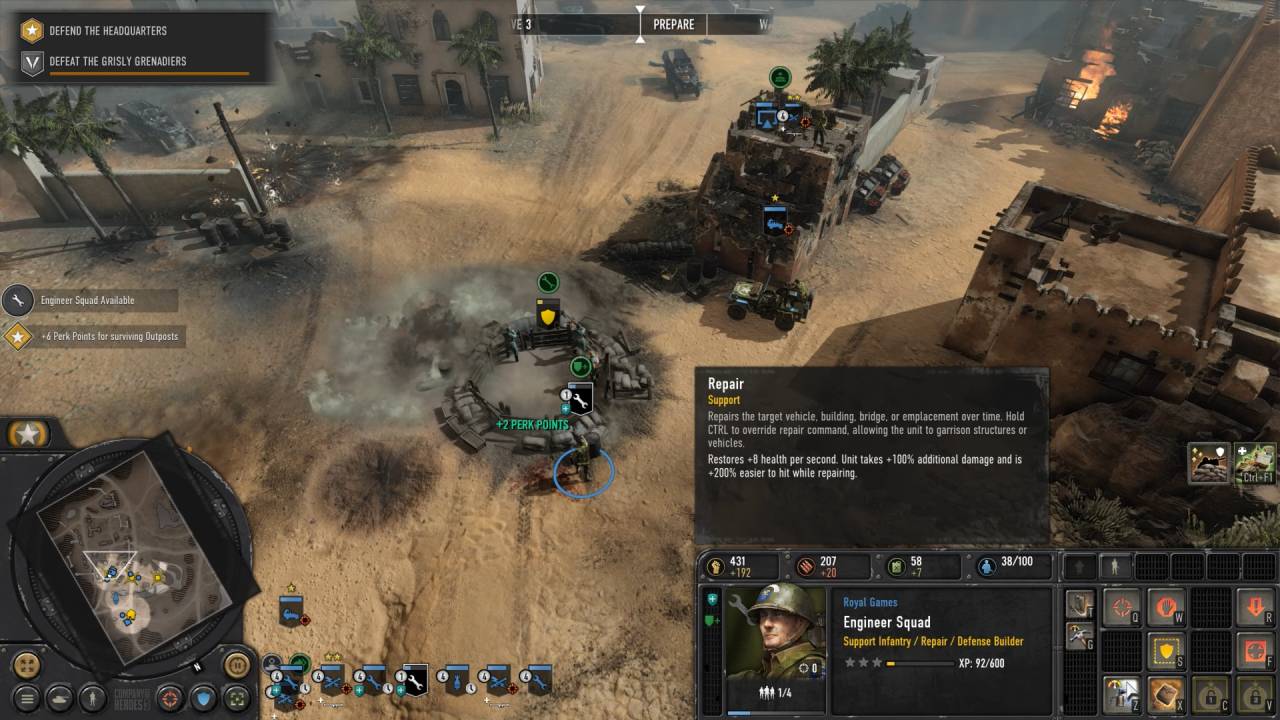
Company of Heroes 3: Final Stand takes the series in a different direction, ditching the usual addition of a new competitive multiplayer mode or expanding the main campaign.
It is a co-op PvE survival game where you defend strategic outposts from waves of enemies that become progressively more dangerous, while slowly building a stronger army with randomized upgrades and permanent progression. The concept is immediately appealing, as it offers a solution for players who like the tactical gameplay.
It also touches on something that many long-time fans have wanted for years. Company of Heroes has always been a competitive multiplayer game, but it can be daunting for new players and frustrating for veterans, who often have to deal with balance changes or very skilled opponents.
Company of Heroes 3: Final Stand does not have a story-based campaign like the main game, which features cinematic cutscenes and story-based missions. Instead, every match creates its own battlefield narrative through the situations you encounter. You choose your faction, decide which enemy army you want to fight, select a battlefield, and pick a difficulty before entering combat.
From there, your objective is simple: survive twelve increasingly difficult waves while protecting key objectives scattered across the map. If you can survive all twelve attacks, you can either finish your run or move into Endless Mode, where the attacks never really stop.
There’s no scripted storyline, but the gameplay itself generates memorable moments, and it’s all very natural. In one battle, you may be frantically repairing damaged defenses as enemy infantry closes in from multiple directions. Another might have you moving anti-tank guns when heavy armor shows up a lot earlier than you expected.
Sometimes you’ll be clinging to a defensive line by the narrowest of margins, waiting for reinforcements to finally show up. Other times you’ll be seeing a carefully laid-out strategy unravel after losing a key squad. These unscripted scenarios become the real stories of Company of Heroes 3: Final Stand.
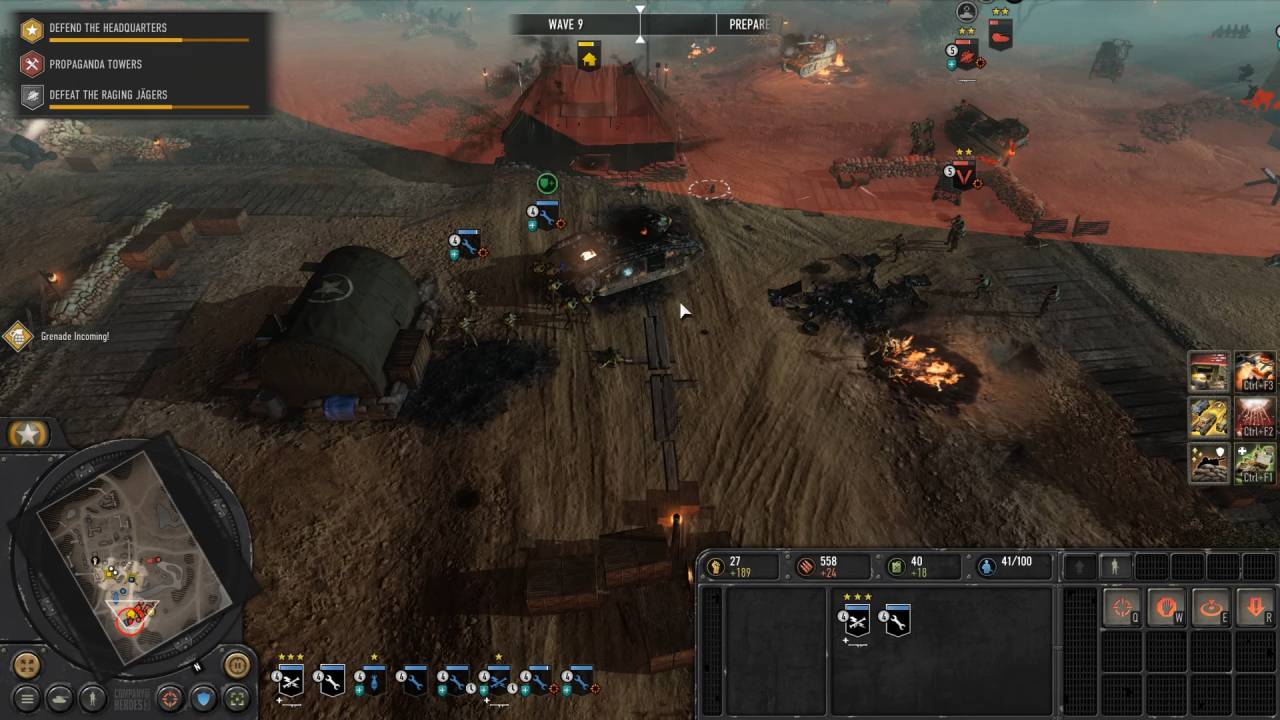
Because every run develops differently, no two matches unfold exactly the same way.
Randomized upgrades, enemy setups that change around, and the never-ending pressure of surviving more and more powerful attacks mean each fight builds its own unique string of wins, losses, and last-minute saves.
Each match begins with a small base and a few starting units, so you’ll need to get your defenses up quickly before the first wave arrives at your position. The early attacks are all infantry, which gives you time to gather resources, build up your forces, and get familiar with the battlefield before the difficulty increases.
As you progress through each wave, the enemy slowly brings in more powerful forces. Eventually, you get the addition of armored vehicles, artillery, elite troops, specialized support units, and dangerous boss enemies that require far more planning to beat alongside the infantry squads.
Each new wave means you have to re-evaluate your defenses, repair damaged positions, replace lost units, and prepare for whatever comes next. The slow buildup helps maintain the tension without being overwhelming in the early stages.
The heart of Company of Heroes 3: Final Stand is its randomized upgrade system. With each wave you complete, you are presented with a number of upgrade choices that steer your run in a direction. Some boost infantry, some boost armor, some fortifications, some engineers, some resource production.
Unlock supply drops, artillery strikes, airborne reinforcements, repair bonuses, construction improvements, and a host of passive abilities. The randomized rewards force you to adapt each match, not repeat the same strategy.
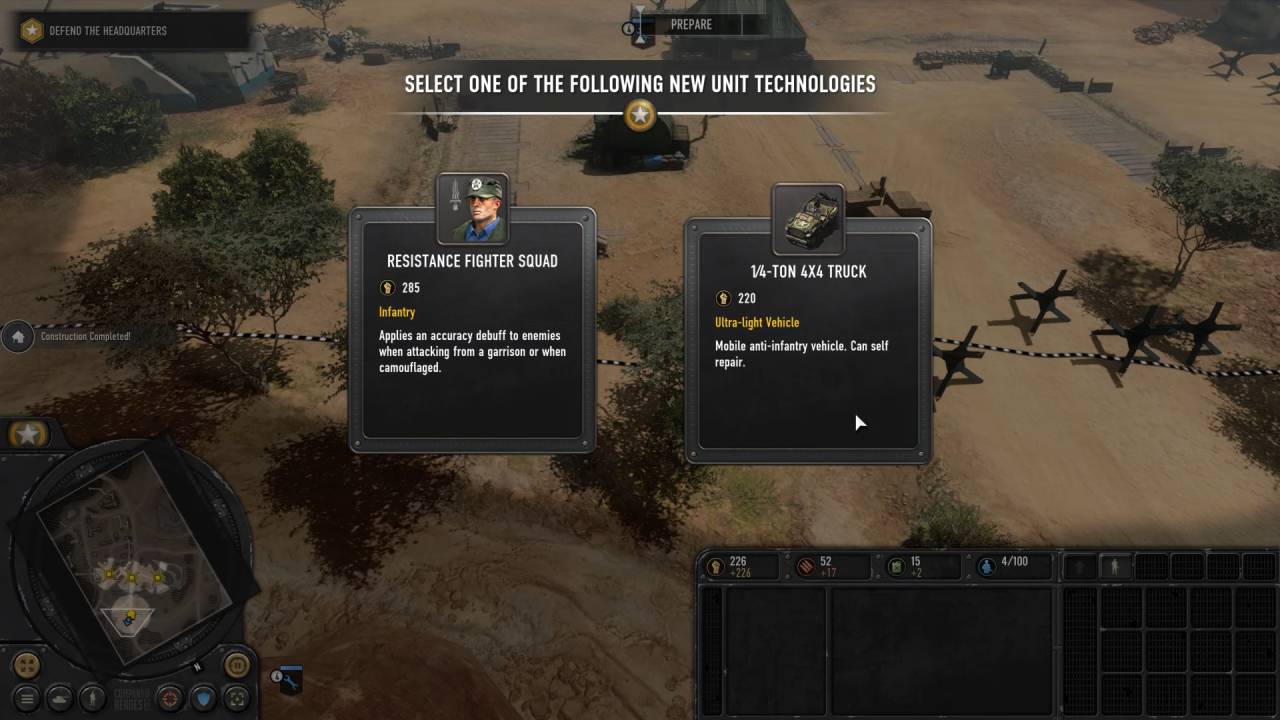
As in the main Company of Heroes experience, resource management is just as important.
You are constantly competing for manpower, fuel, and munitions, and each decision you make impacts your long-term survival. If you pour too much of your resources into infantry in the early waves, you may run out of fuel to counter enemy tanks when they start to show up.
Conversely, if you rush expensive vehicles out too early, you leave your defense open to the first assaults. One of the biggest challenges of Company of Heroes 3: Final Stand is balancing the need to survive now with planning for the future.
The upgrade system is versatile, and your army can develop in different directions, too. One run may naturally evolve into a heavily fortified defensive network built around machine guns, bunkers, anti-tank guns, and engineers. Another may encourage a highly mobile force using elite infantry, airborne reinforcements, artillery support, and armored vehicles to respond wherever the enemy attacks.
Combat remains the strongest part of Company of Heroes 3: Final Stand because it builds directly on Company of Heroes 3's already excellent tactical systems. Cover, positioning, suppression, flanking, vehicle placement, and combined-arms tactics remain essential throughout every battle.
Enemy boss units are often the ultimate test for your defenses and require focused firepower, strategic positioning, and effective use of support abilities. A single mistake can easily lead to disaster if you let an important defensive position fall or destroy an anti-tank gun at the wrong time.
The difficulty keeps increasing and constantly makes you make meaningful decisions. Engineers are essential to fixing damaged structures between waves, artillery abilities are good for breaking up large enemy formations before they reach your frontline, and armored vehicles are critical support when enemy heavy armor appears.
But the fight is faulty. In traditional multiplayer, another player is always changing tactics and making you react.
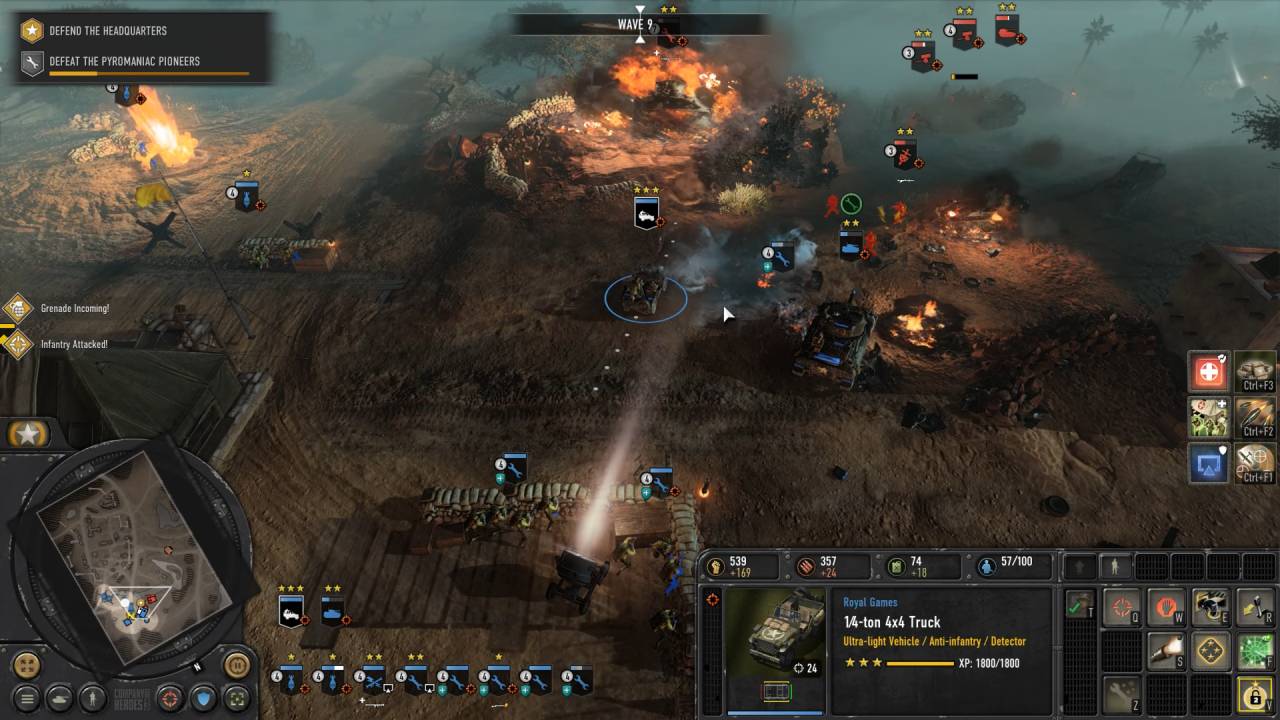
In Company of Heroes 3: Final Stand, however, you generally know exactly where the next wave is going to come from. This makes battles feel more predictable than standard Company of Heroes matches. Many players eventually settle into moving one large fighting force from one objective to another because defensive structures alone rarely stop an entire assault.
The progression system attempts to add long-term replayability through permanent perk points earned after each completed run. Each faction has its progression tree that unlocks bonuses for infantry, tanks, engineers, defensive structures, and resource efficiency.
These upgrades give you incentive to keep playing higher difficulties with stronger armies as time progresses. Unfortunately, the progression stumbles a little as many perk trees feel incredibly similar. Several upgrades are just rearrangements of the same old bonuses instead of creating unique playstyles.
Endless Mode is also unmerciful to dedicated players. If you survive the first twelve waves, you can keep fighting against progressively more difficult enemy attacks, for as long as you like. This makes for a nice endurance challenge, but the rewards are pretty much the same no matter how long you last after the primary objective is done.
Visually, Company of Heroes 3: Final Stand continues using the impressive foundation established by Company of Heroes 3. Realistic explosions, vehicle models, detailed battlefields, and destructible environments further enhance the feeling of being responsible for a battlefield under constant pressure.
There are dramatic moments of slow destruction of defensive positions by heavy artillery, with tanks breaking through the shattered fortifications. Each successful defense feels earned. The battlefield naturally evolves with collapsing structures, craters, and damaged vehicles dotting the landscape, increasing the intensity of every match.
The environments look good, but a lot of the presentation will be quickly recognized by many players as being right out of the base game.
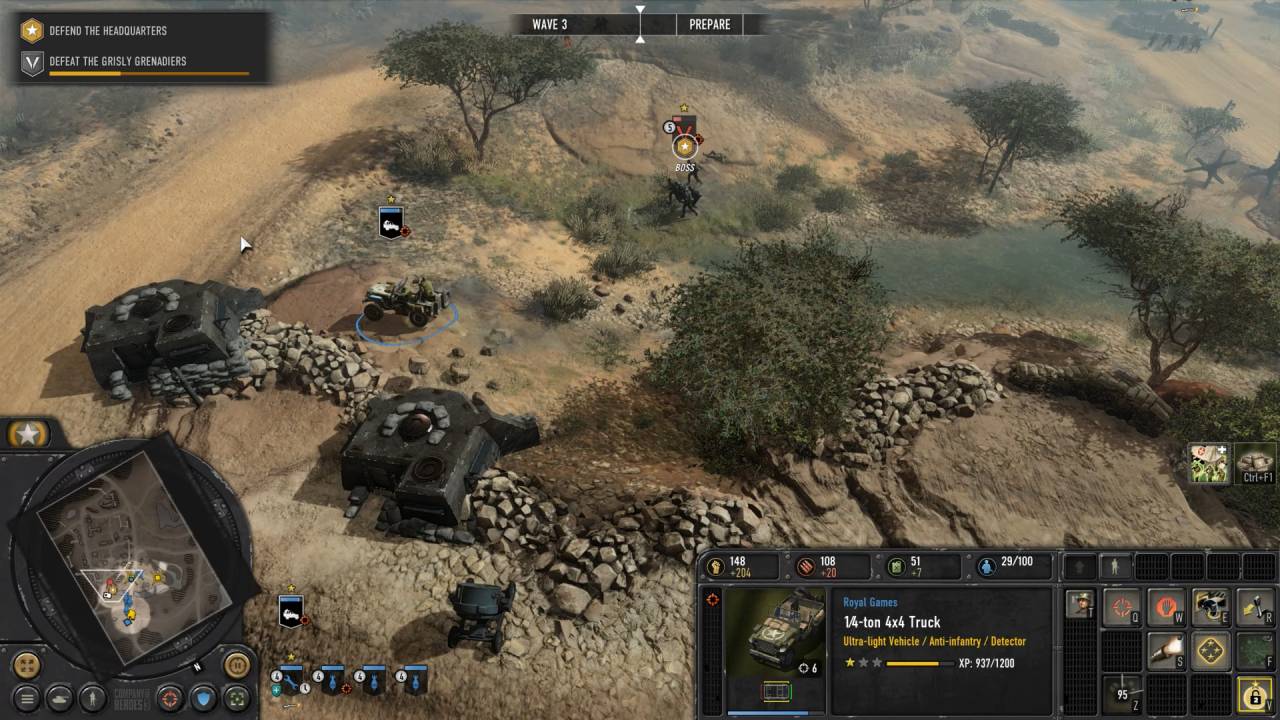
For the most part, units, menus, abilities, animations, and the overall interface design remain untouched, making Company of Heroes 3: Final Stand feel more like an expansion built from existing assets than a wholly new standalone experience.
This lack of originality is one of the reasons people say Company of Heroes 3: Final Stand doesn't have enough original content. There's not much variety in the number of maps either.
The tactical action still lends itself well to the audio design. Explosions have punch, artillery strikes sound suitably devastating, tanks rumble across the battlefield with convincing heft, and infantry voice lines help convey the urgency of combat without becoming distracting.
The sound design, along with the game’s soundtrack and environmental effects, does a good job of reinforcing the constant pressure of defending your objectives in ever more chaotic battles. Clear audio cues also help you track incoming attacks, vehicle movements, and support abilities, making it easier to react as the battlefield becomes increasingly hectic.
Company of Heroes 3: Final Stand succeeds because it takes one of the franchise's greatest strengths—its tactical combat—and places it inside an accessible cooperative survival experience. Defending against increasingly dangerous enemy waves while adapting to randomized upgrades creates plenty of memorable situations, and every successful run feels earned through careful planning rather than luck.
Yet the mode never quite lives up to its potential. Lack of maps, repetitive upgrading, similar assets, similar progression trees, lack of online matchmaking, and an endless mode that doesn't really offer much more reward all contribute to the experience not feeling as substantial as it could have been.
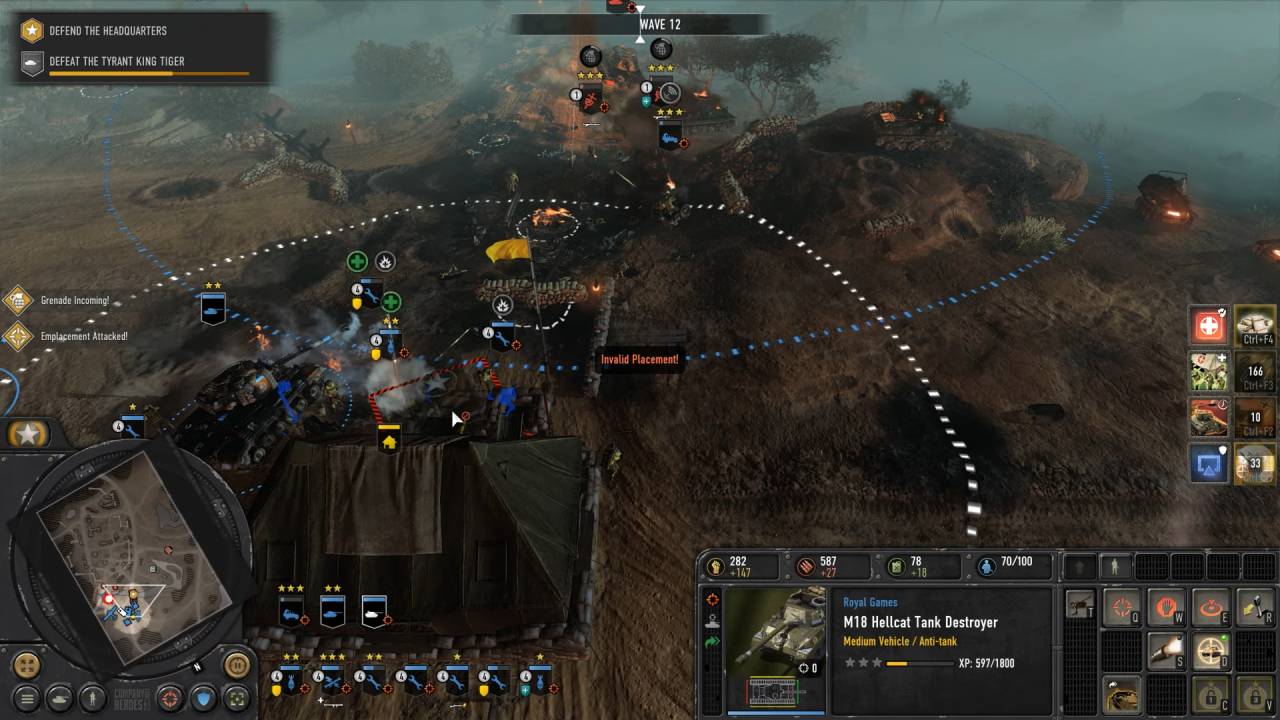
But even with those flaws, Company of Heroes 3: Final Stand still manages to deliver the tense defensive battles that the series is known for. Every run is a different battlefield story, from desperately fixing damaged outposts to surviving overwhelming armor to holding the line with perfectly timed support abilities.
It may not be the full evolution many were hoping for, but it's still a worthy experience for players who enjoy cooperative strategy and wave-based survival based on one of the strongest combat systems in the genre.
Editor, NoobFeed
Verdict
Company of Heroes 3: Final Stand is a fun tactical survival combat experience with good replayability, but with limited content, repetitive progression, and no matchmaking.
68
Related News
No Data.