
Hearts of Iron IV: Peace For Our Time Review
PC
Hearts of Iron IV: Peace For Our Time turns a modest national focus pack into a revealing test of Paradox’s DLC philosophy.
Reviewed by Zahra Morshed on Apr 15, 2026
When Hearts of Iron IV: Peace For Our Time comes out, it's not a big change to how the game works. Instead, it's an addition of material focused on Czechoslovakia. Its place in the larger Paradox history is important because this studio has long made playable systems out of historical worry, political machinery, and military logistics.
There are already a lot of heavy themes in the base game, like global war, industrial planning, ideology, and alternate history. This new addition adds to an already dense and demanding environment. The good name of Paradox Development Studio comes from the fact that it makes strategy feel less like a board and more like a powerful, live government.
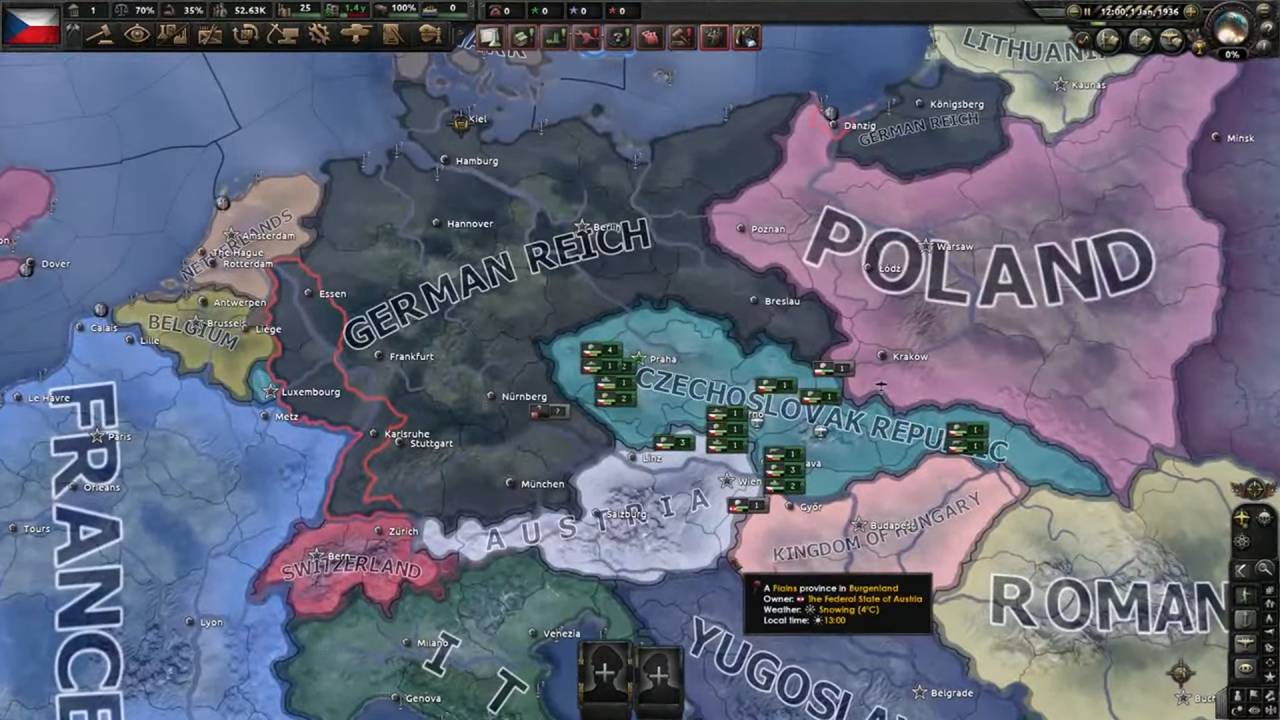
The company has often put faith in you to enjoy complexity instead of running away from it in games like Europa Universalis, Crusader Kings, and Hearts of Iron. You can still see that trust here, even though Hearts of Iron IV: Peace For Our Time isn't as big as the series' biggest add-ons. It doesn't promise to rebuild the war machine, but it does ask if a single, clearer national road is worth people's time, money, and attention.
The story of Hearts of Iron IV: Peace For Our Time is strong because of its promise, not because of the drama that was planned.
Czechoslovakia starts out as a country stuck between political calculations, industrial planning, and the growing pressure of hostile neighbors. This idea gives the expansion a strong strategic identity, since the country isn't just waiting for events to happen. It's up to bold political invention to decide whether to bend, fight, compromise, rearm, line up, or break the timeline apart.
The feeling of being a smaller power surrounded by bigger hunger is what holds the story together. But while Germany, the USSR, Britain, and Italy often act like European powerhouses, Czechoslovakia acts more like a loaded question. The national focus structure seems to support ideological paths, military readiness, industry growth, and different results, which fits with the country's fragile history. Hearts of Iron IV: Peace For Our Time is at its best when the fragile parts are used as tools instead of decorations.
Still, there is a clear tension in the story design: size can become too much. A big focus tree gives you a lot of options, but it can also hide the best ideas by putting them below tasks like cleaning up factories and the military. When a campaign gets to the middle of the 1940s and large parts of the tree are still uncut, the design starts to look crowded instead of giving.
The growth needs both creativity and control, because strategy works best when every branch feels like it has a purpose, not just a lot of resources. Hearts of Iron is still played in the same way: you build factories, study new technologies, train divisions, handle politics, draw front lines, and try to stay alive. Hearts of Iron IV: Peace For Our Time doesn't add a new global system, which is both one of its strengths and one of its weaknesses.
You aren't buying a locked mechanical layer that changes the whole game. Instead, you're buying a focused national experience inside a war model that is already very complex. That makes the growth cleaner, more fair, and less disruptive, but it also means that people should focus on content rather than change when they expect it.
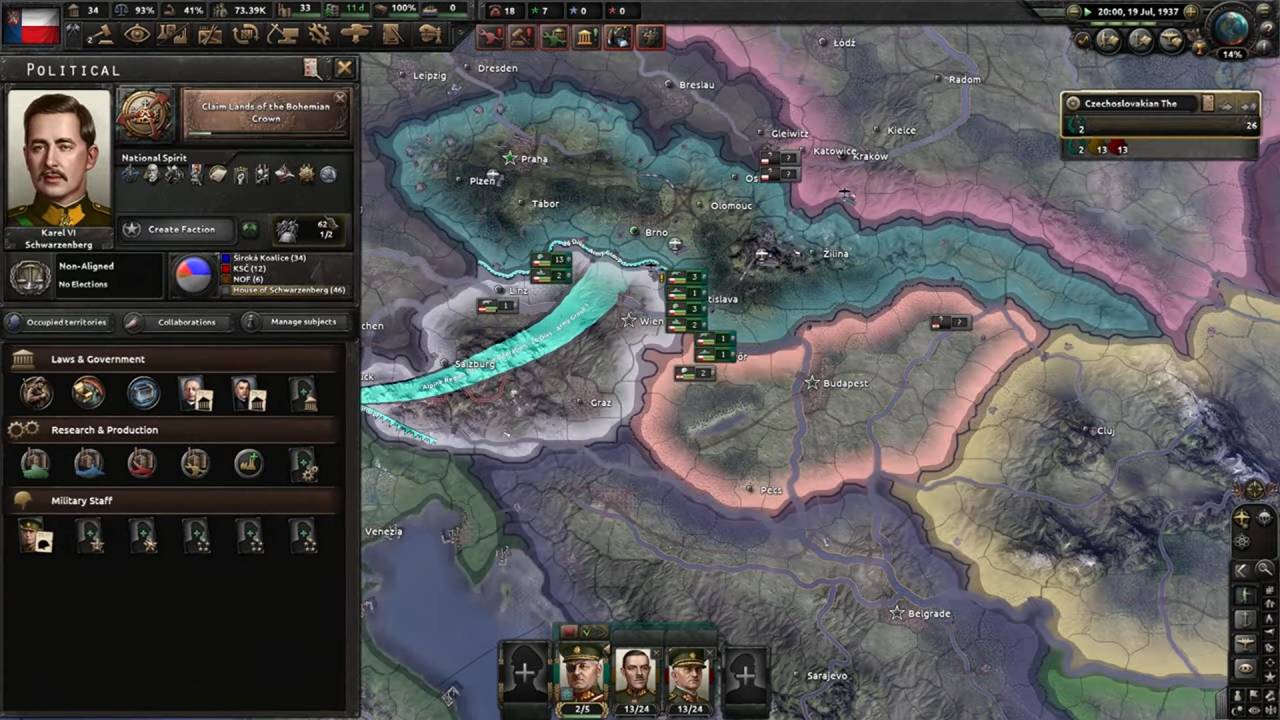
Getting ready for a disaster is still what drives the moment-to-moment loop.
Rifles, weapons, support equipment, planes, tanks, and all the other boring things that are needed to win must be put in factories. Making choices about research that will last for a long time is important because putting off a current model to look for a better one in the future can leave an army unprepared at the worst possible time. That production pressure is still one of the best things about the game; it turns spreadsheet worry into a surprisingly dramatic way to tell a story.
Smart sequencing is important for Czechoslovakia's survival, so this structure helps the country. Industry isn't just background noise; each plant is a use of time, steel, labor, and a response to a threat that is coming. The focus tree can steer the country toward rearmament, a change in its political stance, or other goals, but you must still turn policy into real power.
When you make choices in Hearts of Iron IV: Peace For Our Time that feel like statecraft instead of screen navigation, the game works well. The expansion is also very honest because it doesn't add any new features. It basically says that the value is in a new way to play the current game, not in keeping a key feature from people who don't want to buy it.
That's a better way to run a long-running strategy platform because it keeps the base game the same while giving players who want another campaign texture the choice to add more depth. It's also easy to see the risk: since there isn't a new system, the focus tree has to take most of the weight. In the base framework, combat is like putting together a huge tactical puzzle that takes place on land, air, and sea.
You set offensive plans, draw the front lines, give generals, position aircraft, manage supplies, and decide when to trust automation and when to step in manually. Layered statistics, terrain changes, doctrine effects, equipment quality, planning bonuses, entrenchment, organization, and leadership structure all play a role in how battles are won. That machinery is carried over into Hearts of Iron IV: Peace For Our Time, so the drama on the battlefield comes from how Czechoslovakia gets ready for war and stays alive in it.
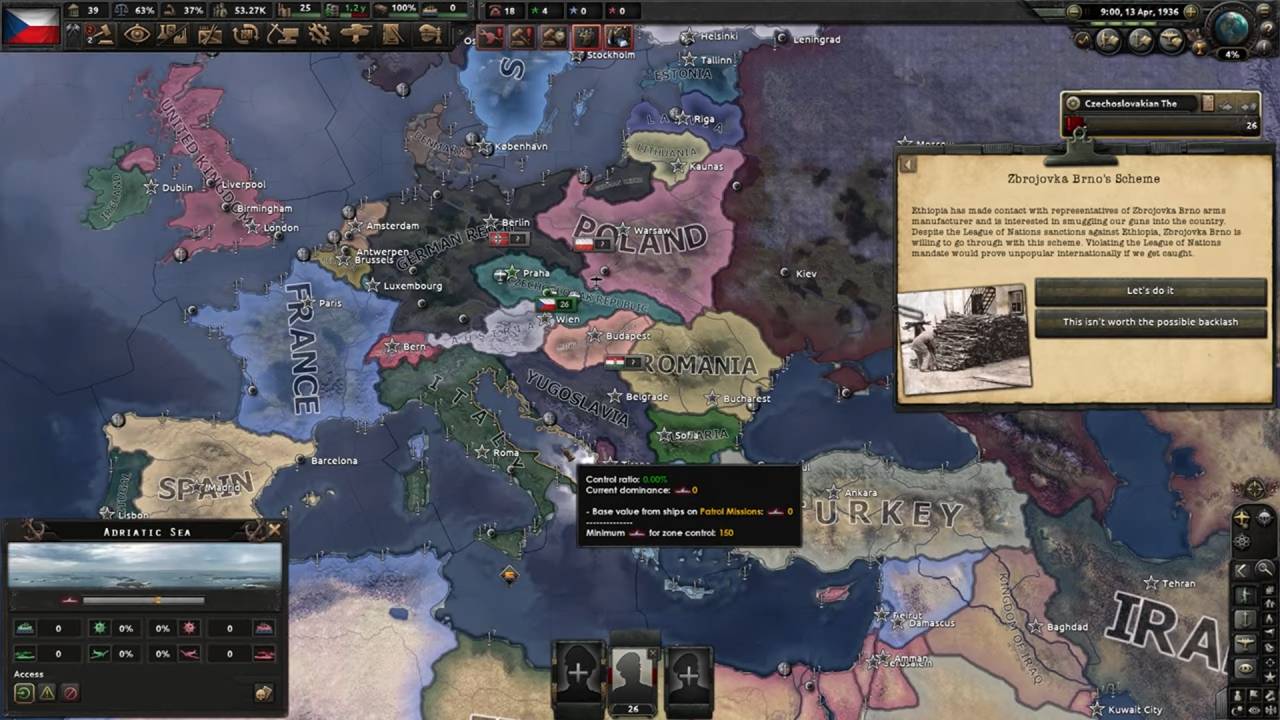
The "puzzle" isn't about getting the right answer; it's about controlling the effects over time.
Today, a strong line might hold while tomorrow's offensive is short on supplies, and tomorrow's offensive might not have any guns because of a strong air force. Best times happen when a defense plan, an industrial schedule, and a diplomatic gamble all come together right before history would usually shut the door. That's what the grand plan promised: not reflex or show, but pressure that leads to decision.
Scale is the best thing about combat. An effective encirclement is more than just a nice shape on the map; it can wipe out months of enemy work, training, and people. A stronger doctrine, a better tank, or a more logical division template can turn an entire front, but only if you know why you have the edge. Putting the familiar military language in a more dangerous national setting makes Hearts of Iron IV: Peace For Our Time more interesting.
The combat method is still hard to read, though. Too many of the game's subtleties are hidden in numbers, tooltips, and automatic resolution, which can make the results of fight feel more like reports than real experiences. Even if you know that a doctrine, support company, or equipment upgrade is important, it can be hard to see exactly what it does in the middle of a fight. Because big decisions need better feedback when you change the front, that lack of transparency makes the emotional payoff weaker.
Hearts of Iron is still one of the few strategy games where operations feel heroic, which is good. There is romance not only in tanks crossing rivers, but also in the months of quiet work that went into getting those tanks ready in the first place. There aren't many games that make production efficiency, replacement stores, and division composition feel so important without turning them into dull numbers.
That foundation is directly helpful for Hearts of Iron IV: Peace For Our Time because a weak country makes every logistical success feel like it was won. The bad thing about automation is that it can act like a helpful helper who doesn't know how to fight. Front-line orders get rid of the need for constant micromanagement, but they can also make it hard to focus and meet deadlines when divisions are needed.
Because the army AI is better at pushing wide than striking surgically, complex breakthroughs, spearheads, and encirclements often need to be fixed by hand. That causes problems, especially when the dream is high command and the reality is saving units over and over again from getting too excited.
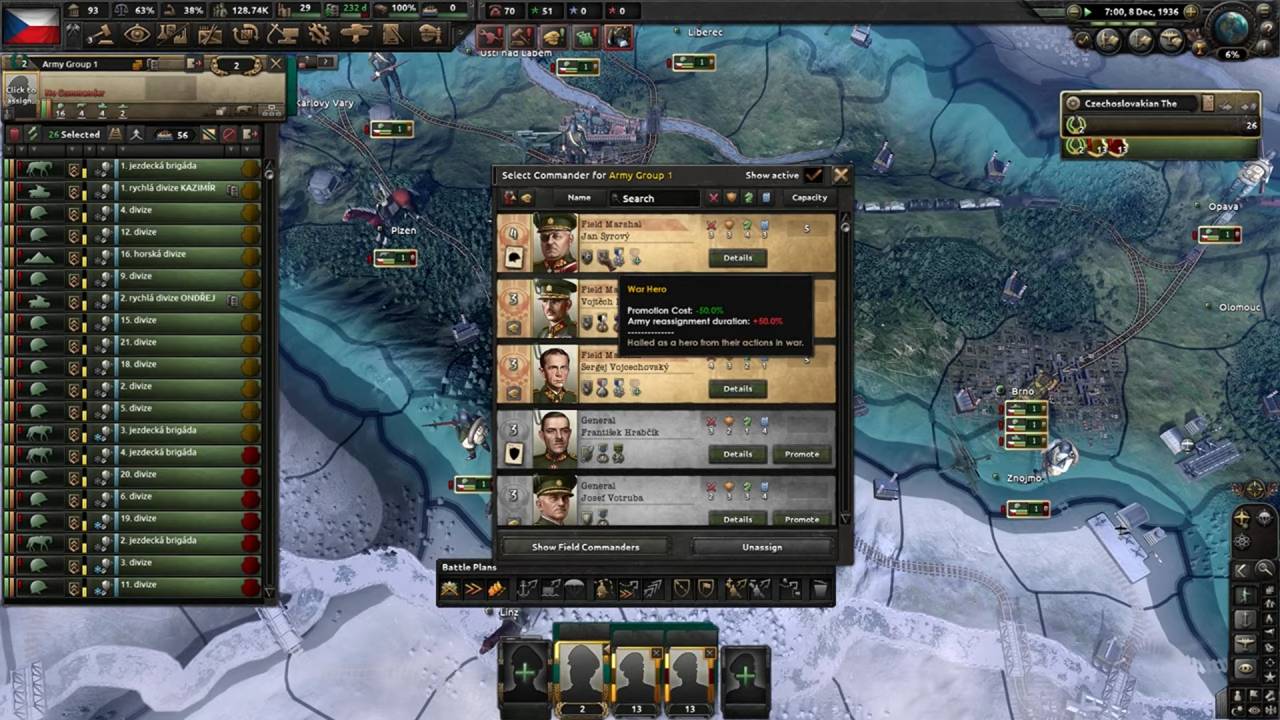
AI that is both enemy and ally can also weaken the historical drama that was meant to exist.
When major powers don't open up new fronts smartly, waste strength on repeated raids, or ignore clear strategic spots, the war loses some of its authority. A smaller country's victory should feel like the result of smarts, planning, and taking risks, not just the enemy losing track of its huge benefits. While Hearts of Iron IV: Peace For Our Time does try to avoid this problem, it is still a problem for the whole series.
Still, the system will stay in place no matter what. Every factory task and military order leaves a fingerprint, so even when it's not perfect, it can make stories feel like they were written by a real person. The best thing that could happen with the expansion is an effort that makes Czechoslovakia more than just a historical victim. It could become a strong argument against what will happen anyway.
That kind of drama that just pops up is exactly why Paradox games stay fun long after you get used to their rough edges. In Hearts of Iron, experience acts as a link between what you know and what you do. Most army, navy, and air experience is gained through training, combat, advisors, doctrines, and other systems that are connected. This experience is then used to improve military capabilities.
The result in real life is simple but strong: the more a force trains and fights, the more control you have over how it will act in the future. That well-known economy is used in Hearts of Iron IV: Peace For Our Time to make getting ready feel active instead of inactive.
For Czechoslovakia, getting more knowledge is important because the country can't afford to waste time or money. It depends on better templates, the progression of doctrine, and the growth of command whether limited manpower turns into a weak line or a disciplined defense tool. When training too hard, equipment can be damaged, and when waiting too long, the army might not be ready for a disaster.
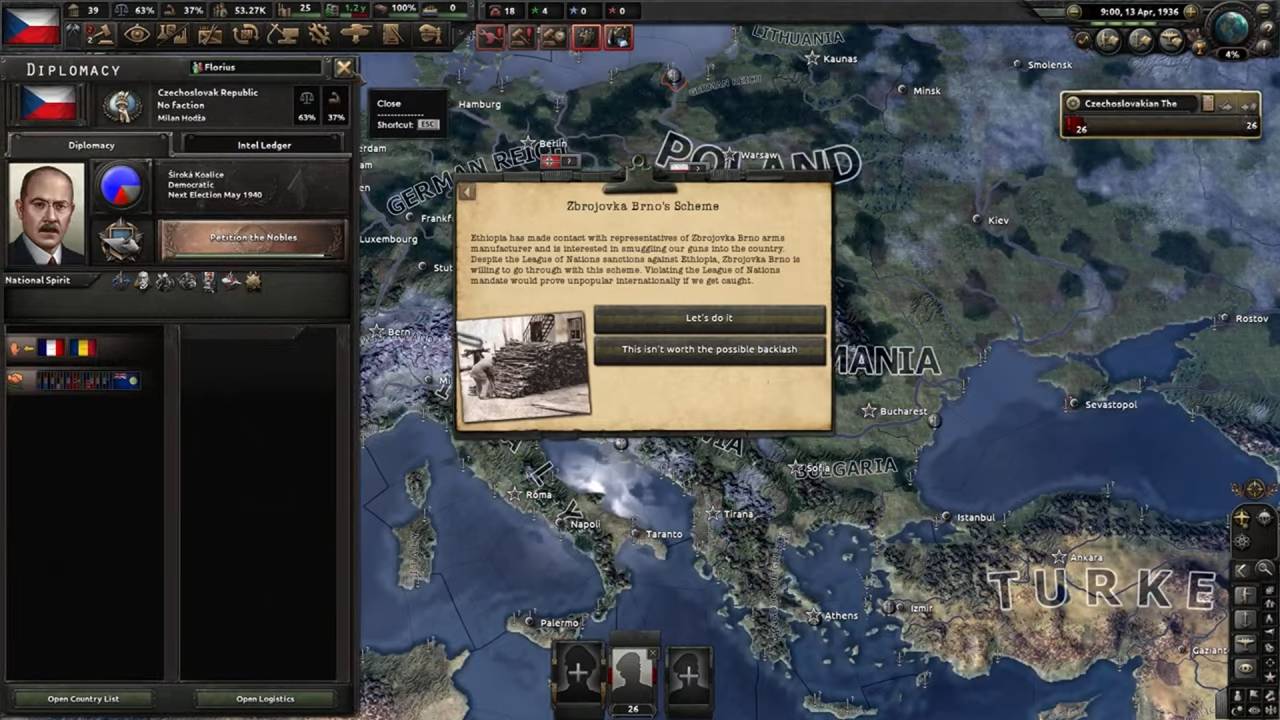
Growth is never free, and readiness is never an idea. This trade-off gives the campaign a useful edge.
But the system can feel like a grind when you're waiting for enough points to make a change that needs to be made. This isn't as insulting as regular role-playing grind because the numbers are tied to learning in schools and the military instead of farming for kills over and over again. Still, things can move more slowly if the desired army identity is tied to small wins and the focus tree already needs long-term planning. National growth, military experience, and the dramatic clock of the war would all work better together if the structure of expansion was tighter.
Hearts of Iron's visual style stays practical, good-looking, and purposely strategic rather than cinematic. The map is the major stage. Its filters, borders, counters, icons, and front lines make the world into a command surface that can be read. The attraction of Hearts of Iron IV: Peace For Our Time lies in its clarity, atmosphere, and geopolitical depth, not in its flashy graphics. The map is less like scenery and more like a live instrument panel when the interface can send pressure well.
The way the information is layered on top of the geography is still the most striking visual feature. From an army, air, and naval point of view, the same land can mean different things. This turns Europe from a political map into a system of threats and possibilities. Portraits, national symbols, and historical information add flavor, especially when different roads lead to the rise of unexpected people or ideas. The end result isn't lush in the usual sense, but it has a clear theme of command, effect, and historical conflict.
That way of doing things has its limits. It's possible for combat to look busy without becoming emotionally clear, and the most important action often happens behind the scenes rather than on the ground. Even though the interface has gotten better over the course of the base game, you still have to figure out how to use a lot of feedback while also managing a lot of different strategy layers at the same time. For experienced players, the density is part of the fun.
For new players, it can feel like being given the keys to a church during an emergency. When used in this way, sound design is more about setting the mood than making each moment spectacular. It sounds like you're in a command room where choices are coming in faster than you can comfortably handle because of the music, interface cues, military background noise, and notification sounds.
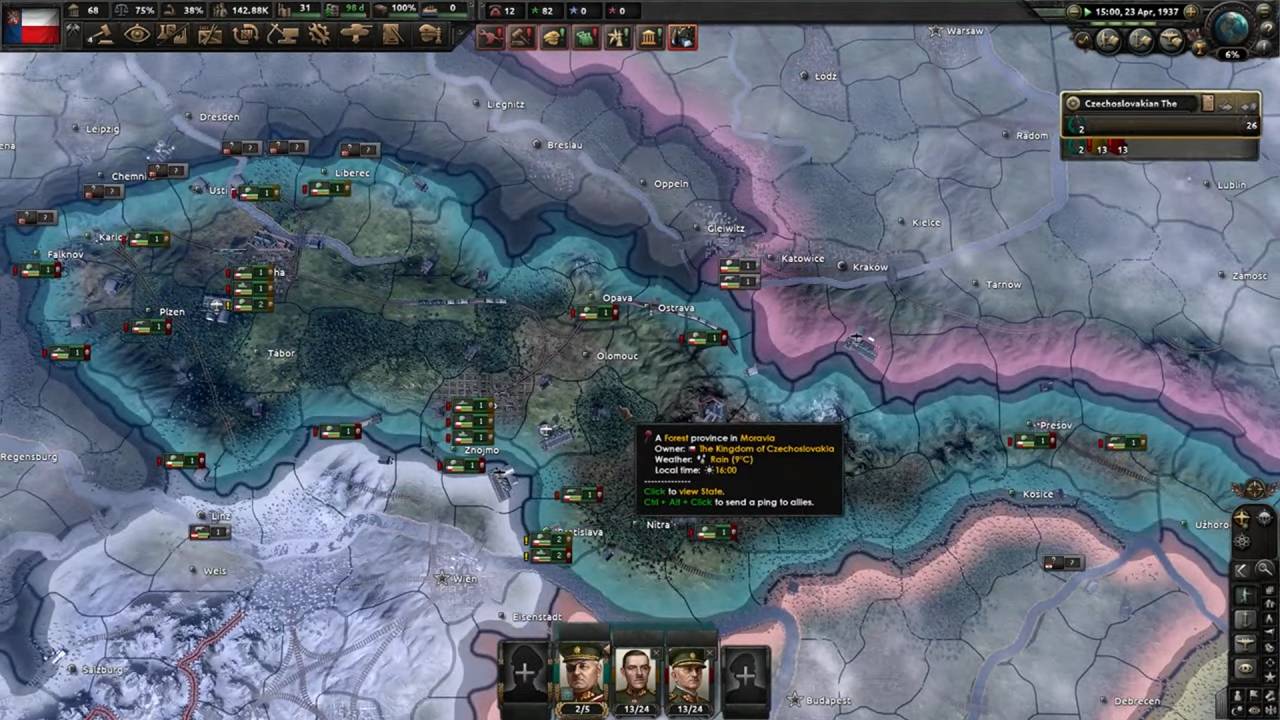
Hearts of Iron IV: Peace For Our Time builds on that sound style by using understatement instead of excess to support long battles.
The soundscape works because it knows that strategy drama often comes from waiting, not from explosions. In a Paradox war game, good sound is important to keep from getting tired. Campaigns can last for hours, so the music needs to be serious without being too loud, repeated, or over the top. The best tracks give the impression of historical scale, and subtle alerts help focus attention when fronts, industries, and diplomacy all need it.
In this way, the expansion benefits from having a mature audio structure that already knows what it's for in the base game. The problem is that audio doesn't always fix the problem of readability in battle. Still, icons, percentages, and equipment logs are more likely to help you figure out when a fight turns around than a dramatic sensory cue.
That keeps the experience cerebral, which is good for the genre, but it can lessen the effect of huge wins or terrible losses. The sound works well with the campaign, but it doesn't make this addition stand out much more than the platform it joins. The most convincing thing about Hearts of Iron IV: Peace For Our Time is that it tells you to be careful.
These days, downloadable material often breaks up core systems into paid pieces. This expansion's more focused approach feels almost refreshingly direct. It gives us a new way to play, a new national problem to live in, and a new chance to change the 20th century through planning, pressure, and risk. That doesn't mean every player has to have it, but it does make it easier to trust.
Its main issue is symmetry. It's possible for a big focus tree to look generous on paper but feel slow in real life, especially when the military and business sectors are competing with more interesting political choices. Because time is short, Czechoslovakia is an interesting topic. However, too much material can lose the urgency that should define the campaign. It would make the growth feel more focused if its best ideas came with better timing and less structural sprawl.
Most importantly, the larger Hearts of Iron framework still causes problems that haven't been fixed. While staying away from moral horror, the game can mimic ideology, deaths, bombing, occupation, and conquest. That distance may keep the game playable, but it also hides some of the worst things that were happening at the time. A strategy game doesn't have to turn into a lesson, but historical abstraction always makes a point, whether it's said out loud or not.
The expansion is best for people who already like the rhythm of the base game and want a focused new national story. Skeptics won't change their minds, the learning curve won't get easier, and long-standing problems with AI and battle transparency won't be fixed. But it can give veterans a short reason to come back, especially those who are interested in smaller countries with big strategic stakes. It's not a revolution, but Hearts of Iron IV: Peace For Our Time is an important campaign seed planted in good strategic ground.
So, the final decision is based on facts. This is a good content pack with a smart theory, an interesting national topic, and enough strategic depth to keep dedicated players interested. It's also not level, sometimes too big, and depends on systems that hide too much of their own wisdom. Hearts of Iron IV: Peace For Our Time should not be praised for ending the war, but for showing that extra material can still be important.
Contributor, NoobFeed
Verdict
A focused, fair-priced strategy expansion with strong national drama, smart restraint, and pacing flaws that keep it from greatness.
69
Related News
No Data.