
Mount & Blade II: Bannerlord Review
PC
Mount & Blade II: Bannerlord—forge your own Medieval legend.
Reviewed by Mezbah Turzo on Dec 12, 2025
The corner of gaming occupied by RPGs is a strange one. These games range in a myriad of sub-genres, from JRPGs to more realistic RPGs like Kingdom Come: Deliverance II. While many other games in the genre chase spectacle and revolve around stories, Mount & Blade is a sandbox experience like no other. The game series is famous for its sandbox RPG gameplay and has appealed to gamers who crave it.
Mount & Blade II: Bannerlord was the long-awaited sequel to Mount & Blade: Warband. Developed by TaleWorlds Entertainment and released in full in 2022 after a while in early access. Mount & Blade is a hybrid action-RPG and grand-strategy sandbox set in the world of war-torn Calradia. You can fight in real-time battles and be a part of armies between warring kingdoms.
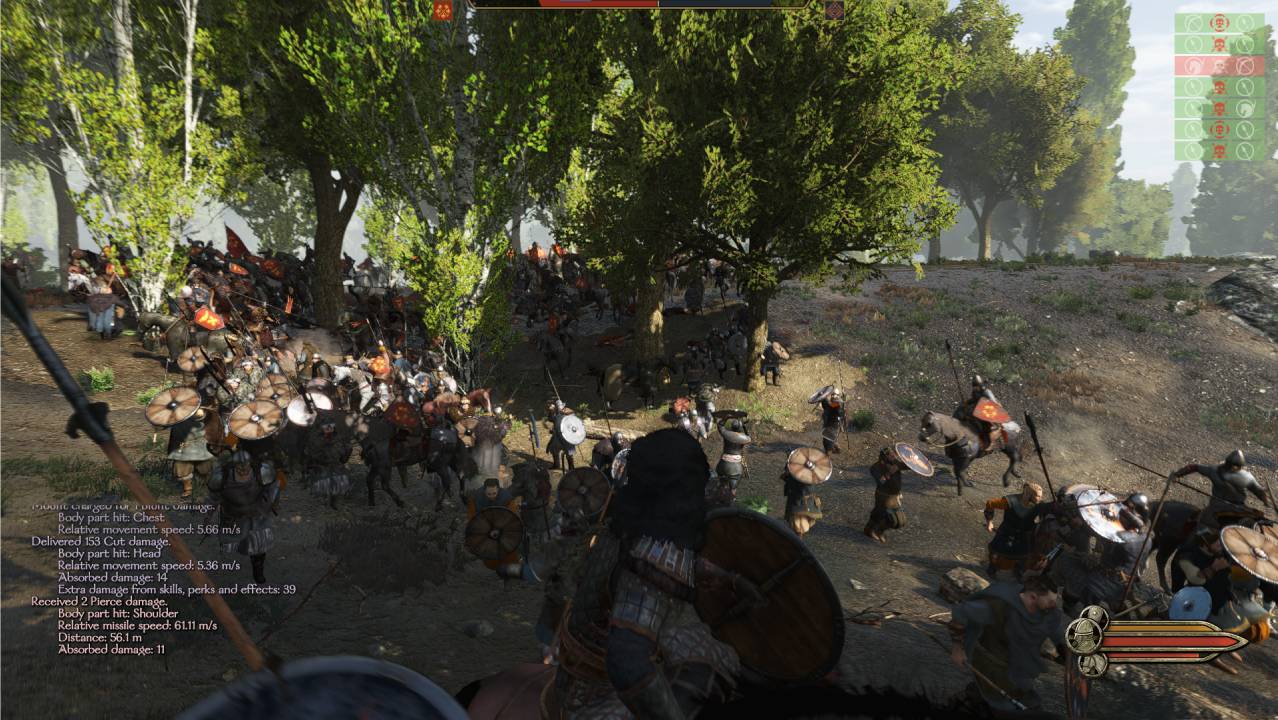
Bannerlord takes you through the ultimate sandbox experience.
You can complete quests, rise up through the ranks, and eventually become a lord yourself, commanding cities and villages of your own, developing them, setting up trade, and more.
The gameplay loop of Bannerlord is pretty simple: you create your character, define their backstory and appearance, and then complete a short tutorial that hands you a horse, a weapon, and leaves you to forge your own path.
You begin just outside a small city tied to your origin, armed with only the gear you chose and whatever ambitions you brought with you.
From there, the world of Calradia opens up. You roam across a fully simulated world map dotted with towns, villages, castles, and roaming parties. Time flows with a day–night cycle, and every faction, caravan, warband, and bandit pack moves around you with its own goals.
Some will try to avoid you, others will chase you down, and as your party grows, you'll need to keep them fed, travel consumes food, and a hungry army falls apart fast. You won't be able to see everything, of course, but only as parties move closer will you spot them. The larger the party, the easier it is for you to spot them.
The interactions are wide and immediate. You can hunt bandits, highwaymen, or the poor, unsuspecting villager group. Winning lets you seize their gear, gold, and take prisoners; losing may see you dragged across the countryside in chains.
Villages, towns, and fortresses are also dotted around the map, each providing you with ample opportunity to do things. There are taverns where you can rest or hire mercenaries, vendors that buy and sell to you, and the local noble, village elder, or governor who offers you quests in exchange for reputation and coin.
Of course, not all of them are as forthcoming, especially with fortresses, and many will not let you enter without you making a name for yourself. Of course, there are other methods of entering a town, sneaking in. But being discovered means a fight and the risk of spending some time in the dungeons.
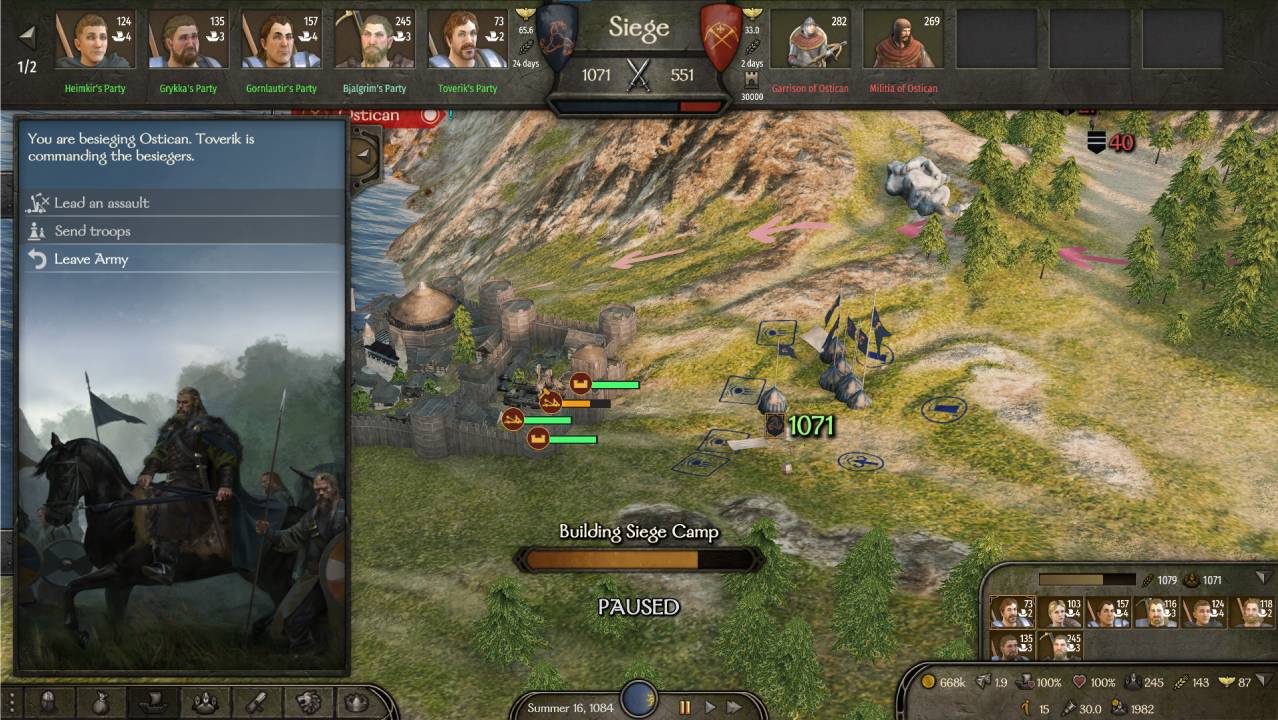
As your influence grows, you can pledge yourself to a kingdom, fight in their wars, earn rewards, and even be granted lands of your own.
Bannerlord also includes a light storyline involving pretenders and competing claims to thrones, but it never forces your hand; you're free to ignore it entirely and forge your own kingdom instead, overthrowing the great powers with your banner at the head of an army you built from nothing.
Troop progression is a major part of that ascension. Every faction has unique unit trees, from humble peasants to elite cavalry and armored shock troops.
Recruits gain experience, improve their stats, and can be upgraded into stronger, specialized soldiers. In battle, you command them directly, issuing tactical orders, adjusting formations, and watching as hundreds of soldiers clash in real time under your direction.
Combat in Bannerlord remains one of the series' strongest pillars. It's fast, weighty, and surprisingly intuitive: you attack in three directions, and you block or parry using the same motion-based system. It's a simple idea that scales brilliantly with skill.
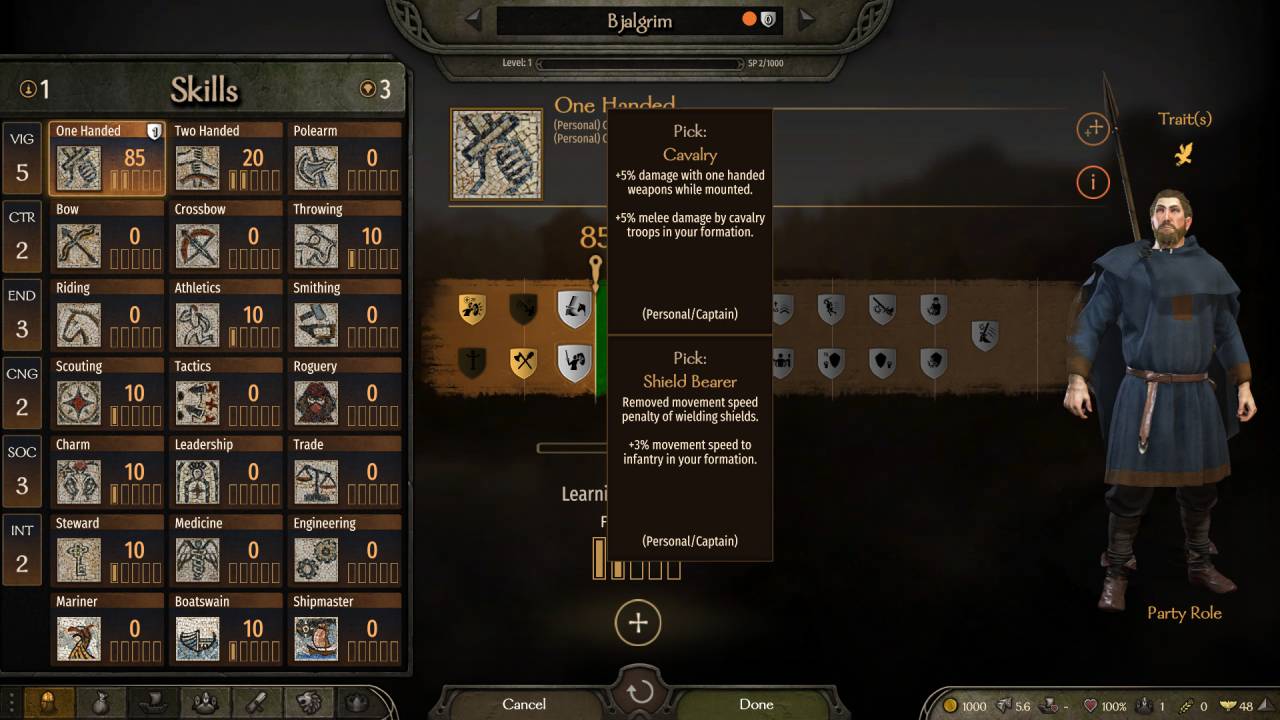
Progression and advancement are tied directly to your actions. Use a weapon long enough, and your proficiency increases. Ride horses often, and your riding skill improves.
Engage in trade, and you'll negotiate better deals. Nearly everything in the game has a skill attached to it, from medicine to scouting to prisoner management, allowing you to shape your character into a warrior, merchant, tactician, or something in between.
It's a system that grows naturally with the way you play, rather than pushing you into predefined roles.
Throughout your journey, you'll meet wandering characters, wanderers, and minor nobles, all of whom can be recruited as companions.
Each of them comes with unique backgrounds, skills, and sometimes personality quirks that make them mesh well (or clash horribly) with others in your party. They can specialize in everything from healing your troops to leading cavalry charges, and their skills grant powerful bonuses that can dramatically shift how your campaign unfolds.
Kingdom management becomes central once you earn (or conquer) your first fief. The settlements you own can be upgraded with different improvements, and in turn can boost growth and offer new revenue for you to reap.
Mount & Blade II: Bannerlord's gameplay extends beyond just battles.
You can raise garrisons and appoint governors, but that's about it on the city management side. It's a slower, more strategic layer of Bannerlord's sandbox, and it ties the entire loop together once you start carving out territory of your own
If you ever raise yourself to the height of a king, you can even engage in diplomacy, set policy, and fight wars with other kingdoms. Once you push past the early scrambling for recruits and the mid-game grind of skirmishes and caravan money, Bannerlord's late game transforms into a sprawling, map-wide power struggle.
Kingdoms rise and collapse in slow, tectonic shifts, and you're no longer just a wandering mercenary. Managing fiefs becomes a constant tug-of-war between prosperity, loyalty, and endless wars declared at inconvenient moments.
Massive battles with hundreds of troops unfold across the plains and sieges. It's grand, it's messy, and at times repetitive, but when it clicks, the late game delivers that sweeping sandbox.
Bannerlord's presentation is a clear step up from Warband, even if it isn't pushing any cutting-edge boundaries. The landscapes give Calradia a grounded, believable atmosphere, and battles look genuinely impressive when cavalry charges kick up dust and arrows darken the sky.
Character models, especially in combat, are detailed, although much of the animations feel stiff and dated, especially in intense combat like sieges or melees. Audio also does its job fairly well, having a thematic orchestral soundtrack. It's not a technical showpiece or an audio-visual masterpiece, but it supports the game's immersion nicely enough.
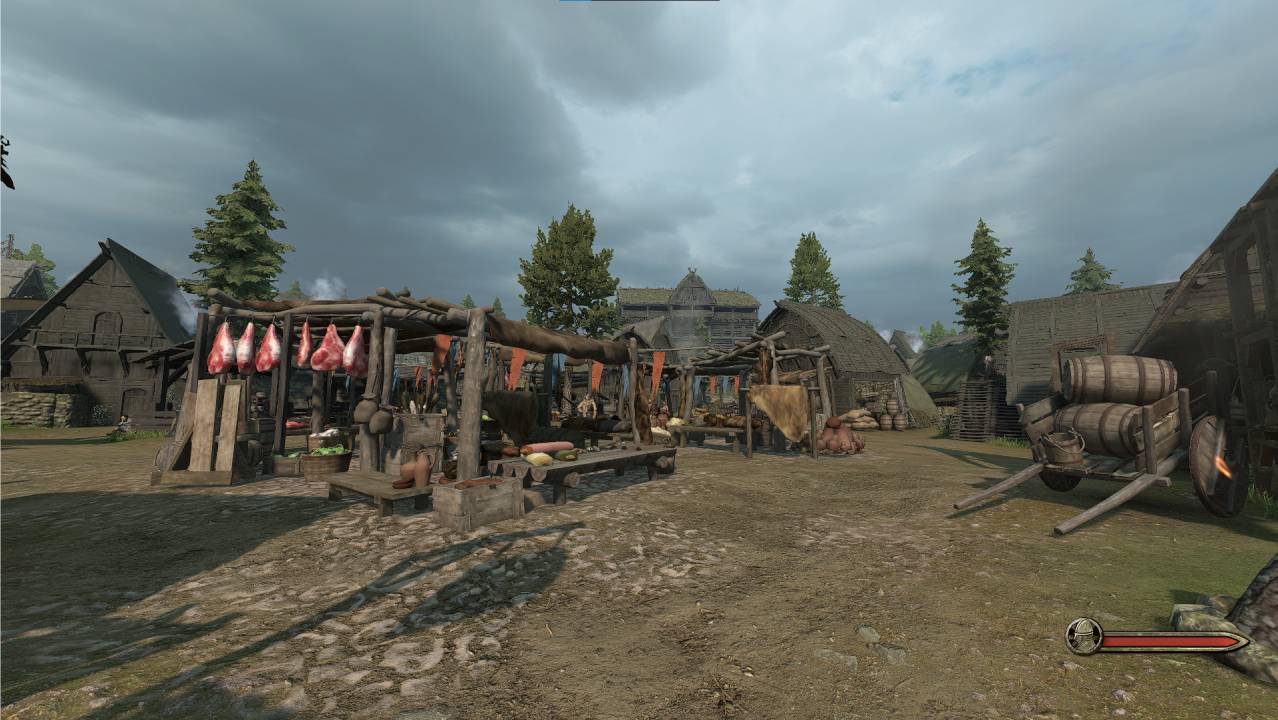
Performance, on the other hand, is very uneven. The game runs most of the time smoothly, but during large-scale battles, your system might start to lag. Bugs are also omnipresent; however, they are not too much of an issue.
Infantry can behave intelligently in open-field fights, but pathfinding breaks down in siege ladders and tight spaces. Cheesing the AI pathfinding in battles is also very easy, making them go in circles as they try to chase you down on your magnificent horse.
Lords sometimes make baffling strategic choices, like launching doomed wars or abandoning captured fiefs, which can undermine the sense of a living, thinking world.
Bannerlord is overflowing with ambition, but its execution still feels uneven. At its best, it delivers huge, cinematic battles and emergent storytelling that few games can rival. Yet many systems, like diplomacy, kingdom management, and the economy, feel undercooked or repetitive.
The game leans heavily on player-driven fun rather than offering meaningful late-game structure, which can make extended campaigns blur together. In the meantime, technical issues and difficult AI problems show you that Bannerlord's big ideas can get ahead of its polish.
It's an experience that gives you a lot of freedom and depth, but it can also be hard to figure out how to go around in its big sandbox. Mount & Blade II: Bannerlord is a rare kind of sandbox; it thrives on emergent chaos, personal ambition, and the stories you accidentally create along the way.
The loop of fighting, recruiting, trading, and conquering stays endlessly fun, especially if you prefer making your own story over being dragged through someone else's plotline.
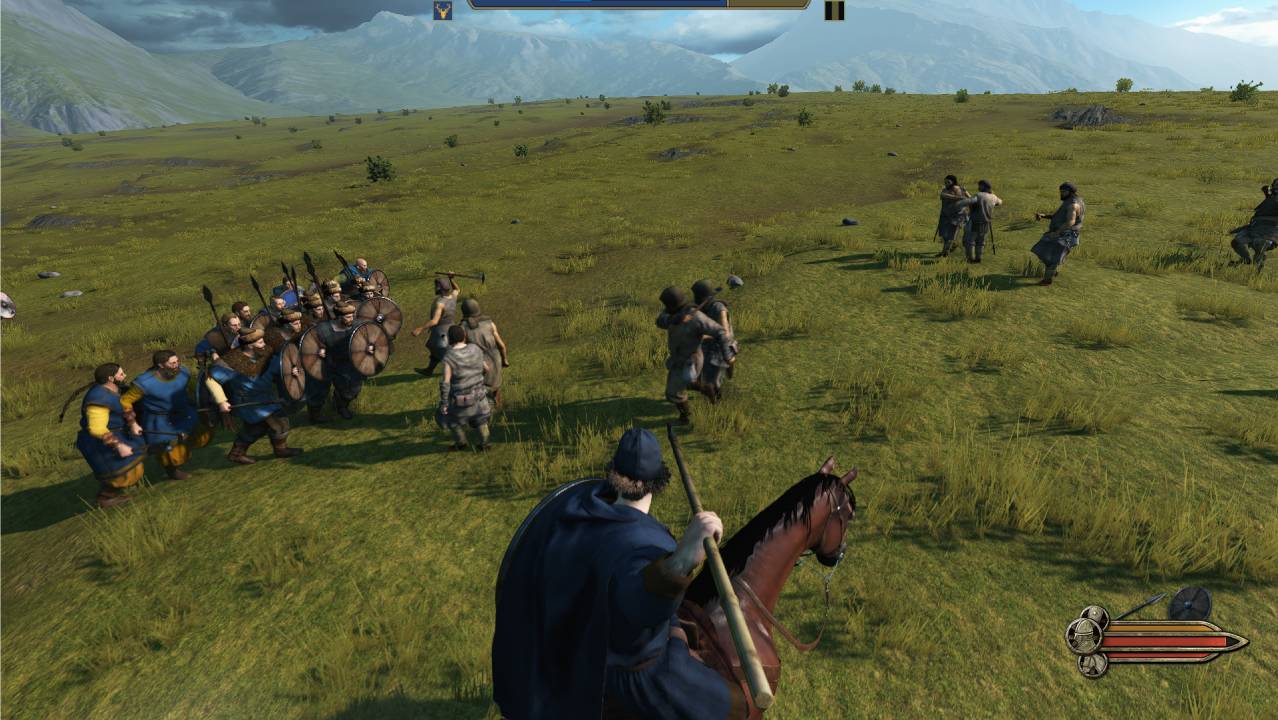
That said, Bannerlord definitely wrestles with its own size. The late game can start feeling like déjà vu, with extra steps, the AI occasionally forgetting basic life skills, and a few technical hiccups—happy to remind you this is a very big game doing a lot at once.
Still, Bannerlord pulls it off. Calradia is a living, responsive, and wonderfully unscripted sandbox where you can spend hours merely because "one more quest" evolved into a surprising civil war. For people who like medieval turmoil, big battles, or role-playing games with no set finish, Bannerlord is still one of the most memorable and dangerously addictive games in the genre.
Contributor, NoobFeed
Verdict
Mount & Blade II: Bannerlord is a thrilling medieval sandbox with epic battles and freedom to forge your own path, despite some AI and late-game rough edges.
90
Related News
No Data.