
Super Meat Boy 3D Review
PlayStation 5
The red cube of meat that everyone loves is finally in 3D, and it works!
Reviewed by Mahi Araf on Mar 31, 2026
If you've ever played the first Super Meat Boy, you know what to expect: tight, punishing platforming that tests your reflexes to the limit and is all about speedrunning. The first game came out on Xbox Live Arcade in 2010 and was a huge success. Its funny, bloody, and ruthless gameplay was a mix of Super Mario Brothers' simple controls and a fast, instant-replay platformer where the goal was simple: get to the end without getting chopped, squashed, or shredded.
From the first time I played Super Meat Boy 3D, I loved it. I downloaded it on a whim and spent hours watching my repeated failures play out in chaotic, bloody loops on the screen. I laughed, screamed, and cursed while playing that game, and I kept coming back for more, even though I died dozens of times on the same level.

Ten years later, the franchise tried out Super Meat Boy Forever, which turned the original into an autorunner with attack mechanics that worked well on mobile devices. It was fun, but it never had the same magic as the first one. And now, the red cube of meat comes to life in a fully 3D world in Super Meat Boy 3D.
With original co-creator Tommy Refenes back on the project and Sluggerfly (known for making weird 3D platformers like Hellpie and Ben and Ed) in charge of development, the game had a good chance of staying true to its roots while also adding to the experience. Edmund McMillen, another important creator of the series, has moved on to work on things like The Binding of Isaac, but Refenes's work keeps the series' spirit alive.
Don't expect big plot twists on the story front. You are Meat Boy, and your girlfriend Bandage Girl has been kidnapped again by none other than Dr. Fetus, the antagonist in a tuxedo, who is in your way. That's all. The story stays simple, which is great for a game that is all about speed, accuracy, and, of course, frustration.
There are short CGI cutscenes throughout the game, mostly during boss fights, but they don't slow down the action. The story isn't interesting because of its complicated plot. It's interesting because of the silly, cartoonish way it's told and the fun of pushing your limits in chaotic levels while this dark, silly world plays out around you.
It's surprising how well the gameplay works in 3D.
Meat Boy can run, jump, and slide along walls. Now he can also wall-run and dash in 3D space. These new features fit in well and don't make the basic mechanics too hard to understand. Movement still feels a little slippery and Mario-like, which makes jumps and landings hard but fair. It was almost easy to pick up after the 2D entries. It felt like my muscle memory from the originals just carried over, but the new mechanics added more movement and strategy.
There are five worlds, each with 15 levels and a boss fight. If you beat the game in A+ levels, you can unlock Dark World levels. Most levels last less than a minute, but finishing them in less than the gold time adds a lot of stress and satisfaction. Replays of all your tries, showing every time you failed and every time you succeeded. Honestly, one of the best parts of the game for me was seeing a dozen Meat Boys run into the same saw that I just barely missed. It's annoying right now, but funny later.
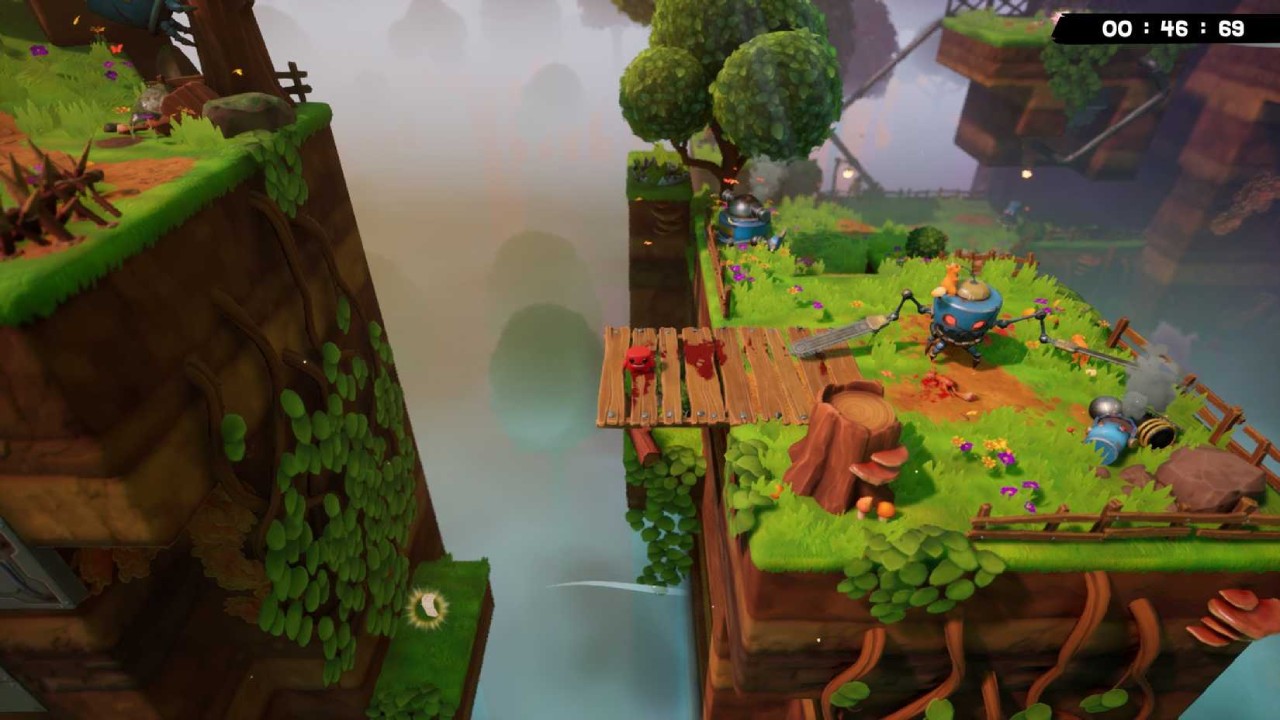
Super Meat Boy 3D has a good balance of difficulty.
The core experience is still challenging, but the first levels help you get used to how the game works. You can change the difficulty of the game based on your skill level with the A+ ranking system and the Dark World stages. This design makes the game easy for new players to pick up, but still fun for those who want perfection.
Super Meat Boy 3D is a little easier in some parts than the original, especially the last boss. But that doesn't make the core platforming less exciting or intense. I liked the pacing; it made the experience feel fair while still keeping the tension high. It's worth talking about the Dark World levels on their own.
These are for players who have already mastered the main levels and want an even harder challenge. They put hazards in new places, require jumps that are exactly right, and often require advanced mechanics like wall runs and dashes together. These Dark World levels get so hard that they almost seem sadistic, making them feel more like the original Super Meat Boy's punishing challenge.
It was scary to try one of these levels for the first time, but it felt great to finally finish it after many tries. It reminded me of why the series became so popular: the feeling of success is real, even though it comes with a lot of stress and colorful language.
Collectibles are important for making progress.
You can find bandages scattered all over the levels. A lot of the time, you'll have to take different paths or go through more dangerous areas to get to them. You can unlock new characters with different traits by collecting them. For example, Skeleton Boy is faster and lighter, so you have to be more precise when using him. Some characters might have strange traits, like jumping higher or having slightly different hitboxes.
This adds a level of strategy where you have to decide whether to rush to finish or take detours for long-term benefits. Progression is fun because the difficulty and rewards are directly related to how you play each level. I spent a lot of time trying to get one bandage in a late-game level, and when I finally did, it felt almost like beating a mini-boss.
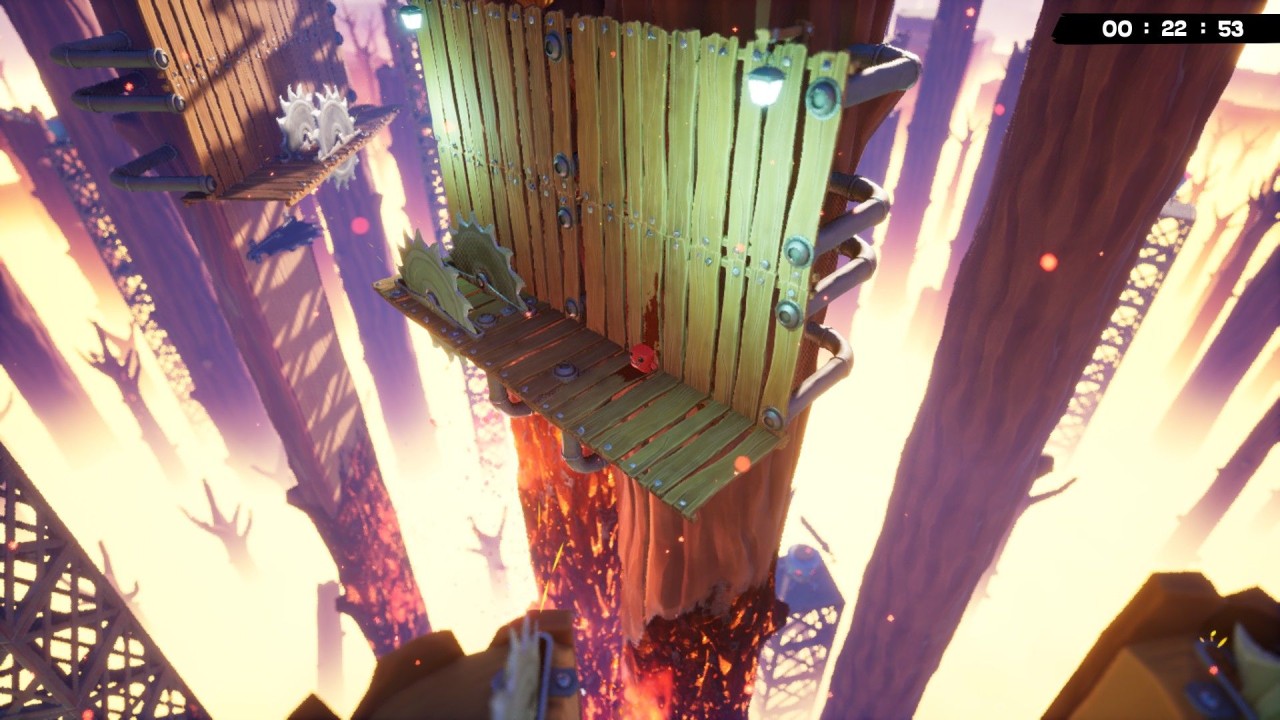
Enemies aren't the main focus; instead, the most difficult parts of the game are the environmental hazards, such as buzz saws, spikes, and moving platforms. However, the occasional mob makes the stage obstacles more interesting. The AI isn't very smart, but it works well for traps that are based on timing.
Boss fights come back as survival gauntlets that test your knowledge of the game's mechanics without any extra collectibles or timers to worry about. Some bosses are harder than others, but none are unfairly hard. I had a love-hate relationship with a mid-game boss that needed perfect timing to avoid a series of spinning blades. After about 40 tries, I finally got it right, and it was so exciting.
There are optional paths, timing challenges, and side objectives that involve collecting bandages that make up puzzle sections.
You have to pay close attention, jump just right, and think outside the box, which makes getting bandages feel rewarding without breaking up the main platforming. They also work well with the progression system because finishing these parts unlocks new characters and helps you get better at the game's mechanics.
I actually looked for hidden paths on purpose, not just for bandages, but also because they made me think about how to get through the levels in a different way. It's the kind of challenge that pays off when you ask questions and try new things. Progression is a key part of gameplay. You get better at the game and learn more about how it works as you finish each level. Collectibles and optional challenges reward you for exploring carefully.
Unlocking new characters is not just cosmetic; it also changes how you play the stages in small ways that affect your strategy. The more I played, the more I tried out different characters for hard parts and found that some were better at getting through certain obstacles. This is a small but important layer of depth that keeps stages feeling new when you play them again.
The PS5 version of Super Meat Boy 3D worked very smoothly for me. Load times are almost instant, frame rates stay steady, and controls are responsive, even when there are many hazards on-screen and the speed is high. The graphics are still colorful and almost creepy, and there are moving hazards and visual cues that help you read the levels even when you're going fast.
The music and sound effects aren't new, but they fit the mood, which makes the bloody chaos strangely enjoyable to watch. The sound of your repeated failures splattering across the screen gives the game an almost funny rhythm that I found surprisingly addictive.
There is no multiplayer mode, but the game encourages competition through time trials and personal growth.
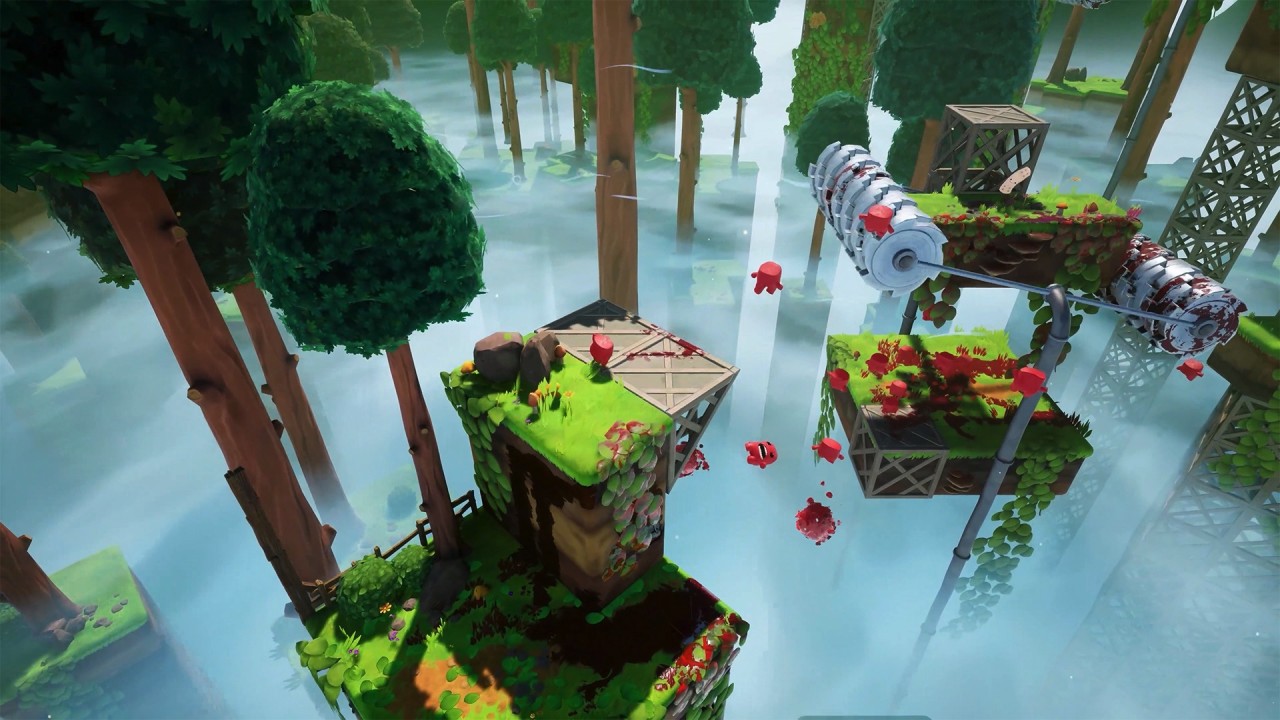
Watching your own replays turns into a social game because you often laugh at your own mistakes. It's too bad that there isn't an online part where you can see other people's runs or ghost races, which would have made the experience even better. Still, the emphasis on accuracy and replayability more than makes up for this lack.
The game is a good deal for the amount of content and replay value it has. The base game might only take a few hours to finish, but the Dark World levels and character unlocks that require collecting things add dozens of hours for players who are really into it. The game's forgiving pacing and clear visual cues make it easy for new players to get into without losing the series' trademark chaos.
Super Meat Boy 3D has a lot of good things going for it, like how well it translates the original mechanics to 3D, how well the controls work, how well the levels are designed, how rewarding the collectibles are, how satisfying the progression is, and how smoothly it runs.
There are some drawbacks, such as the fact that there is no multiplayer mode, the fact that some parts are easier than the original, and the fact that the PS5 version doesn't have features like extended replay counts or the ability to interact with other players' runs.
In general, Super Meat Boy 3D on PS5 is a good follow-up.
It keeps the franchise's history alive while making the core gameplay work in 3D in a way that feels natural and fun. It's worth getting if you liked the first one or challenging platformers in general. The game is punishingly fun, with fair progression and a playful look that makes failing over and over again funny instead of frustrating. It's a fun game with optional Dark World levels, character unlocks, and the excitement of mastering stage after stage. I highly recommend it.
Senior Editor, NoobFeed
Verdict
Super Meat Boy 3D is a faithful, hard, and surprisingly smooth move of the classic game into three dimensions. It has tight controls, smart level design, and a rewarding progression, so anyone who likes precise platforming should play it.
82
Related News
No Data.