
AMD vs. Intel 2026 CPU Battle Heats Up With Major Strategy Changes
Rising competition drives Intel to unlock features while AMD pushes new technologies and experimental high core count architectures.
Hardware by Shinji Okazaki on Apr 24, 2026
Recent changes in the CPU market show that there is more competition, product strategies are changing quickly, and technology is moving in a different way.
The direction of speed, price, and features in the industry is being shaped by new processors, changing company policies, and new ideas that will come out in the future.
.jpg)
The situation of AMD 9950X3D2 Review
It might have been observed that AMD did not publish a review of its new 9950X3D2 before delving into the core narrations. Well, hardly anybody did. This is because AMD chose to blacklist several reviewers. One can readily understand why. The chip is fundamentally identical in the gaming world, with a slight increase in professional loads and higher power requirements, but a significant increase in cost. Thus, it is apparent that the company would not have wanted too many individuals discussing how it is doing relative to its costs.
Whichever the case, if you still want one, it is not advisable to purchase it, though it can be availed of should you need it.
Intel responds to AMD's competition
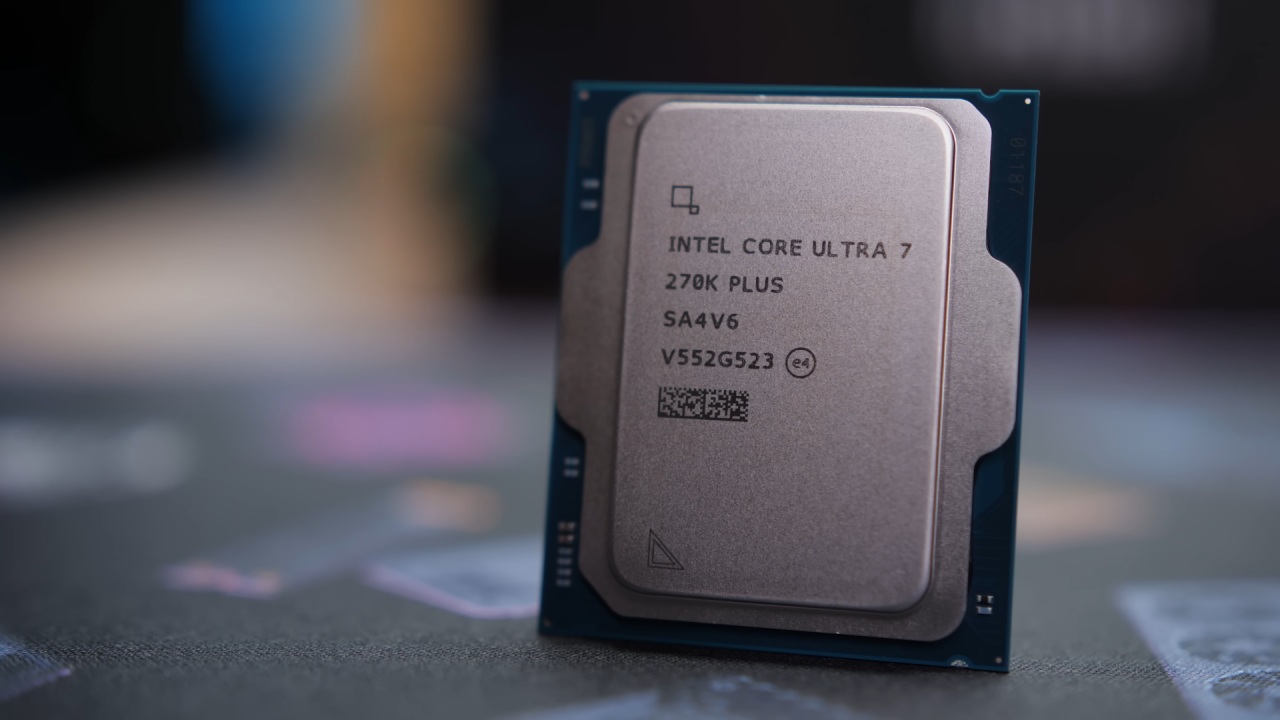
Something is now occurring as AMD is still challenging the competition. In an interview with PC Games Hardware, Robert Hallock of Intel talked about the company's future plans. He added that unlocked SKUs will be added over time and that overclocking need not be limited to the most expensive products.
To anyone who has been in the PC hardware business, Intel has traditionally restricted multipliers on non-K SKUs. This strategy restricted overclocking unless one bought a high-quality processor. AMD did the same before Zen, and with the release of first-generation Ryzen, every SKU supported unlocked multipliers.
Intel is now changing its position. This action is obviously due to the necessity to compete more efficiently with AMD. It shows that competition drives change. AMD was the first to introduce unlocked processors as a differentiator, and Intel is doing the same.
Intel DIY Market Strategy Change
Unlocked processors are not the end of the changes. Intel, too, is reorganizing its approach to the DIY desktop segment. Based on the available data, the DIY desktop market has been separated from the OEM business and is now running independently.
This division enables Intel to focus more on retail builders than on large system integrators. It opens the door to more customized products that specifically target enthusiasts and custom PC builders. These changes signify a move to target the segment that has been overlooked by OEM priorities.
Multi-Frame Generation Technology of AMD
Meanwhile, AMD is ready to launch its multi-frame generation technology. Although this approach is not supported by all, the constraints are evident. Multi-frame generation enhances visual smoothness without increasing latency. Actually, it adds it slightly, that is, the experience appears more resembling, but it does not feel more responsive.
Previous news indicated the coming FSR technology dubbed FSR Diamond. Today, the latest changes to the GPUOpen documentation and ADLX1.5 materials indicate that there are new options for frame generation ratios, both for setting and checking them. These extensions are a strong indication that multi-frame generation support is being implemented.
The ratio controls indicate that it is more than an on-and-off feature, and AMD is indeed ready to implement more advanced frame generation features. FSR Diamond will feature the next-generation model-based upscaling, multi-frame generation, and ray regeneration. It may not work with current-generation GPUs, given the mention of neural rendering, which implies potential hardware limitations.
Future CPU Architecture Leak by AMD
The other significant news concerns one of AMD's future processors, allegedly a Zen7 EPYC under the Florentine codename. These processors can provide a structural change by removing the L3 cache from the compute die and moving it to a different die below it.
Such a design liberates space on the compute die, enabling much greater core counts. It is reported that up to 288 cores are possible, well beyond current offerings. They are supposed to be full Zen7 cores, unlike the dense cores found in certain designs.
The cache die is also interesting, and there is approximately 7MB of L3 cache per core. This brings the total L3 cache to about 2.6GB on the most expensive setup. With such a configuration, significant performance gains may be obtained based on workload requirements.
Final Thoughts
Another possibility arises from the design changes. Because the chiplet is large (codenamed Steamboat), it may be possible to fit two on an AM5 platform. Every chiplet has 36 cores, making it a 72-core Ryzen processor.
Although this is only hypothetical, the idea is technologically feasible. A 72-core desktop consumer platform would be a significant change in desktop computing. It would be especially helpful for workloads that benefit from core isolation or require heavy parallel processing.
A processor like this on a consumer motherboard would probably be expensive. Still, the concept of a desktop-style processor on a consumer motherboard demonstrates the extent to which desktop performance can be improved.
Editor, NoobFeed
Gaming Hardware Updates
No Data.