
AMD’s Zen Architecture Powers Massive Desktop and Server Market Gains
AMD’s record desktop and server growth signals a major power shift in the x86 processor market.
Hardware by Tanvir Kabbo on Feb 14, 2026
One of the biggest changes in the CPU market in decades is happening right now. AMD used to be seen as the clear underdog in x86 CPUs, but it has slowly changed the competitive landscape in the desktop, mobile, and server markets.
The company is now a real industry leader, not just a niche rival, thanks to record market share, significant revenue growth, and consistent performance leadership.
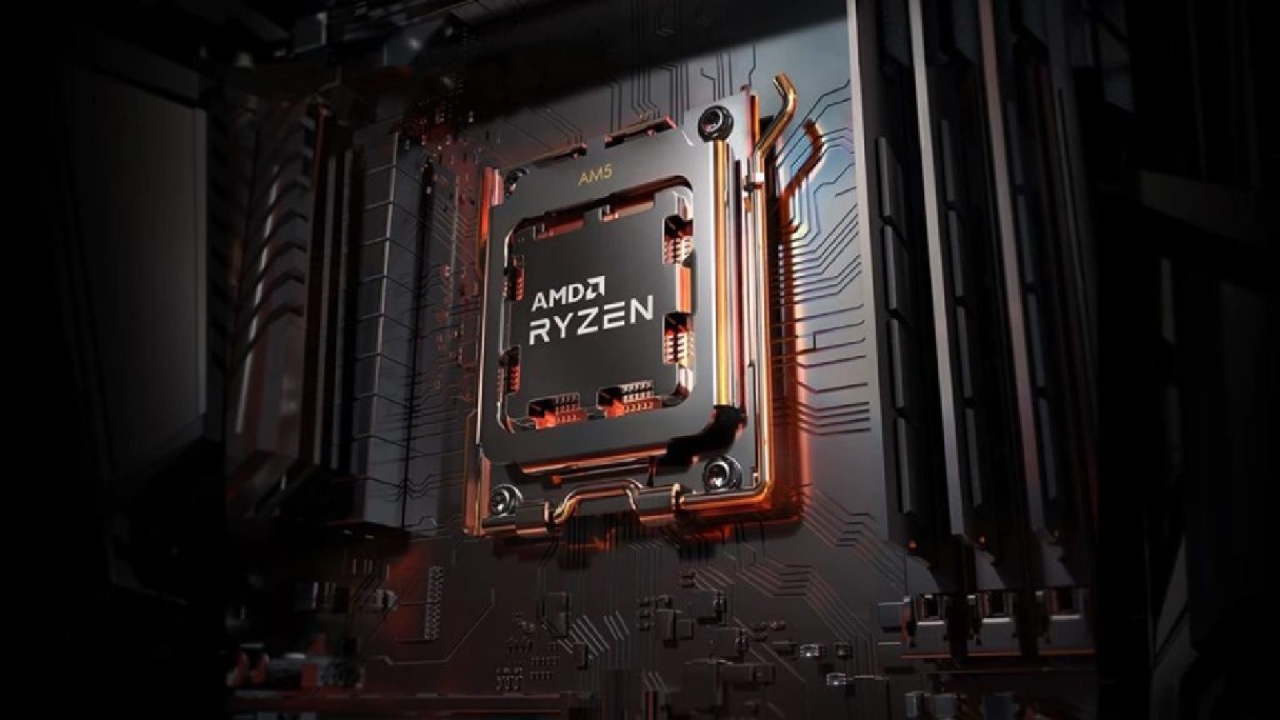
Gaming Leadership Started With X3D
The Ryzen 7 5800X3D introduction marked the start of AMD's recent rise in gaming performance. The $450 chip consistently outscored competitors that cost more, including Intel chips that cost a lot more. The most important new feature was 3D V-Cache technology, which greatly improved the size of the L3 cache without using more power or generating more heat.
That formula changed everything. The Ryzen 7 7800X3D that came after it made AMD even more popular with gamers by providing great frame rates and efficiency. The 16-core Ryzen 9 7950X3D soon took the X3D edge to the high-end enthusiast market. AMD showed that smart cache design could lead to better gaming outcomes instead of just greater clock rates or aggressive power usage.
The Ryzen 9000 series kept the trend going, making AMD the best brand for gaming CPUs. The X3D range has always offered improved value and performance per watt throughout several generations. This meant that aggressive cooling solutions weren't needed as much, but the results were still top-notch.
Record Market Share in All Areas
There is no denying that this policy will have an effect on finances. In the fourth quarter of 2025, AMD supplied 29.2% of all x86 CPUs, which was the highest share ever. The desktop market was especially strong, with a 36.4% share—an outstanding rise from the previous year. OEM use also led to a big rise in mobile processors.
The server part offers an even more interesting narrative. AMD had a 28.8% share of the server x86 volume market, but it made 41.3% of all income in that market. This extra income shows a big change: AMD is not only shipping more units, but it is also offering higher-value, performance-focused solutions that have better profit margins.
.jpg)
EPYC Performance and Business Growth
The EPYC processor series lies at the heart of AMD's success in the server market. EPYC chips have shown to be the best at handling most enterprise and cloud workloads, especially when it comes to power efficiency and running multiple threads at once. Hyperscale data centers and businesses are more interested in EPYC since it has a lot of cores, is competitively priced, and can be built on a larger scale.
This triumph is a big change from AMD's standing little over ten years ago. The Zen architecture's release changed the way designers think about design and competition in a big way. Zen brought AMD back into the race for significant performance, setting the stage for future advances in IPC, efficiency, and scalability.
Zen really changed AMD's path, even though earlier partnerships, such making bespoke silicon for Sony's PlayStation 4, helped keep revenue steady during tough times. The company's current dominance probably wouldn't exist without that change in architecture.
AMD is proof that long-term planning, strict engineering, and focused innovation can change the way things work in a market. There is no longer one main player in the CPU market. Instead, it has become a balanced and fiercely competitive field where AMD plays a major position across gaming, mobile computing, and business infrastructure.
Also, check our other hardware articles:
- AMD Ryzen 9 9950X3D Review: Setting The Standard For 2025 Gaming CPU
- Amazon Luna 2025 Review: Is Prime Gaming's Cloud Service Your Go-To For Casual Fun?
- AMD RX 9070 XT Review: AMD's RDNA 4 Champion for 1440p Gaming
- GeForce Now Ultimate: Ditching Your Gaming PC For Cloud RTX 4080 Power?
- NVIDIA GeForce RTX 5080 Review (2025): Still A 4K Gaming Powerhouse?
- Intel Core Ultra 9 285K Review And Performance Breakdown (2025)
- AMD Ryzen 7 9800X3D Review: 3D V-Cache Goes God Mode with Stunning Gaming Performance
- Intel Core Ultra 9 285K vs AMD Ryzen 7 9800X3D: In-Depth Gaming Performance and Benchmark Comparison
- NVIDIA GeForce RTX 5080 Super Performance In Cyberpunk 2077: Path Tracing & DLSS 4.0 Tested
- AMD Radeon RX 9070 XT In Cyberpunk 2077: Ray Tracing & FSR 4.0 Tested
- Intel Arc B580 Review: The $250 GPU Revolutionizing 1440p Gaming
- Intel Arc B570 Vs. B580: Value, Specs, And Real-World Gaming Performance
- RTX 5090 Laptop Vs. M4 Max MacBook Pro: Ultimate Raw Performance Vs. Battery Endurance
- Intel Arc b580 Vs. RTX 4060: Game Performance And Value Analysis
- RTX5090 Hell Is Us Demo 4K Ultra Benchmark: DLSS Vs. Native Performance Guide
- NVIDIA RTX 5070 Review: Mid-Range Muscle or Marketing Hype?
- Nintendo Switch 2 Review: Handheld Performance, Features & Value Breakdown
- RTX 5070 Ti Review: Performance, Thermals & Power Efficiency Tested
- Samsung Odyssey OLED G81SF Review 2025: Ultimate 32-Inch QD-OLED Gaming Monitor
- AMD RX 9070 Performance Review: Thermals, Clocks, and Real-World FPS
- AMD Ryzen 5 7600 Review: Best Budget Gaming CPU of 2025?
- AMD Radeon RX 7800 XT Review: RDNA 3 Power For Midrange Gaming
- Asus ROG RTX 5090 Astral OC Vs. Founders Edition: The 4K Gaming Benchmark
Senior Editor, NoobFeed
Gaming Hardware Updates
No Data.