
Intel Core i5-12400F vs Ryzen 5 7500F: Budget Gaming CPU Comparison
Comparative analysis of Core i5-12400F and Ryzen 5 7500F, highlighting gaming performance, platform value, and upgrade potential.
Hardware by Nahe Yan on Nov 12, 2025
The Core i5-12400F launched in early 2022 and quickly became a popular choice for budget-conscious gamers due to its affordability and performance. It remains available at a lower price even years later, making it a great choice for gamers who want to get the most for their money.
The Ryzen 5 7500F, on the other hand, is a little more expensive because it is newer. This prompts us to take a closer look at how these two CPUs compare in modern gaming workloads.
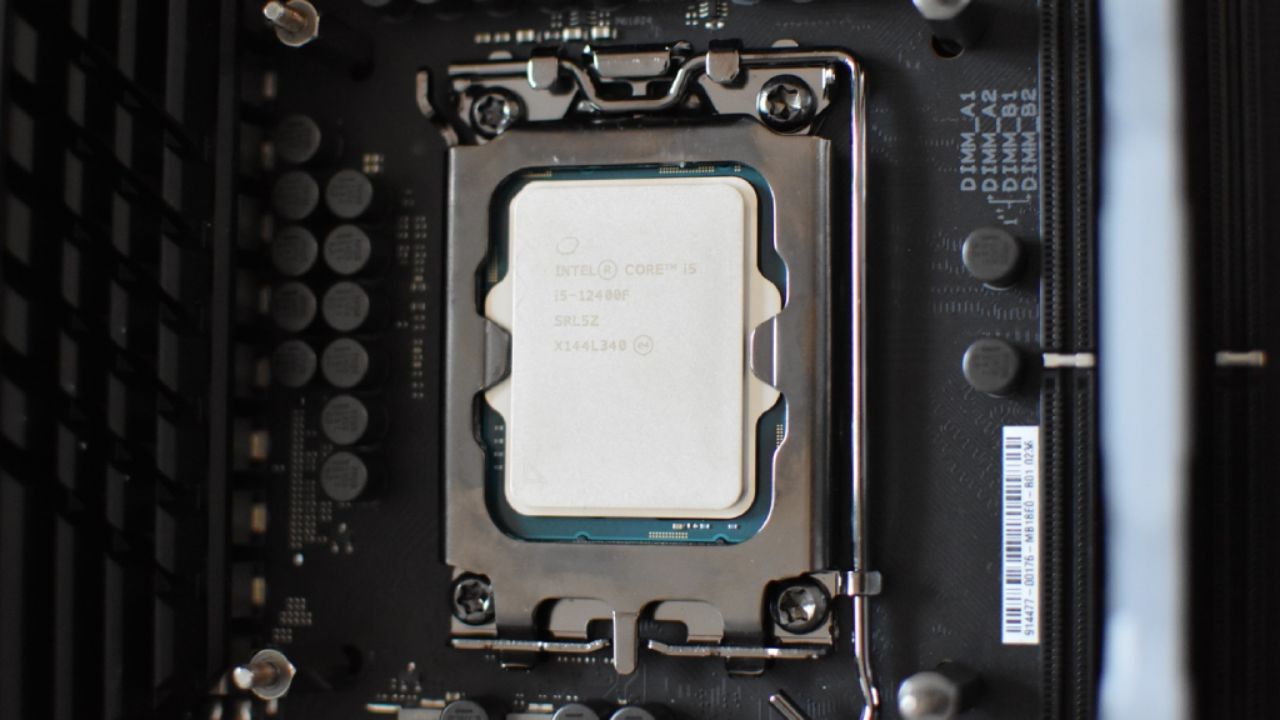
Setting Up and Configuring the Test
We used 32GB of DDR5-6000 CL30 memory to test both CPUs and evaluate their performance. The Core i5-12400F was paired with the MSI Z790 Carbon Wi-Fi motherboard, and the Ryzen 5 7500F was paired with the Gigabyte X670 Aorus Master.
The BIOS on both systems was up to date. They utilized an ASUS ROG Strix RTX 5090 OC Edition graphics card to enhance the GPU's performance. The tests primarily focused on low-resolution scenarios. However, outcomes were also noted at medium and super presets in several titles.
Benchmarks for Games
The Core i5-12400F averaged 142fps with 1% lows of 101fps in Marvel Rivals on the medium level. The Ryzen 5 7500F was over 20% faster at 169 fps. The Ryzen CPU stayed 15% ahead, averaging 109 fps, compared to 84 fps for the 12400F.
Both CPUs did well in Rainbow Six Siege. The 12400F got 301 fps, while the 7500F was 35% faster. The Ryzen processor's lead increased to 42% with the Ultra Plus option. However, the difference in gameplay between 280 fps and 398 fps is still very small.
The 12400F averaged 148 fps on medium settings in Horizon Zero Dawn Remastered. The 7500F saw a 17% boost. At very high settings, the Ryzen CPU still had a 15% edge, with 145 fps compared to 126 fps.
At medium settings in Cyberpunk 2077, the Core i5 got 131 fps, while the 7500F was 24% faster. The Ryzen CPU averaged 108 fps in Ray Tracing Extreme mode, a 23% increase and 20% stronger 1% lows.
The 12400F averaged in the mid-80s in Space Marine 2, whereas the 7500F was 15% faster at medium settings and 13% faster at ultra settings. The differences were smaller in The Last of Us Part II. At medium settings, the Ryzen component was only 11% faster, while at extremely high settings, it was 13% quicker.
The Ryzen 7500F got 170 fps on medium in Spider-Man 2, whereas the 12400F only got 151 fps. This was a 13% lead. In extreme ray tracing, it went from 68 fps to 80 fps, giving it an 18% lead.
The gap between the two CPUs has narrowed in Assassin's Creed: Shadows. The 7500F was only 5% faster, indicating that GPU constraints generally make processors less distinct from one another.

The 12400F averaged less than 90 fps in Mafia: The Old Country, a significant difference. The 7500F was 33% faster at medium settings and 62% faster at 1% lows. The Ryzen CPU was still 28% faster, even on the epic preset.
The Ryzen 5 7500F was 32% quicker on medium settings and 24% faster on epic settings in Assetto Corsa Competizione (ACC). There weren't many differences in Baldur's Gate 3; the 7500F was 8% faster on medium and 5% faster on ultra.
The Ryzen processor made a significant difference in Counter-Strike 2, being 42% faster at medium settings and 36% quicker at extremely high settings. This made it the preferred choice for esports performance.
Comparison of Average Performance
The Ryzen 5 7500F was 20% faster than the Core i5-12400F on medium settings and 18% faster on ultra settings across 12 games tested. Counter-Strike 2 and Rainbow Six Siege saw the biggest improvements. In contrast, games like Assassin's Creed: Shadows and Baldur's Gate 3, which the GPU constrained, showed very little increase.
Even though both processors had six cores and 12 threads, the Ryzen 5 7500F consistently delivered higher frame rates while using slightly less power. Using DDR4 RAM with the 12400F would make it even less powerful, further underscoring the Ryzen CPU's advantage.
Cost of the Platform and Ways to Upgrade
In the US, the Core i5-12400F typically costs around $135, but it occasionally goes on sale for as low as $116. The Ryzen 5 7500F costs about $165. The Ryzen CPU costs $30 more, but it offers a 20% performance advantage and supports contemporary platforms, benefits that will last longer.
Given the overall system cost, both CPUs are about the same value. A 12400F, a DDR4-3200 CL16 kit, and a B760M Pro RS Wi-Fi motherboard together cost about $370. On the other hand, a 7500F with an MSI Pro B650S Wi-Fi card and DDR5 memory costs about $470, which is 27% more than the $370 for the 7500F.

Final Thoughts
The Ryzen 5 7500F is 20% better on average and uses less power; thus, both processors are ideal for gaming. You can also upgrade it using the AM5 socket. The Core i5-12400F remains an excellent value, particularly when paired with DDR4 RAM.
However, the platform becomes less versatile over time. For consumers who prioritize performance and future upgradeability, the Ryzen 5 7500F remains the best choice in 2025.
Also, check our other AMD articles:
- AMD Ryzen 9 9950X3D Review: Setting The Standard For 2025 Gaming CPU
- AMD Ryzen 7 9800X3D Review: 3D V-Cache Goes God Mode with Stunning Gaming Performance
- AMD RX 9070 Performance Review: Thermals, Clocks, and Real-World FPS
- AMD Ryzen 5 7600 Review: Best Budget Gaming CPU of 2025?
- AMD Radeon RX 7800 XT Review: RDNA 3 Power For Midrange Gaming
- Sapphire NITRO+ AMD Radeon RX 9070 XT Review: The Ultimate 4K Gaming GPU
- AMD Ryzen 7 7800X3D: Delivers Gaming Performance Far Beyond Expectations
- AMD Ryzen 9 7900X Review: Powering the AM5 Era with DDR5 & PCIe 5.0
- ASRock Radeon RX 7800 XT Challenger OC Review: Best Price-to-Performance GPU of 2025
- Intel Core i9‑14900K vs. AMD Ryzen 7 7800X3D: Power Profiles & Gaming Benchmarks
Editor, NoobFeed
Gaming Hardware Updates
No Data.