
Marvel’s Wolverine Sparks Backlash as Doubts Grow Over PlayStation’s Direction
Insomniac’s upcoming game is facing criticism over its familiar gameplay, but the bigger concern is whether its story can avoid the narrative problems surrounding recent PlayStation releases.
News by Tahmid Mahi on Aug 19, 2026
The ongoing backlash surrounding Wolverine has become difficult to separate from the wider conversation around PlayStation, especially as social media continues to amplify both legitimate criticism and negativity created purely for engagement. When you look at the reaction online, it becomes clear that not everyone criticizing the game is doing so for the same reason.
That distinction matters because social media can easily turn every criticism into one large conversation where good-faith feedback and engagement farming become impossible to separate. Publishers and developers still need to pay attention to these platforms because they provide a direct view of what players are saying about their games.
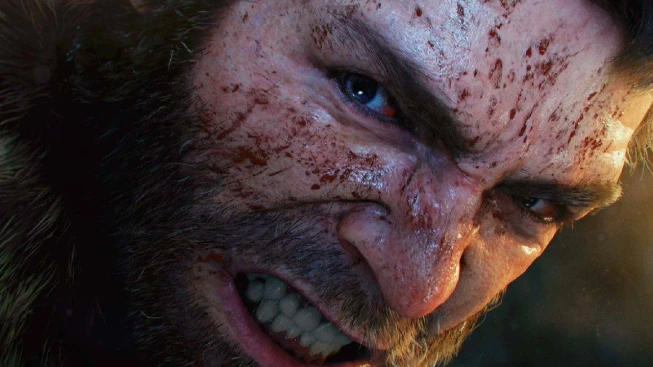
At the same time, you can also see how easy it has become for people to criticize PlayStation simply because doing so generates attention. The current environment means that Wolverine is receiving some criticism because of the game itself, while other criticism is tied to the broader perception of PlayStation.
Some of the complaints about Wolverine focus on its gameplay, particularly the idea that it looks like a linear action game built around button mashing and quick-time events.
However, this approach is not exactly unfamiliar territory for PlayStation’s major single-player releases. The game appears to follow the established formula of a cinematic, big-budget action game, and that formula has been commercially successful for years.
Much of the criticism therefore seems less about Wolverine doing something entirely different and more about players becoming increasingly tired of certain elements that have been present in PlayStation games for a long time.
The bigger concern is the story, especially considering the recent history of PlayStation’s first-party releases. Looking back at games released since around 2020, there has been a perception that several major titles have struggled to match the narratives of their predecessors.
The Last of Us Part II remains one of the most divisive examples, while Horizon Forbidden West, God of War Ragnarök, and Spider-Man 2 have also been described as significant narrative drop-offs compared with the games that came before them.
The same criticism has also been directed toward Saros, which received less attention largely because fewer people played it. Its gameplay was considered a strong point, but its story was viewed much more negatively. That combination is important because it highlights the concern surrounding Wolverine: the gameplay may not be the main problem at all.
Wolverine is relatively simple in terms of expectations. The character is known for his aggressive personality, brutal fighting style, and complicated history, so the game doesn’t need to overcomplicate what makes him appealing. A strong Wolverine game could have focused on action, but it should also use his backstory and character development to tell an interesting story.

That is also why some of the current criticism cannot really be judged yet.
Gameplay footage can show how the combat and structure will work, but it cannot reveal the full quality of the narrative or how Wolverine will be handled as a character. Those parts of the game will only become clear when the complete experience is available.
Another part of the online conversation has focused heavily on Sweet Baby Inc., which has become a recurring topic in discussions surrounding Wolverine. The reaction has been particularly visible in social media comments, where references to the company appear repeatedly.
That becomes even more important because Wolverine is currently being discussed alongside a wider wave of negativity toward PlayStation. The platform has become an increasingly convenient target for engagement online, and criticizing PlayStation can quickly attract attention.
There are legitimate reasons for people to criticize the company, but that does not mean every criticism of every PlayStation game is automatically valid. When the broader negativity surrounding the brand starts influencing discussions about individual games, it becomes harder to determine what people actually think about Wolverine itself.
The Insomniac marketing director has also commented on the situation, describing the way social media algorithms amplify negativity as a relentless experience that may not be good for developers’ mental health.
That concern is understandable, particularly for people who spend years working on a game and then watch thousands of strangers criticize it online. If social media is having a serious negative impact on someone, stepping away from it can obviously be a reasonable choice.
The difficult part is separating useful feedback from pointless negativity.
Not every angry post deserves attention, but not every negative post should be dismissed either. Players can identify genuine problems with a game, and developers need some way of finding those comments among the noise. Simply assuming that everyone criticizing a game is an engagement farmer can be just as damaging as believing every criticism is accurate.

Social media will never become a place where everyone is polite. Developers working on major games will inevitably encounter people saying extreme or unreasonable things about their projects. That is part of the environment that companies have created by using social media as a major way to communicate with audiences.
For developers who can handle social media without allowing it to seriously affect their mental health, there can still be value in staying involved. You can find players offering constructive criticism, identify recurring complaints, and see which parts of a game are generating genuine concern.
If one platform becomes overwhelming, developers can also look elsewhere for communities and creators who provide more balanced feedback. The key is avoiding a situation where only people who praise everything a company does are being treated as valuable voices.
That criticism also applies to the broader PlayStation discussion. The concerns about recent narratives are not simply the result of people trying to attack the company online. There is a recognizable pattern in which some recent games have been viewed as weaker narratively than their predecessors.
Naughty Dog, for example, was once viewed as a studio that could seemingly do no wrong, while Insomniac was also held in extremely high regard several years ago. Those studios still have strong reputations, but the perception is not exactly the same as it was seven or ten years ago. The larger PlayStation brand has also changed in the eyes of some players.
That does not necessarily mean PlayStation needs to completely reinvent its approach.
Its cinematic single-player formula has worked extremely well commercially, and there is little reason to abandon something that continues to sell millions of copies. Quick-time events, linear sections, cinematic presentation, and familiar combat systems are not automatically problems simply because they have appeared in many PlayStation games.
Wolverine also represents an opportunity because it has been a long time since the character received a major game of this scale. The previous major Wolverine title was X-Men Origins: Wolverine, meaning expectations are naturally high for Insomniac’s version. Players are not necessarily asking the studio to reinvent the character.

Based on the gameplay shown so far, there is little reason to dismiss Wolverine outright. The combat and overall structure appear to fit the type of game PlayStation has successfully produced for years.
The bigger unknown remains the narrative and whether Insomniac can deliver a story that feels appropriate for Wolverine while avoiding the problems that have affected some recent PlayStation releases.
Ultimately, the online backlash needs to be viewed from both sides.
Some of the negativity surrounding Wolverine is clearly connected to the wider criticism of PlayStation, while other complaints come from players who have legitimate concerns about the direction of the game.
Developers do not need to accept every criticism they see online, but entirely ignoring negative feedback can also prevent them from recognizing problems that players are genuinely pointing out.
Wolverine will almost certainly sell millions of copies regardless of the current social media reaction. The bigger opportunity for Insomniac and PlayStation is to use the criticism that actually has value while filtering out the noise surrounding it.
If the gameplay delivers and the narrative matches the character, much of the current backlash could eventually become irrelevant. For now, though, the strongest criticism is not necessarily about Wolverine’s combat or its use of familiar PlayStation mechanics; it is about whether the story can prove that PlayStation’s recent narrative problems will not follow this game as well.
Editor, NoobFeed
Related News
No Data.