
NVIDIA DLSS Multi-Frame Generation and G-Sync Pulsar Redefine High Frame Rate Gaming
Multi-frame generation, Reflex, and Pulsar reshape GPU performance beyond traditional frame rate comparisons.
Hardware by Tanvir Kabbo on Feb 21, 2026
Nvidia has started moving into new territories to showcase its CES demos, presenting the same technologies that have already been revealed. Among the highlights is DLSS multi-frame generation, demonstrated using The Outer Worlds 2.
The demo runs at 4K, delivering a locked or near-locked 240fps, with an on-screen latency indicator hovering around 40ms, which is considered good for that performance level.
DLSS Multi-Frame Generation
We have seen a lot of pushback against frame generation, much like the early criticism of upscaling. However, it is clear that this technology is coming and will become a key part of GPU outputs going forward into the next generation.
The cost of producing GPUs continues to rise, silicon costs are increasing, and we are becoming more reliant on machine learning-based features to deliver what many describe as performance boosts. More accurately, these are frame rate boosts.
We are starting to see a coherent vision come together. On one side, there is multi-frame generation delivering 240fps. Right next to it, there is G-Sync Pulsar. Seeing Pulsar for the first time is genuinely transformative. The concept of what a high frame rate looks like and how it presents is very different when you use a display that does not smear detail.
As users, we need to start looking at what a GPU does more holistically and how it interacts with new display technologies. Latency also plays a major role in that equation.
Reflex, Latency, and the Nuanced Reality
When we examine Nvidia Reflex, an interesting pattern emerges. Without Reflex, games can feel laggy, especially for those who believe frame generation adds unacceptable lag. In reality, frame generation with Reflex sits at a midway point between games without Reflex and games running with Reflex enabled.
Extended testing in Cyberpunk 2077 revealed a fascinating scenario. Including Radeon cards such as the 9070 and 9070XT alongside the Nvidia 5070 produced unexpected results. On average, the Nvidia 5070 delivered around 38fps, making it the weakest in terms of raw frame rate. Meanwhile, the 9070 and 9070XT, even with ray tracing enabled, ran faster than the Nvidia card.
However, latency told a different story. Despite having a 12fps average advantage over the 5070, the 9070XT exhibited higher input lag. That challenges the established belief that higher frame rates automatically result in lower latency. There is clearly more to the experience than just raw numbers.
Driver-level Anti-Lag was also tested on the AMD cards and made no noticeable difference. That suggests AMD may already have its anti-lag functionality enabled at the driver level.
A Growing Feature Divide Between Vendors
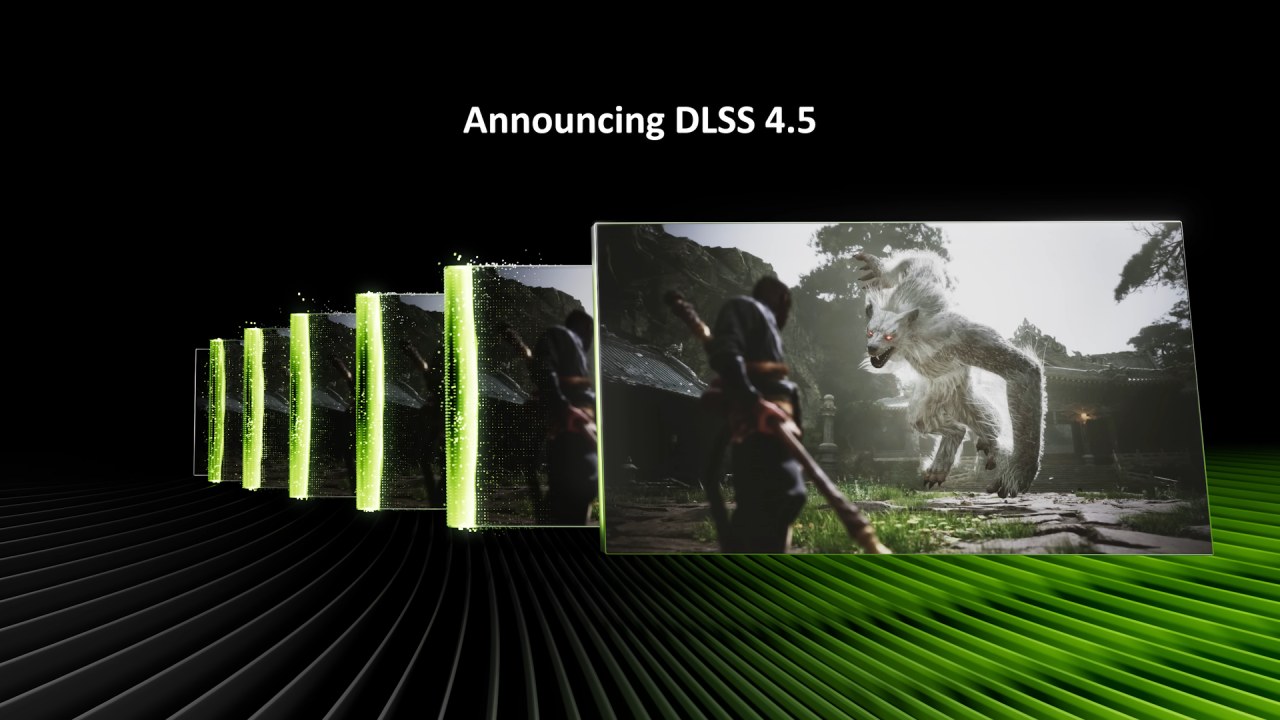
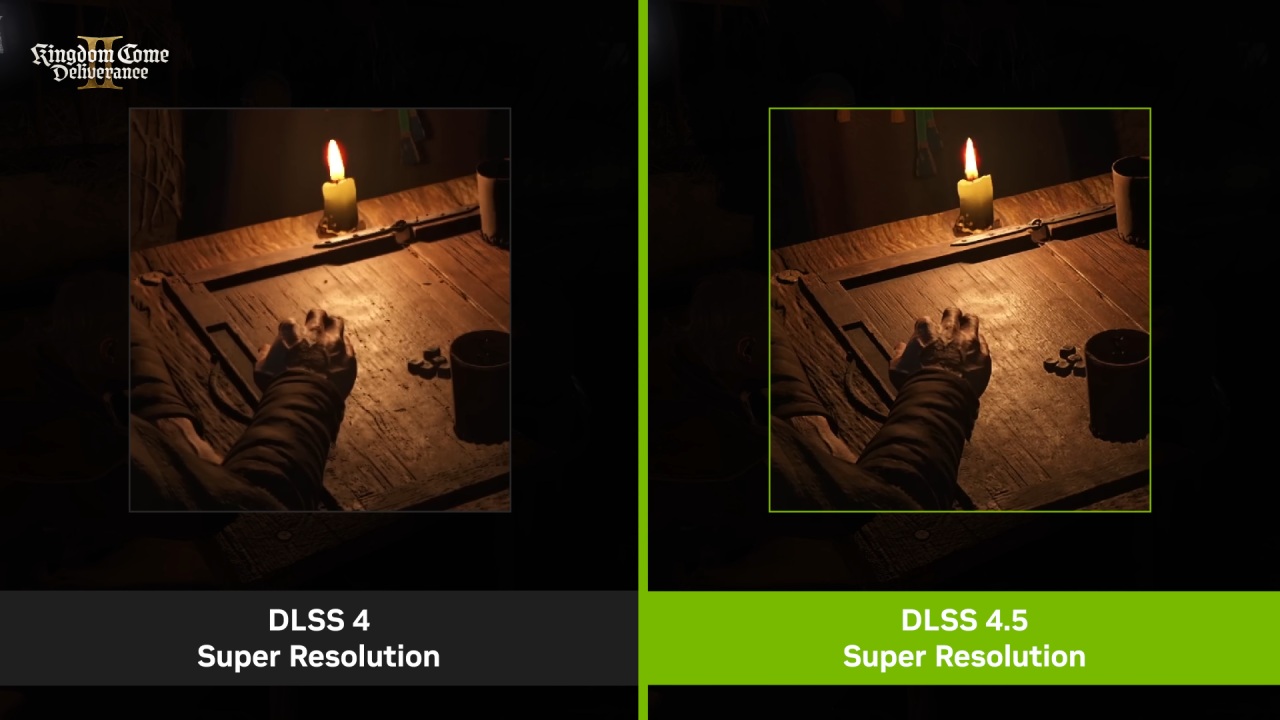
This is an interesting time for graphics. The experience on Nvidia, and increasingly Intel, is becoming harder to compare directly to AMD. Multi-frame generation, advanced anti-lag technologies, ray reconstruction, and DLSS4.5 provide Nvidia with a comprehensive ecosystem of features.
AMD offers analogs in some areas, but not all. Intel, in some respects, appears to be chasing Nvidia’s approach more closely than AMD currently is.
When playing a demanding title like The Outer Worlds 2 on a high-end PC, the experience with multi-frame generation at 240fps, combined with Pulsar and ray reconstruction, pushes beyond what other vendors currently supply. However, the demo environment often focuses on enclosed areas rather than open-world sections, which can present additional challenges such as traversal stutter and shader compilation issues.
We are hoping to see greater homogenization among vendors, especially as the next generation of console hardware approaches. A more balanced feature set across platforms would benefit everyone.
DirectX, Machine Learning, and Industry Shifts
In the past, producing like-for-like benchmark comparisons between AMD and Nvidia GPUs was relatively straightforward because Microsoft set standards through DirectX. Since DirectX12Ultimate, there has been little evolution on that front. In that vacuum, Nvidia has taken the lead with machine learning-driven technologies, creating the current disparity.
Microsoft’s role in the conversation has become less central, while vendor-specific innovation has accelerated.
G-Sync Pulsar and Motion Clarity
Pulsar deserves special attention. The perception of frame rate changes dramatically with improved motion clarity. A demo running at 120fps with Pulsar can look astonishingly clear because of its low persistence characteristics.
If we think back to playing games at 60fps on CRT displays, they looked fantastic. Move that same 60fps to a high-persistence sample-and-hold flat panel, and it appears blurry. Low-persistence displays like Pulsar solve that problem, making lower frame rates look far better than they would on conventional panels.
The advantage of Pulsar is that it works with VRR, meaning you do not need to lock to a maximum frame rate. You can simply enjoy whatever your GPU outputs while maintaining strong motion clarity. Firmware updates are still in progress to enable lower refresh rate options, which should expand its utility further.
A Holistic View of Performance
Looking at the latency tests again, it becomes clear that determining the “best” GPU is more nuanced than comparing frame rates alone. In one scenario, the 9070 XT had the highest frame rate and latency only slightly worse than the Nvidia card, making it the overall strongest performer at those settings. But that does not tell the whole story.
The modern GPU experience includes base frame rate, base latency, frame-generated latency, and the quality of generated frames. All of these factors contribute to the final experience.
At 240fps, each frame persists for roughly 4ms. That provides some leeway in the quality of generated frames, but there is still room for improvement. As these technologies evolve, dynamic frame generation will likely improve further, especially in more challenging scenarios.
For testing, relevant metrics needed to be locked to native 1440p, which isn't how most people would set up their PCs in real life. Nvidia users might utilize DLSS with route tracing to get similar performance, but AMD users might set things up differently. It is getting harder and harder to make accurate like-for-like comparisons.
We are moving into uncharted territory. The direction of travel is clear, but how dynamic frame generation will scale in more demanding contexts remains to be seen. With a base frame rate of around 40fps scaled to 240fps through 6x multi-frame generation, the question becomes simple: how good will it feel in practice? That is something you will ultimately have to experience firsthand.
Also, check our other hardware articles:
- AMD Ryzen 9 9950X3D Review: Setting The Standard For 2025 Gaming CPU
- Amazon Luna 2025 Review: Is Prime Gaming's Cloud Service Your Go-To For Casual Fun?
- AMD RX 9070 XT Review: AMD's RDNA 4 Champion for 1440p Gaming
- GeForce Now Ultimate: Ditching Your Gaming PC For Cloud RTX 4080 Power?
- NVIDIA GeForce RTX 5080 Review (2025): Still A 4K Gaming Powerhouse?
- Intel Core Ultra 9 285K Review And Performance Breakdown (2025)
- AMD Ryzen 7 9800X3D Review: 3D V-Cache Goes God Mode with Stunning Gaming Performance
- Intel Core Ultra 9 285K vs AMD Ryzen 7 9800X3D: In-Depth Gaming Performance and Benchmark Comparison
- NVIDIA GeForce RTX 5080 Super Performance In Cyberpunk 2077: Path Tracing & DLSS 4.0 Tested
- AMD Radeon RX 9070 XT In Cyberpunk 2077: Ray Tracing & FSR 4.0 Tested
- Intel Arc B580 Review: The $250 GPU Revolutionizing 1440p Gaming
- Intel Arc B570 Vs. B580: Value, Specs, And Real-World Gaming Performance
- RTX 5090 Laptop Vs. M4 Max MacBook Pro: Ultimate Raw Performance Vs. Battery Endurance
- Intel Arc b580 Vs. RTX 4060: Game Performance And Value Analysis
- RTX5090 Hell Is Us Demo 4K Ultra Benchmark: DLSS Vs. Native Performance Guide
- NVIDIA RTX 5070 Review: Mid-Range Muscle or Marketing Hype?
- Nintendo Switch 2 Review: Handheld Performance, Features & Value Breakdown
- RTX 5070 Ti Review: Performance, Thermals & Power Efficiency Tested
- Samsung Odyssey OLED G81SF Review 2025: Ultimate 32-Inch QD-OLED Gaming Monitor
- AMD RX 9070 Performance Review: Thermals, Clocks, and Real-World FPS
- AMD Ryzen 5 7600 Review: Best Budget Gaming CPU of 2025?
- AMD Radeon RX 7800 XT Review: RDNA 3 Power For Midrange Gaming
- Asus ROG RTX 5090 Astral OC Vs. Founders Edition: The 4K Gaming Benchmark
Senior Editor, NoobFeed
Gaming Hardware Updates
No Data.