
OneXPlayer 3 Challenges Valve Steam Machine at 45W
OneXPlayer 3 challenges Valve Steam Machine performance while using significantly less power across multiple demanding games.
Hardware by Naheyan Tahmin on Aug 24, 2026
OneXPlayer 3 and Valve's Steam Machine are two different ways to play PC games. It is meant to be placed in an entertainment center and connected to a TV or monitor. The OneXPlayer 3 is a handheld system with a screen, a battery, and detachable controllers. Both are designed to play games, but their hardware and power limits differ significantly.
Valve's 30th anniversary is coming up soon, and reviewers have already received hardware ahead of the official release. This makes the launch of Steam Frame seem closer. There are 28 compute units and 8GB of VRAM on the GPU. 64GB of DDR5 memory running at 5600MT/s has been added to the system. It's possible for the CPU to draw up to 30W and the GPU up to 110W, for a total of 140W.
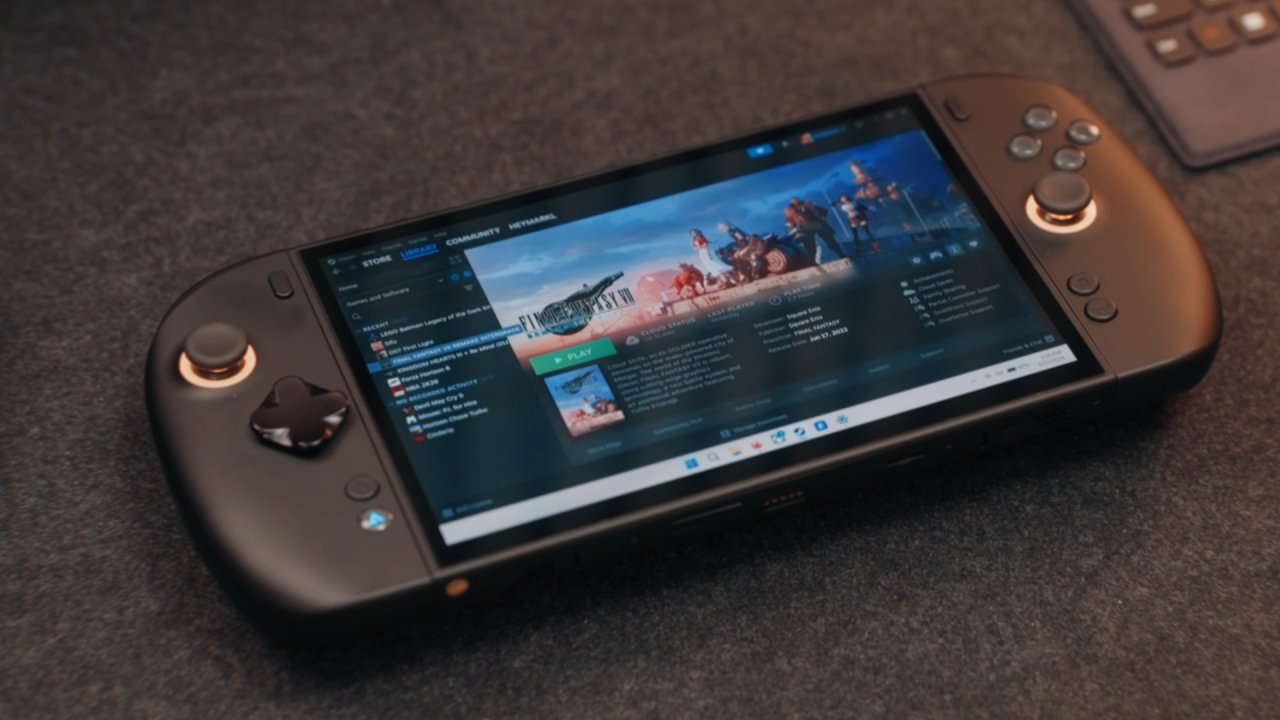
Steam Machine and OneXPlayer 3 Hardware
OneXPlayer 3 uses the Intel Arc A3 Extreme with 16 cores and 16 threads, reaching up to 4.6GHz. The chip also includes lower-clocked, efficient, low-power cores. Its integrated GPU is the B390 with 12 XE3 cores. Instead of dedicated VRAM, the system uses unified memory.
The configuration tested here has 32GB running at 8533MT/s, with 18GB dedicated to VRAM and additional memory available if needed. The combined CPU and GPU power limit is 45W. Third-party applications can push the OneXPlayer 3 beyond that limit, but the testing keeps the system at 45W. That creates a large difference in power consumption between the two machines.
We tested the games at 1080p and 1440p. At 1080p, most games used scaling, with XeSS used on the Intel system and FSR used on the AMD system. Some games were also tested at 1440p using native rendering and ultra settings to show the difference in raw performance.
Gaming Performance
Forza Horizon 6 produced one of the more interesting results. OneXPlayer 3 was still limited to 45W, while the Steam Machine's GPU was using between 80W and 95W during testing. At 1080p high with quality scaling, the Steam Machine averaged 67 fps, while the OneXPlayer 3 reached 68 fps. The difference was only 1fps, although FSR and XeSS cannot be matched perfectly.
At 1440p native without scaling, the result changed. Steam Machine averaged 41 fps, while the OneXPlayer 3 reached 51 fps. The handheld therefore beat the Steam Machine in this test while using significantly less power.
Forza games also tend to perform better on Windows than on SteamOS, which matters when comparing the OneXPlayer 3 with the Steam Machine. Across other systems, Forza games have performed better on Windows. We tested Shadow of the Tomb Raider on the OneXPlayer 3 without DX12, even though Windows can enable it. Using DX12 could improve performance.
At 1080p high with native rendering, the Steam Machine averaged 125 fps, while the OneXPlayer 3 averaged 103 fps. At 1440p at native high settings, the Steam Machine reached 89 fps, and the OneXPlayer 3 reached 83 fps. The difference was much smaller at 1440p, with the Steam Machine holding a 6fps advantage. We tested Left 4 Dead 2 at 1440p with maximum settings.
Steam Machine was significantly ahead of the OneXPlayer 3. The power figures also showed how differently the two systems operated. The OneXPlayer 3 used a little over 25W for the CPU and GPU combined, while the Steam Machine's GPU alone reached 101W. That makes the performance comparison more meaningful.
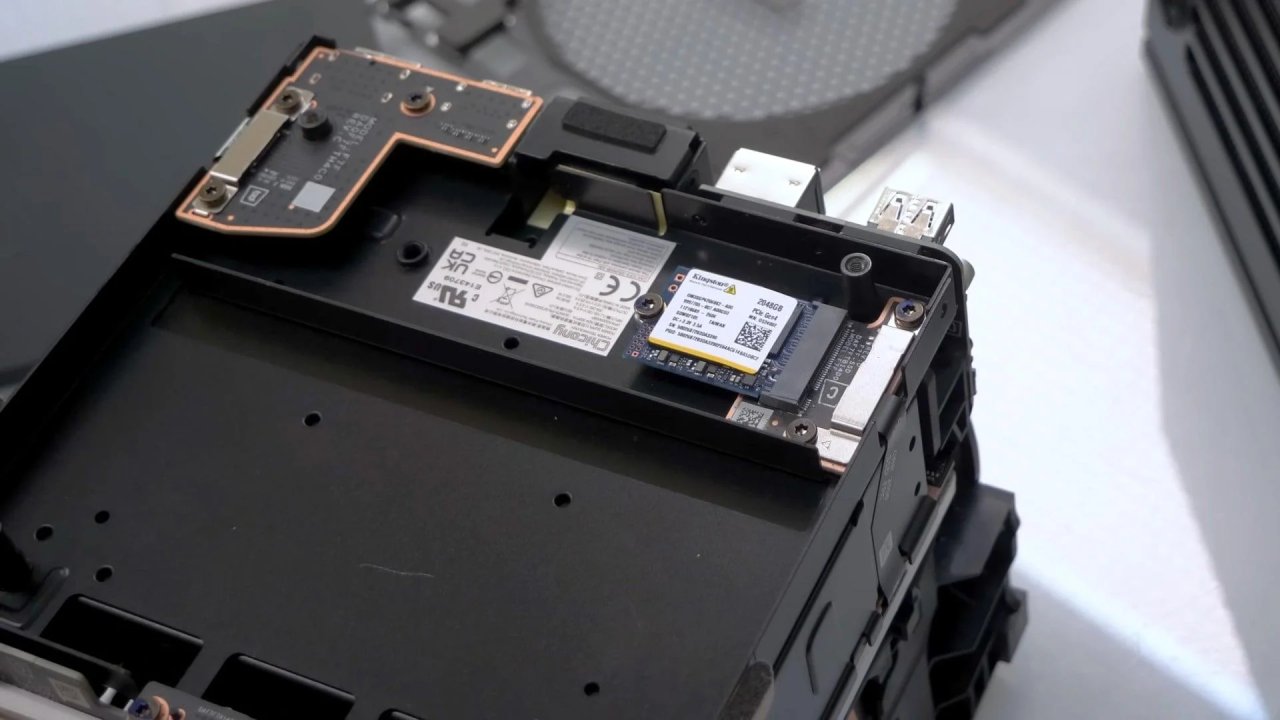
Frame Generation
Another test focused on a game at 1440p high settings without scaling. On the Steam Machine, we enabled FSR frame generation. Getting beyond 60fps at 1440p high required either additional FSR scaling or frame generation. With FSR frame generation at 2x, the Steam Machine averaged around 74fps.
OneXPlayer 3 had another option through XeSS frame generation. It supports 2x, 3x, and 4x modes. With XeSS multi-frame generation set to 4x, the OneXPlayer 3 produced a frame rate that exceeded the Steam Machine's output. The handheld generated more artificial frames, but it still used much less power.
The extra generated frames helped keep performance smooth and brought the OneXPlayer 3 close to, or slightly ahead of, the Steam Machine in this particular test. Steam Machine came ahead in most of the games tested. At 1440p, Cyberpunk 2077 showed around a 72% performance uplift for the Steam Machine over the OneXPlayer 3.
The main difference between these two systems is power consumption.
Forza Horizon 6 was the exception, with the OneXPlayer 3 beating the Steam Machine in both the 1080p quality-scaled test and the 1440p native test. The Windows environment is also a factor, as Forza games have consistently shown better performance there than on SteamOS. OneXPlayer 3 remained at a maximum of 45W for the CPU and GPU combined throughout testing.
Steam Machine can reach 140W combined, though it does not stay at that level continuously. Average power consumption was around 120W during testing, while the GPU alone could exceed 100W. The results show that the Steam Machine remains ahead in most gaming workloads.
OneXPlayer 3 can approach its performance while operating within a much lower power limit. Forza Horizon 6 also demonstrated that the handheld can outperform the Steam Machine in certain workloads. The comparison shows how far a 45W handheld gaming PC can go against a system designed around substantially higher CPU and GPU power.
Editor, NoobFeed
Gaming Hardware Updates
No Data.