
AMD Faces Rising Competition From Intel Titan Lake and Nvidia ARM Chips
Intel Nova Lake focuses on IPC gains and E-core scaling while maintaining similar clock speeds for balanced performance improvements.
News by Nahe Yan on Apr 10, 2026
AMD has been the clear leader in both the desktop and laptop x86 markets for the past few years. Intel has been behind since the Ryzen 3000 series, also known as Zen 2, launched. Going forward, though, Intel and NVIDIA will be stronger competitors for AMD.
New CPU designs from Intel, like Titan Lake and Serpent Lake, are on the way. Serpent Lake will include an advanced Intel CPU and an NVIDIA GPU. NVIDIA is also making its own N1-based CPUs for laptops. AMD has also announced the price of the 9950X3D2, which boasts a dual 3D V-Cache design.

9950X3D2 is the first twin 3D V-Cache CPU, and AMD has disclosed its price.
The chip costs $900 and will be available on April 22. AMD has already given the press benchmarks, but they didn't say how much they will cost until later. It is between a high-end desktop processor and a popular gaming CPU. AMD is making it more appealing to developers and content makers. In some workloads, such as AI simulations, benchmarks show that it is about 5–8% better than the 9950X3D.
The chip costs $200 more than the 9950X3D. Some people have reacted negatively, but we don't yet know how it will work in the real world. The TDP is 200W, which is more than most consumer CPUs. Clock speeds are down by about 100MHz, which isn't much. 9800X3D, 9950X3D, or even the 7800X3D might be better for gaming.
Depending on how well this product sells, we might also see dual-V-Cache designs become mainstream in future Zen architectures. NVIDIA is working on an N1 laptop SoC, a single-chip solution for AI workloads and content creation. The engineering prototype has up to 128GB of LPDDR5X memory running at 8533MTS, indicating it can handle a lot of data.
The processor has 6144 CUDA cores and will come in two versions: N1 and N1X. The N1 version will have up to 20 CPU cores. It has typical connections, including Wi-Fi, HDMI, and two M.2 ports. Because they are based on ARM architecture, these processors work with Windows on ARM devices. At first, they won't be able to directly compete with Ryzen or Intel processors, but their position may change over the next 2 to 3 years.
We think NVIDIA will make versions that are more focused on gaming in the future.
Because of the company's direction and its already significant market power in the GPU market, gaming optimization is likely to become a focus. There is also a chance for handheld devices that work like current x86-based solutions, but there are still distinctions in how they are built.
Intel has stayed competitive with some CPUs, such as the 12400 and 12900, but AMD has stayed on top in both the desktop and laptop markets. The future Intel architectures point to a change in strategy. Nova Lake is likely to grow to 52 cores. Clock speeds may stay about the same as they are now, with only small increases or small decreases.
IPC enhancements will be the main source of performance gains. P-cores are likely to achieve IPC gains of about 10%, while E-cores may see much larger gains. AMD's next-generation Ryzen CPUs, on the other hand, may have higher clock speeds but smaller IPC gains.
Intel is more focused on efficiency and IPC, while AMD is more focused on frequency scaling. This changes the performance balance between the two firms. One of the most interesting new designs is Intel's Serpent Lake. It is likely to have an NVIDIA RTX GPU tile and an Intel CPU. This is a hybrid method that uses both Intel CPU cores and NVIDIA graphics.
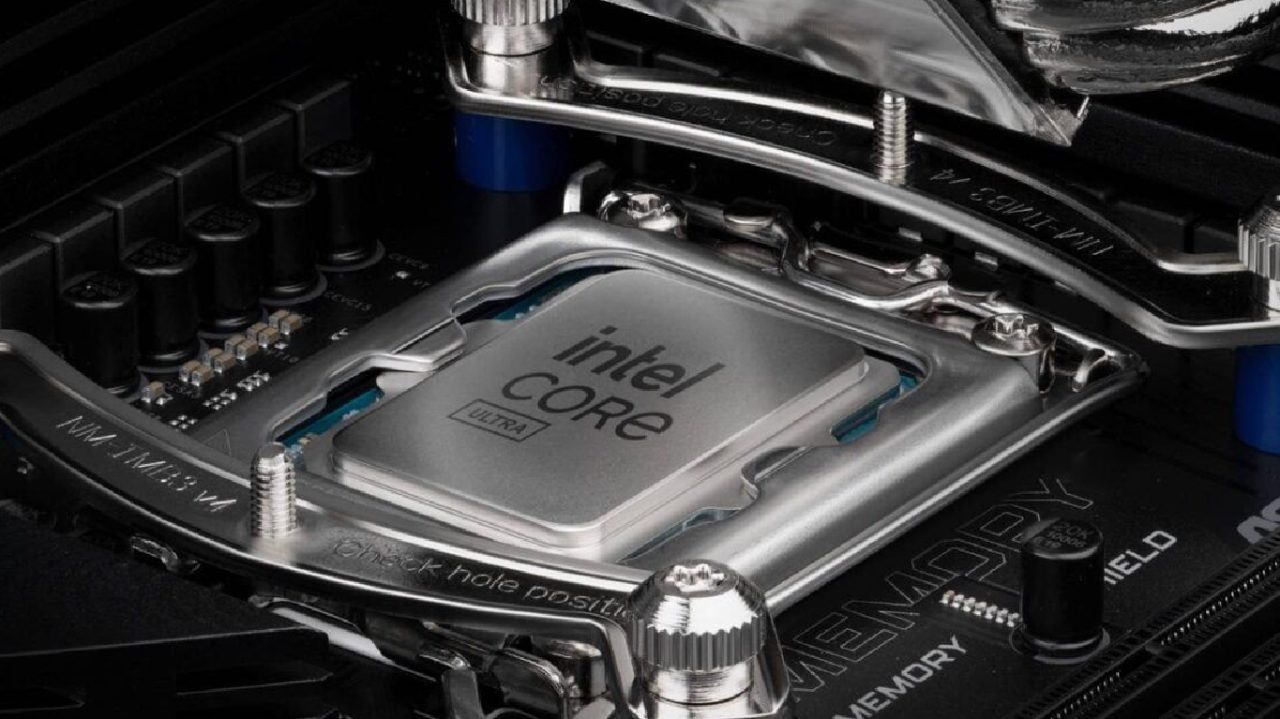
Serpent Lake will have the same CPU tile as Titan Lake, which has Golden Eagle and Copper Shark cores.
Titan Lake still uses a hybrid design with distinct P-cores and E-cores, rather than a single architecture. Intel has dropped its plans for Nova Lake AX, which was supposed to compete with high-performance APUs. Razer Lake AX is the result of this design.
Razer Lake is expected to have 16 Griffin P-cores and 32 Golden Eagle E-cores, as well as some extra low-power cores. IPC enhancements are likely, especially for E-cores, which will have a bigger impact on total performance. The architecture is based on Nova Lake ideas; it has faster clock speeds and better efficiency. It shows how much Intel is relying on E-core performance scaling.
Titan Lake will keep using a mix of Golden Eagle P-cores and Copper Shark E-cores. It doesn't use a single-core structure. Hammer Lake is intended to be the next step toward unified cores. This design may be available by 2029 or 2030. Different sources give different timelines.
The unified core design is likely to be built on the E-core architecture. These cores will evolve over time to handle a wider range of workloads, just as AMD does with its Zen cores. By varying the sizes of the caches, clusters, and cores, you can remain flexible while keeping the same basic architecture.
Intel, AMD, and NVIDIA are all working on new CPUs.
It will make markets more competitive across desktop and mobile. Intel is working on IPC advances and E-core scaling, AMD is working on clock speeds and architectural improvements, and NVIDIA is getting into the CPU market with ARM-based designs.
Zen 6 is likely to have high clock rates, but Zen 7 may bring major architectural changes, such as redesigned caches. Intel's roadmap shows that there will be many versions of core designs that will eventually come together. As these technologies improve and compete directly across diverse areas, the market is likely to change significantly over the next several years.
Editor, NoobFeed
Related News
No Data.